GAME · 2012
Assassin's Creed III
- Developer
- Ubisoft Quebec, Ubisoft Romania, Ubisoft Annecy
- Publisher
- Akella
- Platforms
- Microsoft Windows, PlayStation 3, Wii U, Java Platform, Micro Edition
36 archived facts 4 topics 1 source Last reviewed Sep 2026
All facts (36)
- #001
Development of Assassin's Creed III started in January 2010, following the release of Assassin's Creed II, and was handled by a senior team at Ubisoft.
- #002
Assassin's Creed III spent two and a half years in development, the longest cycle for the series since the original Assassin's Creed.
- #003
More than 300 people in Montreal contributed to Assassin's Creed III, collaborating with teams in Quebec City, France, Singapore and Ukraine.
- #004
When Ubisoft announced Assassin's Creed: Brotherhood in 2010, parts of the gaming community wondered whether it was Assassin's Creed III; developers said Brotherhood was not the third installment and that Assassin's Creed III would not feature a pre-existing character.
- #005
Patrice Désilets, former creative director of the Assassin's Creed series, said the series had always been planned as a trilogy, and that Assassin's Creed III's story would center on the Assassins' effort to stop the world's end in 2012.
- #006
Contains a major spoiler — show
According to interviews with Patrice Désilets and creative director Alex Hutchinson, the original ending planned for Assassin's Creed III when it was conceived as a trilogy had Desmond and Lucy defeating Abstergo before a solar flare, with the pair on a spaceship restarting humanity elsewhere.
- #007
The planned ending of Assassin's Creed III changed substantially after the success of Assassin's Creed II, which led to additional spinoffs before work began on the third main game; Désilets and Hutchinson chose to conclude Desmond's story while avoiding the cataclysmic scenario so further games in the series would be possible.
- #008
Jean-François Boivin of Ubisoft stated that every numbered entry in the Assassin's Creed series introduces a new lead character and setting.
- #009
According to Alexandre Amacio, the planned release of the next franchise installment before December 2012 stemmed from the idea that Desmond Miles, the series' modern-day protagonist, was to finish his tale by December 2012.
- #010
Ubisoft CEO Yves Guillemot confirmed on November 8, 2011, during an earnings call that a new "major" Assassin's Creed game would be released in 2012. Guillemot declined to provide further details about the title beyond this confirmation.
- #011
Ubisoft confirmed in February 2012 that Assassin's Creed III existed and would be released in North America on October 30, 2012.
- #012
According to Guillemot, the team had been working on Assassin's Creed III for three years, and the publisher planned to push the title heavily because it considered the product fantastic.
- #013
Guillemot said the publisher was investing more heavily in Assassin's Creed III than in any other title in the series.
- #014
In January 2012, a purported Ubisoft insider claimed that Assassin's Creed III would be set during the American Revolution.
- #015
On February 29, 2012, a Best Buy employee sent Kotaku a promotional image of Assassin's Creed III and retailer information indicating a full reveal was imminent.
- #016
Around the same period, the official Assassin's Creed Facebook page stated that a major announcement was only days away, and its cover photo showed a snowy, bleak setting.
- #017
Game Informer appeared set to confirm the details through an advertising banner on its site, and images showed the new assassin beside American revolutionary leader George Washington.
- #018
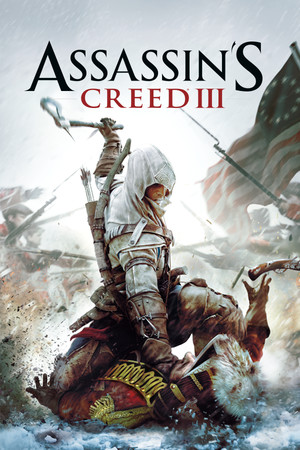
Ubisoft released the box art for Assassin's Creed III on March 1, 2012, confirming the game's American Revolution setting.
- #019
Game Informer revealed its cover feature for Assassin's Creed III, which included more artwork of the game's new main character.
- #020
Assassin's Creed III was unveiled with a cinematic trailer on March 5, 2012.
- #021
Assassin's Creed III runs on the AnvilNext engine, which delivers improved visuals, character models and AI, allowing for battlefields full of fighters.
- #022
Ubisoft found it surprising that Rockstar's Red Dead Redemption, released midway through Assassin's Creed III's development, included wild animal hunting and a giant frontier to explore, features Ubisoft had also planned for its own sequel.
- #023
According to Assassin's Creed III lead writer Corey May, Ubisoft examined Red Dead Redemption's success and sought to take the formula in new directions.
- #024
Assassin's Creed III writer Matt Turner attributed the similarities between the game and Red Dead Redemption to "a convergence of minds".
- #025
Creative director Alex Hutchinson said Ubisoft avoided making the Assassin's Creed III protagonist a female character because the American Revolution setting was not a strong match, despite many people wanting female Assassins in the series.
- #026
The inclusion of Haytham as a playable character in Assassin's Creed III was concealed from the press, with the development team the only ones aware and all advertising focused solely on Connor.
- #027
Alex Hutchinson said Haytham's character arc in Assassin's Creed III ran far too long because there was no time for extensive product testing, which drew some backlash from players.
- #028
Adrian Hough, who voiced and performed motion capture for Haytham, said the writing for the character was very good and that the development team gave him artistic freedom to make the character his own, seeing him as a product of his performance as well as the writing and animation.
- #029
For Assassin's Creed III, Ubisoft consulted Teiowí:sonte Thomas Deer on the game's depiction of Mohawk culture. Deer, of the Kanien’kehá:ka Onkwawén:na Raotitióhkwa Language and Cultural Center, advised on developmental decisions about cultural details including clothes and music.
- #030
Scalping was originally planned as a game mechanic in Assassin's Creed III but was removed after Teiowí:sonte Thomas Deer told the developers that the Mohawk people shown in the game never performed scalping.
- #031
Mohawk language teacher Akwiratékha Martin and Teiowí:sonte Thomas Deer helped Noah Watts learn Kanien'kéha, the Mohawk language, for his voicing of Ratonhnhaké:ton in Assassin's Creed III. Martin said Ubisoft let him change dialogue he felt did not sound sufficiently "Kanien'kéha" or that he considered inappropriate.
- #032
Residents of the Kahnawà:ke Mohawk community near Montreal contributed voices and music to Assassin's Creed III.
- #033
The Mohawk community of Kahnawà:ke granted Ubisoft permission to use the name Ratonhnhaké:ton for Connor in Assassin's Creed III, which was considered a significant honor.
- #034
Out of respect and gratitude, Ubisoft did not trademark Connor's Mohawk name in Assassin's Creed III.
- #035
A planned cutscene in Assassin's Creed III showing Ratonhnhaké:ton's village wearing ceremonial masks was omitted at Deer's request, as the masks belonged to a very private aspect of Mohawk spirituality.
- #036
Deer, whose contributions to Assassin's Creed III were substantial, described the finished game as a "phenomenal achievement" for his people.
Sources & editorial notes
Sources for the entries on this page
- Wikipedia Assassin's Creed III — Wikipedia
Information from external sources is independently selected, consolidated and edited by Arka Evren. Sources are listed for verification and further reading. Encyclopedia text is used under its licence (CC BY-SA). How we work