
GAME · 2009 · UK
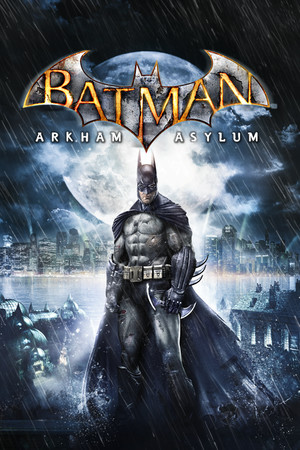
Batman: Arkham Asylum
- Developer
- Rocksteady Studios
- Publisher
- Eidos Interactive
- Platforms
- PlayStation 3, Microsoft Windows, macOS
109 archived facts 7 topics 3 sources Last reviewed Nov 2026

109 Interesting Facts About Batman: Arkham Asylum
Interesting Facts (52)
- #001
- #002
The creators of the game decided that in order to have the voice acting top-notch, they'd use seasoned Batman actors from Batman: The Animated Series (1992). Kevin Conroy reprised his role as Batman in the game; as did Mark Hamill, who voiced The Joker; and Arleen Sorkin, who provided the voice of Harley Quinn. Although Conroy and Hamill would continue to voice their characters in the series, Sorkin's voice for Harley Quinn is replaced by Tara Strong after this game.
- #003
- #004
- #005
- #006
At the end of the credits, there is a short cutscene which randomly gives the player one of three endings, where a box is floating on water and suddenly a villain's hand grasps on to the box, either Scarecrow, Killer Croc, or Bane. According to Rocksteady, Scarecrow is the "official" ending and that he survived being torn apart by Killer Croc earlier on in this game, as he is featured in the newest Batman Arkhamverse game, Batman: Arkham Knight (2015) where Scarecrow appears to look extremely horrible and grotesque.
- #007
This game features the second largest collection of villains appearing in a Batman Video game including cameos, after the verification's made by it's sequel, Batman: Arkham City (2011) (as of September 2011). Those who make appearances are: * The Joker * Dr. Harleen Frances Quinzel/Harley Quinn * Edward Nashton/Edward Nigma/The Riddler (although he is only heard and not seen beyond the character biography artwork) * Waylon Jones/Killer Croc * Dr. Jonathan Crane/The Scarecrow * Bane * Dr. Pamela Lillian Isley/Poison Ivy * Victor Zsasz * The dummy known as Scarface (albeit without the assistance of the ventriloquist Arnold Wesker) * Basil Karlo/Clayface (who is also not seen in his true form but in the guise of multiple characters in a cell in the penitentiary).
- #008
When you come under Scarecrow's fear toxin for the third time, the game pretends to crash and start over. Rocksteady did this as a way to explore what the player's worst fear would be if they were under the fear gas, which is going so far in a game only for it to crash and not have their progress saved.
- #009
The Game's version of Arkham Asylum is heavily influenced by the version that existed in the comic books, as it features strong elements from the stories of Alan Grant, the limited series "Arkham Asylum: Hell on Earth" and very obvious references to Grant Morrison's graphic novel: "Arkham Asylum: A serious house on a serious earth", among other influences.
- #010
Batman: Arkham Asylum was "remastered" for the Xbox One and PlayStation 4 as part of the Batman: Return to Arkham (2016) Collection. When the remaster was initially revealed on May 18th, 2016, there was so much outrage about the very apparent graphical downgrades and stylistic changes that the remaster's release date was pushed from July 26th, 2016, to October 21st, 2016, in order to address the issues. The final product indeed ended up looking better than the reveal trailer footage, but many of the stylic changes remained, much to fan dismay. The most evident of these changes was to the character models - in particular The Joker, who was given a more youthful complexion and colour scheme as opposed to the original more aged design.
- #011
Many characters who are never seen, but leave traces of themselves behind as Riddles, go on to have major roles in the sequel. For example, the player can find Catwoman's whip and goggles on display in a glass case, Penguin's top hat and various umbrellas in another glass case, Mr. Freeze's, Two-Face's and Clayface's cells, a series of case files written by Hugo Strange, and a duty schedule that lists Dr. Thomas "Hush" Elliot as an employee. Ra's al-Ghul's corpse even shows up in the morgue, only to vanish when the player returns.
- #012
While rescuing Dr. Penelope Young you can hear her telling the mooks to let her speak directly to Joker, a seemingly unwise demand that you wouldn't expect from a garden-variety hostage. But you might expect it from someone who had unwittingly done business with him and wants to try resolving such an incriminating situation quietly and privately.
- #013
Titan Joker's design was originally going to look very different. According to Carlos D'Anda: "I had initially envisioned him as a 'spiderlike' creature more than anything... some disjointed, messed up looking monster straight out of an Aphex Twin video or something...." However, he was eventually forced to make Titan Joker look more like the other, more muscular, Titans.
- #014
- #015
In the Penitentiary, downstairs from where Batman finds Warden Quincy Sharp, you can find Clayface's cell. He is originally disguised as Aaron Cash, banging against the glass and begging Batman to free him. But, if you turn around and come back, Cash is replaced by Commissioner Jim Gordon, who doesn't say anything to Batman, but instead just laughs. If you look at him through Detective Mode/Vision, you can see his lack of a skeleton. He's also the answer to one of the Riddles, and once you scan him, you can access his character bio as Clayface.
- #016
At one point, a security guard angrily tells Joker as he's being taken back to Arkham that he'll pay for the deaths of three of his friends from the previous escape, only for Joker to be shocked that he only managed to kill three, and state that he'll try to improve by killing 100 more people the next time he escapes. By the time of the end of the game, he did kill well over 100 people at Arkham.
- #017
- #018
- #019
Contains a major spoiler — show
Scarecrow being in the game was kept a secret as to surprise players. Also, when the player encounters Scarecrow for the final time, the game makes it seem like Scarecrow is messing with our heads as well when the game appears to glitch, crash and restart. This is a sham as the new opening sequence has several things out of place: "BATMAN MIGHT BE ESCAPING PATIENT" sign the upside down messed up batsignal Joker driving Batman in the batmobile to Arkham Scarecrow being the receiving Doctor Finally, the Joker kills the player by then saying to move "the middle stick" to avoid Jokers lethal shot. This is also a sham since there is no "middle stick" Once you select restart, Batman emerges from a makeshift grave and starts the final Scarecrow mini-game. Upon completion, the game will continue as it is supposed to. Also, in place of the Blackgate inmates being escorted by Arkham guards, we now see Commissioner James Gordon, Head Gaurd Aaron Cash, Warden Quincy Sharp and Dr. Penelope Young being escorted by Joker's thugs.
- #020
- #021
Contains a major spoiler — show
After the credits, a short cutscene picks one of three endings at random: a crate floats on the water and a villain's hand suddenly grabs it, either Scarecrow, Killer Croc or Bane. Rocksteady says Scarecrow's is the "official" ending, meaning he survived Killer Croc's attack early in the game; he returns in Batman: Arkham Knight (2015), the latest game in the Batman Arkhamverse, looking more terrifying and strange than ever.
- #022
- #023
- #024
Contains a major spoiler — show
In the Penitentiary, one floor below where Batman finds Warden Quincy Sharp, is Clayface's cell. At first he looks like Aaron Cash, pounding on the glass and begging Batman to get him out. Turn away and look back, and Cash has become Commissioner Jim Gordon, who says nothing and just laughs. In Detective Mode/Vision you can see he has no skeleton. He's also the answer to one of the Riddles, and scanning him unlocks Clayface's character biography.
- #025
- #026
- #027
Contains a major spoiler — show
Scarecrow's presence was kept under wraps to surprise players. During the final Scarecrow encounter, the game seems to glitch, crash and restart, as if he were messing with our heads too. It's a fake-out, and the new opening is full of wrong details: a "BATMAN MIGHT BE ESCAPING PATIENT" sign, an inverted bat signal, the Joker driving Batman to Arkham in the Batmobile, and the Doctor who receives him turning out to be Scarecrow. Then the Joker kills the player after telling them to move "the middle stick" to dodge his fatal shot, another lie, since there is no "middle stick". Choose restart and Batman climbs out of a temporary grave into the final Scarecrow mini-game; beat it and the game carries on as normal. And instead of Blackgate prisoners escorted by Arkham guards, we now see Commissioner James Gordon, Head Guard Aaron Cash, Warden Quincy Sharp and Dr. Penelope Young being escorted by Joker's thugs.
- #028
- #029
- #030
- #031
- #032
- #033
- #034
- #035
- #036
- #037
- #038
Batman: Arkham Asylum was "remastered" for Xbox One and PlayStation 4 as part of the Batman: Return to Arkham (2016) collection. When the remaster first surfaced on May 18, 2016, there was so much outrage over the very noticeable graphical downgrades and stylistic changes that the remaster's premiere date was pushed back from July 26, 2016 to October 21, 2016 to fix the problems. The final product did indeed look better than the trailer, but to the horror of fans, most of the stylistic changes remained. The most obvious of these changes were in the character models, especially the Joker, who had a younger skin and color scheme compared to the original old design.
- #039
Many characters who are never seen but leave traces behind as Riddles go on to play significant roles in the sequel. For example, the player can find Catwoman's whip and goggles in a glass case, the Penguin's top hat and various umbrellas in another glass case, the cells of Mr. Freeze, Two-Face and Clayface, a series of case files written by Hugo Strange, and a duty roster on which Dr. Thomas "Hush" Elliot is listed as an employee. Ra's al-Ghul's corpse even turns up in the morgue, but disappears when the player returns.
- #040
While rescuing Dr. Penelope Young, you can hear her telling the thugs to let her speak directly to the Joker, a seemingly senseless request you wouldn't expect from an ordinary hostage. But you could expect it from someone who had unknowingly done business with him and was trying to quietly and privately resolve such an incriminating situation.
- #041
The Joker's initial design included him wearing a "mad scientist" outfit to match Harley Quinn's "nurse" costume. However, this was changed in favor of a more traditional look. Additionally, the corners of the Joker's mouth were originally torn or injured, but this was scrapped so that the Joker wouldn't resemble his appearance in the live-action Batman film The Dark Knight (2008).
- #042
Various design choices indicate that the game was originally played in rainy weather. It rains in the opening scene, lightning strikes can be seen when Batman enters the Medical Facility, and several guards and inmates wear raincoats. It may have been planned for the game to have rain before it was removed, possibly due to performance issues. In Batman: Return to Arkham, there is now rain in free roam, either to remove the rain from the opening and the Medical Facility or because of improved hardware that allowed for effects that weren't previously available but were desired.
- #043
Titan Joker's design was originally going to look very different. According to Carlos D'Anda: "Originally I had envisioned him as a 'spider-like' creature more than anything… a messy, hideous-looking monster straight out of an Aphex Twin video…" However, in the end he had to make Titan Joker resemble the other, more muscular Titans.
- #044
- #045
In the Penitentiary, you can find Clayface's cell on the floor below where Batman finds Warden Quincy Sharp. At first he is disguised as Aaron Cash, banging on the glass and begging Batman to rescue him. But when you turn around and come back, Cash is replaced by Commissioner Jim Gordon, who says nothing to Batman and instead just laughs. When you look at him through Detective Mode/Vision, you can see that he has no skeleton. It is also the answer to one of the Riddles, and when you scan him you can access the character biography as Clayface.
- #046
- #047
At one point, a security guard angrily tells the Joker, as he is being taken back to Arkham, that he will pay for the deaths of his three friends in the previous escape, but the Joker is only surprised that he managed to kill just three people and states that he will try to improve by killing 100 more on his next escape. By the end of the game, he had killed more than 100 people in Arkham.
- #048
The presence of Scarecrow in the game was kept secret in a way that surprised players. Additionally, when the player encounters Scarecrow for the last time, the game appears to have Scarecrow messing with our heads when the game glitches, crashes and restarts. In the new opening sequence, since many things are out of place, this is a lie: "BATMAN MIGHT BE ESCAPING PATIENT", the inverted bat signal that directs Batman to the Doctor who greets him with the Batmobile, Arkham Scarecrow. Finally, the Joker kills the player by telling him to move "the middle stick" to avoid the Joker's fatal shot. This too is a lie because there is no "middle stick". When you choose to restart, Batman emerges from a temporary grave and starts the final Scarecrow mini-game. Once completed, the game will continue as it should. We also see that instead of Blackgate prisoners being accompanied by Arkham guards, Commissioner James Gordon, Chief Guard Aaron Cash, Warden Quincy Sharp and Dr. Penelope Young are now accompanied by Joker's thugs.
- #049
- #050
- #051
- #052
Production Story (26)
- #053
- #054
- #055
- #056
Early on, Joker wore a "mad scientist" outfit to match Harley Quinn's "nurse" outfit, but that gave way to a more traditional look. The sides of his mouth were also originally torn or scarred, an idea scrapped so he wouldn't resemble the Joker of the live-action Batman film The Dark Knight (2008).
- #057
Several design choices suggest the game was originally set in rainy weather: it's raining in the opening cutscene, lightning flashes whenever Batman is inside the Medical Facility, and several guards and inmates wear raincoats. Rainfall may have been planned and then removed, possibly for performance reasons. Batman: Return To Arkham now has rainfall in free roam, either to fit the opening and Medical Facility rain or because improved hardware allowed effects that had been wanted but unavailable.
- #058
- #059
Killer Croc originally started out as a man born with a unique skin disease that gave him scaly skin and very reptilian-like attributes. The version of the character in this video-game reflects his appearances in the comic books after the year 2000, where he actually mutates into a rather large crocodile.
- #060
- #061
- #062
- #063
- #064
Contains a major spoiler — show
After the confirmation of its sequel, Batman: Arkham City (2011) (as of September 2011), this game has the second-largest collection of villains in any Batman video game, cameos included: The Joker; Dr. Harleen Frances Quinzel/Harley Quinn; Edward Nashton/Edward Nigma/The Riddler (heard but not seen beyond his character biography artwork); Waylon Jones/Killer Croc; Dr. Jonathan Crane/The Scarecrow; Bane; Dr. Pamela Lillian Isley/Poison Ivy; Victor Zsasz; the dummy known as Scarface (though without the ventriloquist Arnold Wesker); and Basil Karlo/Clayface (not in his true form, but disguised as multiple characters in a penitentiary cell).
- #065
Contains a major spoiler — show
Batman: Arkham Asylum got a "remaster" for the Xbox One and PlayStation 4 in the Batman: Return to Arkham (2016) Collection. Its reveal on May 18th, 2016 set off such outrage over obvious graphical downgrades and stylistic changes that the release date moved from July 26th, 2016, to October 21st, 2016, so the problems could be addressed. The final product did look better than the reveal trailer, but to fans' dismay many of the stylistic changes stayed, the most evident in the character models, especially The Joker, who was given a younger complexion and colour scheme in place of the original, more aged design.
- #066
- #067
- #068
- #069
- #070
- #071
- #072
The Batman: Arkham Asylum team picked out what they saw as Batman's defining traits and exaggerated them, dropping ideas that clashed with them and strictly enforcing others, such as his refusal to kill. Arkham Asylum was chosen as the setting because it kept the player in an area full of enemies rather than an open city.
- #073
- #074
- #075
- #076
- #077
- #078
Behind the Scenes (11)
Characters & Cast (1)
Easter Eggs & References (17)
- #091
- #092
- #093
The Arkham mansion has a hidden room: put three sprays of explosive gel on a particular wall and players can step inside to see blue prints, pictures and plans for the sequel, Batman: Arkham City (2011). Detective vision offers no hints, and it was hidden so well that Rocksteady kept quiet about it until 6 months after release.
- #094
- #095
- #096
- #097
- #098
The Scarecrow audio tape interviews mention a Dr. Murphy and a Dr. Combs, after Cillian Murphy, who plays Scarecrow in Christopher Nolan's Batman film series, and Jeffrey Combs, who voiced Scarecrow in later episodes of The New Batman Adventures (1997) and in the video game Batman: Rise of Sin Tzu (2003).
- #099
- #100
- #101
Contains a major spoiler — show
Scarecrow's role was kept secret to surprise players. At the final Scarecrow encounter, the game seems to glitch, crash and restart, as if Scarecrow were messing with our heads too. It's a sham, and the new opening sequence is full of mistakes: a "BATMAN MIGHT BE ESCAPING PATIENT" sign, an upside-down, messed-up batsignal, Joker driving Batman to Arkham in the Batmobile, and Scarecrow as the receiving doctor. Then the Joker kills the player after telling them to move "the middle stick" to avoid his lethal shot, another sham, since there is no "middle stick". Select restart and Batman rises from a makeshift grave to begin the final Scarecrow mini-game; finish it and the game continues as it should. And in place of Blackgate inmates escorted by Arkham guards, it's now Commissioner James Gordon, Head Guard Aaron Cash, Warden Quincy Sharp and Dr. Penelope Young being escorted by Joker's thugs.
- #102
- #103
- #104
Contains a major spoiler — show
Clayface's cell is in the Penitentiary, downstairs from where Batman finds Warden Quincy Sharp. He's first disguised as Aaron Cash, banging on the glass and begging Batman to free him; turn around and come back, and Commissioner Jim Gordon is standing there instead, saying nothing, just laughing. Detective Mode/Vision reveals he has no skeleton. He's also the answer to one of the Riddles, and once scanned, his character bio as Clayface opens up.
- #105
Contains a major spoiler — show
As he's being taken back to Arkham, the Joker is told by an angry security guard that he'll pay for killing three of his friends in the last escape. The Joker is shocked he only managed three and says he'll try to do better by killing 100 more next time. By the end of the game, he has killed well over 100 people at Arkham.
- #106
Spray a wall in the Arkham mansion with explosive gel three times and it opens onto a hidden room full of blueprints, images and plans for the sequel Batman: Arkham City (2011). Detective Vision won't point you to it, and Rocksteady kept it so quiet that nobody heard about it until six months after release.
- #107
Deeper Meaning (1)
- #108
Characters in the game adapted from the comics: * Bruce Thomas Wayne/Batman, called Bruce Wayne or Batman on screen, first seen in "The Case of the Chemical Syndicate" by writer Bill Finger and artist Bob Kane, in Detective Comics #27 (May 1939). * The Joker, first seen in writer Bill Finger's "The Joker" in Batman #1 (Spring 1940), from artist Bob Kane's concept via illustrator Jerry Robinson. * Dr Harleen Frances Quinzel/Harley Quinn, created by writer Paul Dini and animator Bruce Timm for the 1992 animated series and later brought into comics and other media, starting with Batman: Harley Quinn #1 (October 1999). * Gotham City Police Commissioner James Worthington Gordon, Sr., called Commissioner Gordon or Jim on screen, who like Batman first appeared in "The Case of the Chemical Syndicate" by Bill Finger and Bob Kane in Detective Comics #27 (May 1939). * Barbara Gordon/Oracle, who talks to Batman only via a comms link. Barbara Gordon (originally Batgirl) was created by Batman editor Julius Schwartz and artist Carmine Infantino at the request of William Dozier, producer of the Batman (1966) series; Batgirl first appeared in "Batgirl's Million Dollar Debut!" by writer Gardner Fox and artist Carmine Infantino, and her Oracle persona later debuted in "Weird War Tales" in Suicide Squad #23, written by John Ostrander and drawn by Kim Yale. * Head Arkham Guard Aaron Cash, first seen in Arkham Asylum: Living Hell #1 (July 2003), written by Dan Slott and drawn by Ryan Sook. * Edward Nashton/Edward Nigma/The Riddler, only a voice on Batman's radio here, first seen in Bill Finger and Dick Sprang's "The Riddler" in Detective Comics #140 (October 1948). * Dr. Jonathan Crane/Scarecrow, first seen in "The Riddle of the Human Scarecrow" by Bill Finger and Bob Kane in World's Finest Comics #3 (Fall 1941). * Dr. Pamela Lillian Isley/Poison Ivy, first seen in "Beware - Poison Ivy!" in Batman #181 (June 1966), by writer Robert Kanigher and artist Sheldon Moldoff. * Bane, first seen in Batman: Vengeance of Bane #1 (January 1993) by writers Chuck Dixon and Doug Moench and artist Graham Nolan, from Denny O'Neil's concept. * Waylon Jones/Killer Croc, first seen in "The Squid" in Batman #357 (March 1983), written by Gerry Conway and drawn by Gene Colan. * Victor Zsasz, first seen in "The Last Arkham (Part I of IV)" in Batman: Shadow of the Bat #1 (June 1992), written by Alan Grant and drawn by Norm Breyfogle. * The gangster dummy Scarface (without ventriloquist Arnold Wesker), first seen in "Fever" in Detective Comics #583 (February 1988), written by John Wagner and Alan Grant and drawn by Norm Breyfogle. * Basil Karlo/Clayface (never in his true form, only disguised as multiple characters in a prison cell), first seen in Bill Finger and Bob Kane's "The Murders Of Clayface" in Detective Comics #40 (June 1940). * Dr. Thomas Wayne and Martha Wayne, Bruce Wayne's parents, who appear in Batman's Scarecrow-induced hallucination; both first appeared in a flashback in "The Batman Wars Against the Dirigible of Doom" in Detective Comics #33 (November 1939), and while writers Bill Finger and Gardner Fox and artists Bob Kane and Jerry Robinson are listed as creators, it's hard to say who added what to either character. Every other character was created solely for this video game. Only the creators of each character's first appearance are named; like all comic book characters, Batman and his supporting cast have been reinvented many times by different writers, and different settings have added different concepts to their overall mythology.
Career & Awards (1)
Sources & editorial notes
Sources for the entries on this page
- arkaevren.com arkaevren.com kaydı
- Wikipedia Batman: Arkham Asylum — Wikipedia
Information from external sources is independently selected, consolidated and edited by Arka Evren. Sources are listed for verification and further reading. Encyclopedia text is used under its licence (CC BY-SA). How we work