GAME · 2015
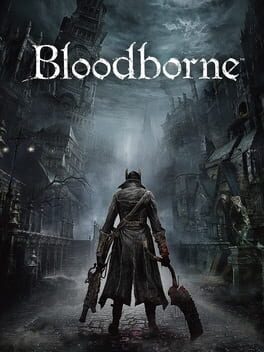
Bloodborne
- Developer
- FromSoftware, Japan Studio
- Publisher
- Sony Interactive Entertainment
27 archived facts 3 topics 2 sources Last reviewed Sep 2026
14 Facts From the Development of Bloodborne
- #002
Japan Studio, a subsidiary of Sony Interactive Entertainment, approached FromSoftware about cooperative development on a title, and director Hidetaka Miyazaki raised the possibility of making a game for eighth-generation consoles. The concept of Bloodborne grew out of that exchange.
- #004
Bloodborne had no connections to FromSoftware's earlier titles, though director Hidetaka Miyazaki acknowledged that it "carries the DNA of Demon's Souls and its very specific level design".
- #006
Development of Bloodborne ran in parallel with the development of Dark Souls II.
- #007
Bloodborne's Victorian Gothic setting drew partly on the novel Dracula and on the architecture of locations in Romania and the Czech Republic.
- #009
H. P. Lovecraft's Cthulhu Mythos series of surreal horror stories was enjoyed by Miyazaki, who applied similar themes to Bloodborne.
- #011
Miyazaki wanted to build a game set in an era like those of such novels, with everything as detailed as possible, and felt it was only possible on eighth generation hardware.
- #013
Bloodborne was a PlayStation 4 exclusive rather than a cross-generation release because of the need for high-end hardware and because the PlayStation 4 was presented to the company first.
- #016
Bloodborne's team deliberately avoided raising the difficulty above that of their previous games, believing it would make the game "pretty much unplayable for anyone".
- #018
To balance the difficulty, Bloodborne's team built a more aggressive combat system centered on both action and strategy, and reworked the death penalties from the Souls games so the title would not be classed as one for hardcore gamers.
- #020
Adding guns to Bloodborne was one of the team's harder decisions; they were included because they suited the setting and would be less accurate than modern firearms, replacing the shields of earlier Souls titles.
- #024
Development of Bloodborne's soundtrack took roughly two and a half years.
- #025
Screenshots and a gameplay trailer for Bloodborne leaked online weeks before its official reveal under the title Project Beast.
- #026
At the time of the Project Beast leak, many people believed it might be connected to Demon's Souls.
- #027
Miyazaki later said Bloodborne was never intended as Demon's Souls II, because Sony Computer Entertainment wanted a new intellectual property for the PlayStation 4.
Sources & editorial notes
Sources for the entries on this page
- Wikipedia Bloodborne — Wikipedia
Information from external sources is independently selected, consolidated and edited by Arka Evren. Sources are listed for verification and further reading. Encyclopedia text is used under its licence (CC BY-SA). How we work