GAME · 2018
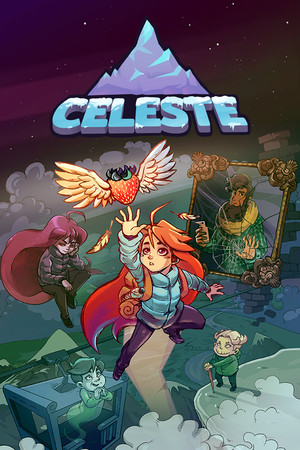
Celeste
- Platforms
- Microsoft Windows, macOS
35 archived facts 5 topics 1 source Last reviewed Sep 2026
26 Facts From the Development of Celeste
- #001
Celeste originated as a PICO-8 prototype that Maddy Thorson and Noel Berry built in three days in August 2015, initially called "Everest".
- #002
Thorson and Berry chose a minimal core gameplay approach with added mechanics to create complexity, partly because of time limits, and felt a character climbing a mountain suited that design.
- #003
Celeste was conceived from the start as a single-player adventure, and lessons from Thorson's earlier game TowerFall (2013) were applied to its development.
- #004
After the PICO-8 version, later named Celeste Classic, the team sought more development time and fewer restrictions to expand Celeste; the Classic version became a hidden minigame in the final game, with Thorson producing and Berry as lead programmer, and the team underwent crunch in the last months.
- #005
Celeste's gameplay drew on several earlier titles, with Thorson and Berry naming Metroid (1986), Donkey Kong Country 2 (1995) and Kero Blaster (2014) as influences.
- #006
Thorson described Super Mario Bros. 3 (1988) as the single biggest inspiration for Celeste, especially its method of problem-solving.
- #007
Shacknews and Kill Screen compared Celeste's level design to the levels Thorson had made in Super Mario Maker (2015).
- #008
Celeste developer Thorson aimed for Madeline's moveset to stay minimal while capturing the feel of bouldering, which led to her limited stamina when climbing walls.
- #009
The stamina system in Celeste was further shaped by the importance of vertical space that came with the mountain-climbing theme.
- #010
Because Celeste's gameplay demanded more precise control, its developers avoided a pre-existing physics engine so they could predetermine outcomes in certain situations.
- #011
Celeste's precise gameplay also shaped its art style, as the team believed pixel art could convey information to the player more clearly and was already familiar with the style.
- #012
During the design phase of Celeste, the team aimed for a game that felt difficult yet fair, altering or cutting levels and mechanics they judged unfairly hard.
- #013
Celeste's design prioritized matching what the player intended to do over demanding near-perfect execution, although later challenges call for greater precision.
- #015
Celeste's mechanics were built so the game can be hardcore or forgiving depending on player preference, and its harder challenges were designed to have clearer solutions.
- #016
Celeste's Assist Mode was conceived after its developers observed public discussion around Cuphead (2017), in which many players found that game too difficult or unforgiving.
- #017
The accessibility feature in Celeste was first called "Cheat Mode", but Thorson considered that label too judgmental and renamed it "Assist Mode".
- #020
Celeste's story was written by Thorson, who drew on her own depression and anxiety after reaching a breaking point during development.
- #021
The Celeste developers were surprised by how large a role the story played, and they delayed the game to do the story justice, connect it properly to the gameplay, and make Madeline's narrative experiences reflect the player's gameplay experiences.
- #022
Celeste's ending remained undecided through most of its development; developer Thorson knew early that Madeline would fall down the mountain before reaching the summit, but not how that would be framed within the story.
- #026
Lena Raine composed the majority of Celeste's soundtrack.
- #027
For most of Celeste's B-side levels, additional composers created remixes of Lena Raine's music.
- #028
Lena Raine's score for Celeste informed the visual design of some levels.
- #032
The Farewell expansion for Celeste began development after a long break following the game's release, and was made alongside the team's next project, Earthblade.
- #033
Farewell was first planned as a self-contained set of very difficult levels, but its scope expanded to add a new narrative that continues the base game's story.
- #034
Farewell was released at no additional cost; according to Thorson, this was possible only because Celeste had been financially successful.
- #035
Raine returned to compose the soundtrack for Celeste's Farewell expansion.
Sources & editorial notes
Sources for the entries on this page
- Wikipedia Celeste (video game) — Wikipedia
Information from external sources is independently selected, consolidated and edited by Arka Evren. Sources are listed for verification and further reading. Encyclopedia text is used under its licence (CC BY-SA). How we work