GAME · 2008
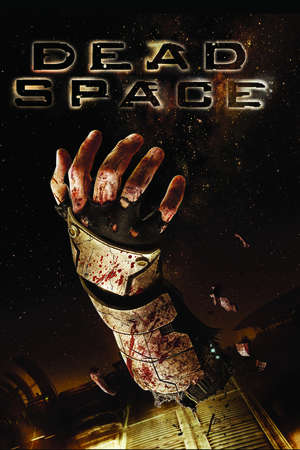
Dead Space
- Developer
- Visceral Games
- Publisher
- Electronic Arts
- Platforms
- PlayStation 3, Microsoft Windows
41 archived facts 5 topics 1 source Last reviewed Sep 2026
All facts (41)
- #001
Dead Space was created by Glen Schofield, who was working at EA Redwood Shores at the time and aimed to make what he considered the most frightening horror game possible.
- #002
Glen Schofield's concept for Dead Space drew on Resident Evil 4 (2005) and the Silent Hill series.
- #003
During its early stage, Dead Space was known as Rancid Moon.
- #004
To get a playable concept ready in time, the Dead Space prototype was developed on original Xbox hardware, with the team deciding it was better to have something playable before planning how to make the game work on next-generation hardware.
- #005
Dead Space was approved by Electronic Arts after the team showed a vertical slice equivalent to one level, at which point all the basic gameplay elements had been settled upon.
- #006
According to co-producer Chuck Beaver, the pre-greenlight work on Dead Space lasted 18 months, and after approval the team used their vertical slice experience to build eleven more levels in ten months.
- #007
Although Dead Space was heavily influenced by Resident Evil 4, Schofield wanted it to be more active, since having to stop and shoot in Resident Evil 4 often broke his immersion. The gameplay balance was aimed between the faster pace of third-person shooters and the slower pace of horror games.
- #008
Resource management in Dead Space was repeatedly tuned and balanced so the game would feel tense without being unfair or frustrating.
- #009
Immersion was central to Dead Space, which placed its HUD elements inside the game world and played story sequences such as cutscenes and audio or video logs in real time.
- #010
Dead Space's standard HUD elements were built into the environment and explained through contextual or overt in-game means; the team felt this approach made the setting better realised and conveyed.
- #011
A quick turn option was added and cut several times during Dead Space's production, and it was ultimately dropped because binding it to the last free controller buttons made test players turn by accident in dangerous situations.
- #012
The Windows version of Dead Space went through several control-scheme configurations, as the team sought the best possible setup for mouse and keyboard.
- #013
Dead Space was built around a founding gameplay principle called "strategic dismemberment", which focused on severing enemies' limbs to kill them.
- #014
This limb-severing approach set Dead Space apart from most shooters, which emphasized headshots or allowed players to fire volleys of weapons at enemies.
- #015
Weapons accuracy and enemy behaviour in Dead Space were tuned around the strategic dismemberment concept; enemies enraged by traditional headshots charged the player instead of dying instantly.
- #016
A two-person co-op multiplayer option for Dead Space was prototyped over a three-month period but was cut so the team could focus on a polished single-player experience.
- #017
Dead Space used a procedural element for enemy placement so that enemies appeared at random points within a room, preventing players from memorising and counterattacking against patterns.
- #018
Dead Space included a mechanism controlling where enemies spawned from locations such as vents, based on the player's position.
- #019
A Dead Space sequence in which Isaac is ambushed and dragged down a hallway by a large tentacle stalled development for a month. The team first planned it as an instant death, then reworked the attack into an interactive one that Isaac had to escape, requiring dedicated mechanics and animations.
- #020
Schofield admitted that the way and order he assigned tasks stopped the tentacle sequence from working properly. To fix it, the Dead Space team moved to a "layered" production structure that finished one section at a time, and cut two other unspecified pieces to allow the sequence to work.
- #021
For Dead Space, the character animation was designed to be realistic, with extensive transitional animations smoothing shifts between stances for the player, other characters and enemies.
- #022
Dead Space's zero-G sections were developed alongside the setting, and the team researched real space exploration and survival to achieve the right atmosphere and movement. Implementing zero-G was difficult, a process Beaver described as "months and months and months of work".
- #023
Isaac required a separate animation set for zero-G environments in Dead Space, and his sluggish movement was created by animation director Chris Stone performing an exaggerated stomping walk with bungee cables attached to his legs.
- #024
Dead Space was originally titled Rancid Moon, and its early concept was set on a prison planet in outer space, similar to Escape from New York.
- #025
The development team behind Dead Space liked the space element of the early concept but disliked the prison setting.
- #026
For Dead Space, the story was defined from the outset and the levels and objectives were built around it, in contrast with many game productions at the time where story had low priority.
- #027
Dead Space's first solid concept involved humans mining planets, with the twist that one mined planet holds something dangerous.
- #028
The themes of religion and rogue states beyond Earth's control were chosen for Dead Space to ground its science fiction narrative.
- #029
Unitology was created five months into Dead Space's development, after Schofield felt something was missing; having read about the Chicxulub crater, Schofield wrote the original Marker as the object that caused the crater and built Unitology around it.
- #030
The specifics of Unitology in Dead Space were devised by Wanat and Beaver, who produced pieces of the religious lore as the scenario required.
- #031
The main concept behind Dead Space's Unitology was to examine a religion or cult growing out of control, along with the corruptive influence of bad people through religion; when later compared to Scientology, it was described as representing irrational thought and action prompted by the unknown.
- #032
A key early inspiration for the tone of Dead Space was the film Event Horizon. Schofield cited its visual storytelling and camera work, including a scene of gore that the on-screen character misses, as an early influence.
- #033
The French horror film Martyrs was another strong influence on Schofield for Dead Space.
- #034
Dead Space referenced other science fiction movies: Isaac's struggle was compared to Ellen Ripley from Alien, the characters' dementia referenced Solaris, and the desperation mirrored that of Sunshine.
- #035
The scenario for Dead Space was a collaborative effort between Warren Ellis, Rick Remender and Antony Johnston. Ellis created much of the background lore and groundwork for the game.
- #036
Ellis's draft was given to Rick Remender, who wrote out planned scenes, added scenes of his own and performed rewrites before the script was handed to Antony Johnston.
- #037
Much of Antony Johnston's work on Dead Space focused on dialogue that had to fit around key events already solidified, and he contributed heavily to the audio logs, using them to create additional storyline and flesh out the narrative.
- #038
Isaac Clarke's name in Dead Space referenced two science fiction authors, Isaac Asimov and Arthur C. Clarke.
- #039
Dead Space's protagonist Isaac was designed as an average, non-military person untrained for combat or survival, with his armour and weapons reflecting an untrained engineer: the suit is a work outfit for conditions staff likened to an oil rig in space, and the weapons are mining tools.
- #040
The ship environments in Dead Space deliberately avoided traditional science fiction, which the developers saw as overly clean and lacking function, and instead emulated Gothic architecture to achieve a realistic feel that fit their practical and aesthetic vision.
- #041
Dead Space's lighting was based on light from the strong lamps used in dentistry, and the large number of familiar environments and designs made the Ishimura a believable living environment while increasing the horror elements for players.
Sources & editorial notes
Sources for the entries on this page
- Wikipedia Dead Space (2008 video game) — Wikipedia
Information from external sources is independently selected, consolidated and edited by Arka Evren. Sources are listed for verification and further reading. Encyclopedia text is used under its licence (CC BY-SA). How we work