GAME · 1997
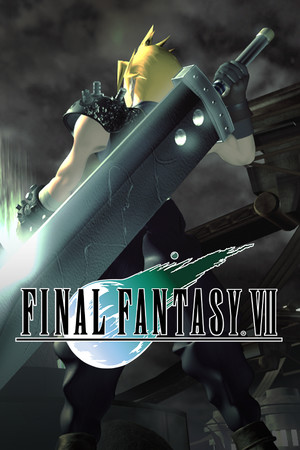
Final Fantasy VII
- Developer
- Square
- Publisher
- Square, Square Enix
- Platforms
- Microsoft Windows
- Original title
- Fainaru fantajî VII
40 archived facts 4 topics 1 source Last reviewed Sep 2026
29 Facts From the Development of Final Fantasy VII
- #001
As with the previous installment, series creator Hironobu Sakaguchi reduced his role to producer on Final Fantasy VII and granted others a more active role in development, including Yoshinori Kitase, one of the directors of Final Fantasy VI.
- #002
Final Fantasy VII was initially planned as a 2D game for Nintendo's Super Nintendo Entertainment System, and an early 2D prototype was created.
- #003
Development of Final Fantasy VII was postponed so the team could help finish Chrono Trigger, and discussions for Final Fantasy VII resumed in 1995 once Chrono Trigger was completed.
- #004
Square shifted development of Final Fantasy VII onto the PlayStation after weighing technical and economic problems with Nintendo's hardware and being impressed by CD-ROM storage capacity compared with Nintendo 64 cartridges.
- #005
A Nintendo 64 version of Final Fantasy VII was tested and then discarded because rendering the Behemoth monster's 2000 polygons strained the hardware and caused a low frame rate.
- #006
Square's choice of platform for Final Fantasy VII was influenced by a highly successful tech demo based on Final Fantasy VI using Softimage 3D software and by the rising price of cartridge-based games, which was limiting Square's audience.
- #007
During development of Final Fantasy VII, the staff considered a first-person camera for world map exploration with enemies visible on the terrain, and also wanted parties of up to 10 characters in battle scenes.
- #008
Final Fantasy VII's gameplay system stayed largely the same as Final Fantasy V (1992) and VI, though it placed greater emphasis on player control, and the initial plan called for shifting camera angles in battle.
- #009
As producer of Final Fantasy VII, Sakaguchi focused much of his effort on the battle system and proposed the Materia system to allow more character customization than earlier Final Fantasy games, since Materia could be reconfigured between battles.
- #010
Artist Tetsuya Nomura contributed to Final Fantasy VII's gameplay by designing the Limit Break system as an evolution of Final Fantasy VI's Desperation Attacks; the Limit Breaks served a gameplay purpose while also evoking each character's personality in battle.
- #011
Final Fantasy VII was one of the most expensive video game projects of its time, with an estimated cost of US$40 million, equivalent to $61 million when adjusted for inflation in 2017.
- #012
Final Fantasy VII was described as having the largest development team of any game up to that point, as video game development teams were usually only 20 people.
- #013
Square retained its passion-based game development approach for Final Fantasy VII, using extensive capital from earlier commercial successes to focus on quality and scale rather than budget constraints.
- #018
According to Nomura, the main scenario of Final Fantasy VII was not finished when he joined, so he drew the hero and heroine first and then developed further characters while inventing their details.
- #021
In Sakaguchi's early draft of Final Fantasy VII, the protagonists belonged to a group seeking to destroy Mako reactors, as in the final game, but were chased by a detective named Joe, and they ultimately destroyed the city.
- #023
Although the planned New York concept was dropped, Final Fantasy VII still represented a drastic shift from earlier entries by abandoning Medieval fantasy elements for an 'ambiguously futuristic' world; Square later used the New York setting in Parasite Eve in 1998.
- #024
Kazushige Nojima joined Final Fantasy VII as scenario writer after completing Bahamut Lagoon in 1996.
- #025
The team decided to create a central protagonist for Final Fantasy VII, departing from the ensemble cast of equally important playable characters in Final Fantasy VI.
- #026
Contains a major spoiler — show
Final Fantasy VII's developers decided to kill the heroine Aerith because her death would be the most devastating and consequential. The decision followed a proposal by Nomura, after Sakaguchi said the game needed to portray death rather than simply make 'life' the theme.
- #027
Contains a major spoiler — show
Kitase and Nojima planned for most of Final Fantasy VII's main cast to die shortly before the final battle, but Nomura vetoed the idea because he believed it would weaken the impact of Aerith's death.
- #029
Final Fantasy VII's scenario was written by Nojima, who was chosen because Kitase had been impressed by his earlier work on Heracles no Eikō III: Kamigami no Chinmoku (1992). Nojima's task was to unify the team's ideas into a cohesive narrative.
- #030
To give Final Fantasy VII's characters a more realistic feel, Nojima wrote scenes in which they sometimes argued and raised objections. This slowed the story's pace but added depth to the characters.
- #032
Masato Kato, initially unaffiliated with Final Fantasy VII, was brought in to flesh out less important story scenes and wrote several late-game scenes, among them the Lifestream sequence and Cloud and Tifa's conversation before the final battle. He wrote these scenes to his own tastes without consulting others, which he later regretted.
- #033
Final Fantasy VII was the first entry in the series to use 3D computer graphics, a shift made possible by the move from the SNES to next-generation consoles.
- #034
Because the developers knew from the start that Final Fantasy VII would be a fully 3D game, detailed designs, a finalized script and storyboards were already in place before actual development began.
- #037
Final Fantasy VII marked a shift from 2D graphics to 3D environments overlaid on pre-rendered backgrounds, accompanied by a focus on a more realistic presentation.
- #038
In Final Fantasy VII, environments shifted with camera angles and character model sizes changed based on their place in the environment and distance from the camera, giving a sense of scale.
- #039
The highly cinematic storytelling style of Final Fantasy VII, which contrasted with Square's previous games, was attributed to Kitase, a fan of films with an interest in the parallels between film and video game narrative.
- #040
Character movement during in-game events in Final Fantasy VII was handled by the character designers in the planning group, who taught themselves motion work; the first characters the team worked with were Cloud and Barret.
Sources & editorial notes
Sources for the entries on this page
- Wikipedia Final Fantasy VII — Wikipedia
Information from external sources is independently selected, consolidated and edited by Arka Evren. Sources are listed for verification and further reading. Encyclopedia text is used under its licence (CC BY-SA). How we work