GAME · 2018
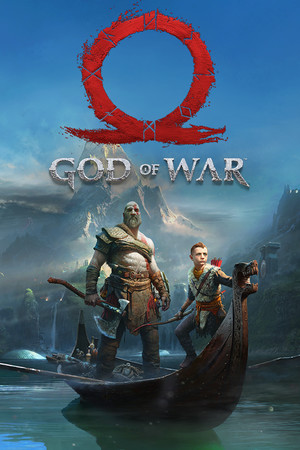
God of War
- Developer
- Santa Monica Studio, Jetpack Interactive
- Publisher
- Sony Interactive Entertainment, PlayStation PC LLC
- Platforms
- Microsoft Windows
31 archived facts 5 topics 1 source Last reviewed Sep 2026
All facts (31)
- #001
Development on the next God of War began in 2014, a fact confirmed by Santa Monica Studio creative director Cory Barlog at the inaugural PlayStation Experience on December 6, 2014. Barlog described the project as in early development and said it would not be a prequel but possibly a reboot.
- #002
Concept art leaked in April 2016 showing Kratos in the world of Norse mythology, a setting series creator David Jaffe had originally considered after Kratos eliminated the Greek gods. The game was officially announced at E3 2016 with a gameplay demo that confirmed the Norse setting.
- #003
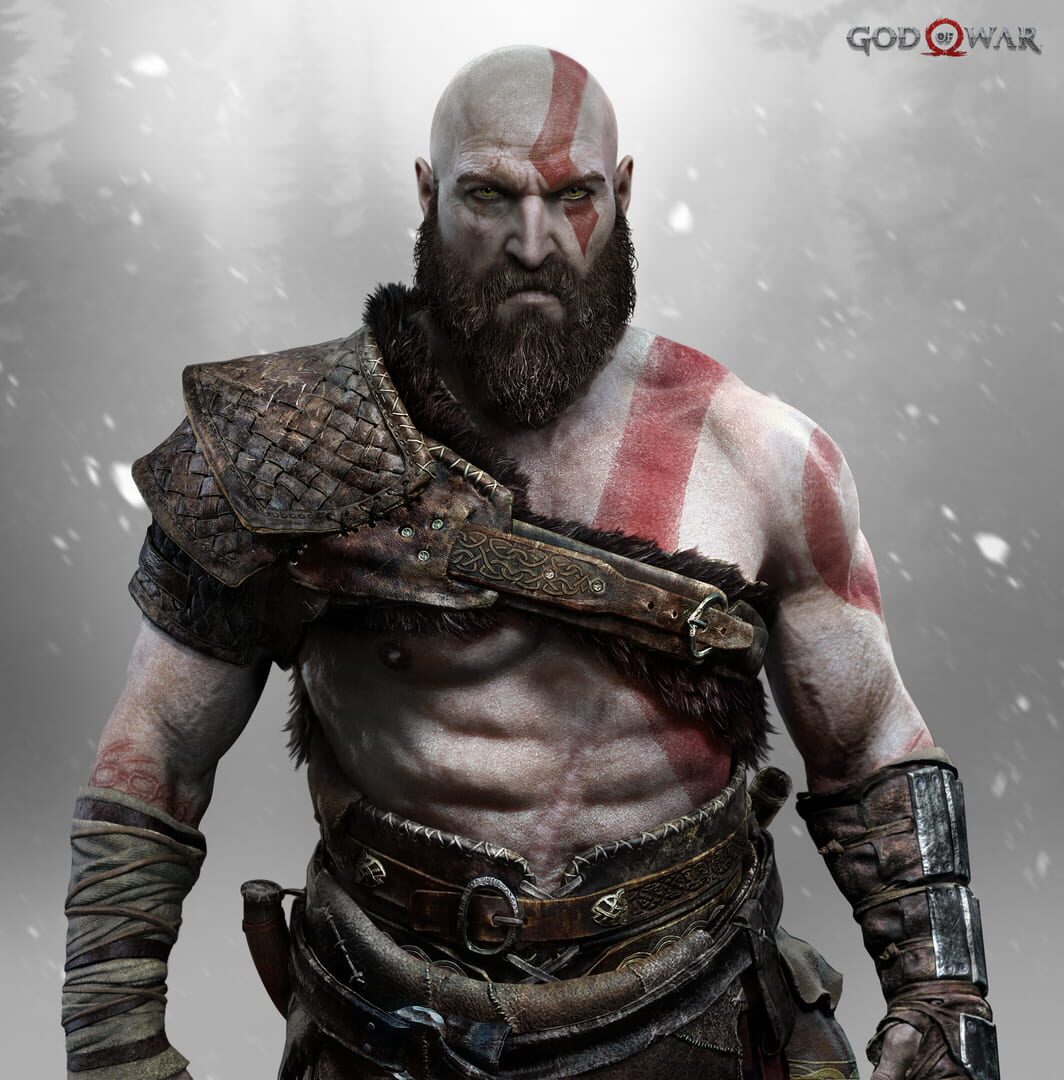
The E3 2016 demo showed a fully bearded Kratos teaching his son to hunt, with the pair also battling a troll, and ended by revealing the title God of War and confirming development for the PlayStation 4.
- #004
The E3 2016 announcement confirmed that Cory Barlog had returned to the series as game director for the new installment, his fifth God of War game. Barlog had been a major contributor to the series since the original God of War in 2005, most notably as director of God of War II in 2007.
- #005
Barlog said the writing team read the Prose Edda to study how Norse myths were translated and told, and they found ways to parallel elements from those myths to fit their story, as they had done with Greek mythology in earlier games.
- #006
Before choosing Norse mythology, Barlog considered Egyptian mythology, but half the team favored it; he opted for the Norse setting because Egypt was less isolated and less barren, which he felt would keep the focus on Kratos and avoid distracting from the central theme of a stranger in a strange land.
- #007
Barlog explained that Kratos traveled from Greece to Norway after God of War III because different cultures' belief systems coexisted but were separated by geography; he clarified that Kratos did not destroy the entire world, only the portion ruled by the Greek pantheon, and that the newer game predated the Vikings, taking place when their gods walked the Earth.
- #008
God of War does not include a morality system or branching story, so every player experiences the same narrative, and the developers confirmed that controversial minigames from earlier entries, including one featuring sex, would not return.
- #009
The enemy count in God of War was raised to as many as 100 on-screen, though that limit is never reached, compared with up to 50 in God of War III and Ascension.
- #010
Gameplay features such as jumping, swimming and instant-death platforming challenges were removed from God of War because the camera sits closer to Kratos, and the team dropped multiplayer, which Ascension had introduced, to concentrate on the single-player experience.
- #011
God of War is presented as one continuous shot, with no camera cuts, loading screens or fades between gameplay and cutscenes. According to Barlog, roughly forty percent of the team initially disagreed with the approach because it added work and production demands, and it had not previously been used in a three-dimensional AAA game.
- #012
Barlog had pitched a one-shot camera while at Crystal Dynamics on Tomb Raider (2013) but was turned down; Sony was far more supportive of his creative ideas for God of War. After the team played the finished game, Barlog said they came to understand his vision and felt it was a feature they should keep using.
- #013
Barlog and lead level designer Rob Davis drew influence from the Resident Evil series, citing Resident Evil 4 (2005)'s blend of poised camera exploration and scavenging and Resident Evil 7 (2017)'s strong vision from a team making bold decisions that audiences followed.
- #014
Barlog noted initial disagreement over camera distance on God of War: he wanted it close, while the combat team preferred it further back, as in the Assassin's Creed and Batman: Arkham games, and he eventually persuaded the team to adopt the close camera.
- #015
God of War's axe was selected to give the game a more grounded direction, according to lead gameplay designer Jason McDonald, who had worked on the series since its original entry. The team initially struggled to make the weapon distinctive until they conceived of throwing the axe and having it return to Kratos, after which the design came together.
- #016
Designers Anthony DiMento and Luis Sanchez said God of War's level design and exploration drew influence from Bloodborne (2015), aiming to let the world breathe and expand player discovery through micro-loops that unlock paths and shortcuts. A dedicated exploration team was formed for this purpose.
- #017
God of War's side quests were organized into a four-tier system: top-tier quests from Brok and Sindri, next from wayward spirits, then treasure maps and artifacts, and bottom-tier milestones such as killing all of Odin's ravens. Brok and Sindri's quests became dungeons, while the others supported exploration, with Kratos's motivations ranging from obtaining more powerful gear to teaching Atreus life lessons through the spirits' stories.
- #018
God of War was developed for the standard PlayStation 4, though Barlog confirmed it would take advantage of the PlayStation 4 Pro's extra power. On a Pro, players could choose resolution mode, running at a target 30 frames per second in 4K with checkerboard rendering, or performance mode, targeting 60fps at 1080p.
- #019
In late December 2016, Barlog confirmed that God of War could be played from beginning to end. He later stated its story would take 25–35 hours to complete, far longer than the roughly 10 hours of each of the previous four main installments.
- #020
In January 2018, the release date of God of War was confirmed for April 20, 2018, and a trailer released at that time showed that the mythological character Mímir would have a role.
- #021
During early development of God of War, some team members argued that Kratos was "annoying" and that his story had run its course, and there was talk of using a different protagonist. According to Barlog, keeping Kratos required a lot of convincing.
- #022
The creator of God of War said he did not want to simply reboot the franchise by retelling the origin story from the beginning.
- #023
For God of War, the creator aimed to reimagine the gameplay and offer players a fresh perspective and a new tactile experience.
- #024
The creator of God of War sought to delve deeper into Kratos's emotional journey and the drama that unfolds when an immortal demigod decides to change.
- #025
Barlog cited the canceled live-action Star Wars television series developed by George Lucas in the 2000s as an influence on God of War; while working at LucasArts he had been allowed to visit Skywalker Ranch and read scripts planned for the show.
- #026
According to Barlog, the bond between Kratos and his son is central to God of War, and he described the game as Kratos teaching his son how to be a god while his son teaches Kratos how to be human again.
- #027
Barlog compared the shift in Kratos's portrayal to the Marvel Comics character Hulk, saying the team had already told the Hulk's story and now wanted to tell Bruce Banner's; Studstill said the franchise needed to evolve into something more emotional for older gamers.
- #028
Christopher Judge, best known for playing Teal'c on Stargate SG-1, took over as the voice of Kratos in God of War, replacing Terrence C. Carson, who had voiced the character since the original game.
- #029
Terrence C. Carson said of his replacement as Kratos that "Sony went in a new direction."
- #030
Terrence C. Carson later said he understood the reason for the change and that Christopher Judge's casting made sense for what Sony wanted to do.
- #031
Terrence C. Carson said that losing acting jobs is part of the business, but that he felt a lack of respect because no one at Sony contacted him.
Sources & editorial notes
Sources for the entries on this page
- Wikipedia God of War (2018 video game) — Wikipedia
Information from external sources is independently selected, consolidated and edited by Arka Evren. Sources are listed for verification and further reading. Encyclopedia text is used under its licence (CC BY-SA). How we work