GAME · 2004
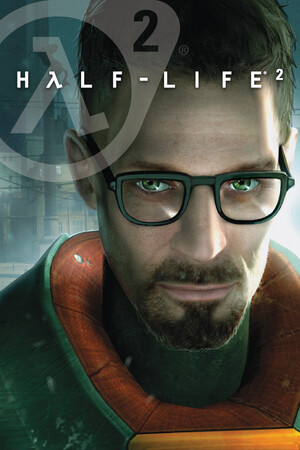
Half-Life 2
- Platforms
- Microsoft Windows, PlayStation 3, macOS
16 archived facts 3 topics 1 source Last reviewed Sep 2026
All facts (16)
- #001
Development of Half-Life 2 started in June 1999, six months after the original Half-Life was released.
- #002
Half-Life 2 was developed by a team of 82 people, or around 100 including voice actors.
- #003
Valve president Gabe Newell wanted Half-Life 2 to redefine the FPS genre, saying that if it was not viewed as the best PC game of all time it would disappoint most of the team.
- #004
Gabe Newell gave the Half-Life 2 team no deadline and a "virtually unlimited" budget, promising to fund the project himself if necessary, while they used Valve's new in-house Source engine, developed simultaneously.
- #005
As an experiment, Valve made a minigame called Zombie Basketball, in which players threw zombies through hoops using a physics-manipulating gun.
- #006
In late 2001, Valve started work on a showreel intended to be shown at E3 the following year, with the aim of demonstrating the project.
- #007
The showreel presented to Newell featured physics, environments including the Borealis, and a dialogue-heavy scene with the scientist Dr. Kleiner.
- #008
In September 2002, the Half-Life 2 team completed a second showreel that included a buggy race along the City 17 coast, headcrabs on a pier, an alien strider attacking the city, and a shortened Kleiner sequence.
- #009
In October 2002, Newell told the Half-Life 2 team that the game would be announced at E3 2003 and released by the end of that year.
- #010
As with the original Half-Life, the Half-Life 2 team split into "cabals" that worked on different levels.
- #011
For Half-Life 2, designers built levels using placeholder shapes and surfaces, which artists then worked on.
- #012
Valve announced Half-Life 2 at E3 2003, showing off its characters, animation and physics; the reveal was well received and the game earned the E3 Game of the Show award.
- #013
After the Half-Life 2 leak, Valve implemented new policies to protect against leaks, including requiring journalists to attend their office to play the game before release.
- #014
After returning from Christmas in 2004, the Half-Life 2 team worked long hours under stressful conditions with no guarantee the game would be finished soon, while development cost $1 million per month.
- #015
By March 2004, the Half-Life 2 team had produced a version playable from start to finish and paused development for a week to play through it.
- #016
Major changes to Half-Life 2 at that stage included cutting the Borealis, swapping the jet ski for an airboat, and introducing the physics-manipulating gravity gun earlier.
Sources & editorial notes
Sources for the entries on this page
- Wikipedia Half-Life 2 — Wikipedia
Information from external sources is independently selected, consolidated and edited by Arka Evren. Sources are listed for verification and further reading. Encyclopedia text is used under its licence (CC BY-SA). How we work