
ArkaEvren
L.A. Noire

GAME · 2011 · AUSTRALIA

L.A. Noire

Developer
Team Bondi
Platforms
PlayStation 3, Microsoft Windows

52 archived facts 8 topics 2 sources Last reviewed Nov 2026
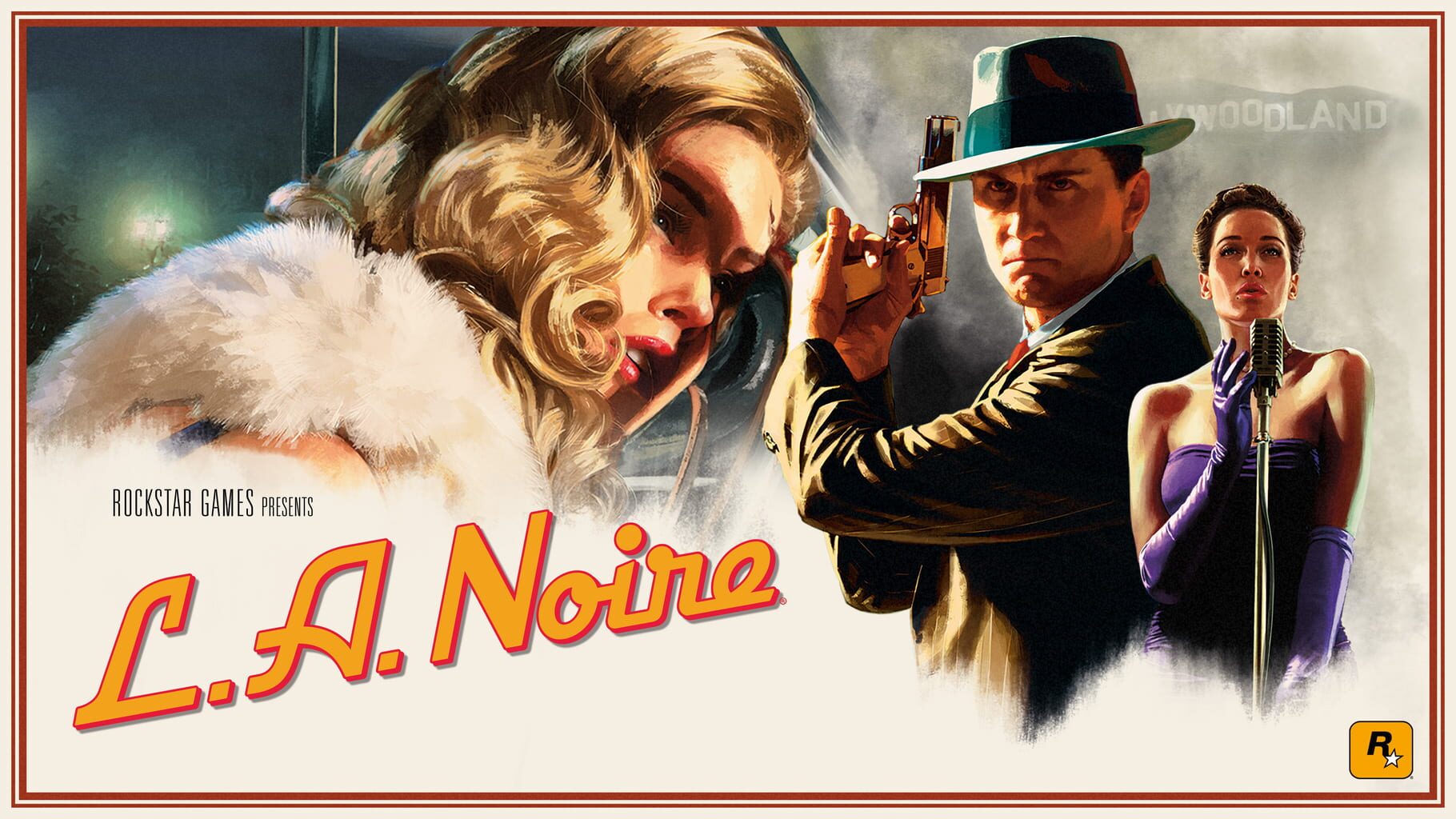
  • L.A. Noire — production image

52 Interesting Facts About L.A. Noire

Interesting Facts (14)

  1. #001

    Even though L.A. Noire was critically acclaimed and sold well, the game's lengthy development and use of cutting edge facial capture technology caused the studio, Team Bondi, to close down shortly after its release.

    INTERESTING FACTS · SOURCED

  2. #002

    This was the first video game to be shown at the Tribeca Film Festival. It was shown as an hour-long film, followed by a session where the audience could ask questions to the developers about the making of the game.

    INTERESTING FACTS · SOURCED

  3. #003

    In order to correctly recreate post-war Los Angeles, the developers studied the photographs of 1940s aerial photographer Robert Spence.

    INTERESTING FACTS · SOURCED

  4. #004

    'The Red Lipstick Murder' was adapted from the unsolved case of army nurse Jeanne French, who was brutally murdered in 1947. The letters 'B.D.' written in lipstick on French's body led to a connection being drawn with the era's famous 'Black Dahlia' murder. The game successfully captures this mysterious atmosphere.

    INTERESTING FACTS · SOURCED

  5. #005

    The 'Golden Butterfly' case adheres closely to the real story of Dorothy Montgomery, who was murdered in Los Angeles on 3 May 1947. A golden butterfly brooch torn from her blouse was found beside Montgomery's body. Authorities initially linked the savagery to the murder of Elizabeth Short.

    INTERESTING FACTS · SOURCED

  6. #006

    'The Silk Stocking Murder' is a loose adaptation of the real case of Rosenda Mondragon, who was murdered in 1947. 'The White Shoe Slaying', meanwhile, was inspired by the story of Laura Trelstad, who lost her life the same year. 'The Studio Secretary Murder' is likewise based on the 1947 death of Evelyn Winters.

    INTERESTING FACTS · SOURCED

  7. #007

    Lead actor Aaron Staton and Connie Fletcher, who plays his wife Marie in the game, are also married in real life. This gave a natural boost to the chemistry between the characters.

    INTERESTING FACTS · SOURCED

  8. #008

    The original interrogation options were designed as 'Coax', 'Force' and 'Lie'. They were later changed to 'Truth', 'Doubt' and 'Lie'. Players found it odd that Cole Phelps became excessively aggressive with the 'Doubt' option. In the Remastered versions these options were updated to 'Good Cop', 'Bad Cop' and 'Accuse'.

    INTERESTING FACTS · SOURCED

  9. #009

    The remastered version of L.A. Noire was announced on 7 September 2017. Three different versions were planned: 1080p and 4K resolution support for Xbox One and PS4, new touch controls for Nintendo Switch, and seven cases adapted for VR for the HTC Vive. All versions were released on 14 November 2017, and it was said that the move was made to gauge interest in a sequel.

    INTERESTING FACTS · SOURCED

  10. #010

    The Fraud and Burglary desks were cut from the game because they did not fit on a single Blu-ray disc. The game's director, Brendan McNamara, stated that a total of eleven cases for these two desks had been developed up to a certain point. The 'six months later' text between the Traffic and Homicide desks explains this gap.

    INTERESTING FACTS · SOURCED

  11. #011

    The pencil Cole Phelps uses is the 'Venus' model by the US Pencil Company. This small detail is an indication that the character was equipped with accessories appropriate to his era.

    INTERESTING FACTS · SOURCED

  12. #012

    The traffic desk case 'A Slip of the Tongue' follows the same plot as the 'The Big Deal' episode of the 1956 series Dragnet. Both deal with a printer committing forgery on ownership documents.

    INTERESTING FACTS · SOURCED

  13. #013

    The vice desk case 'Reefer Madness' is based on the 1936 propaganda film of the same name. That film is known for depicting marijuana use in an extremely exaggerated and fear-filled way.

    INTERESTING FACTS · SOURCED

  14. #014

    The shop to the right of Frank Morgan's apartment is named 'Geiger's Rare Books'. This is a reference to Raymond Chandler's famous detective novel 'The Big Sleep'.

    INTERESTING FACTS · SOURCED

Production Story (20)

  1. #015

    Bunco and Burglary desks were cut due to not being able to fit on one Blu-ray disc. Further trouble with this was with the Xbox 360 version, which came on three discs, and the Complete Edition was on four discs. Game director/writer Brendan McNamara mentioned that there were eleven cases in total for both desks that were worked on to an extent. This explains the "six months later" text in the gap between the Traffic and Homicide desks. Harold Caldwell, acted by Brandon Keener, was to be the partner on the Burglary desk. Him having worked with Cole is still referenced in the case "Manifest Destiny." He also appears in the street crime "Against the Odds."

    PRODUCTION STORY · SOURCED

  2. #016

    There was originally a cut system for the street crimes, where if you performed poorly on a case, the captain would yell at you and make you go out on the street busting criminals. You would have had to do enough of these to get the chance to be offered another case. It was cut for being too much of a distraction. This is still heard in the cutscenes where you perform poorly, but the street crimes were reworked to only become side missions.

    PRODUCTION STORY · SOURCED

  3. #017

    The original questioning options were written as "Coax", "Force" and "Lie". They were later changed to "Truth", "Doubt" and "Lie". People found it odd that Cole Phelps went very aggressive with the Doubt approach. In the remastered versions, the options were changed to "Good Cop", "Bad Cop" and "Accuse".

    PRODUCTION STORY · SOURCED

  4. #018

    Even though L.A. Noire was critically acclaimed and sold well, the game's lengthy development and its use of cutting-edge facial capture technology caused the studio, Team Bondi, to close down shortly after its release.

    PRODUCTION STORY · SOURCED

  5. #019

    The script for the game was 2,200 pages long.

    PRODUCTION STORY · SOURCED

  6. #020

    The game took seven years to develop.

    PRODUCTION STORY · SOURCED

  7. #021

    Many of the game's cases are based on real-life crimes that occurred in 1940s Los Angeles. "The Driver's Seat" is loosely based on the real-life 1947 disappearance of Eugene White. "A Marriage Made in Heaven" was inspired by the true story surrounding the death of Jay Dee Chitwood in 1944; it may also have been inspired by the movie Double Indemnity (1944), in which the two protagonists intend to kill the female lead's spouse to claim the insurance money. "The Red Lipstick Murder" is heavily influenced by the murder of Jeanne French, a 45-year-old army nurse who was found stripped and stomped to death early in the morning in February 1947. The case was never officially solved but was supposedly linked to the infamous "Black Dahlia" murder because the initials "B.D." were written in lipstick on French's body and the murder took place just weeks after the murder of Elizabeth Short (Black Dahlia), which also occurred in 1947 Los Angeles. "The Golden Butterfly" is heavily based on the real-life murder of Dorothy Montgomery on May 3, 1947, in Los Angeles; Dorothy was mutilated, which is why authorities first thought there was a connection to Elizabeth Short's murder, and a golden butterfly brooch that belonged to her and had been torn from her blouse was found near her body. "The Silk Stocking Murder" is loosely based on the real 1947 murder of Rosenda Mondragon. "The White Shoe Slaying" is loosely based on the real-life 1947 murder of Laura Trelstad. "The Studio Secretary Murder" is loosely based on the real-life 1947 murder of Evelyn Winters.

    PRODUCTION STORY · SOURCED

  8. #022

    After the game's release, former staff members came forward talking about the game's long and troubled production. Former developers talked about the abrasive and abusive behavior of Bondi Games head Brendan McNamara and a grueling two-year crunch period. Turnover was high, with new hires cycling in and out in months at a time.

    PRODUCTION STORY · SOURCED

  9. #023

    The game was being developed in partnership with Sony Entertainment, but as development grew more expensive, Sony pulled out. Eventually Rockstar Games came in as a partner but sank over $50 million into the production.

    PRODUCTION STORY · SOURCED

  10. #024
    Contains a major spoiler — show

    In the homicide case "The Quarter Moon Murders," Cole Phelps and Rusty Galloway solve the Black Dahlia murder case.

    PRODUCTION STORY · SOURCED

  11. #025

    The game was being developed in partnership with Sony Entertainment, but as the development process grew more expensive, Sony withdrew from the game. Eventually Rockstar Games came on as a partner, though it invested more than 50 million dollars in production.

    PRODUCTION STORY · SOURCED

  12. #026

    McNamara's long-standing interest in 1940s Los Angeles, including a screensaver of the first freeway being built there while he worked on The Getaway, and the lighting improvements from PlayStation 2 to PlayStation 3, led him to explore the film noir genre in L.A. Noire.

    PRODUCTION STORY · SOURCED

  13. #027

    After L.A. Noire's release, a group of former Team Bondi employees created a website called lanoirecredits.com listing more than 100 names that had been left out of or misrecorded in the game's official credits.

    PRODUCTION STORY · SOURCED

  14. #028

    An anonymous Team Bondi employee said he was required to work 10–12 hours daily, weekends included, during work on L.A. Noire.

    PRODUCTION STORY · SOURCED

  15. #029

    Several former Team Bondi staff described ongoing crunch during L.A. Noire's development, with one saying they sometimes worked 80 to 110 hours a week to hit milestones; some said overtime went unpaid, a claim McNamara denied.

    PRODUCTION STORY · SOURCED

  16. #030

    After IGN published a report, the International Game Developers Association opened an investigation into Team Bondi to check the claims it contained.

    PRODUCTION STORY · SOURCED

  17. #031

    Lead gameplay programmer David Heironymus and senior gameplay programmer Charles Lefebvre disputed the claims, saying crunch was regrettable but unavoidable and that they knew of no unpaid overtime or abusive conditions.

    PRODUCTION STORY · SOURCED

  18. #032

    In July 2011, confidential emails from L.A. Noire's development were leaked, along with additional comments from staff members who said the material highlighted a contentious relationship between Team Bondi and Rockstar.

    PRODUCTION STORY · SOURCED

  19. #033

    An anonymous development team source told GamesIndustry.biz that Rockstar "saved the project" but that the relationship between Rockstar and Team Bondi was "badly damaged", making further collaborations unlikely.

    PRODUCTION STORY · SOURCED

  20. #034

    The same anonymous source said Rockstar was frustrated with the direction at Team Bondi, whose management "resented Rockstar for taking lots of creative control"; Rockstar had once been keen on making Team Bondi something like "Rockstar Sydney" but came to see that as a terrible idea.

    PRODUCTION STORY · SOURCED

Behind the Scenes (6)

  1. #035

    To recreate post-war Los Angeles accurately, the developers studied the photographs of Robert Spence, a 1940s aerial photographer.

    BEHIND THE SCENES · SOURCED

  2. #036

    The pencil used by Cole Phelps is the US Pencil Company "Venus."

    BEHIND THE SCENES · SOURCED

  3. #037

    MotionScan, the facial capture technology central to L.A. Noire's interrogation mechanic, was developed by Depth Analysis, a sister company to Team Bondi founded under McNamara's leadership; it recorded actors at 1,000 frames per second using 32 cameras to capture expressions from every angle.

    BEHIND THE SCENES · SOURCED

  4. #038

    MotionScan's precise requirements forced extensive preparation for L.A. Noire, including hairstyling for performers, and Rockstar was doubtful about the process, leading the team to consider falling back on the technique used in other Rockstar games such as Red Dead Redemption (2010).

    BEHIND THE SCENES · SOURCED

  5. #039

    For L.A. Noire, the development team based building interiors on real Los Angeles structures and studied the Barclay Hotel extensively to recreate it accurately in the game.

    BEHIND THE SCENES · SOURCED

  6. #040

    L.A. Noire's team took artistic licence in recreating Los Angeles, including showing the Babylon film set from Intolerance, which had been destroyed before the 1940s, as a way to celebrate its history.

    BEHIND THE SCENES · SOURCED

Characters & Cast (2)

  1. #041

    Most of the actors in this game have appeared on the show Mad Men (2007), including Aaron Staton, who plays Cole Phelps.

    CHARACTERS & CAST · SOURCED

  2. #042

    Some L.A. Noire characters draw on real people, including Mickey Cohen, while others are inspired figures; Captain Donnelly is loosely based on LAPD Captain Jack Donahue and on McNamara's father.

    CHARACTERS & CAST · SOURCED

Easter Eggs & References (7)

  1. #043

    The store to the right of Frank Morgan's apartment building is called "Geiger's Rare Books," a reference to Raymond Chandler's famous hardboiled detective novel The Big Sleep.

    EASTER EGGS & REFERENCES · SOURCED

  2. #044

    The British boxer Albert Hammond in "The Set Up" is played by Don Kembry, who portrayed Mark Hammond, the protagonist in writer/director Brendan McNamara's previous game, The Getaway (2002).

    EASTER EGGS & REFERENCES · SOURCED

  3. #045

    The case "Slip of the Tongue" on the Traffic Desk follows the same plotline, including the printer forging ownership papers, as the 1956 episode of Dragnet "The Big Deal" (Season 5 Episode 34).

    EASTER EGGS & REFERENCES · SOURCED

  4. #046

    The "Reefer Madness" Vice case is based on the 1936 propaganda film of the same name, which depicts a highly exaggerated and fear-mongering perspective of marijuana use.

    EASTER EGGS & REFERENCES · SOURCED

  5. #047

    A very clear homage to James Ellroy's LA Quartet. Ellroy also wrote a second quartet set during WWII.

    EASTER EGGS & REFERENCES · SOURCED

  6. #048

    The social security card number of Elizabeth Smart (078-05-1120) shown in the Quarter Moon Murders is a nod to the most widely used social security number, which became widespread because a sample card was inserted into wallets. In 1938, wallet manufacturer the E. H. Ferree Company in Lockport, New York, decided to promote its product by showing how a Social Security card would fit into its wallets. A sample card, used for display purposes, was inserted into each wallet. Company Vice President and Treasurer Douglas Patterson thought it would be a clever idea to use the actual SSN of his secretary, Mrs. Hilda Schrader Whitcher.

    EASTER EGGS & REFERENCES · SOURCED

  7. #049

    The character of Roy Earle shares a name with the main character of the movie High Sierra (1941), played by Humphrey Bogart.

    EASTER EGGS & REFERENCES · SOURCED

Deeper Meaning (1)

  1. #050
    Contains a major spoiler — show

    The two songs that Elsa sings in the video game serve as foreshadowing for her. The first song, "I Always Kill The Thing That I Love," comes true for her when the two men she loved, her friend Lou Buchwalter and her lover Cole Phelps, both end up dead by the end of the game. The other song is called "Guilty," which later serves to represent her own guilt over both men's deaths.

    DEEPER MEANING · SOURCED

Career & Awards (1)

  1. #051

    It was the first video game to be shown at the Tribeca Film Festival. It was screened as an hour-long film, followed by a session in which the audience could ask the developers questions about the making of the game.

    CAREER & AWARDS · SOURCED

Life & Family (1)

  1. #052

    Aaron Staton and Connie Fletcher, who portrayed Cole Phelps and his wife Marie, are married to each other in real life.

    LIFE & FAMILY · SOURCED

Sources & editorial notes

Sources for the entries on this page

  1. Wikipedia L.A. Noire — WikipediaEncyclopedia · accessed 18 Sep 2026

Information from external sources is independently selected, consolidated and edited by Arka Evren. Sources are listed for verification and further reading. Encyclopedia text is used under its licence (CC BY-SA). How we work