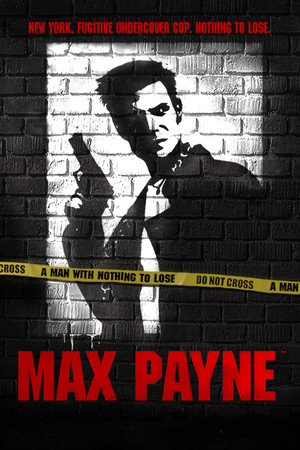
GAME · 2001
Max Payne
- Developer
- Rockstar Toronto, Rockstar Vienna, MacSoft Games
- Publisher
- Gathering of Developers, 3D Realms, Suntendy Interactive Multimedia Co.,Ltd.
- Platforms
- macOS, Microsoft Windows
18 archived facts 4 topics 1 source Last reviewed Sep 2026
All facts (18)
- #001
Remedy Entertainment conceived the idea for Max Payne in late 1996, after finishing its first game, Death Rally. The concept was initially inspired by Loaded and later by the success of Tomb Raider, though the team was determined to avoid Tomb Raider's "horrid camera system".
- #002
According to story and scriptwriter Sam Lake, his starting point for Max Payne was the archetype of the private eye and hard-boiled cop, which he wanted to use in a game with a deeper, more psychological story.
- #003
A prototype and design document for Max Payne were created under the working titles Dark Justice and Max Heat. The project was then shown to 3D Realms, which signed a development deal and allowed production to begin.
- #004
For Max Payne's cutscenes, the developers chose comic panels with voice-overs over fully animated cinematics, finding them more effective and less costly.
- #005
The developers of Max Payne noted that comic panels pushed players to interpret each panel themselves, arguing that such nuance would be harder to achieve with in-game or pre-rendered cinematics.
- #006
Max Payne's in-game engine was used for some cutscenes featuring action sequences, and the game's music was composed by Kärtsy Hatakka.
- #007
Max Payne was built on Remedy's in-house MAX-FX engine, which had been in development since early 1997.
- #008
MAX-FX was used for Max Payne and its sequel, and a level editor was shipped with both games so players could use it.
- #009
The MAX-FX engine behind Max Payne was licensed to Futuremark, which used it for its 3DMark benchmark series, ending with 3DMark 2001 Second Edition.
- #010
An early version of Max Payne's story and gameplay was shown in a trailer at the 1998 E3, drawing considerable interest for its innovative content and effects, particularly the MaxFX 3D particle-based system for smoke and muzzle flashes. 3D Realms producers later claimed they deliberately avoided overhyping the game.
- #011
Max Payne was first scheduled for a spring 1999 release, but it was repeatedly delayed and heavily revamped in 2000. The revamp improved the graphics with more realistic textures and lighting and led to the multiplayer mode being dropped.
- #012
Max Payne was released for Windows on 25 July 2001.
- #013
In Max Payne, the detonation of the subway tunnel door to reach the bank vault echoes the cartwheeling elevator door in The Matrix.
- #014
Max Payne's "Nothing to Lose" level introduction resembles the lobby shootout scene from The Matrix.
- #015
Max Payne was announced for Android and iOS on 6 April 2012 under the title Max Payne Mobile, a port of the PC version of the original game.
- #016
Max Payne Mobile arrived on iOS on 13 April 2012, while the Android release was pushed back to 14 June 2012.
- #017
Apart from an HD overhaul, Max Payne Mobile kept the original game unchanged, and version 1.3 released on 18 March 2013 fixed a bug blocking access to cloud saves.
- #018
Max Payne Mobile marked the first release of Max Payne in Germany, arriving only in a censored state after the ban on the game was lifted.
Sources & editorial notes
Sources for the entries on this page
- Wikipedia Max Payne (video game) — Wikipedia
Information from external sources is independently selected, consolidated and edited by Arka Evren. Sources are listed for verification and further reading. Encyclopedia text is used under its licence (CC BY-SA). How we work