GAME · 1998
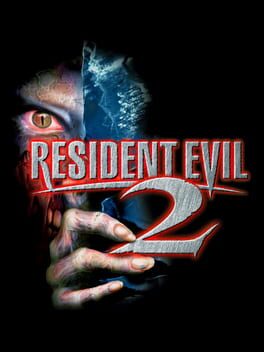
Resident Evil 2
- Developer
- Capcom, Factor 5, Tiger Electronics
- Publisher
- Capcom
- Platforms
- Nintendo 64, Microsoft Windows, Nintendo GameCube
- Original title
- Biohazard 2
29 archived facts 4 topics 1 source Last reviewed Sep 2026
All facts (29)
- #001
Development of Resident Evil 2 started one month after its predecessor was completed in early 1996.
- #002
Resident Evil 2 was made by a team of roughly 45 people that later became part of Capcom Production Studio 4.
- #003
Hideki Kamiya directed the Resident Evil 2 team, which included newer Capcom employees and more than half of the staff from the original Resident Evil.
- #004
Early in development, producer Shinji Mikami frequently clashed creatively with Hideki Kamiya and sought to steer the team his own way, before stepping back to an overseeing producer role and asking to see the latest build only once a month.
- #005
This early build was later dubbed Resident Evil 1.5 by Mikami and differed drastically from the final version of Resident Evil 2.
- #006
The plot of the early build followed the same basic outline as Resident Evil 2 and featured a zombie outbreak in Raccoon City two months after the events of the first game.
- #007
In the early build of Resident Evil 2, Umbrella had already been closed as a consequence of its illegal experiments.
- #008
During development of Resident Evil 2, the team aimed to keep the level of fear found in the original game and created two characters with no experience of frightening situations: Leon S. Kennedy, who closely matched his final version, and Elza Walker, a college student and motorcycle racer on vacation in her hometown of Raccoon City.
- #009
In an early version of Resident Evil 2, the character paths did not intersect, and each character had two support partners rather than one.
- #010
In this early version of Resident Evil 2, Leon was assisted by fellow police officer Marvin Branagh and researcher Linda, an early form of Ada, while Elza was helped by Sherry Birkin and John, who appears in the released game as gun shop owner Robert Kendo.
- #011
Mikami stated in 1996 that the sequel would feature new monsters and that the number of onscreen enemies would rise to around seven or more, in order to create a sensation of terror as monsters swarm around the character.
- #012
Supervisor Yoshiki Okamoto objected to the story of Resident Evil 2 because it closed off the possibility of later installments.
- #013
Yoshiki Okamoto suggested building a fictional universe that would recast Resident Evil as a metaseries, in the manner of Gundam and James Bond, where separate stories share common elements.
- #014
While the team was stalled on rewriting the scenario for Resident Evil 2, Okamoto was introduced to screenwriter Noboru Sugimura, who was enthusiastic about the first game's story.
- #015
Noboru Sugimura was first brought in on a trial basis for Resident Evil 2, but Okamoto was impressed by how easily Sugimura solved script problems and soon asked him to write the entire scenario.
- #016
One fundamental story change in Resident Evil 2 was reworking Elza Walker into Claire Redfield, so that the game would connect to the plot of the first game.
- #017
To meet Capcom's sales plan of two million copies, director Kamiya sought to draw new customers by giving Resident Evil 2 a more ostentatious, Hollywood-like story presentation.
- #018
The planners rebuilt Resident Evil 2 from the ground up to accommodate the changes, while the programmers and other remaining team members were reassigned to Resident Evil Director's Cut.
- #019
Resident Evil Director's Cut shipped with a playable preview disc of the new Resident Evil 2 version, intended to promote the sequel and apologize to players for its delayed release.
- #020
Resident Evil 2's environments were built on SGI O2 computers, and rendering each background took two or three weeks.
- #021
Resident Evil 2 limited the number of zombies shown on screen at once to seven, which allowed 450 polygons to be used for the comparatively detailed models of Leon and Claire.
- #022
Resident Evil 2's "Zapping System" was partly inspired by Back to the Future Part II, a time-travel sequel that presents the original film's story from a different perspective.
- #023
Resident Evil 2's voice-overs were recorded by an all-Canadian cast before the cutscenes were finished, with each actor chosen from a roster of ten candidates per role, and Ada was the only main character absent from a pre-rendered cutscene because her model was not completed in time.
- #024
The North American release of Resident Evil 2 includes more violent game over screens than the Japanese version, Biohazard 2, from which those screens were removed.
- #025
Resident Evil 2 was made more difficult than its Japanese equivalent so that short-term rentals would not affect U.S. sales.
- #026
The music for Resident Evil 2 was composed by Masami Ueda, Shusaku Uchiyama, and Syun Nishigaki, with one track written by Naoshi Mizuta.
- #027
As lead composer, Masami Ueda supplied the motifs for Resident Evil 2, while Shusaku Uchiyama wrote the horror-themed music for its investigation and movie scenes.
- #028
Resident Evil 2's score uses a versatile three-note leitmotif as its main theme, recurring in tracks including "Prologue", "Raccoon City", and "The Third Malformation of G".
- #029
The music of Resident Evil 2 conveys "desperation" as its underlying theme and spans styles from ambient horror to industrial, with militaristic percussion for Raccoon City's streets and ominous piano underscores for the police station.
Sources & editorial notes
Sources for the entries on this page
- Wikipedia Resident Evil 2 — Wikipedia
Information from external sources is independently selected, consolidated and edited by Arka Evren. Sources are listed for verification and further reading. Encyclopedia text is used under its licence (CC BY-SA). How we work