GAME · 2018
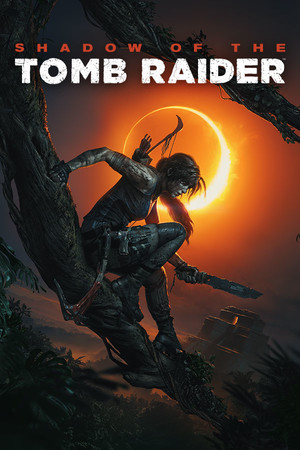
Shadow of the Tomb Raider
- Developer
- Eidos Montreal, Crystal Dynamics, Nixxes Software
- Publisher
- Square Enix
- Platforms
- Microsoft Windows, macOS
20 archived facts 5 topics 1 source Last reviewed Sep 2026
All facts (20)
- #001
Eidos-Montréal took on major development duties for Shadow of the Tomb Raider, while Crystal Dynamics, the primary developer of earlier reboot entries, provided additional development.
- #002
Eidos-Montréal estimated development costs for Shadow of the Tomb Raider at between $75 and $100 million, making it the studio's largest project at the time. The game was built using the Foundation engine, previously used for Rise.
- #003
Shadow of the Tomb Raider was directed by Daniel Chayer-Bisson, one of the co-creative directors for the 2013 reboot, and development was completed on July 24, 2018, when Eidos-Montréal confirmed the game had gone gold.
- #004
Jonah had a larger presence in Shadow compared to his previous appearances, serving as Lara's moral compass and challenging her views while reminding her of the human cost of her quest for revenge. Camilla Luddington and Earl Baylon reprised their roles, providing voice and motion capture for Lara and Jonah.
- #005
Eidos-Montréal was given the Shadow of the Tomb Raider franchise after its levels for the previous entry were rated very highly by playtesters, which gave Crystal Dynamics confidence to pass the series to the studio.
- #006
For Shadow of the Tomb Raider, Eidos-Montréal first studied the series' basic elements before building the game from both prior entries and its own design philosophies, as it had done on Deus Ex and Thief.
- #007
Shadow of the Tomb Raider was designed to divide its focus evenly among traversal, combat and puzzles, which the two teams considered the franchise's three pillars.
- #008
More tombs and puzzles were added to Shadow of the Tomb Raider because they were the most common player requests, with the tombs placed across both the main critical path and side objectives.
- #009
Shadow of the Tomb Raider was built around a core narrative theme of fear, with the team contrasting the fear players feel in dangerous tombs against the fear Lara inflicts on her enemies in combat.
- #010
Shadow of the Tomb Raider initially included a "fear meter" that filled as Lara terrified her foes, but the team scrapped it for being too intangible and instead drew on Predator and Alien to make enemies' terror and panic visible on-screen.
- #011
Shadow of the Tomb Raider prioritized stealth mechanics, letting players use the environment for tactical advantage, traverse the canopy for added verticality, and replace stationary "mud pits" with a camouflage system usable anytime in combat.
- #012
Dozois described Lara as an "apex predator" in Shadow of the Tomb Raider, with combat emphasizing repositioning so she can blend back into the environment shortly after striking enemies, while the game was still designed to be challenging because the team felt players would not feel fear if it were too easy.
- #013
Shadow of the Tomb Raider's main setting, the South American jungles, was chosen because the development team felt it offered a clear visual contrast with the settings of the game's predecessors and was among the world's "deadliest environments".
- #014
Although Shadow of the Tomb Raider's setting was first designed to be "dark" and "bleak", the team later opted to make it more colorful.
- #015
The developers of Shadow of the Tomb Raider treated the game's world as a "character" in its own right, one that players had to overcome through treacherous environments and dangerous wildlife to uncover its secrets.
- #016
Underwater exploration was added to Shadow of the Tomb Raider to bring Lara's moveset closer to that of the classic games, with these sections designed to be "claustrophobic" in the manner of Mexico's cenotes; the team watched National Geographic scuba diving videos while creating them.
- #017
Brian D'Oliveira composed the music for Shadow of the Tomb Raider. He was chosen for his ability with South American instruments, and he worked with native musicians at his Montreal studios to achieve the right sound for each location.
- #018
For Shadow of the Tomb Raider, the music team kept the styles established since the 2013 reboot while adding new esthetic elements drawn from local culture and from a darker portrayal of Lara and her mission.
- #019
Martin Stig Andersen served as Ambient Sound Designer on Shadow of the Tomb Raider, focusing on the sound transition for underwater segments.
- #020
The Shadow of the Tomb Raider team brought back "The Instrument", a specially designed percussion instrument created by Matt McConnell for the 2013 reboot's soundtrack. It was used to convey the primal aspects of Lara's character and to reference her adventure on Yamatai in the 2013 game.
Sources & editorial notes
Sources for the entries on this page
- Wikipedia Shadow of the Tomb Raider — Wikipedia
Information from external sources is independently selected, consolidated and edited by Arka Evren. Sources are listed for verification and further reading. Encyclopedia text is used under its licence (CC BY-SA). How we work