GAME · 2012
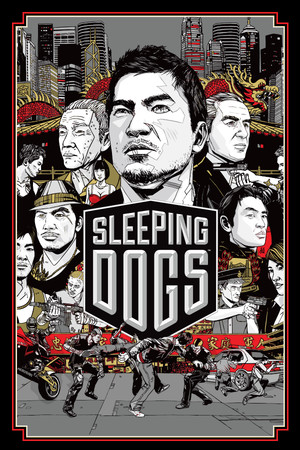
Sleeping Dogs
- Developer
- United Front Games
- Publisher
- Square Enix
- Platforms
- PlayStation 3, Microsoft Windows, macOS
25 archived facts 2 topics 1 source Last reviewed Sep 2026
19 Facts From the Development of Sleeping Dogs
- #001
Sleeping Dogs originated from Black Lotus, a game Treyarch was developing in 2007 that was cancelled the same year and became True Crime: Hong Kong.
- #002
Black Lotus was planned as an action game with a female protagonist and drew heavy comparisons to Hong Kong action movies, but Activision judged the approach unlikely to succeed against other games of the time.
- #003
Late in 2007, Activision asked the newly founded ten-person studio United Front Games to rework the Black Lotus idea into an open world game with a male protagonist.
- #004
United Front Games accepted the project, and Activision supplied enough funding for 180 employees.
- #005
A year into development, Activision proposed that Sleeping Dogs, then known as Black Lotus, be made part of the existing True Crime franchise.
- #006
Activision believed the innovations in Black Lotus could revitalize the True Crime franchise and make the game successful in its own right, despite disappointing sales of previous True Crime titles.
- #007
Activision attached Sleeping Dogs to the True Crime series and revealed it publicly as True Crime: Hong Kong in November 2009.
- #008
Activision delayed Sleeping Dogs until 2010 to allow further refinement.
- #009
Activision announced the cancellation of True Crime: Hong Kong on February 9, 2011, while reporting its financial results for the last quarter of 2010. The publisher cited "quality issues," saying further investment would not make the game competitive in its genre even under its most optimistic projections.
- #010
Executive producer Stephen Van Der Mescht said in an interview that True Crime: Hong Kong was playable from start to finish and nearly complete in content before Activision cancelled it. He also said the game "stood apart" from its competition.
- #011
According to Activision CEO Eric Hirshberg, the cancellation of True Crime: Hong Kong on June 22, 2011 was driven by budget increases and development delays. Hirshberg said the higher budget and repeated delays meant the game would have needed to be a "pretty incredible success" for Activision to see an acceptable return on investment.
- #012
Activision's assessment, as stated by CEO Eric Hirshberg, was that True Crime: Hong Kong did not reach a quality level that could compete with rival titles, especially Grand Theft Auto and Red Dead Redemption.
- #013
Square Enix did not purchase the True Crime intellectual property and renamed the game Sleeping Dogs.
- #014
Combat was a central focus during the development of Sleeping Dogs. Design director Mike Skupa said the combat system was refined using feedback from Square Enix, with references drawn from Tony Jaa's The Protector.
- #015
The combat system of Sleeping Dogs began as what Mike Skupa described as "one big violent sandbox" and was developed into a playable demo.
- #016
Mike Skupa, design director on Sleeping Dogs, was pleased with how well the game retained the qualities of its original demo.
- #020
During the early stages of development of Sleeping Dogs, in-game dialogue was recorded in Los Angeles by local Asian actors, but much of the audio was later re-recorded in Hong Kong through the specialist recording company Drum Music.
- #021
Audio design for Sleeping Dogs was complicated because scripting took place in Vancouver while recording was handled in Hong Kong.
- #025
Nathan Wang wrote original Chinese songs for Sleeping Dogs in the style of Cantopop and Mandopop.
Sources & editorial notes
Sources for the entries on this page
- Wikipedia Sleeping Dogs (video game) — Wikipedia
Information from external sources is independently selected, consolidated and edited by Arka Evren. Sources are listed for verification and further reading. Encyclopedia text is used under its licence (CC BY-SA). How we work