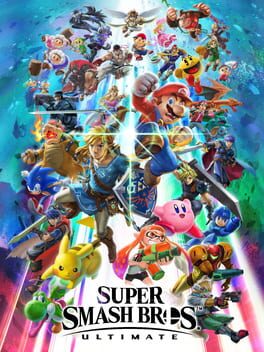
GAME · 2018
Super Smash Bros. Ultimate
- Developer
- Sora Ltd., Bandai Namco Studios
- Publisher
- Nintendo
18 archived facts 3 topics 1 source Last reviewed Sep 2026

12 Facts From the Development of Super Smash Bros. Ultimate
- #001
Preparation for Super Smash Bros. Ultimate moved faster than in earlier series entries because its team was not built from scratch.
- #002
The project plan for Super Smash Bros. Ultimate was underway by December 2015, while downloadable content for the 3DS and Wii U titles was still in development, and was completed after that DLC finished. Staff were gathered soon afterward.
- #003
Super Smash Bros. Ultimate had a shorter development period than previous series entries, with Hatena assisting on some elements and tri-Crescendo contributing to programming and design.
- #004
Sakurai sought to bring back every character from earlier Super Smash Bros. titles so fans would not be disappointed, even though he knew this would complicate development and licensing and sharply raise costs; the return of Bandai and Sora made it more feasible.
- #007
Ridley from Metroid had long been requested as a playable character by the Super Smash Bros. community; in 2008, Sakurai said he knew Ridley was in high demand but considered him "impossible" to add unless the character's size could be sacrificed for balancing. To include Ridley in Super Smash Bros. Ultimate, Sakurai studied the character's art and redesigned him so he could stand upright.
- #008
Every character in Super Smash Bros. Ultimate was chosen at the start of development except Incineroar, who did not yet exist; the team left a space open for a Sun and Moon Pokémon. The Inklings' ink mechanic proved difficult to implement because of how it interacted with environments.
- #009
Super Smash Bros. Ultimate was built from scratch by its team, using new assets and content. Localization manager Nate Bihldorff said the game greatly improved lighting effects and texture rendering compared with the Wii U version's game engine.
- #011
The Spirits mechanic in Super Smash Bros. Ultimate was conceived to create an enjoyable single-player mode, but the team lacked the resources to make character models. It allowed them to use various characters and assets, though not to tell stories for individual fighters or create new locations and rules.
- #014
Sakurai began contacting composers over a year before Super Smash Bros. Ultimate's release, giving them a database of more than a thousand suggested track ideas and allowing them to submit personal favorites that received priority for inclusion.
- #016
For Super Smash Bros. Ultimate, Nintendo decided by November 2018 which characters would be added as downloadable content, rather than letting players request fighters as they had for the Nintendo 3DS and Wii U entries.
- #017
Nintendo met with Rare studio head Craig Duncan at E3 2018 to discuss adding Banjo and Kazooie as downloadable content for Super Smash Bros. Ultimate; Duncan agreed and connected the two development teams. Sakurai noted the pair were the second most requested character in a Nintendo-sanctioned fan vote in 2015 for Super Smash Bros. for Nintendo 3DS and Wii U, and Phil Spencer of Xbox described negotiating their inclusion as an easy deal thanks to Microsoft's strong partnership with Nintendo.
- #018
According to Daniel Kaplan of Mojang Studios, Nintendo and Microsoft first discussed bringing Minecraft content into the Super Smash Bros. series about five years before Steve was added to Super Smash Bros. Ultimate.
Sources & editorial notes
Sources for the entries on this page
- Wikipedia Super Smash Bros. Ultimate — Wikipedia
Information from external sources is independently selected, consolidated and edited by Arka Evren. Sources are listed for verification and further reading. Encyclopedia text is used under its licence (CC BY-SA). How we work