GAME · 2011
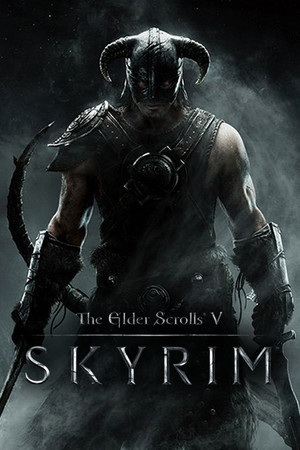
The Elder Scrolls V: Skyrim
- Developer
- Bethesda Game Studios
- Publisher
- Bethesda Softworks, 1C Company, Softclub
- Platforms
- PlayStation 3, Microsoft Windows, Xbox Series X and Series S
40 archived facts 5 topics 1 source Last reviewed Sep 2026
28 Facts From the Development of The Elder Scrolls V: Skyrim
- #001
Bethesda Game Studios started planning the next Elder Scrolls title while working on Fallout 3, after finishing The Elder Scrolls IV: Oblivion in 2006.
- #002
From the beginning of planning, Bethesda decided that The Elder Scrolls V: Skyrim would be set in the land of Skyrim and would feature dragons as a central theme.
- #003
Full development of The Elder Scrolls V: Skyrim began after Fallout 3 was released in 2008, and the developers regarded Skyrim as a spiritual successor to both Fallout 3 and earlier Elder Scrolls games.
- #004
The Elder Scrolls V: Skyrim was made by a team of roughly 100 people that included both newcomers and veterans of the series, with production supervised by Todd Howard, a director of several Bethesda Softworks titles.
- #005
The Elder Scrolls V: Skyrim is set in the province of Skyrim, which the development team designed by hand.
- #006
Skyrim's game world is similar in size to Oblivion's Cyrodiil, but its mountainous topography inflates the game space and makes traversal more difficult than the relatively flat Cyrodiil.
- #007
Art director Matt Carofano described Skyrim's "epic-realism" world design as a departure from Oblivion's generic representation of classic European fantasy lore.
- #008
The team divided Skyrim's world into nine sectors called holds, aiming to make each topographically unique and to reflect NPC socioeconomic backgrounds through elaborate, wealthy locations alongside poorer, lower-tech ones.
- #009
For The Elder Scrolls V: Skyrim, the team dropped the generated landscapes used in Oblivion in favor of a hand-crafted world. Its 150 dungeons were designed by a group of eight people, whereas only one team member had handled dungeon design in Oblivion.
- #011
The Elder Scrolls V: Skyrim runs on Bethesda's Creation Engine, which was forked from the Fallout 3 codebase specifically for the game.
- #012
After Fallout 3 shipped, Bethesda set numerous design objectives for Skyrim; according to Howard, the team completed all of them and continued further.
- #013
Howard said that if the team could not meet its design goals on seventh-generation consoles, Skyrim would have waited for the next generation, but he felt the technology of the time did not hold the team back.
- #014
The Creation Engine brought graphical improvements to Skyrim, including longer draw distance than earlier The Elder Scrolls titles, dynamic lighting that lets any structure or item cast shadows, and greater flora detail than SpeedTree provided in prior Bethesda games.
- #015
The Elder Scrolls V: Skyrim used Havok's Behavior toolset for character animation, which the team chose to allow greater fluidity between walking, running and sprinting movements.
- #016
In Skyrim, interactions between the player and NPCs occur in real time, with NPCs able to move and gesture while conversing, unlike Oblivion where time froze and the camera zoomed in on the NPC's face.
- #018
Skyrim uses an updated version of the Radiant AI system created for Oblivion, allowing NPCs to do what they want under extra parameters and to perform tasks such as farming, milling and mining while reacting to each other.
- #019
Jeremy Soule composed the music for The Elder Scrolls V: Skyrim, having previously worked on Morrowind and Oblivion.
- #020
The main theme of The Elder Scrolls V: Skyrim, "Dragonborn", was recorded with a choir of more than 30 people singing in the fictional dragon language.
- #021
Bethesda concept artist Adam Adamowicz created the Draconic language for The Elder Scrolls V: Skyrim and developed a 34-character runic alphabet; Bruce Nesmith explained that words were added to the lexicon whenever the studio wanted to say something.
- #022
Bethesda released four audio CDs alongside The Elder Scrolls V: Skyrim on November 11, 2011.
- #023
The Skyrim soundtrack is sold through Jeremy Soule's distributor DirectSong, and Soule autographed every physical copy ordered via DirectSong.
- #024
Amazon.de "Day One" pre-orders of Skyrim included a five-track promotional soundtrack sampler.
- #025
A digital edition of the Skyrim soundtrack became available through iTunes on January 31, 2013.
- #029
Between 2017 and 2021, 74 small downloadable content packs called "Creations" were released for The Elder Scrolls V: Skyrim Special Edition through Creation Club.
- #030
All 74 Creations were compiled as part of The Elder Scrolls V: Skyrim's "Anniversary Edition" in 2021.
- #031
The "Anniversary Edition" of The Elder Scrolls V: Skyrim was not available as a standalone title on GOG.com until 2022.
- #039
Enderal: The Shards of Order was released in July 2016 in German only, with an English version following on August 16, 2016.
- #040
The Forgotten City, a 2015 mod for The Elder Scrolls V: Skyrim, was later adapted into a full standalone game released on PC and consoles in 2021.
Sources & editorial notes
Sources for the entries on this page
- Wikipedia The Elder Scrolls V: Skyrim — Wikipedia
Information from external sources is independently selected, consolidated and edited by Arka Evren. Sources are listed for verification and further reading. Encyclopedia text is used under its licence (CC BY-SA). How we work