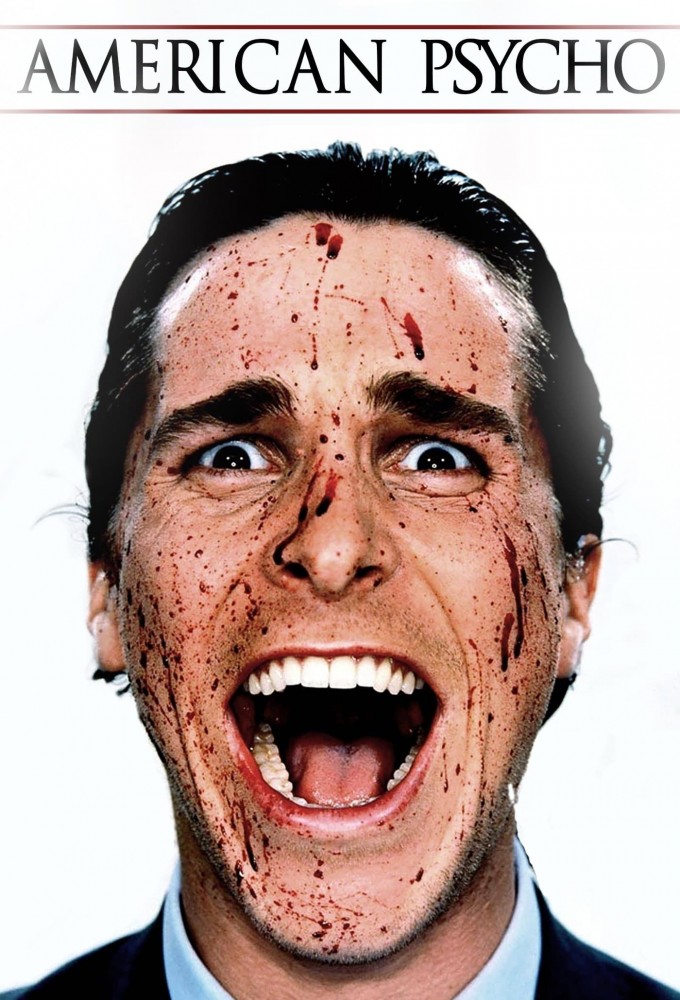
FILM · 2000 · CANADA
American Psycho
- Directed by
- Mary Harron
- Runtime
- 102 min
- Studio
- Lionsgate, Pressman Film, Muse Productions
143 archived facts 8 topics 1 source Last reviewed Sep 2026
A wealthy New York investment banking executive hides his alternate psychopathic ego from his co-workers and friends as he escalates deeper into his illogical, gratuitous fantasies.
Summary: TMDB
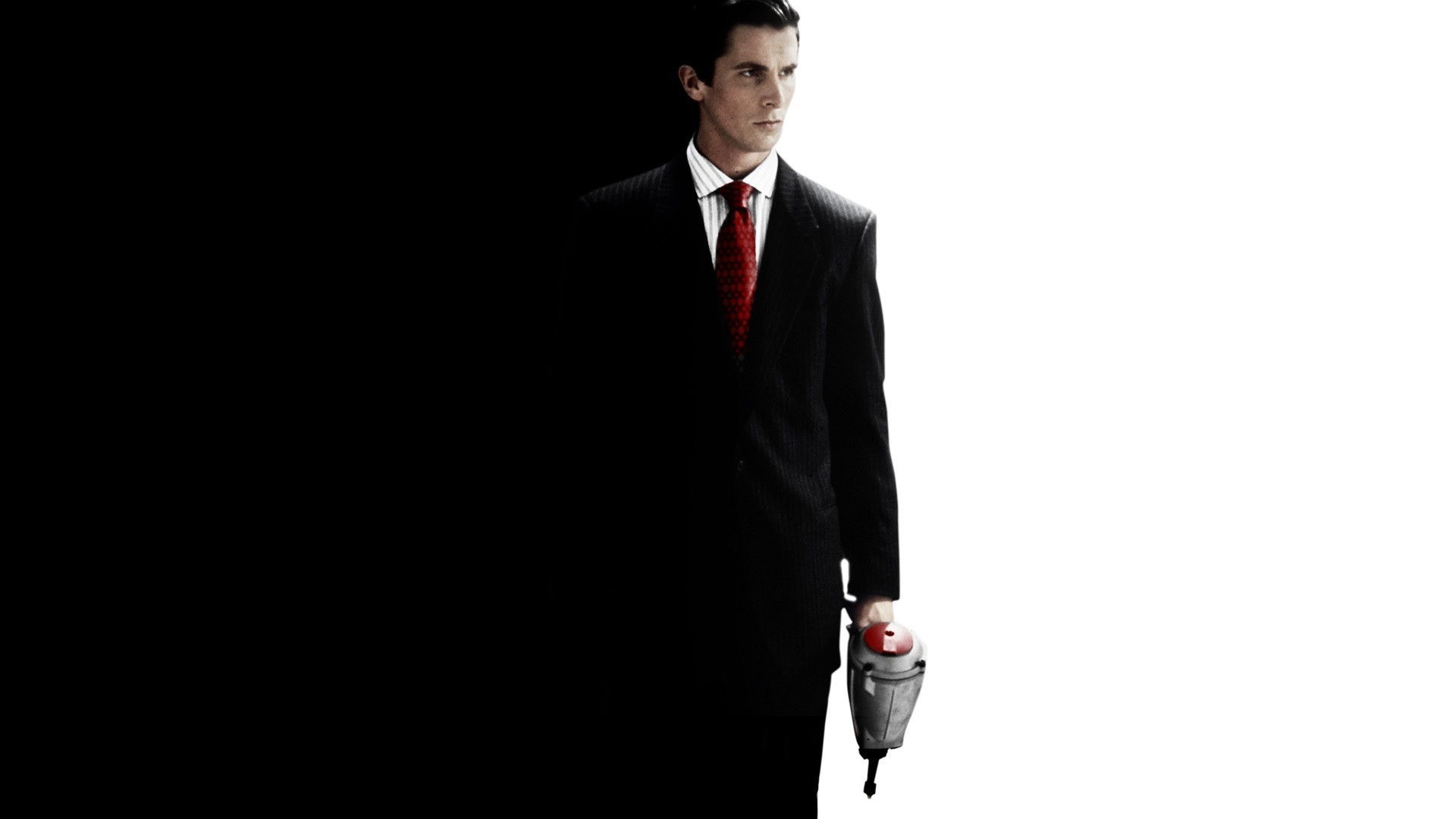
106 Interesting Facts About American Psycho
- #001
The film's largest expense was securing the rights to the various songs used in it.
- #002
Searching for a way to create the character of Patrick Bateman, Christian Bale came across Tom Cruise's appearance on Late Show with David Letterman (1993). According to co-writer and director Mary Harron, Bale saw in Cruise "this very intense friendliness with nothing behind the eyes," and Bale later based the Bateman character on that. Interestingly, Tom Cruise also appears in the novel. He lives in the same apartment complex as Bateman, who encounters him in an elevator, mishears the title Cocktail (1988), and calls him "Bartender."
- #004
Contains a major spoiler — show
The closing scene shows a sign reading "This is not an exit." These are the novel's final words.
- #005
Contains a major spoiler — show
Christian Bale's phone confession to his lawyer that he is a serial killer was filmed in 14 takes. Director Mary Harron kept pushing Bale to do one more take, with him improving each time. Throughout it all, Bale was regularly fueled by cappuccinos.
- #007
During the production, Christian Bale watched the morning routine that his character Patrick Bateman narrates near the beginning of the film.
- #011
The vast majority of the dialogue in the film is taken word for word from Bret Easton Ellis's novel.
- #013
Contains a major spoiler — show
In the film, Bateman's apartment is clean and showy. In the novel, his apartment becomes increasingly filthy and cluttered because of the various body parts and organs of some of his victims, as well as the large amount of blood spilled. This is one of the main reasons he frequently uses the apartment of Paul Owen, called Paul Allen in the film, to keep bringing more victims home.
- #014
The famous "whoosh" sounds in the business card scene were created by slowing down the sound of a sword being drawn from its scabbard.
- #015
To block out the threesome scene with the two prostitutes, co-writer and director Mary Harron and Christian Bale watched X-rated tapes. In her commentary, Harron says Bale drew stick figures of the positions he thought would work best.
- #016
Contains a major spoiler — show
The only scene in which Patrick Bateman does not appear is the one at the end of the film where Jean looks at his daily planner.
- #017
During the big chainsaw scene, between takes Christian Bale would happily hang around (literally) wearing nothing but a sock over his johnson and a few tennis shoes.
- #018
The head seen in Patrick Bateman's refrigerator was achieved by having the actress in question raise her head up through the refrigerator's shelves.
- #019
Contains a major spoiler — show
The events Bateman mentions in the phone message he leaves for his lawyer are events from Bret Easton Ellis's book but do not appear in the film. Nevertheless, these events probably still happened, but off-screen at different points.
- #020
Mary Harron instructed Willem Dafoe to play each of his scenes in three different ways: one as if he suspected Patrick Bateman, one as if he had no idea about Bateman's crimes, and one as if he were undecided.
- #021
After the film was completed, and following the grueling gym routine and healthy lifestyle that went with it, Christian Bale admitted to co-writer Guinevere Turner that he was "so fucking sick of having to eat chicken breasts."
- #022
Contains a major spoiler — show
The only parts of the film that author Bret Easton Ellis disliked were Bateman's "moonwalk" during Paul Allen's murder scene and the voice-over, which he considered "too explicit."
- #025
Ewan McGregor was later offered the role of Patrick Bateman, but turned it down after Christian Bale personally encouraged him to do so.
- #026
The name Bateman is derived from Norman Bates, the main character of the "Psycho" film series.
- #027
Because of the graphic and extreme nature of the murder and torture scenes, some scenes from the book had to be either removed entirely or toned down for the film. Some readers had to stop reading the novel and take a break, or could not finish it at all because of the excessively horrifying scenes.
- #028
The film was initially given an NC-17 rating by the MPAA, a cinematic death sentence because of distribution difficulties. Director and co-writer Mary Harron argued loudly against the rating but had to make some minor cuts to secure an R rating.
- #029
The business cards belonging to Patrick Bateman, David Van Patten, Timothy Bryce, Paul Allen and Luis Carruthers each contain the same typo. At the top right, below where the company name "Pierce & Pierce" is listed, the department is written as "Mergers and Aquisitions" instead of "Mergers and Acquisitions."
- #030
By chance, when Christian Bale removes the gel mask at the beginning of the film, it came off in a single take on the first attempt. Mary Harron had previously suffered with this scene and was worried the mask would tear when removed.
- #032
Whitney Houston did not allow her songs to be used in the film.
- #033
The Huey Lewis & The News song "Hip to Be Square," which appears in the film, was initially included on the soundtrack album but was removed shortly after release because of a lack of publishing rights. The album was recalled and reissued without the song, though some copies of the first pressing had already been sold. Over the years this turned into the legend that Huey Lewis had refused to allow the song on the album because of the film's content.
- #034
After the novel was first optioned in 1991, author Bret Easton Ellis decided that director Stuart Gordon would write the screenplay himself, with Johnny Depp playing Patrick Bateman. Gordon wanted to make the film in black and white and stay as faithful to the book as possible, which would have meant a guaranteed X rating. After the project fell through, Gordon was replaced by David Cronenberg, with Brad Pitt in the lead role. That project also failed to materialize.
- #035
To achieve his flashy look in the film, Christian Bale spent several hours a day in the gym and then three hours a day with a trainer on set.
- #036
To capture the right feel for the character, Christian Bale studied the novel "American Psycho" and the character of Patrick Bateman extensively. He distanced himself from others on set in order to create a mysterious, unsettling aura for Bateman.
- #037
While the novel "American Psycho" is set in 1989, the film adaptation is set in 1987. This is evidenced by the scene in which Patrick briefly reads Zagat's Survey: 1987. Additionally, the televised speech by President Ronald Reagan shown in the film's final scene also took place in 1987 (whereas Reagan had already left the White House by the time the events of the original novel occur).
- #039
Patrick suggests that Elizabeth have sex with Christy; Elizabeth mocks the suggestion and asks why he would think she would be interested in lesbianism. Patrick says he went to Sarah Lawrence College. Guinevere Turner, who plays Elizabeth and is also one of the film's screenwriters, actually attended Sarah Lawrence College and is a lesbian.
- #040
Reese Witherspoon was three months pregnant when she made this film.
- #041
Although Patrick Bateman holds a high-paying, well-salaried job at a Wall Street firm, he is never shown doing any actual work. In his office he only does things like listen to music or draw.
- #043
Contains a major spoiler — show
Although this scene never occurs in the original novel, Jean is the only character who realizes, after Patrick Bateman's erratic phone call, that he has gone mad and discovers extremely disturbing and horrifying scribbles in his daily planner. This also shows that Jean is the only character in the film who does not succumb to the culture of consumption and materialism that Bateman and those around him possess, and who recognizes a person's inner qualities rather than their external ones.
- #044
In the film, Bateman thinks he has seen Donald Trump's limousine and mistakes a woman for Ivana Trump. In the novel, Bateman is obsessed with the Trumps, going to restaurants because Donald is seen there or trying to get into one of Donald's parties. When Detective Kimball comes to his office, a copy of The Art of the Deal is proudly displayed in his office.
- #045
Contains a major spoiler — show
Luis Carruthers, Jean and the kitten are the only characters who unknowingly escape Bateman's deadly attempts on their lives.
- #046
Contains a major spoiler — show
In the final scene, Patrick Bateman uses the phrase "Rockin' and Rollin' and whatnot…" This is a phrase frequently used by Patrick's younger brother Sean Bateman in "The Rules of Attraction," also written by Bret Easton Ellis. Sean also appears briefly in the "American Psycho" novel, where he uses this phrase as well. The line was first used by John Travolta's character Danny in the film Grease (1978).
- #047
In the novel, Patrick Bateman is a far more misogynistic, racist, sexist, homophobic and xenophobic character. Although some of these traits are still subtly present, they were largely toned down in the film to make the character more tolerant and likable.
- #048
Author Bret Easton Ellis created the character Patrick Bateman inspired by his own father.
- #049
Contains a major spoiler — show
The film takes place over a few months, while the novel takes place over two years.
- #050
Contains a major spoiler — show
Although there are many hints in the film, in the novel Patrick Bateman was depicted as a cannibal. There were many sensational scenes in which Bateman ate the corpses of his cooked or raw victims.
- #051
The film shown on Bateman's television while he exercises at home is The Texas Chain Saw Massacre (1974), but the audio recording used is different from the film.
- #053
The scene in which Patrick Bateman yells at the Asian woman in the laundromat was shot at a small dry cleaner on Church Street in Toronto, Ontario. Most of the construction scenes (for example, his escape near the finale) were shot in the financial district downtown.
- #054
Bateman is excused from the meeting by claiming he has an appointment with "Cliff Huxtable." This was the name of Bill Cosby's character on The Cosby Show (1984).
- #055
Contains a major spoiler — show
In the scene where Bateman confesses the murders to his lawyer over the phone, Christian Bale's Gal accent can briefly be heard.
- #056
After publishing the novel, author Bret Easton Ellis received numerous death threats following the release of American Psycho.
- #057
This was the second time in two years that Lionsgate had gotten into trouble with the MPAA over one of its films. They had previously clashed with censors over Dogma (1999), which was deemed profane.
- #058
Production designer Gideon Ponte was an art dealer in New York and had very strong ideas about what kind of artworks should appear in Patrick Bateman's apartment.
- #059
Contains a major spoiler — show
The film takes place over several months, from late 1986 to early 1987. The scenes that establish this are the Christmas party at Evelyn's house and the closing scene featuring Ronald Reagan's speech broadcast on March 4, 1987.
- #061
Contains a major spoiler — show
When Patrick confesses the murders over the phone, one of the people he says he killed is his ex-girlfriend Bethany. He says he killed her with a nail gun. In the book, among the other torture methods inflicted on her, Bethany is graphically and gruesomely abused and mutilated with a nail gun before she finally dies of her wounds, particularly when Patrick uses a saw to cut off one of her arms.
- #062
All of the characters' business cards bear the same company name (Pierce & Pierce), department (Mergers and Acquisitions[sic]), job title (Vice President), address, phone, fax and telex numbers. Apart from the names, the information on them is identical.
- #063
This was the first film in which Christian Bale began a run of different physiques and body transformations. Others include Reign of Fire (2002), The Machinist (2004), Batman Begins (2005), Rescue Dawn (2006), The Dark Knight (2008), The Fighter (2010), The Dark Knight Rises (2012), American Hustle (2013), Vice (2018) and Ford v Ferrari (2019).
- #065
The framed black paintings hanging in Bateman's apartment are part of Allan McCollum's series "Surrogate Paintings."
- #066
In Dexter (2006), Dexter Morgan uses Patrick Bateman's name as an alias to obtain M-99 in order to subdue his victims. Both characters share certain similarities, in that each is a serial killer leading a double life.
- #067
In the famous business card scene, every card lists its title as "Vice President." Since none of these Vice Presidents is ever shown actually doing any work, this may be a callback to the famous "Greed is Good" speech in Wall Street, in which Gordon Gekko states that the company he took over had 33 Vice Presidents and that he could not figure out what any of them did.
- #068
Contains a major spoiler — show
Bret Easton Ellis's novel contained far more disturbing and violent scenes that do not appear in the film. These scenes included blood and cannibalism.
- #069
Patrick Bateman says the line "I have to return some videotapes" twice in the film. Whenever he encountered an awkward situation and wanted to leave, he would say it.
- #070
Contains a major spoiler — show
Jared Leto's character is named "Paul Allen" in the film, but in the novel his name is actually "Paul Owen." Bateman kills Owen/Allen with an axe, but unlike in the film (where the killing itself is mostly not shown), his death is described in the novel in extremely graphic and detailed fashion.
- #072
Justin Theroux wore blue contact lenses to play Timothy Bryce.
- #073
Some media outlets jokingly described the film as "an adaptation of a novel written by a misogynist (Bret Easton Ellis) directed by a feminist (Mary Harron)."
- #075
The scene in which Patrick (Christian Bale) and Courtney (Samantha Mathis) are in bed (when she asks whether he will call her before Easter) was taken from Bret Easton Ellis's first novel, "Less Than Zero." In that novel, the conversation between Clay and Blair is almost identical to the one in the film (with Easter substituted for Christmas). In the "American Psycho" book, however, Courtney (lying in bed) asks Patrick whether he will call her before Thanksgiving.
- #076
To play Patrick Bateman, Christian Bale had to gain muscle and mass to reach his target of one hundred and eighty pounds (eighty-two kilograms).
- #077
Christian Bale said that after the film's premiere, Wall Street types would often approach him and tell him how much they loved Patrick Bateman. When he asked whether they meant it ironically, however, they tended not to answer.
- #078
Contains a major spoiler — show
Several deleted scenes never made it into the film's final cut. These scenes include: Patrick failing to seduce Evelyn sexually and arguing about why she is not completely in love with Timothy Bryce; Patrick and Courtney having sex but being interrupted by concerns that safe sex was not properly practiced; Kimball running into Patrick at a club and the two having a brief chat; Patrick and his friends talking while riding in a limousine; and Timothy Bryce, extremely uncomfortable at a club for an unknown reason, telling Patrick he is leaving, jumping over a railing and running out of the crowded club while Patrick watches.
- #081
As part of the marketing campaign, emails supposedly sent by Patrick Bateman were distributed. Christian Bale was not very keen on this approach.
- #082
One of the reasons Chloë Sevigny was interested in the project was that she had a brother who worked on Wall Street.
- #085
The two large prints (posters) in Bateman's apartment are part of Robert Longo's series "Men in the Cities."
- #087
Patrick Bateman works at the same firm, Pierce and Pierce, as Sherman McCoy in The Bonfire of the Vanities (1990).
- #088
Drew Barrymore and Liv Tyler were initially asked to play some of the female roles.
- #089
The first porn film Bateman watches is White Angel (1998). The second is Red Vibe Diaries: Object of Desire (1997).
- #090
Contains a major spoiler — show
The scene in which Bateman kills the homeless man Al is far bloodier and more disturbing in the novel. In the novel, he stabs Al repeatedly in the eyes, face, stomach, hands and genitals. As he does so, he humiliates Al by pulling down the second man's trousers and exposing the man's lower body in front of everyone. While doing this, he calls Al racist slurs. He then breaks Al's dog's legs and leaves the dog in agony with an unknown fate. In the film, Bateman stabs Al several times in the stomach and (somewhat off-screen) shoots and kills his dog.
- #091
Contains a major spoiler — show
Some of the murders Patrick confesses to his lawyer over the phone are the killing of a gay man and his dog. In the book, he encounters the man and his dog while walking one night. He eventually cuts the dog open and disembowels it. He then stabs its petrified owner several times in the face and head. He then shoots the man with a silencer to make sure he is dead.
- #093
Detective Kimball uses a CD case to reflect light into Patrick Bateman's eye, but Bateman does not react, stating that he is dead inside.
- #095
Although this is not in the novel, in the film Patrick Bateman is shown talking about his favorite musicians in great detail before carrying out his lethal attacks on his victims. People have said they find this element of the character very frightening, because it not only shows how shallow and pretentious he is but also how obsessive and unpredictable Bateman is.
- #096
Director Mary Harron and Christian Bale tried to persuade Winona Ryder to play Evelyn Williams but were unsuccessful.
- #099
Contains a major spoiler — show
Although it is neither shown nor mentioned in the film, in the novel Bateman frequently watched a fictional talk show called "The Patty Winters Show." At one point, to show Bateman's deteriorating sanity, he sees a giant Cheerio as a guest on the show.
- #101
Contains a major spoiler — show
Although it is barely mentioned in the film, the novel contains many discussions of the AIDS virus and epidemic.
- #102
In the novel, Patrick Bateman's most common weapons of choice are an axe, a nail gun, a chainsaw, a baton, acid, knives and guns. In the film, we see him using a knife, an axe, a nail gun, a chainsaw and a gun.
- #103
Contains a major spoiler — show
When Bateman kills Paul Allen, two GQ magazines are visible on the table: August 1987, "The Lusts and Luck of Corbin Bernsen," and June 1987, "Timothy Dalton is the New James Bond."
- #104
Contains a major spoiler — show
Some people have said they felt sorry for Patrick Bateman during his confession scene. The character was acknowledged to have a deteriorating soul, and the scene showed the unfortunate result of Bateman being unable to get help for his psychosis.
- #105
The address next to Patrick Bateman's prescription bottle was Yogi's Bar, which is now William J. Greenberg, Jr. Desserts.
- #106
In some versions of the film's poster, a woman is visible in the reflection of the butcher knife in Patrick Bateman's hand. The woman is Krista Sutton, the actress who plays the call girl Sabrina.
- #107
Producer Edward R. Pressman first bought the rights to Bret Easton Ellis's novel in 1992, a year after its publication.
- #109
In the scene with the prostitute Christie (Cara Seymour), Bateman's friend mentions "Alison Poole" among their mutual acquaintances. Alison Poole is the narrator and main character of "Story of My Life," a novel by Jay McInerney, a contemporary of Bret Easton Ellis.
- #112
Director Mary Harron was pregnant during the making of the film.
- #113
Contains a major spoiler — show
At one point Bateman exercises while watching The Texas Chain Saw Massacre (1974). This foreshadows one of the murders, in which he kills using a chainsaw.
- #114
Debate has arisen, and continues, over whether the film is a drama, a thriller or a horror film. Some even argue it is more of a black comedy. It is probably a cross-genre film that contains more than the single genre that defines it.
- #116
Patrick Bateman is seen smoking a cigar only once in the film. In the novel he is described as smoking cigars frequently.
- #118
Principal photography lasted seven weeks, from late February to April 1999.
- #119
The documentary This Film Is Not Yet Rated (2006) made heavy use of clips from the film. This was because the documentary set out to show that the film was one of those the Motion Picture Association of America had in some way censored.
- #120
In the early stages of development, Oliver Stone was to serve as executive producer and Rob Weiss as director. Weiss planned to give the role of Evelyn Williams to Shannen Doherty.
- #121
Contains a major spoiler — show
Although it is not mentioned in the film's MPAA R rating description, the film also contains nudity. The scenes showing this are the sex scenes between Patrick Bateman and prostitutes, the tanning scene, the chainsaw chase scene and the shower scenes with Patrick.
- #122
In Australia, during the Classification Recommendations video, the man in the R18+ shirt can be seen on screen while this film plays as he gives the explanation of the rating.
- #126
The film is based on Bret Easton Ellis's 1991 novel of the same name, "American Psycho". The novel was published on 6 March 1991.
- #127
Christian Bale and Samantha Mathis appeared in Little Women (1994).
- #128
One of the songs on the soundtrack is "Pump Up the Volume". Samantha Mathis, who plays Courtney Rawlinson, appeared in the 1990 film of the same name, Pump Up the Volume (1990).
- #129
This is director Mary Harron's second film.
- #130
The heavy metal band Ice Nine Kills' number one song on Spotify is a song adapted from the film, titled "Hip To Be Scared". The song has more than 11 million listens.
- #131
The film was released nine years after the novel was published.
- #132
American Psycho and Memento (2000) both use David Bowie's song "Something in the Air" at the end of their title sequences. Christian Bale worked with Memento (2000) director Christopher Nolan on The Dark Knight Trilogy and The Prestige (2006). Bowie also appeared in Nolan's The Prestige (2006).
- #133
When Leonardo DiCaprio decided to play Patrick Bateman, he drew up a short list of directors that included Danny Boyle, Martin Scorsese, Stanley Kubrick and Jonathan Demme. DiCaprio went on to work with Boyle on The Beach (2000) and with Scorsese on seven films, beginning with Gangs of New York (2002).
- #134
A little past the halfway point there is a scene in a club. The two people seen dancing in the club are most likely "Club Kids," a group of young, outrageous New York City dance-club personalities popularized by Michael Alig and James St. James. It could even be argued that they are St. James and Alig.
- #135
Josh Lucas and Reese Witherspoon both appeared in Sweet Home Alabama (2002).
- #136
This is the first film in which Christian Bale and Willem Dafoe appeared together. The second was Out of the Furnace (2013).
- #138
Justin Theroux and Bill Sage played Carrie Bradshaw's love interests in Sex and the City (1998).
- #139
Co-writer and director Mary Harron and star Christian Bale both have Batman connections. Harron had once directed a Batman television special for the BBC series The Late Show (1988) showing the character's evolution from comic book to feature film. Bale is perhaps best known for his role as Batman in The Dark Knight trilogy.
- #140
Willem Dafoe appears for the first time alongside an actor who would play Batman. In this film Dafoe appears with Christian Bale, who played Bruce Wayne/Batman in Batman Begins (2005), The Dark Knight (2008) and The Dark Knight Rises (2012). The second time he appeared alongside an actor who would play Batman was The Lighthouse (2019). In that film he appears with Robert Pattinson, who played Bruce Wayne/Batman in Batman (2022).
- #143
This is the first film in which Justin Theroux, who plays Timothy Bryce, and Willem Dafoe, who plays Detective Kimball, appeared together. The second is Beetlejuice Beetlejuice (2024), the sequel to Beetlejuice (1988).
Sources & editorial notes
Reference databases
Sources for the entries on this page
- IMDb IMDb
Information from external sources is independently selected, consolidated and edited by Arka Evren. Sources are listed for verification and further reading. Encyclopedia text is used under its licence (CC BY-SA). How we work