FILM · 1993 · USA
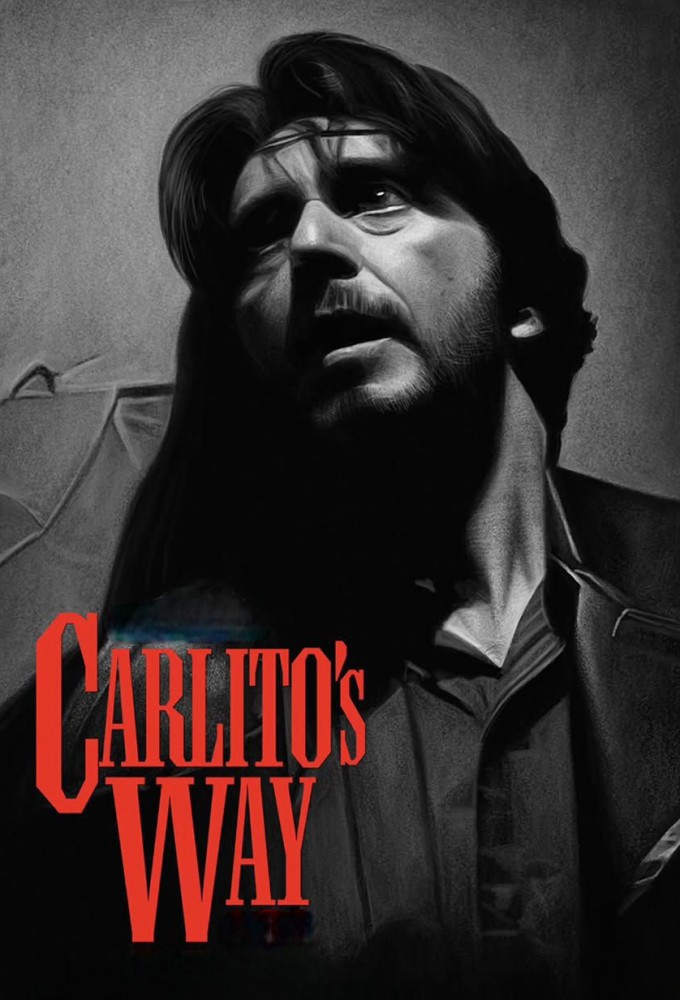
Carlito's Way
35 archived facts 6 topics 1 source Last reviewed Oct 2026
All facts (35)
- #001
Al Pacino struggled in his scenes with Jorge Porcel. The Argentine actor, who made 50 films in his home country, spoke no English and had learned his lines phonetically.
- #002
The exterior of the hospital where Carlito visits his bedridden lawyer is the same location used for the scene in which Vito Corleone is shot in The Godfather (1972), which also starred Al Pacino.
- #003
Al Pacino and Penelope Ann Miller had a romantic relationship during filming. Miller spoke publicly about their romance in interviews, but Pacino was involved with Lyndall Hobbs at the time. Pacino attended the film's premiere with Hobbs and avoided Miller entirely.
- #004
Al Pacino specifically wanted Penelope Ann Miller as his co-star.
- #005
John Leguizamo turned down the role of Benny Blanco four times. He finally took the part after Brian De Palma allowed him to improvise most of his lines.
- #006
Kleinfeld does not die in the novel the film is based on. Brian De Palma, however, felt that Carlito needed to get some revenge before he died.
- #007
According to writer David Koepp, Al Pacino and Sean Penn had problems with the hospital scene, so Koepp kept rewriting it until Brian De Palma was asked to be on set while it was shot. Before filming, Pacino was not convinced, feeling his character would never go to a hospital. In the end, they shot it anyway.
- #008
Directors John Mackenzie and Abel Ferrara were considered before Brian De Palma was hired. De Palma was initially reluctant to take the job because he did not want to make another film about a Latino gangster, as he had with Scarface (1983). The script, however, convinced him otherwise.
- #009
Carlito's nightclub is called "El Paraíso," which is also the name of the food stand where Al Pacino's character works in Scarface (1983).
- #010
The film is adapted from Edwin Torres's novel "After Hours." To avoid confusion with Martin Scorsese's New York club-set comedy-drama After Hours (1985), it instead took its title from Torres's first novel, about the rise of crime boss Carlos Brigante. Actor Rocco Sisto happens to appear in both this film and the earlier Scorsese film.
- #011
Al Pacino initially wanted to wear a ponytail to play Carlito. When he visited East Harlem, however, he saw that no man there wore his hair that way.
- #012
According to Brian De Palma, Sean Penn demanded 30 takes of Kleinfeld asking Carlito to help Tony Taglialucci escape. When De Palma wanted to move on to the next shot, Penn yelled at him. Penn kept yelling at De Palma on the flight back to New York. He later called De Palma on the phone to keep yelling at him. De Palma said this was the only argument on the film.
- #013
Shaving the hairline on Kleinfeld's head was Sean Penn's idea.
- #014
A several-minute static shot filmed at the train station was originally planned to end with Al Pacino's entrance. Because the planning and resetting took so long, they had only one chance for the shot to work. The shot went exactly as they wanted, but at the very end a miscommunication between the AD and the Steadicam operator caused him to turn toward Pacino before he was ready. The take therefore did not end as intended, so they shot a cutaway of another character and then revealed Pacino in a separate shot.
- #015
The first shot planned was actually the Grand Central climax, but it had to be reconsidered when Al Pacino appeared on crutches. Instead, the ill-fated drug deal in the pool hall went into production first. This was a scene the studio had initially asked Brian De Palma to shorten. De Palma actually expanded the scene but used tension-building techniques to trick the studio executives into thinking the scene was shorter and therefore liking it.
- #016
Al Pacino first met Judge Edwin Torres in 1973 while preparing for the Serpico (1973) shoot. At the time, Torres was in the middle of writing the novels the film is based on and discussed them with Pacino. Twenty years later, Torres took Pacino to East Harlem to help him prepare for the role of Carlito.
- #017
A teaser trailer shown in theaters opened with audio clips of memorable dialogue from previous Al Pacino performances (in order: Dog Day Afternoon (1975), Serpico (1973), The Godfather (1972), Scarface (1983), Sea of Love (1989) and Scent of a Woman (1992)) before launching into clips from the actual film. Because of copyright, this trailer was not included in any home video release of the film.
- #018
Alan Dershowitz threatened to sue the producers because he believed David Kleinfeld was based on him.
- #019
The location used as Gail's apartment is the same building that represented Frank Serpico's apartment in Serpico (1973), which also starred Al Pacino. Minetta Lane in Greenwich Village is only one block long and curves, so it is frequently used in films, television and commercials. Both ends of the street can easily be closed off for filming.
- #020
Sean Penn said he took the role of David Kleinfeld in order to work with Al Pacino, and that he could use the money to finance his second film, The Crossing Guard (1995). This followed Penn's directorial debut, The Indian Runner (1991). Meanwhile, Viggo Mortensen, the lead actor of Carlito's Way (1993), also appeared in that film.
- #021
Tony Taglialucci's escape from Rikers Island, a night shoot in the middle of the river, was considered impossible. Instead, the production used a shipyard in Brooklyn, where Kleinfeld's boat was lowered into an empty "lock" that was pumped full of river water. Smoke machines and towers of space lights were set up.
- #022
Brian De Palma's first choice for the role of Gail was the Irish actress Alison Doody, who played Elsa in Indiana Jones and the Last Crusade (1989). She turned down the offer because of the topless dance scene she would have had to perform in the film.
- #023
"Brigante" is a Corsican surname. Edwin Torres was inspired to make Carlito of Corsican origin because there was a large Corsican migration to Puerto Rico in the 19th century.
- #024
Although many people compare the character Carlito Brigante to a reformed Tony Montana, Al Pacino says in his memoir "Sonny Boy" (2024): "Carlito Brigante as a character couldn't be further from Scarface; he doesn't get high, he keeps his cool. He doesn't lose control… he shows a bit of mercy to a rival he probably shouldn't have."
- #025
David Koepp struggled with the voiceover throughout the writing process. It was initially planned to be done in a hospital, but Brian De Palma suggested a train station platform.
- #026
Frank Minucci (Tony Taglialucci) was a former mob enforcer in real life and admitted that he would beat people who owed him money with a hammer and drag them chained to his car across the street. After he married and became a father, Minucci bought his way out of the mafia and eventually became an evangelical preacher.
- #027
When Carlito meets the informant Lalin, The O'Jays' song "Backstabbers" plays in the background.
- #028
To get into character, Al Pacino accompanied Edwin Torres in East Harlem. There he was able to absorb the sights and the atmosphere.
- #029
To prepare for the pool-playing scene, Al Pacino played professional pool in Nevada for a month.
- #030
Thirteen characters, including Carlito, are killed in the closing sequence.
- #031
Viggo Mortensen's wheelchair is decorated with blue and red stripes as a tribute to his favorite football team, San Lorenzo de Almagro.
- #032
In 1989, film producer Elliott Kastner sued Al Pacino, alleging that he had backed out of an agreement to play the role of Carlito in a film in which Marlon Brando would play Kleinfeld. The lawsuit was eventually dropped.
- #033
When the mobsters stop Carlito in the club and sit him down at a table, they joke with him about looking Italian. In fact, Al Pacino is Italian-American.
- #034
The word "fuck" is said a total of 139 times.
- #035
Luis Guzmán was wearing a shabby leather jacket that his brother-in-law had lent him for the audition. Brian De Palma was so impressed by his look that he cast him immediately.
Sources & editorial notes
Reference databases
Sources for the entries on this page
- IMDb IMDb kaydı
Information from external sources is independently selected, consolidated and edited by Arka Evren. Sources are listed for verification and further reading. Encyclopedia text is used under its licence (CC BY-SA). How we work