
FILM · 2013 · USA
Frozen
- Directed by
- Chris Buck, Jennifer Lee
- Runtime
- 102 min
- Studio
- Walt Disney Animation Studios
238 archived facts 8 topics 1 source Last reviewed Nov 2026
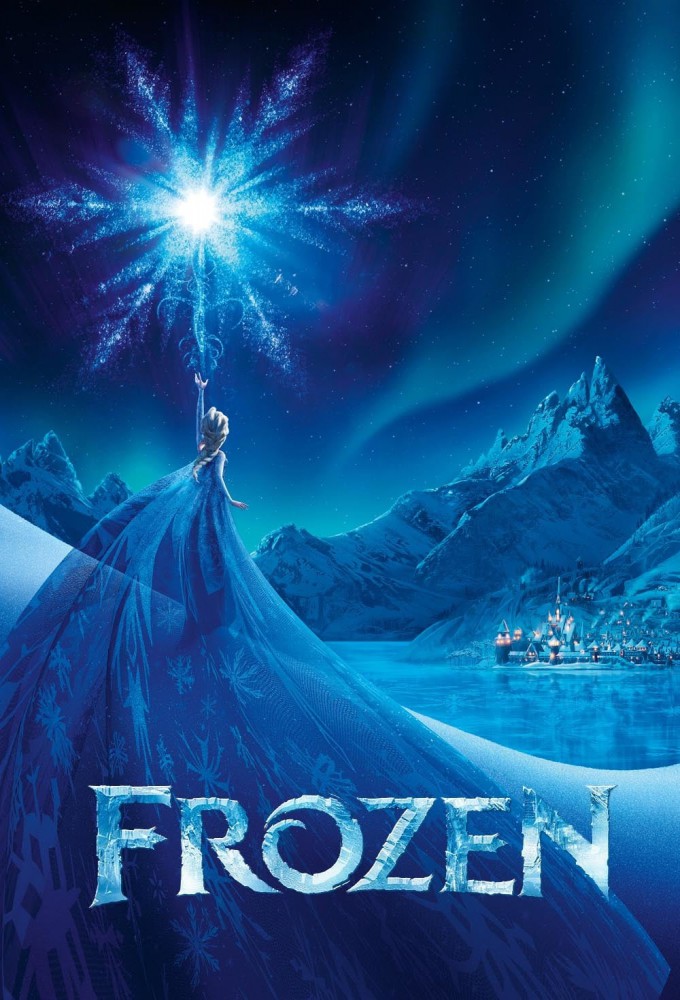
Young princess Anna of Arendelle dreams about finding true love at her sister Elsa’s coronation. Fate takes her on a dangerous journey in an attempt to end the eternal winter that has fallen over the kingdom. She's accompanied by ice delivery man Kristoff, his reindeer Sven, and snowman Olaf. On an adventure where she will find out what friendship, courage, family, and true love really means.

238 Interesting Facts About Frozen
Interesting Facts (66)
- #001
- #002
- #003
- #004
- #005
In an interview on "Fresh Air with Terry Gross," Josh Gad (Olaf) said that when he took his older daughter (then about four years old) to her first-ever movie in a theater (Monsters University), there was a trailer beforehand for Frozen. The trailer didn't contain any of Olaf's lines or songs but did feature the brief sound of Olaf laughing. Gad said that as soon as his daughter heard that laugh, she said, "That's Dada, more Dada." Gad started crying in the movie theater.
- #006
- #007
- #008
When the King pulls the book off the shelf to figure out where to find the trolls, the book is written in Nordic runes, originating from Scandinavia, where the film crew drew much inspiration. These runes were the basis for the dwarf runes used in J.R.R. Tolkien's The Lord of the Rings. A map that falls out of the book resembles the map of the Lonely Mountain seen in The Hobbit.
- #009
- #010
Kristen Bell stated that with this film, she has fulfilled a dream that began in her childhood when she saw The Little Mermaid (1989) and Aladdin (1992); to voice an animated character. When she was around that same age, she recorded a voice box where she sang a couple of songs from The Little Mermaid, including "Part of Your World." Her Little Mermaid vocal tracks were part of the reason why she got the part of Anna, as a director Jennifer Lee said to her that if she hadn't recorded her vocal tracks from Mermaid, it would've been challenging to find the right one to play Anna.
- #011
For the song "Do You Want to Build a Snowman?", three different actresses respectively provided the singing voice of Anna: Katie Lopez as Young Anna, Agatha Lee Monn as Teenage Anna, and Kristen Bell as Anna. Agatha is the daughter of the film's writer/director Jennifer Lee, and Katie is the daughter of its songwriters Robert Lopez and Kristen Anderson-Lopez. Katie and her sister, Annie, sang the film's deleted song, "Spring Pageant," along with their parents. The song can be found on the film's two-disc Deluxe Edition Motion Picture Soundtrack.
- #012
- #013
- #014
- #015
Idina Menzel called Frozen (2013) "a bit of a feminist movie for Disney." "I'm proud of that," Menzel told Zap2it. "It has everything, but it's essentially about sisterhood. I think these two women are in competition with each other but are always trying to protect each other; sisters are very complicated. It's a great relationship to have in movies, especially for young kids." Kristen Bell said, "I'm excited to show this to people. I got to be part of the kind of movie I wanted to see as a kid. I always loved Disney animation, but there was something about the women I couldn't relate to. Their posture was like that too. They were good and well-spoken, and I feel I made this girl [Princess Anna] much more relatable, much quirkier, much more combative and more excited and odd." Director Jennifer Lee shared the same sentiment in an interview with CBS Mornings (2012) on March 21, 2014, noting that although Anna and Elsa are princesses, they are more modern than the main character in Cinderella (1950): "These girls are very different from Cinderella. Their wants, their goals and their dreams are, I think, much more contemporary. And I think you'll continue to see that change."
- #016
- #017
- #018
- #019
- #020
During preproduction of the film, the film's production, art, lighting, and design leads teams went to Wyoming, Quebec, and Norway to study and gain an appreciation for the environment for the film, such as walking through snow (Wyoming), make observations of how light reflects and refracts on snow and ice (Quebec), and to gain an inspirational natural look on ice, mountains, water, and other elements needed for the story (Norway). "We had a concise schedule for this film, so our main focus was really to get the story right, but we knew that John Lasseter is keen on truth in the material and creating a believable world, and again that doesn't mean it's a realistic world - but a believable one. It was important to see the scope and scale of Norway, and important for our animators to know what it's like," Peter Del Vecho, the film's producer, said. "There is a real feeling of Lawrence of Arabia (1962) scope and scale to this," he finished.
- #021
- #022
When Elsa is holding the scepter and orb, the bishop proclaims (In Icelandic): "Sem hón heldr inum helgum eignum ok krýnd í þessum helga stað ek té fram fyrir yðr..." In English this means: "As she holds the holy properties, and is crowned in this holy place, I present to you... Queen Elsa of Arendelle." In the script, it reads: "Sehm hon HELL-drr IN-um HELL-gum AYG-num ok krund ee THES-um HELL- gah STAHTH, ehk the frahm FUR-ear U- thear..."
- #023
- #024
When Oaken is standing talking to Anna within his Trading Post, you can see small figurines of the original concept art for Frozen's Trolls. They appear on the right side; looking a bit like fur-balls with eyes, legs, big noses, and arms. Pictures of the concept art can be found in "Disney; The Art of Frozen."
- #025
- #026
- #027
After Oaken throws out Kristoff during the "Big Summer Blow-out" scene, Oaken offers Anna "Lutefisk" which appears to be fish in a jar. Lutefisk is a traditional dish of Nordic countries e.g. Sweden, Norway and Finland. It is whitefish soaked in lye and is served in northern states (e.g Minnesota, Wisconsin etc.) during the holidays and enjoyed by the people of Nordic descent in the United States.
- #028
- #029
According to Robert Lopez and Kristen Anderson-Lopez, the film's songwriters' voice notes on the outtakes featured in the deluxe version of the soundtrack, some of the previous rewrites of the script included plot elements like -A prophesy made by the trolls about an evil queen that would freeze the land (mentioned in the cut-out songs "Spring Pageant" which is sung by their daughters Katie (who sings 5-year-old Anna's part in "Do You Want to Build a Snowman?") and Annie, and "Life's Too Short" (a song ultimately replaced by "For the First Time in Forever (Reprise)") -A whole plot regarding Elsa and Anna being seen as the heir and the spare (mentioned in the cut-out "More Than Just a Spare", Anna's "big introductory song" at the time according to Kristen Anderson-Lopez, similar to "For the First Time in Forever")
- #030
- #031
Producer Peter Del Vecho explained the change of the English title from "The Snow Queen" to "Frozen": "The title Frozen (2013) came about independently of the title Tangled (2010). That's because it represents the film for us. Frozen plays on the level of ice and snow, but also on the frozen relationship, the frozen heart that needs to be thawed. However, we don't intend to make a comparison between Tangled and Frozen. The decision to name the film was the filmmaker's Frozen decision. The reason the studio later called it The Snow Queen was that it resonated more strongly than Frozen in some countries. Perhaps countries have a richness of The Snow Queen in their heritage, and they wanted to emphasize that." Continuing his explanation, he said, "We're telling a story about family and relationships, and that in itself can be very complicated. Often what you perceive something to be is not what it turns out to be. Elsa has to hide who she is her whole life, even from her sister. It clearly affected her and turned her into the character she is. I hope that if you look at the story through Elsa's eyes, you can understand what she did, or if you look through Anna's eyes, you'll understand why she did it, but it's all complicated relationships. We don't think of this as a Princess film. They are Princesses, but we don't think of it that way, so I'm always a little surprised when people talk about it that way. But I can say that we really wanted to make them believable and didn't want to put them on a pedestal. Our version of these characters had to be really realistic and relatable to the things you might experience in your life."
- #032
- #033
Santino Fontana told The Hollywood Reporter that the biggest challenge of working in animation "is that you have no idea what it's gonna look like. Any acting in front of a camera or on stage, you have to be aware of the whole arc, the whole through line, whereas in animation the script is constantly changing, so you are really only responsible for that scene. That's a huge difference and a huge weight off your shoulders. You don't have to get something right, because it's going to change and they are going to edit it, so that's great."
- #034
- #035
Initially assigned only to be a screenwriter, on November 30, 2012, Disney announced that Jennifer Lee had joined veteran animator/director Chris Buck [Tarzan (1999), Surf's Up (2007)] as co-director. Given the short schedule for this production, a second director was necessary, and after her acclaimed work on Wreck-It Ralph (2012), Lee was a natural choice. When she came on board, she quickly understood the story, worked well with everyone associated with the film, and had a passion for the material equal to Buck's. Lee became the first woman to direct an animated feature made and produced by Walt Disney Animation Studios. In a March 21, 2014 interview with CBS This Morning, speaking of this offer, Lee said that "it's a change that was long overdue and hopefully leads to more shifts in front of and behind the camera." She went on to say that she hoped that her "success will lead to a shift in the type of stories told and who tells them. We need more women in creative leadership. We just do, so if it inspires anyone to say, 'Well, I can do that' or just casually think, 'There's no reason I can't,' I mean, then great, so let's keep talking about it until there's the day where we don't have to anymore."
- #036
The words "door" and "anymore" form a rhyming couplet five times in the songs, once each in "Do You Want to Build a Snowman" (I never see you anymore, come out the door), "For the First Time in Forever" (The window is open, so's that door, I didn't know they did that anymore), "Love is an Open Door" (Say goodbye to the pain of the past, we don't have to feel it anymore, love is an open door), "Let It Go" (Can't hold it back anymore, let it go, let it go, turn away and slam the door), and "For the First Time in Forever (reprise) (Please don't slam the door, you don't have to keep your distance anymore).
- #037
- #038
- #039
Peter Del Vecho explains the decision of having two directors: "In story planning we're always together. That's myself, the head of story, the songwriters and Jennifer Lee and Chris Buck; you can't do anything until you get that story working. But after that, we have the ability to keep Jen working on story while Chris is working on animation, and then they come together again in editorial. The idea of two directors is that they can come together to bounce ideas off each another when they need to but also split their duties a little bit so that, essentially, they can get more work done in a straight day."
- #040
In an article, psychotherapist Dr. Jill Squyres diagnosed Elsa as suffering from Borderline Personality Disorder. Interestingly, Jennifer Lee stated on her twitter account that it was intentional to show Elsa as having anxiety and depression.
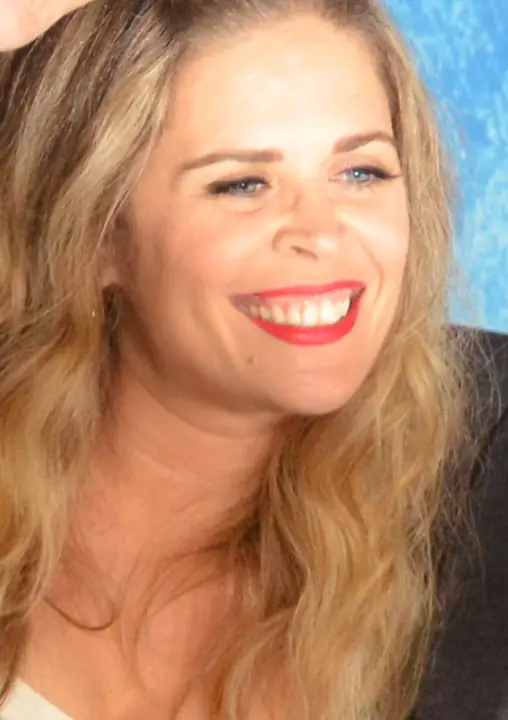
Frozen (2013): Jennifer Lee smiles in front of a blue backgroundImage: Wikimedia Commons · Mingle Media TV, Red Carpet Report, CC BY-SA 2.0 - #041
- #042
- #043
- #044
- #045
- #046
- #047
- #048
- #049
- #050
In the scene where Anna is dancing with the Duke of Westleton, he claims to be like a chicken, and briefly does a chicken dance with his hand on top of his head. This is the same chicken dance done by Lindsay Bluth on Arrested Development, in which Alan Tudyk, who voices the Duke has a recurring minor role as Pastor Terry Veal. Alan Tudyk also went on to voice HeiHei, the chicken in Moana (2016).
- #051
- #052
- #053
- #054
- #055
The film was being made in Burbank, California but songwriting team Robert Lopez and Kristen Anderson-Lopez lived in New York City. This necessitated two hour long videoconferencing calls every day for nearly 14 months as the songs were so integral to the film's plot - which was constantly changing.
- #056
- #057
- #058
- #059
Although Elsa doesn't gain full command of her powers until she learns how to thaw Anna and the rest of Arendelle at the climax, she does briefly demonstrate this ability during the "Let It Go" sequence where she manages to stop it from snowing. She appears able to better control her powers when she's in the right mood - the better the mood, the better she's able to handle it.
- #060
- #061
- #062
- #063
- #064
- #065
- #066
Production Story (44)
- #067
- #068
- #069
- #070
According to Robert Lopez and Kristen Anderson-Lopez, the film's songwriters' voice notes on the outtakes featured in the deluxe version of the soundtrack, some of the previous rewrites of the script included plot elements like -A prophesy made by the trolls about an evil queen that would freeze the land (mentioned in the cut-out songs "Spring Pageant" which is sung by their daughters Katie (who sings 5-year-old Anna's part in "Do You Want to Build a Snowman?") and Annie, and "Life's Too Short" (a song ultimately replaced by "For the First Time in Forever (Reprise)") -A whole plot regarding Elsa and Anna being seen as the heir and the spare (mentioned in the cut-out "More Than Just a Spare", Anna's "big introductory song" at the time according to Kristen Anderson-Lopez, similar to "For the First Time in Forever")
- #071
- #072
For the song "Do You Want to Build a Snowman?", three different actresses respectively provided the singing voice of Anna: Katie Lopez as Young Anna, Agatha Lee Monn as Teenage Anna, and Kristen Bell as Anna. Agatha is the daughter of the film's writer/director Jennifer Lee, and Katie is the daughter of its songwriters Robert Lopez and Kristen Anderson-Lopez. Katie and her sister, Annie, sang the film's deleted song, "Spring Pageant," along with their parents. The song can be found on the film's two-disc Deluxe Edition Motion Picture Soundtrack.
- #073
- #074
- #075
- #076
- #077
- #078
Michael Eisner, then-CEO and chairman of The Walt Disney Company, was very interested in "The Snow Queen" project when it was in early development in 2002. Even though he had much less involvement in production of Disney movies in the 2000s than he had in the 1980s and 90s, he had a special passion for the story and characters of the Snow Queen. Eisner offered his support to the project and even suggested doing the film with John Lasseter at Pixar Animation Studios, when the two studios would get their contracts renewed.
- #079
Producer Peter Del Vecho explained the English title change from "The Snow Queen" to "Frozen": "The title Frozen (2013) came up independently of the title Tangled (2010). It's because, to us, it represents the movie. Frozen plays on the level of ice and snow but also the frozen relationship, the frozen heart that has to be thawed. We don't think of comparisons between Tangled and Frozen, though. The decision to call the film Frozen was the filmmaker's decision. The studio's decision to then call it the Snow Queen overseas was because that just resonated stronger in some countries than Frozen. Maybe there's a richness to the Snow Queen in the countries' heritage and they just wanted to emphasize that." As he continued to make his statement, "We're telling a story about family and relationships and that in itself can be very complicated. A lot of times what you perceive something to be isn't what it turns out to be - Elsa has to hide for her whole life who she is, even from her sister. That clearly affected her and made her into the character she is. Hopefully, if you look at the story through Elsa's eyes, you'll be able to understand what she does, or if you look at it through Anna's eyes, you'll be able to understand why she does what she does, but they're all complicated relationships. We don't think of it as a Princess movie. They happen to be Princesses, but we don't think about it that way, so I always get a bit thrown when people talk about this. But I can say we want to make them really believable and not set them up on a pedestal. Our version of these characters should feel really real and be relatable to things you might go through in your life."
- #080
The film was being made in Burbank, California but songwriting team Robert Lopez and Kristen Anderson-Lopez lived in New York City. This necessitated two hour long videoconferencing calls every day for nearly 14 months as the songs were so integral to the film's plot - which was constantly changing.
- #081
- #082
Peter Del Vecho explains the decision of having two directors: "In story planning we're always together. That's myself, the head of story, the songwriters and Jennifer Lee and Chris Buck; you can't do anything until you get that story working. But after that, we have the ability to keep Jen working on story while Chris is working on animation, and then they come together again in editorial. The idea of two directors is that they can come together to bounce ideas off each another when they need to but also split their duties a little bit so that, essentially, they can get more work done in a straight day."
- #083
The words "door" and "anymore" form a rhyming couplet five times in the songs, once each in "Do You Want to Build a Snowman" (I never see you anymore, come out the door), "For the First Time in Forever" (The window is open, so's that door, I didn't know they did that anymore), "Love is an Open Door" (Say goodbye to the pain of the past, we don't have to feel it anymore, love is an open door), "Let It Go" (Can't hold it back anymore, let it go, let it go, turn away and slam the door), and "For the First Time in Forever (reprise) (Please don't slam the door, you don't have to keep your distance anymore).
- #084
- #085
- #086
The song "For the First Time in Forever", in the verse where Anna sings about meeting her potential true love, originally contained the line, "I hope that I don't vomit in his face." Disney deemed the line unacceptable, as it contained a reference to bodily fluids, and asked that it be changed. It was Katie Lopez, the young daughter of songwriters Robert Lopez and Kristen Anderson-Lopez, who came up with the replacement line, "I wanna stuff some chocolate in my face."
- #087
- #088
- #089
- #090
Initially assigned only to be a screenwriter, on November 30, 2012, Disney announced that Jennifer Lee had joined veteran animator/director Chris Buck [Tarzan (1999), Surf's Up (2007)] as co-director. Given the short schedule for this production, a second director was necessary, and after her acclaimed work on Wreck-It Ralph (2012), Lee was a natural choice. When she came on board, she quickly understood the story, worked well with everyone associated with the film, and had a passion for the material equal to Buck's. Lee became the first woman to direct an animated feature made and produced by Walt Disney Animation Studios. In a March 21, 2014 interview with CBS This Morning, speaking of this offer, Lee said that "it's a change that was long overdue and hopefully leads to more shifts in front of and behind the camera." She went on to say that she hoped that her "success will lead to a shift in the type of stories told and who tells them. We need more women in creative leadership. We just do, so if it inspires anyone to say, 'Well, I can do that' or just casually think, 'There's no reason I can't,' I mean, then great, so let's keep talking about it until there's the day where we don't have to anymore."
- #091
Michael Giaimo, the film's art director, is well known for his exuberant art direction for Pocahontas (1995), which was the last time he served as art director at Walt Disney Animation Studios. Frozen (2013) marked his return to the studio after being fired when Home on the Range (2004) was received very poorly by critics and audiences -it caused massive layoffs and the short-lived demise of traditional animation.
- #092
The second Disney animated feature to be released on November 27th, 11 years after Treasure Planet (2002).
- #093
- #094
- #095
- #096
Kristoff and Anna were originally children called Kai and Greta, which can still be seen in early concept art. Eventually as the story changed they were aged up to adults and renamed Kristoff and Anna. Kristoff himself is based on both Kai and the Robber Girl from the original tale, whereas Anna is based on Gerda and the Summer Witch, whom according to some adaptations of The Snow Queen, is the title Queen's sister.
- #097
Kristen Anderson-Lopez and Robert Lopez wrote "Let It Go" within a single day. It originated with the story outline they were given, which called for "Elsa's Badass Song" at that point. The two began by envisioning the song with an "emo" undertone. According to Anderson-Lopez: "We went for a walk in Prospect Park and threw phrases at each other. What does it feel like to be the perfect exalted person, but only because you've held back this secret? [Robert Lopez] devised 'kingdom of isolation,' and it worked." Lopez could improvise the song's first four lines on the spot. They went home and composed the rest of the song by alternating between improvising melodies on a piano and brainstorming lyrics on a whiteboard. Musically, the song was written to accommodate Idina Menzel's vocal range. "Let It Go" went on to break many pop music records, becoming the first song from a Disney animated musical to reach the top ten of the Billboard Hot 100 since "Colors of the Wind" from Pocahontas (1995) peaked at number four. The song is Menzel's first single to reach the top 10 on the Billboard Hot 100 chart, making her the first Tony Award winner for acting ever to get the top 10. On March 2, 2014, "Let It Go" won the Academy Award for Best Original Song at the 86th Academy Awards, where it was performed live by Menzel.
- #098
- #099
Walt Disney Animation Studios attempted several times before to develop Hans Christian Andersen's classic fairy tale "The Snow Queen" into a film in the 2000s, but it never worked. They first tried it in 2002, but it was scrapped when master animator Glen Keane famously quit the project. "The Snow Queen" resurfaced again in 2009, and John Lasseter recruited directors Kirk Wise and Gary Trousdale (Beauty and the Beast (1991), The Hunchback of Notre Dame (1996), Atlantis: The Lost Empire (2001)) to helm the project. Producer Don Hahn and writer Linda Woolverton also signed on to the project, alongside Alan Menken and Glenn Slater, who were commissioned to write the songs. In 2010, the film was placed on hold, rather than being put back in "development hell" again, as Disney devised a way to make the story work.
- #100
- #101
Visiting Norway was essential in developing the design aesthetic for "Frozen" regarding color, light, and atmosphere. According to Michael Giaimo, there were three critical takeaways from the research trip in making "Frozen" unique to the Disney canon: The fjords, which are narrow inlets surrounded by massive vertical rock formations and serve as the setting for the secluded Arendelle kingdom; The medieval stave churches, whose rustic triangular roof-lines and shingles inspired the castle compound; And the rosemaling folk art, whose distinctive paneling and grid patterns informed the architecture, decor, and costumes (the most elaborate in Disney history, designed by Brittney Lee).
- #102
On December 22, 2011, Disney announced that "The Snow Queen" had been put back into development, now entitled Frozen (2013), with a different crew and was scheduled for the 2013 holiday season release. It was, however, uncertain whether or not the project was still going to be in hand drawn animation or switch to computer animation. Twenty days later, on January 11, 2012, it was announced that the film was now going to be computer animated, based on how the successful Tangled (2010) was computer animated, along with the fact that they would be stopping traditionally animated films completed after their two attempts to return to traditional animation with The Princess and the Frog (2009) and Winnie the Pooh (2011) did not do as well as they hoped.
- #103
- #104
- #105
- #106
Kristoff and Anna were originally children called Kai and Greta, which can still be seen in early concept art. Eventually as the story changed they were aged up to adults and renamed Kristoff and Anna. Kristoff himself is based on both Kai and the Robber Girl from the original tale, whereas Anna is based on Gerda and the Summer Witch, whom according to some adaptations of The Snow Queen, is the title Queen's sister.
- #107
Michael Eisner, then-CEO and chairman of The Walt Disney Company, was very interested in "The Snow Queen" project when it was in early development in 2002. Even though he had much less involvement in production of Disney movies in the 2000s than he had in the 1980s and 90s, he had a special passion for the story and characters of the Snow Queen. Eisner offered his support to the project and even suggested doing the film with John Lasseter at Pixar Animation Studios, when the two studios would get their contracts renewed.
- #108
- #109
There are many similarities between Elsa and Elphaba, the main character played by Idina Menzel in the stage adaptation of the novel "Wicked" by Gregory Maguire. They both are (eventually orphaned) daughters of influential parents. They both have special powers that they try to hide, yet they manifest them unwillingly in front of crowd. Eventually, both Elsa and Elphaba embrace their magic talents - and become objects of public hatred and outcasts from society. Furthermore, "Let It Go" features verses that are practically correspondent to Elphaba's hymn "Defying Grafity".
- #110
Contains a major spoiler — show
Originally, Queen Elsa was intended to be the villain of the story. However, when the character's major song, "Let It Go," was played for the producers, they concluded that the song was not only very appealing, but its themes of personal empowerment and self-acceptance were too positive for a villain to express. Thus, the story was rewritten to have Elsa as an isolated innocent who is alarmed upon learning that her powers are inadvertently causing harm and struggles to control her powers with Anna's help.
Behind the Scenes (19)
- #111
- #112
When Elsa is holding the scepter and orb, the bishop proclaims (In Icelandic): "Sem hón heldr inum helgum eignum ok krýnd í þessum helga stað ek té fram fyrir yðr..." In English this means: "As she holds the holy properties, and is crowned in this holy place, I present to you... Queen Elsa of Arendelle." In the script, it reads: "Sehm hon HELL-drr IN-um HELL-gum AYG-num ok krund ee THES-um HELL- gah STAHTH, ehk the frahm FUR-ear U- thear..."
- #113
Regarding the look and nature of the film's cinematography, Michael Giaimo, who also helped with the cinematography, was greatly influenced by the legendary Jack Cardiff's work in Black Narcissus (1947), which lends a hyper-reality to Frozen (2013). "Because this is a movie with such scale and we have the Norwegian fjords to draw from, I really wanted to explore the depth. From a design perspective, since I was stressing the horizontal and vertical aspects, and what the fjords provide, it was perfect. We encased the sibling story in scale." In fact, Ted D. McCord's work on The Sound of Music (1965) was another major influence: "The juxtaposition of character and environment and the counterpart of how they played in terms of cinematography was brilliant in that film," Giaimo added. The cinematography is also equally inspired by Freddie Young's work in Doctor Zhivago (1965). It is also Giamo's idea that Frozen (2013) should be filmed in CinemaScope, which was "warmly approved" by John Lasseter. This was mainly to capture the scope, scale, and depth of the film's ambitious story and direction. It marked the first time that a full-length motion picture was filmed in CinemaScope in years, as well as the first Disney production to be filmed in CinemaScope since the animated short In the Bag (1956) to be filmed in CinemaScope and the first Disney animated film since Lady and the Tramp (1955). Frozen (2013) joins among other few Disney animated feature films that were filmed in the 2.39: 1 widescreen format or wider: Lady and the Tramp, Sleeping Beauty (1959), The Black Cauldron (1985), Atlantis: The Lost Empire (2001), Brother Bear (2003), and Wreck-It Ralph (2012).
- #114
- #115
During preproduction of the film, the film's production, art, lighting, and design leads teams went to Wyoming, Quebec, and Norway to study and gain an appreciation for the environment for the film, such as walking through snow (Wyoming), make observations of how light reflects and refracts on snow and ice (Quebec), and to gain an inspirational natural look on ice, mountains, water, and other elements needed for the story (Norway). "We had a concise schedule for this film, so our main focus was really to get the story right, but we knew that John Lasseter is keen on truth in the material and creating a believable world, and again that doesn't mean it's a realistic world - but a believable one. It was important to see the scope and scale of Norway, and important for our animators to know what it's like," Peter Del Vecho, the film's producer, said. "There is a real feeling of Lawrence of Arabia (1962) scope and scale to this," he finished.
- #116
- #117
- #118
- #119
- #120
- #121
The horses featured in the film are all Norwegian Fjord horses. They are one of the oldest breeds used in Norway for hundreds of years. As the film shows, they are known for their distinct dark stripe that runs through the center of the mane. Manes are typically cut to a Mohawk-like crescent shape to emphasize this feature and the breed's neck. The one minor liberty taken in the film is that this is a very short, if robust, breed; horses in this film are shown to be a good 4-6" taller than their real-life counterparts.
- #122
- #123
- #124
- #125
Michael Giaimo, the film's art director, is well known for his exuberant art direction for Pocahontas (1995), which was the last time he served as art director at Walt Disney Animation Studios. Frozen (2013) marked his return to the studio after being fired when Home on the Range (2004) was received very poorly by critics and audiences -it caused massive layoffs and the short-lived demise of traditional animation.
- #126
- #127
- #128
Regarding the look and nature of the film's cinematography, Michael Giaimo, who also helped with the cinematography, was greatly influenced by the legendary Jack Cardiff's work in Black Narcissus (1947), which lends a hyper-reality to Frozen (2013). "Because this is a movie with such scale and we have the Norwegian fjords to draw from, I really wanted to explore the depth. From a design perspective, since I was stressing the horizontal and vertical aspects, and what the fjords provide, it was perfect. We encased the sibling story in scale." In fact, Ted D. McCord's work on The Sound of Music (1965) was another major influence: "The juxtaposition of character and environment and the counterpart of how they played in terms of cinematography was brilliant in that film," Giaimo added. The cinematography is also equally inspired by Freddie Young's work in Doctor Zhivago (1965). It is also Giamo's idea that Frozen (2013) should be filmed in CinemaScope, which was "warmly approved" by John Lasseter. This was mainly to capture the scope, scale, and depth of the film's ambitious story and direction. It marked the first time that a full-length motion picture was filmed in CinemaScope in years, as well as the first Disney production to be filmed in CinemaScope since the animated short In the Bag (1956) to be filmed in CinemaScope and the first Disney animated film since Lady and the Tramp (1955). Frozen (2013) joins among other few Disney animated feature films that were filmed in the 2.39: 1 widescreen format or wider: Lady and the Tramp, Sleeping Beauty (1959), The Black Cauldron (1985), Atlantis: The Lost Empire (2001), Brother Bear (2003), and Wreck-It Ralph (2012).
- #129
Characters & Cast (13)
- #130
Idina Menzel, the English voice of Elsa, was in the original cast of the musical Wicked, and won a Tony in 2004 for her portrayal of Elphaba (the Wicked Witch of the West). Dutch actress and singer Willemijn Verkaik, who provides Elsa's voice in the Dutch and her singing voice in the German version of Frozen, originated the role of Elphaba both in the German version (Stuttgart, 2007) and in the Dutch version (Scheveningen, 2011) of the musical. She later went on to play the same role in English on Broadway in 2013 and in London in 2014.
- #131
- #132
- #133
- #134
Although Elsa doesn't gain full command of her powers until she learns how to thaw Anna and the rest of Arendelle at the climax, she does briefly demonstrate this ability during the "Let It Go" sequence where she manages to stop it from snowing. She appears able to better control her powers when she's in the right mood - the better the mood, the better she's able to handle it.
- #135
In an interview on "Fresh Air with Terry Gross," Josh Gad (Olaf) said that when he took his older daughter (then about four years old) to her first-ever movie in a theater (Monsters University), there was a trailer beforehand for Frozen. The trailer didn't contain any of Olaf's lines or songs but did feature the brief sound of Olaf laughing. Gad said that as soon as his daughter heard that laugh, she said, "That's Dada, more Dada." Gad started crying in the movie theater.
- #136
Santino Fontana told The Hollywood Reporter that the biggest challenge of working in animation "is that you have no idea what it's gonna look like. Any acting in front of a camera or on stage, you have to be aware of the whole arc, the whole through line, whereas in animation the script is constantly changing, so you are really only responsible for that scene. That's a huge difference and a huge weight off your shoulders. You don't have to get something right, because it's going to change and they are going to edit it, so that's great."
- #137
Kristen Bell stated that with this film, she has fulfilled a dream that began in her childhood when she saw The Little Mermaid (1989) and Aladdin (1992); to voice an animated character. When she was around that same age, she recorded a voice box where she sang a couple of songs from The Little Mermaid, including "Part of Your World." Her Little Mermaid vocal tracks were part of the reason why she got the part of Anna, as a director Jennifer Lee said to her that if she hadn't recorded her vocal tracks from Mermaid, it would've been challenging to find the right one to play Anna.
- #138
- #139
- #140
At an audition/ table read for Idina Menzel, she and Kristen Bell broke into an accapella rendition of "The Wind Beneath My Wings" as the songs for Frozen (2013) hadn't been completed at that stage. (Bell and Menzel had met previously to rehearse the number in order to improve Menzel's chances of landing the role.) This clinched Menzel's participation in the film.
- #141
- #142
At an audition/ table read for Idina Menzel, she and Kristen Bell broke into an accapella rendition of "The Wind Beneath My Wings" as the songs for Frozen (2013) hadn't been completed at that stage. (Bell and Menzel had met previously to rehearse the number in order to improve Menzel's chances of landing the role.) This clinched Menzel's participation in the film.
Easter Eggs & References (53)
- #143
It appears that the statue head that Anna tosses in the cake during the song First Time In Forever is the same as that of Prince Eric from The Little Mermaid (1989). There is even a fan theory that claims that the King and Queen's ship that sinks in the beginning is the shipwreck where Ariel has her collection of human objects in The Litte Mermaid. Mermaid directors John Musker and Ron Clements thought the theory was "interesting", but did not know if this was the intention of the makers of Frozen.
- #144
- #145
- #146
- #147
- #148
- #149
- #150
When the gates open during "For The First Time in Forever," there is a cameo of Rapunzel and Eugene (Flynn) from Tangled (2010). Rapunzel has short, brown hair and is wearing a purple and pink dress (her celebration dress at the end of 'Tangled'), and Eugene is wearing a maroon vest and a brownish sash. They are entering the screen from the left.
- #151
- #152
- #153
- #154
- #155
When the King pulls the book off the shelf to figure out where to find the trolls, the book is written in Nordic runes, originating from Scandinavia, where the film crew drew much inspiration. These runes were the basis for the dwarf runes used in J.R.R. Tolkien's The Lord of the Rings. A map that falls out of the book resembles the map of the Lonely Mountain seen in The Hobbit.
- #156
- #157
In addition to Eugene and Rapunzel's cameo during the scene where Anna is singing "First Time in Forever," there is a second "easter egg." When Anna dances through the room full of paintings, she stops in front of 'Jean-Honoré Fragonard''s "The Swing," which inspired the visual style of Tangled (2010).
- #158
When Oaken is standing talking to Anna within his Trading Post, you can see small figurines of the original concept art for Frozen's Trolls. They appear on the right side; looking a bit like fur-balls with eyes, legs, big noses, and arms. Pictures of the concept art can be found in "Disney; The Art of Frozen."
- #159
- #160
- #161
- #162
- #163
- #164
- #165
- #166
- #167
After Oaken throws out Kristoff during the "Big Summer Blow-out" scene, Oaken offers Anna "Lutefisk" which appears to be fish in a jar. Lutefisk is a traditional dish of Nordic countries e.g. Sweden, Norway and Finland. It is whitefish soaked in lye and is served in northern states (e.g Minnesota, Wisconsin etc.) during the holidays and enjoyed by the people of Nordic descent in the United States.
- #168
- #169
In the scene where Anna is dancing with the Duke of Westleton, he claims to be like a chicken, and briefly does a chicken dance with his hand on top of his head. This is the same chicken dance done by Lindsay Bluth on Arrested Development, in which Alan Tudyk, who voices the Duke has a recurring minor role as Pastor Terry Veal. Alan Tudyk also went on to voice HeiHei, the chicken in Moana (2016).
- #170
- #171
- #172
While Arendelle is covered in snow, two townsmen are seen arguing over the correct way to stack firewood, bark up, or bark down. This refers to a heated debate in Norway (part of Scandinavia, where the film is believed to be set) that was sparked in 2013 after a 12-hour TV program on firewood aired. It included 8 hours of a live fireplace, and the network received dozens of texts complaining about how the firewood was stacked. The complaints were split evenly between people who were upset about bark facing up and those who were complaining about bark facing down.
- #173
- #174
Many viewers have wondered how Kristoff could suddenly travel in a winter sled in what was, until a few minutes ago, the middle of summer. The junior novelization explains that the sled is convertible and can be fitted with wheels or runners as desired, presumably like changing a spare tire by the side of the road. When Kristoff and Sven share a carrot when guests arrive at the castle, the sled is shown with wheels, and the snow skis can be seen strapped to the side.
- #175
When Anna, Kristoff, and Olaf arrive at Elsa's ice castle, Anna tells Olaf to give her a minute with Elsa alone. Olaf starts counting, with Kristoff joining the count shortly after that, as Anna enters. When Olaf enters, we hear him say "60," and it has indeed been one minute between when he started counting and when he enters.
- #176
- #177
- #178
Hans is seen on a wanted poster in Big Hero 6 (2014).
- #179
- #180
In this movie, Princess Anna is berated by her older sister, Queen Elsa, (as by her friend Kristoff) for falling in love and getting engaged after knowing someone for only one day. This is similar to a plot point discussed by several characters in Enchanted (2007) which also starred Idina Menzel.
- #181
When the gates open during "For The First Time in Forever," there is a cameo of Rapunzel and Eugene (Flynn) from Tangled (2010). Rapunzel has short, brown hair and is wearing a purple and pink dress (her celebration dress at the end of 'Tangled'), and Eugene is wearing a maroon vest and a brownish sash. They are entering the screen from the left.
- #182
- #183
In addition to Eugene and Rapunzel's cameo during the scene where Anna is singing "First Time in Forever," there is a second "easter egg." When Anna dances through the room full of paintings, she stops in front of 'Jean-Honoré Fragonard''s "The Swing," which inspired the visual style of Tangled (2010).
- #184
- #185
The song "For the First Time in Forever", in the verse where Anna sings about meeting her potential true love, originally contained the line, "I hope that I don't vomit in his face." Disney deemed the line unacceptable, as it contained a reference to bodily fluids, and asked that it be changed. It was Katie Lopez, the young daughter of songwriters Robert Lopez and Kristen Anderson-Lopez, who came up with the replacement line, "I wanna stuff some chocolate in my face."
- #186
- #187
Contains a major spoiler — show
During the song "Love is an Open Door", Hans tells Anna that he's been searching his whole life to "find his own place". As he says this, he gestures to Arendelle. This foreshadows the third act of the film, when Hans reveals to Anna that he only wanted to marry her for her kingdom.
- #188
- #189
- #190
Contains a major spoiler — show
Hans briefly looks surprised following the line "We finish each others..." "...sandwiches!" in "Love is an Open Door", prior to saying "Hey, that's what I was gonna say!", hinting that he's tailoring himself to match Anna's interests so he can woo her to further his goals. In addition, he says that right after Anna leaves the scene.
- #191
Contains a major spoiler — show
During "Love is an Open Door", Hans doesn't match Anna's movements in a few scenes, which foreshadow he's trying to keep up his act with her. For example, when they dance like robots on the clock tower, Anna is moving slightly faster than Hans, and when they do a dance in the lighthouse light on the sail, their movements are not actually centered. Also, he is shown trying to catch up to Anna some times, like in the scene where they balance on the bridge railing. When climbing onto the roof to stargaze, Anna climbs first, then Hans. Even the heart shape they make with their hands at the end has Anna make the symbol first with Hans completing it.
- #192
Contains a major spoiler — show
In the scene where Anna and Hans dance around the lighthouse and their shadows are shown on the sail by the rotating light, Hans' shadow is the only one that stays in the light, while Anna's shadow goes almost completely into the darkness before he pulls her back in. This serves as a visual foreshadowing that Anna is being used as a pawn in Hans' scheme to take the throne.
- #193
Contains a major spoiler — show
In the fight scene, just before he runs to the Duke's henchman to divert the arrow from Elsa, Hans glances upwards. This makes the "perfect shot" that makes the chandelier fall and knock Elsa out more realistic and is a more concrete, yet subtle, alluding to his villainous status.
- #194
Contains a major spoiler — show
Right after Anna sings, "Nothing's in my way!" at the very end of "For the First Time in Forever", she gets clobbered by Hans' horse and almost falls into the water. This gives a hint that Hans is going to use her love for him to marry himself into the throne.
- #195
Contains a major spoiler — show
During the song "For the First Time in Forever", Anna jumps in front a series of paintings. thereby becoming a part of the various romantic scenarios. The last painting looks like a minor version of "The Last Supper", with Anna taking the center position of Jesus Christ. Possibly this is meant to foreshadow the betrayal that awaits her later in the film.
Deeper Meaning (37)
- #196
- #197
- #198
- #199
Doors, both open and closed, are used to represent relationships. After Anna's accident when the sisters were children, the castle gates were ordered closed, and Elsa was forced to stay away from Anna, and a closed door constantly divided Anna and Elsa. When Elsa opens the gates on the day of her coronation, Anna uses this moment to finally see the outside world and interact with her sister once more, while Elsa considers closing them again which also runs the risk of shutting Anna out once more. Anna pickets to Elsa to never shut her out again once she meets her at the ice palace, and at the end, Elsa decides to never close the gates again, meaning the sisters are reunited. In addition, Elsa slams the door at the fourth wall following "Let it Go", and during "Love is an Open Door", Anna closes the balcony door to separate herself and Hans from the rest of the party, Elsa included.
- #200
As Elsa is creating her ice palace, one line of the song "Let It Go" is "My soul is spiraling in frozen fractals all around". 'Fractal' is the term applied to certain mathematical geometries which have the property that a fractal structure looks the same at all levels of magnification. Snowflakes and other ice artifacts exhibit fractal geometry, and certain artificial fractal objects are nicknamed 'snowflakes' because of their resemblance to them. But in addition, there is another significance to the word 'fractal' in connection with this film. The application of fractal mathematics to computer-generated images was one of the first major breakthroughs in the creation of realistic three dimensional landscapes in computer graphics, enabling films like Frozen (2013) to be made.
- #201
Idina Menzel called Frozen (2013) "a bit of a feminist movie for Disney." "I'm proud of that," Menzel tells Zap2it. "It has everything, but it's essentially about sisterhood. I think that these two women are competitive with one another but always trying to protect each other - sisters are just so complicated. It's a great relationship in movies, especially for young kids." Kristen Bell said, "I'm excited to show it to people. I became a part of the kind of movie I wanted to see as a kid. I always loved Disney animation, but there was something about the females that was unattainable to me. Their posture was too good, and they were too well-spoken, and I feel like I made this girl [Princess Anna] much more relatable [sic] and weirder and scrappier and more excitable and awkward. I'm proud of that." Director Jennifer Lee shared the same feeling in a March 21, 2014 interview with CBS Mornings (2012), wherein she noted that although they're princesses, Anna and Elsa are more modern than the titular character in Cinderella (1950): "These girls are very different from Cinderella. Their wants, goals, and dreams are much more, I think, contemporary. And I think you'll keep seeing that shift."
- #202
- #203
- #204
In a August 10, 2013 interview with The Hollywood Reporter, directors Chris Buck and Jennifer Lee that giving Frozen (2013) a timeless feel was important to them. In the article, it reads: "What makes something a classic film is there is that quality that it speaks to you whether it is 1930 or 2013," said Lee, admitting that Cinderella (1950) and The Little Mermaid (1989) are still her favorite Disney animated features. For Frozen (2013), she related that the directors aimed to make the film both "timeless and timely. ... We just kept pushing to make sure there are themes in this movie that make it relatable." Lee (also a writer on the film) noted that at its heart, the feature is a story about sisters, and John Lasseter helped to elevate that point. "When we were still just discovering the story we'd show John [the work] he'd say 'you have to go deeper.' That is the key to John -you have to have worked each scene to the point where you know exactly what it means and why, and you got the most out of it." Buck, whose favorite Disney animated film is still Pinocchio (1940), added that Lasseter would "also keep us on track... with so many people and voices in the room, you can start to stray." Incidentally, the two went to California Institute of the Arts together and "have that same love of Disney... I love that classic feel; it is ingrained in me."
- #205
The two snowmen, Olaf and Marshmallow, represent Elsa's personalities when she made them. Olaf, built by Elsa when she played with Anna as a little girl, is friendly and affectionate. Marshmallow (the Golem-like creature), who was made by Elsa when she wanted Anna, Kristoff, and Olaf to leave her castle and never return, is rough and fierce.
- #206
- #207
- #208
- #209
The two snowmen, Olaf and Marshmallow, represent Elsa's personalities when she made them. Olaf, built by Elsa when she played with Anna as a little girl, is friendly and affectionate. Marshmallow (the Golem-like creature), who was made by Elsa when she wanted Anna, Kristoff, and Olaf to leave her castle and never return, is rough and fierce.
- #210
As Elsa is creating her ice palace, one line of the song "Let It Go" is "My soul is spiraling in frozen fractals all around". 'Fractal' is the term applied to certain mathematical geometries which have the property that a fractal structure looks the same at all levels of magnification. Snowflakes and other ice artifacts exhibit fractal geometry, and certain artificial fractal objects are nicknamed 'snowflakes' because of their resemblance to them. But in addition, there is another significance to the word 'fractal' in connection with this film. The application of fractal mathematics to computer-generated images was one of the first major breakthroughs in the creation of realistic three dimensional landscapes in computer graphics, enabling films like Frozen (2013) to be made.
- #211
- #212
- #213
In a August 10, 2013 interview with The Hollywood Reporter, directors Chris Buck and Jennifer Lee that giving Frozen (2013) a timeless feel was important to them. In the article, it reads: "What makes something a classic film is there is that quality that it speaks to you whether it is 1930 or 2013," said Lee, admitting that Cinderella (1950) and The Little Mermaid (1989) are still her favorite Disney animated features. For Frozen (2013), she related that the directors aimed to make the film both "timeless and timely. ... We just kept pushing to make sure there are themes in this movie that make it relatable." Lee (also a writer on the film) noted that at its heart, the feature is a story about sisters, and John Lasseter helped to elevate that point. "When we were still just discovering the story we'd show John [the work] he'd say 'you have to go deeper.' That is the key to John -you have to have worked each scene to the point where you know exactly what it means and why, and you got the most out of it." Buck, whose favorite Disney animated film is still Pinocchio (1940), added that Lasseter would "also keep us on track... with so many people and voices in the room, you can start to stray." Incidentally, the two went to California Institute of the Arts together and "have that same love of Disney... I love that classic feel; it is ingrained in me."
- #214
- #215
Doors, both open and closed, are used to represent relationships. After Anna's accident when the sisters were children, the castle gates were ordered closed, and Elsa was forced to stay away from Anna, and a closed door constantly divided Anna and Elsa. When Elsa opens the gates on the day of her coronation, Anna uses this moment to finally see the outside world and interact with her sister once more, while Elsa considers closing them again which also runs the risk of shutting Anna out once more. Anna pickets to Elsa to never shut her out again once she meets her at the ice palace, and at the end, Elsa decides to never close the gates again, meaning the sisters are reunited. In addition, Elsa slams the door at the fourth wall following "Let it Go", and during "Love is an Open Door", Anna closes the balcony door to separate herself and Hans from the rest of the party, Elsa included.
- #216
Contains a major spoiler — show
In the opening song, "Frozen Heart", the ice merchants sing "Beware the frozen heart." The film explores three meanings of this lyric. Although the merchants are actually singing about the dangers of the icy tundra, the words also can refer to the cold, impersonal demeanor of Elsa, and finally, the lyric is a foreshadowing of the peril that nearly kills Anna.
- #217
Contains a major spoiler — show
Hans seems to be based on the cursed mirror from the original fairy tale "The Snow Queen". In the fairy tale, if a shard of the mirror punctures someone, they only see the bad in the world and essentially become cold-hearted. Because Hans was constantly overshadowed by his older brothers, he grew up to be a cold-blooded and manipulative cynic. Furthermore, in the first two-thirds of the film, Hans acts like a mirror by subtly mimicking whomever he's with so no one suspects his true intentions. When he sees his own reflection in the study's window, he finally reveals his real, wicked nature.
- #218
Contains a major spoiler — show
Doors, open and closed, represent relationships. After the accident when the sisters were kids, the castle gates were ordered closed, and a closed door constantly divided Anna and Elsa. When Elsa opened the gates to the public on her coronation, Anna is excited to be released to the outside world for just that day. Anna also chides Elsa for shutting her out of her life, closes the balcony doors to separate herself and Hans from the party, and Elsa's song "Let it Go" with the doors slamming on the fourth wall. Elsa's line at the end that she's never closing the gates again signifies the sisters' relationship is finally repaired.
- #219
Contains a major spoiler — show
During "For the First Time in Forever", Anna interacts with various castle artifacts. The first is a stone bust of a man who looks sinister and dissatisfied; the second is various paintings showing peasant men looking loving and friendly. Said artifacts foreshadow the personalities of Hans and Kristoff, respectively, as well as the order of their introductions.
- #220
- #221
Contains a major spoiler — show
At the start of the movie, Elsa and Anna are wearing brightly colored clothes, symbolizing their happiness. But as they grow apart over the course of the movie, their clothes become progressively darker. (This is especially evident in the "Do You Wanna Build a Snowman" montage.) At the end of the movie - when the sisters are finally reunited - their clothes are once again bright.
- #222
Contains a major spoiler — show
While singing the part of 'Love is an Open Door' with "You and I were just meant to be," Hans sings, "You..." while Anna finishes with, "...and I," with both pronouns referring to her. Through this clever use of pronouns, the exchange conveys that Anna is the only one who is really in love, with Hans pretending to reciprocate her feelings in order to facilitate his goals.
- #223
Contains a major spoiler — show
In the first half hour of the film, Anna only wears green-colored clothes. However, after she sets off on her journey to find Elsa, she wears an outfit similar to her sister's coronation attire, complete with the colors blue, black, and purple. This is possibly done to show Anna's devotion to Elsa, as well as her growing maturity. After she successfully brings Elsa home, Anna goes back to wearing green.
- #224
- #225
Contains a major spoiler — show
After Elsa freezes Arendelle, Anna and Prince Hans are walking through the town square. Anna shivers as Prince Hans pulls his jacket closer. When Anna is riding on Sven with Kristoff and she shivers, Kristoff kindly gives her his hat, in contrast to the selfish Hans.
- #226
Contains a major spoiler — show
After Hans leaves Anna alone in the room, Olaf arrives and heats the fire up for Anna. He begins to melt, much to Anna's dismay, proclaiming, "Some people are worth melting for." If Olaf had melted for Anna, this could have been the act of true love to save her life.
- #227
- #228
Contains a major spoiler — show
The song "Love is an Open Door" is meant to serve as a double meaning for both Anna and Hans. When Anna sings it, she thinks of love as a close relationship, using it as a way to escape her locked up life. When Hans sings it though, he is only using Anna's love for him to steal the throne, which he will gain control of once Elsa is killed.
- #229
Contains a major spoiler — show
Elsa's verses of "For the First Time in Forever (Reprise)" are done in a deceptive cadence, representing her anxiousness and worries over Anna and fearing she could hurt her like in the past, which is what happens at the end of the song when she freezes her heart.
- #230
- #231
Contains a major spoiler — show
A bit of Arthurian legend is in"Frozen", as that states that the King 's (Arthur) health and mood shall be reflected in the land. When Arthur is defeated by Mordred, England becomes bleak, crops fail, etc. When Elsa becomes Queen, after her coronation, when she loses control, the entire kingdom is affected; not just a localized area.
- #232
Contains a major spoiler — show
Originally, Queen Elsa was intended to be the villain of the story. However, when the character's major song, "Let It Go," was played for the producers, they concluded that the song was not only very appealing, but its themes of personal empowerment and self-acceptance were too positive for a villain to express. Thus, the story was rewritten to have Elsa as an isolated innocent who is alarmed upon learning that her powers are inadvertently causing harm and struggles to control her powers with Anna's help.
Career & Awards (4)
- #233
- #234
- #235
- #236
Walt Disney Animation Studios' ninth film to be rated PG by the ACB (Australian Classification Board) after The Black Cauldron (1985), The Hunchback of Notre Dame (1996), Tarzan (1999), Dinosaur (2000), Atlantis: The Lost Empire (2001), Treasure Planet (2002), Chicken Little (2005), and Wreck-It Ralph (2012).
Life & Family (2)
Sources & editorial notes
Reference databases
- Wikipedia
- IMDb
Information from external sources is independently selected, consolidated and edited by Arka Evren. Sources are listed for verification and further reading. Encyclopedia text is used under its licence (CC BY-SA). How we work