
FILM · 2001
Harry Potter and the Sorcerer's Stone
276 archived facts 8 topics 1 source Last reviewed Sep 2026
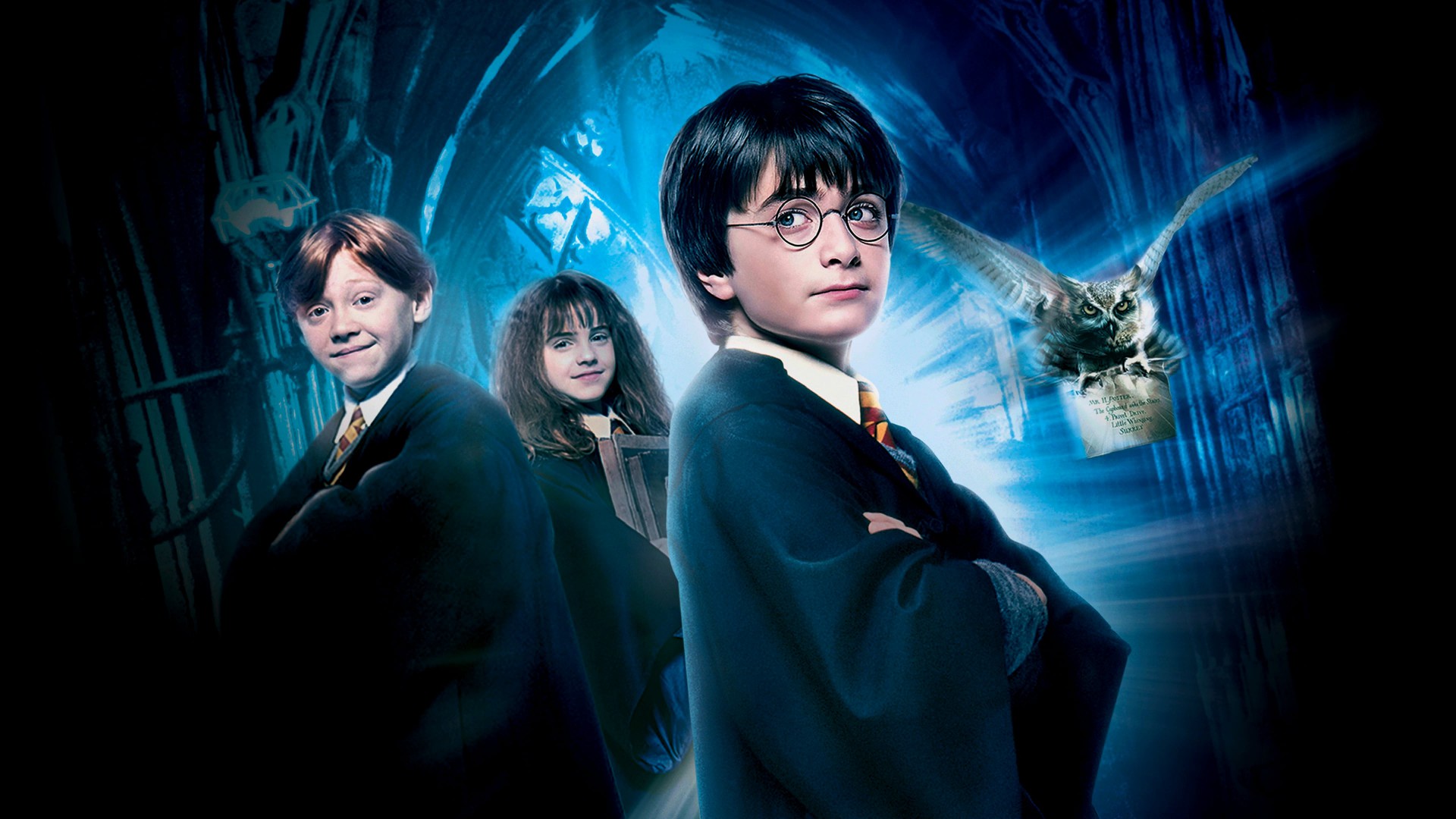
20 Facts on the Deeper Meaning of Harry Potter and the Sorcerer's Stone
- #005
The producers initially wanted to use Canterbury Cathedral as a filming location for some Hogwarts scenes, but the Dean of Canterbury refused, saying it was not appropriate to use a Christian church to promote pagan imagery. Gloucester Cathedral agreed to take its place; the Dean of Gloucester, the Reverend Nicholas Bury, admitted he was a fan of the books. However, when it was decided to use the local cathedral as a filming location in Gloucester, there was a large backlash from the media. Protesters wrote sackfuls of letters to local newspapers claiming it was blasphemy and vowed to block the film crew's access. In the end, only one protester showed up.
- #016
This film and the novel it is based on are known as "Harry Potter and the Philosopher's Stone" everywhere outside the United States. The reason was that US publisher Scholastic believed American audiences were largely unfamiliar with the concept of the 'Philosopher's Stone' and asked JK Rowling to change her title (and the relevant text in the book) to "Sorcerer's Stone." To keep the film consistent with the book, every scene in the film that mentions the Philosopher's Stone was shot twice (once with the actors saying "Philosopher's" and once with them saying "Sorcerer's") or dubbed (most notably one of the scenes in which Hermoine says it in the library and her face is not shown). J. K. Rowling has since said she regrets allowing the title change but that as a novice author she was not in a strong enough position to fight it at the time (her publisher had even asked her to abbreviate her name to J. K. out of fear that young boys would be reluctant to read a book written by a woman). Fans in the United States often ask her why she did not call it "The Philosopher's Stone."
- #018
Contains a major spoiler — show
The inscription around the Mirror of Erised reads: "Erised stra ehru oyt ube cafru oyt on wohsi". Read backwards, the inscription says: "I show not your face, but your heart's desire."
- #037
Nicolas Flamel, known as the creator of the Philosopher's Stone, appeared as a plot device in novels featuring characters such as Batman, Indiana Jones and Robert Langdon, including the book The Da Vinci Code (2006). He was a real alchemist (born in France around 1330) who is (probably) believed by some people to have produced the Philosopher's Stone. Because mysterious circumstances surrounded his death in 1418, he was said to have lived for hundreds of years. The book and film accurately reflect his age. He later appeared in Fantastic Beasts: The Crimes of Grindelwald (2018).
- #040
Aunt Petunia's name is especially fitting given that she and her husband have always resented having to look after their orphaned nephew Harry; in floriography (the language of flowers), petunias represent anger and resentment.
- #048
Almost all scenes involving Harry and/or the trio were shot in chronological order; the most notable exceptions are as follows: the final scene of this film, in which the trio return home on the Hogwarts Express, was the first scene shot, followed by the scene in which Harry first sees the locomotive at Platform 9 3/4 (the only other scene that required the real train to be present). The Quidditch match was then the last thing filmed, largely because of how long it took the visual effects departments to figure out how to do it.
- #050
Contains a major spoiler — show
Although Professor Dumbledore gives him a meaningful look, the film never explicitly reveals who gave Harry the invisibility cloak at Christmas. In the book, the cloak is said to have belonged to Harry's father, who gave it to Dumbledore to keep. Dumbledore then gave it to Harry, thinking his father would have wanted him to have it. Both the books and the films repeatedly imply that Dumbledore gave the cloak to Harry so that he could use it to solve mysteries by secretly investigating and eavesdropping on conversations (which also explains Dumbledore's excessive tolerance of Harry's frequent violations of school rules).
- #059
While scenes were being shot at Gloucester Cathedral, the cathedral's modern electrical signs, light switches and door locks had to be hidden behind panels painted to match the rest of the stone walls. The stained-glass windows were also altered to conceal the fact that the building is a church; religious symbols were covered with coloured plastic filter paper to blend in with the surrounding glass. One window depicted the naked figures of Adam and Eve; they were given clothes and even the lightning-bolt marks trademarked by Harry Potter on their foreheads.
- #070
Contains a major spoiler — show
In the book, Harry, Hermione, Neville and Draco spend a night in the Forbidden Forest with Hagrid as detention, but in the film Ron takes Neville's place. This stems from an unused part of the book in which Ron is bitten by the dragon Norbert and has to go to the hospital wing; Neville is punished in his place because, like Harry and Hermione, he is caught outside for hours, ironically wanting to warn them that Draco was trying to trap them.
- #095
Contains a major spoiler — show
In the scene where Harry sees his mother and father in the mirror, his whole family was supposed to appear (according to the book). However, when Dumbledore catches Harry spending time alone with the mirror, it is implied that he sees his whole family, because the shot shows the back of the mirror frame. In the book Harry also asks Dumbledore what he sees in the mirror; Dumbledore says he sees himself holding a pair of socks, a gift he would much rather have than all the books he usually receives. Harry then thinks Dumbledore may be joking.
- #132
Three-headed dogs feature prominently in Greek and Roman mythology and are also known as hellhounds, chief among them Cerberus, the Guardian of the Underworld. In the film adaptation of Harry Potter and the Sorcerer's Stone, however, Hagrid says he bought Fluffy from "an Irish feller" rather than "a Greek chappie," losing the original reference. Screenwriter Steve Kloves stated that he originally used "a Greek chappie," but does not know how the line was changed.
- #133
Despite having less than a minute of screen time and only two lines of dialogue, the unnamed Head Goblin at Gringotts appears prominently on the American theatrical poster, directly below the faces of Ron and Harry. Many believe this is due to his rather striking appearance.
- #147
Although the main musical theme composed by John Williams, 'Hedwig's Theme' (which can also be heard in all the other films), is present, Harry's owl Hedwig is never named in this film.
- #155
The locomotive that portrays the "Hogwarts Express" in the film, a 1937 4-6-0 "Hall" class steam engine numbered 5972, originally belonged to the Great Western Railway and was named "Olton Hall."
- #200
People often tell Daniel Radcliffe that his American accent sounds like it comes from Ohio. He believes this stems from his early experiences working with Ohio-born director Chris Columbus.
- #216
SR West Country class 21C127 Taw Valley was initially accepted as the locomotive chosen for the Hogwarts Express and was briefly repainted red with Hogwarts Express nameplates to promote the Harry Potter series. However, the engine was rejected by film director Chris Columbus, who said it looked too modern for the film. GWR 4900 Class 5972 Olton Hall was ultimately chosen in its place.
- #232
Sir John Hurt played Aragorn in The Lord of the Rings (1978), making him the only actor to appear in both the "Harry Potter" and "The Lord of the Rings" film series. Only two other actors appeared in both series in another capacity: Bill Nighy and Sir Stephen Fry. Nighy played Samwise in the 1981 BBC radio adaptation of "The Lord of the Rings" and Rufus Scrimgeour in Harry Potter and the Deathly Hallows: Part 1 (2010). Fry played the Master of Laketown in "The Hobbit" trilogy and narrated the British audiobooks and video games of "Harry Potter."
- #238
When the cast (made up almost entirely of British actors) said something between "Happy Christmas" and "Merry Christmas," some American moviegoers were confused. This is largely because in the United Kingdom "merry" is a euphemism for being drunk.
- #259
J. K. Rowling borrowed many names and plot points from J. R. R. Tolkien. In the first book these include Neville Longbottom, whose name comes from Longbottom Leaf (or "pipeweed"), a type of tobacco, and the Mirror of Erised, which closely resembles Galadriel's Mirror. Among the film's cast are John Hurt, who voiced Aragorn in The Lord of the Rings, and Maggie Smith, whose former husband Robert Stephens also voiced Aragorn in a BBC Radio play.
- #261
Because of its size and proportions, the Troll had to be brought to the screen as a digital creation combined with a number of practical attachment models: a pneumatic rig designed by John Richardson swung the Troll's club. Nick Dudman's team also made a pair of silicone 'Troll trousers' representing its legs, which former rugby player Martin Bayfield wore during filming.
Sources & editorial notes
Reference databases
Sources for the entries on this page
- IMDb IMDb
Information from external sources is independently selected, consolidated and edited by Arka Evren. Sources are listed for verification and further reading. Encyclopedia text is used under its licence (CC BY-SA). How we work