
ArkaEvren
Inglourious Basterds

FILM · 2009 · GERMANY

Inglourious Basterds

Directed by
Quentin Tarantino
Runtime
153 min
Studio
Universal Pictures, The Weinstein Company, A Band Apart

366 archived facts 7 topics 2 sources Last reviewed Nov 2026

In Nazi-occupied France during World War II, a group of Jewish-American soldiers known as "The Basterds" are chosen specifically to spread fear throughout the Third Reich by scalping and brutally killing Nazis. The Basterds, lead by Lt. Aldo Raine soon cross paths with a French-Jewish teenage girl who runs a movie theater in Paris which is targeted by the soldiers.

  • Inglourious Basterds — production image

366 Interesting Facts About Inglourious Basterds

Interesting Facts (6)

  1. #001

    Colonel Hans Landa (Christoph Waltz) speaks the most languages in the movie: Four (English, French, German, and Italian).

    INTERESTING FACTS · SOURCED

  2. #002

    When asked about the misspelled title, writer and director Quentin Tarantino gave the following answer: "Here's the thing. I'm never going to explain that. You do an artistic flourish like that, and to explain it would just take the piss out of it, and invalidate the whole stroke in the first place."

    INTERESTING FACTS · SOURCED

  3. #003

    (at around 12 mins) The role of Shosanna Dreyfus' father, Jakob (briefly seen hiding beneath the floorboards in Perrier LaPadite's farmhouse), was played by Patrick Elias, whose father, Buddy Elias, was a first cousin of Anne Frank.

    INTERESTING FACTS · SOURCED

  4. #004

    (at around 1h 1 min) When Francesca (Julie Dreyfus) mentions former UFA actress Lilian Harvey, Joseph Goebbels (Sylvester Groth) throws a tantrum and screams never to mention that name in his presence. Lilian Harvey had to flee Nazi Germany in 1939 after helping Jewish choreographer Jens Keith escape to Switzerland.

    INTERESTING FACTS · SOURCED

  5. #005

    Leonardo DiCaprio was the first choice for Colonel Hans Landa, but Quentin Tarantino then decided that a German-speaking actor should play the part. DiCaprio played one of the primary antagonists in Tarantino's next film, Django Unchained (2012).

    INTERESTING FACTS · SOURCED

  6. #006

    Getting ready for her role, Mélanie Laurent spent several weeks working as a projectionist at the New Beverly Cinema, mostly running cartoons and trailers ahead of the screenings. Quentin Tarantino's real test for her was projecting Reservoir Dogs (1992).

    INTERESTING FACTS · SOURCED

Production Story (144)

  1. #007

    Word went around that Harvey Weinstein, after feedback from the Cannes Film Festival, was pushing Quentin Tarantino to cut forty minutes from the movie (then two hours and twenty-eight minutes long). Harvey denied it, explaining that Tarantino was simply reshuffling some scenes because he hadn't had time to finish editing before Cannes; he had been given only six weeks to edit, when other directors usually get six months to a year. In fact, the theatrical cut is five minutes longer than the version that premiered at Cannes.

    PRODUCTION STORY · SOURCED

  2. #008

    Enzo G. Castellari, director of The Inglorious Bastards (1978), let Quentin Tarantino use the title "Inglourious Basterds" in return for a cameo as a General yelling "Fire!" (Castellari appears in his own film too). Tarantino did shoot Castellari as a General in the theater, pointing at the burning screen, but the scene didn't make the theatrical cut.

    PRODUCTION STORY · SOURCED

  3. #009

    Unlike most Hollywood films, the end credits list the main artistic contributors (editor Sally Menke, for example) ahead of the producers.

    PRODUCTION STORY · SOURCED

  4. #010

    Quentin Tarantino once seriously thought about doing Basterds as a TV miniseries of around 5 episodes, until his friend Luc Besson talked him out of it.

    PRODUCTION STORY · SOURCED

  5. #011

    At his audition in Berlin, Michael Fassbender asked about playing Colonel Hans Landa. Quentin Tarantino's reply: "Look, man, any guy that gets cast as Heathcliff is not fucking German enough to play my Landa, all right?"

    PRODUCTION STORY · SOURCED

  6. #012

    Quentin Tarantino rang Rod Taylor himself to offer him Sir Winston Churchill. When Taylor heard the film would be shot in Germany, he pointed out that Albert Finney lived in England and had played Churchill to great acclaim in The Gathering Storm (2002). Tarantino answered, "If Rod Taylor turns me down, I'll call Albert Finney." Taylor took the part.

    PRODUCTION STORY · SOURCED

  7. #013

    In a round table with Brad Pitt, Quentin Tarantino recalled that Til Schweiger had always refused to wear a Nazi uniform on film, largely because he was born and raised in Germany and genuinely hated anything to do with the Nazis. Once Schweiger heard that he would brutally kill a Nazi in every scene he wore the uniform, he gladly agreed to play Hugo Stiglitz.

    PRODUCTION STORY · SOURCED

  8. #014

    Cloris Leachman originally appeared as Mrs. Himmelstein, an elderly Jewish woman living in Boston. Her scenes, in which she drinks tea with Donny Donowitz and then signs his trademark baseball bat, were filmed but cut from the final film; Quentin Tarantino says he may use the footage in the prequel instead.

    PRODUCTION STORY · SOURCED

  9. #015

    Ironically, since Diane Kruger was best known for English-language films, Quentin Tarantino took her for an American and doubted she could handle the German dialogue and accent. At her audition she soon showed him she was a native German speaker.
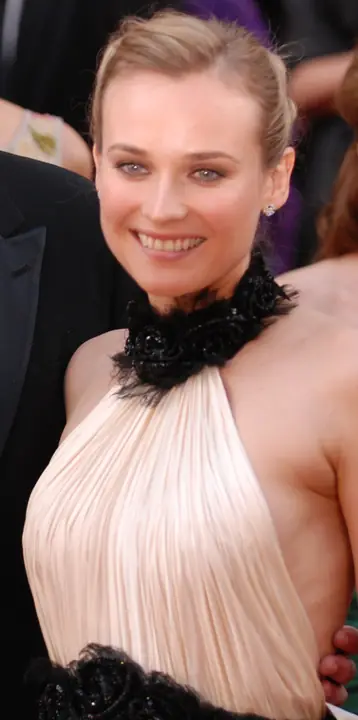
    Inglourious Basterds (2009) — Bridget Von Hammersmark
    Inglourious Basterds (2009): Bridget Von HammersmarkImage: Wikimedia Commons · Photo by Sgt. Michael Connors, Public domain

    PRODUCTION STORY · SOURCED

  10. #016

    While the search for a Colonel Hans Landa dragged on, Quentin Tarantino considered dropping the film, afraid he had written a part nobody could play. Once Christoph Waltz auditioned, though, he and producer Lawrence Bender agreed they had found the perfect actor.

    PRODUCTION STORY · SOURCED

  11. #017

    The only movie Brad Pitt made as a lead for The Weinstein Company or its earlier incarnation, Miramax. He has said it was all about working with Quentin Tarantino and had nothing to do with Harvey Weinstein. His hostility toward Weinstein dates back to the 90s, when Pitt physically threatened the producer after finding out Weinstein had sexually harassed his then-girlfriend Gwyneth Paltrow.

    PRODUCTION STORY · SOURCED

  12. #018

    The German-language version drops much of the script's multilingual play, except where the scene absolutely needs it. In the opening scene, for example, Landa and Perrier LaPadite start out in French and switch to German instead of English. All of Michael Fassbender's dialogue had to be re-recorded, though, including lines originally filmed in German, because Lt. Hicox first appears speaking German dubbed by another actor.

    PRODUCTION STORY · SOURCED

  13. #019

    Universal Pictures brought the film's German publicity website into line with German penal law, which restricts the display of Nazi iconography. The swastika was taken out of the title, and the steel helmet got a bullet hole where the Nazi symbol had been. The download section dropped any wallpapers openly showing the swastika. While posters and wallpapers may not show Nazi iconography, German law exempts "works of art," so the film itself is not censored in Germany.

    PRODUCTION STORY · SOURCED

  14. #020

    The film-within-the-film 'Stolz der Nation' (Nation's Pride), directed by Eli Roth, is included in full as a special feature on the Inglourious Basterds DVD and can also be found on Youtube. The fictional film's "director" is called Alois von Eichberg.

    PRODUCTION STORY · SOURCED

  15. #021

    Quentin Tarantino visited Brad Pitt at Chateau Miraval in France, where Pitt lived with Angelina Jolie. They spent a night, and five bottles of the estate's own Pink Floyd rosé, talking about him playing Aldo Raine, and by the end Pitt had said yes.

    PRODUCTION STORY · SOURCED

  16. #022

    Quentin Tarantino saw Mélanie Laurent three times. At the first meeting he played all the characters himself; at the second they read the lines together; the third was a face-to-face dinner. Over dinner he told her, "Do you know something? There's just something I don't like. It's that you're famous in your country, and I'm really wanting to discover somebody." Laurent answered, "No, no, no.... I'm not so famous", and four days later he called to give her the part of Shosanna.

    PRODUCTION STORY · SOURCED

  17. #023

    The film is fiction, but it took some inspiration from "Operation Greenup," a real mission by the Office of Strategic Services. In February 1945, three O.S.S. agents were parachuted into Austria: Fred Mayer, a German-born American spy; Hans Wijnberg, a Dutch-born agent who, like Mayer, was Jewish; and Franz Weber, a former Austrian Wehrmacht officer. For several months Mayer gathered intelligence on the Germans' "Alpine Fortress," posing as a Nazi officer and as a French electrician, while Wijnberg and Weber, staying with Weber's family in Innsbruck, radioed it to O.S.S. operatives in Bari, Italy. When a black marketer blew Mayer's cover, the Gestapo captured and tortured him, but he wouldn't give up the other two. General Franz Hofer, commander of the Nazi forces in western Austria, knew the war was lost and wanted to surrender to the Allies rather than to the Red Army. He had Mayer brought to his house and offered to get a message from him to the O.S.S. offices in Bern, Switzerland, through a German agent. Mayer helped negotiate the surrender of Germany's forces in Austria, which took place in Innsbruck on May 3, 1945, and afterwards he and Wijnberg went back to America. In 2012, they were reunited by webcam for the History Channel documentary The Real Inglorious Bastards (2012). Wijnberg died the day after that interview; Weber died in April 2016.

    PRODUCTION STORY · SOURCED

  18. #024

    The finished cut ran three hours and ten minutes. Before the first public screening, Quentin Tarantino and Sally Menke took two days to bring it down to its final length of two hours and thirty-three minutes.

    PRODUCTION STORY · SOURCED

  19. #025

    Quentin Tarantino was considering abandoning the film while the casting searched for someone to play Colonel Hans Landa, fearing he'd written a role that was unplayable. After Christoph Waltz auditioned, however, both Tarantino and producer Lawrence Bender agreed they had found the perfect actor for the role.

    PRODUCTION STORY · SOURCED

  20. #026
    Contains a major spoiler — show

    In the first draft of the script, Wilhelm survives being shot by Bridget von Hammersmark, and it is what he tells Colonel Hans Landa that blows her cover.

    PRODUCTION STORY · SOURCED

  21. #027
    Contains a major spoiler — show

    Samm Levine's part was much bigger in the original script, with Private First Class Hirschberg one of the main Basterds. In the film he gets a single line and vanishes before the closing scenes, his fate left open. Levine has said in interviews that Hirschberg made it to the end of the story: closing scenes that were written but never shot had him and some other Basterds meeting up with Lieutenant Raine and Private First Class Utivich after they dealt with Colonel Landa.

    PRODUCTION STORY · SOURCED

  22. #028
    Contains a major spoiler — show

    In earlier drafts, Shosanna was a far more active member of the French Resistance, picking off soldiers from rooftops and even keeping a death list of senior Nazi officials to cross off one by one. But Quentin Tarantino had used those ideas in his Kill Bill movies, so he felt they were redundant here and made Shosanna a more realistic character who keeps her head down.

    PRODUCTION STORY · SOURCED

  23. #029
    Contains a major spoiler — show

    The film Shosanna makes for the Nazis was meant to be in French in the original ending; Mélanie Laurent persuaded Quentin Tarantino to do it in English instead, to make the finale hit harder.

    PRODUCTION STORY · SOURCED

  24. #030

    With Kill Bill done, Tarantino went back to his first draft of Inglourious Basterds and thought about making it a mini-series, but Luc Besson convinced him to finish it as a film.

    PRODUCTION STORY · SOURCED

  25. #031

    It is the only film in which Brad Pitt starred for The Weinstein Company or Miramax. Pitt has said this came entirely from his desire to work with Tarantino and had nothing to do with Harvey Weinstein. His enmity toward Weinstein stems from his physically threatening the producer in the 1990s when he learned of his sexual harassment of Pitt's then-girlfriend Gwyneth Paltrow.

    PRODUCTION STORY · SOURCED

  26. #032

    In a roundtable interview, Tarantino said that Til Schweiger had previously refused to wear a Nazi uniform for a film role, owing to having been born and raised in Germany and to his genuine anti-Nazi hatred. When Schweiger was told that in every scene he would brutally kill a Nazi, he gladly accepted the role of Hugo Stiglitz.

    PRODUCTION STORY · SOURCED

  27. #033

    At the end of every take, the actors would turn to the camera and say "Hello Sally"; this was a greeting to the film's editor, Sally Menke. The practice had been in place since Tarantino's earlier films (Kill Bill: Vol. 1, Kill Bill: Vol. 2, Death Proof). Inglourious Basterds was the last film Menke edited for Tarantino; her work was honored with her final Oscar nomination for Best Editing in 2010, and she died the same year.

    PRODUCTION STORY · SOURCED

  28. #034

    Because Diane Kruger's best-known performances had been in English-language films, Tarantino thought she was American and doubted whether she could successfully deliver the German dialogue. At the audition, Kruger quickly proved she was a native German speaker.

    PRODUCTION STORY · SOURCED

  29. #035

    After the film's release, Daniel Brühl admitted that his French was not perfectly fluent during the audition. When Tarantino asked him to speak French, he bluffed, sometimes mixing French with Spanish, and he guessed correctly that Tarantino would not notice. Once Brühl received a translated version of the script, he was able to perfect his French pronunciation.

    PRODUCTION STORY · SOURCED

  30. #036

    Michael Fassbender's performance as Lieutenant Archie Hicox is full of layers of irony. Fassbender was born in Heidelberg, Germany, to German and Irish parents and was raised in Ireland. He now lives in London; his native language is German, his second is Irish, his third is English, and he is a master of English accents and dialects. In this film he plays an Englishman posing as a German who speaks German fluently but struggles to hide his accent.

    PRODUCTION STORY · SOURCED

  31. #037

    To prepare for her role, Mélanie Laurent worked for several weeks as a film projectionist at the New Beverly Cinema, mostly projecting cartoons and trailers before screenings. The real test Tarantino set was for her to screen Reservoir Dogs (1992).

    PRODUCTION STORY · SOURCED

  32. #038

    B.J. Novak had to get permission from The Office (2005) to play Private Utivich. His absence from the series was explained by his character "going to Thailand with friends from high school."

    PRODUCTION STORY · SOURCED

  33. #039

    The giant swastika that falls to the ground in the final scene is real. It was a mistake that happened on set.

    PRODUCTION STORY · SOURCED

  34. #040

    In the German propaganda film within the film, "Nation's Pride," directed by Eli Roth, Tarantino voiced an American soldier who says, "I beg you, we must destroy that tower!" A Tarantino dummy also appears in the film as the first German to be scalped.

    PRODUCTION STORY · SOURCED

  35. #041

    Eli Roth and Omar Doom nearly caught fire for real while shooting the theater fire scene. In tests the flame temperature had reached 750°F (400°C), but during the shoot the set got out of control; the ceiling temperature hit 2000°F (1093°C). Tarantino was operating the camera on a crane in a fireproof suit, and no one wanted to back down. Fire marshals said that if filming had continued for another fifteen seconds, the steel structure would have collapsed. Roth and Doom escaped with minor burns.

    PRODUCTION STORY · SOURCED

  36. #042

    Shosanna's father, Jakob (seen hiding under the floorboards in the farmhouse), was played by Patrick Elias. Elias's father, Buddy Elias, was Anne Frank's first cousin.

    PRODUCTION STORY · SOURCED

  37. #043

    Eli Roth directed the film-within-the-film, "Nation's Pride." Roth, whom Tarantino asked to direct this short, stipulated that his brother Gabriel also work as second camera. The brothers, who set up a hundred and thirty camera setups in two days, pleased Tarantino so much that he gave Roth the planned third day as well. The short film, five and a half minutes in total, was designed to feel not like a coherent whole but like fragments of a longer film.

    PRODUCTION STORY · SOURCED

  38. #044

    In the scene where Bridget von Hammersmark is strangled to death, Diane Kruger nearly drowned for real. Tarantino was bothered by the artificiality of strangulation scenes in other films and convinced Kruger to actually be strangled. Fearing that Christoph Waltz could not do it properly, Tarantino shot the scene himself. He told Kruger, "I'm going to strangle you, I'm going to cut off your air, just for a short while," and strangled her to the point of fainting. Fortunately, the take was completed in one go.

    PRODUCTION STORY · SOURCED

  39. #045

    Asked how he got into the savage mindset of the "Bear Jew," Eli Roth attributed his performance partly to historically accurate costumes: "Wearing wool underwear makes you want to kill everything." He also noted that he had secretly added Hannah Montana music to his girlfriend's iPod, and that listening to it inexplicably allowed him to access the character's savage nature.

    PRODUCTION STORY · SOURCED

  40. #046

    The posters for the propaganda film "Stolz der Nation" were prepared in the style of Third Reich film posters, historically accurate down to including the German censorship stamp of the period.

    PRODUCTION STORY · SOURCED

  41. #047

    The foods Landa chooses for Shosanna are symbolic. The glass of milk refers back to the moment at LaPadite's farm where Landa drinks milk and Shosanna's family is killed; the strudel, made with lard, is not kosher and violates Jewish dietary rules.

    PRODUCTION STORY · SOURCED

  42. #048

    In the original ending, Shosanna's film for the Nazis was to be in French. Mélanie Laurent suggested to Tarantino that it be done in English to make the ending stronger.

    PRODUCTION STORY · SOURCED

  43. #049

    Lieutenant Aldo Raine (Brad Pitt) uses the name "Enzo Gorlomi" while impersonating an Italian actor at the end of the film; this is the birth name of Enzo G. Castellari, director of The Inglorious Bastards (1978).

    PRODUCTION STORY · SOURCED

  44. #050

    In the first drafts of the script, Shosanna was a more active member of the French resistance, shooting soldiers from rooftops and keeping a death list. But when Tarantino used those details in the Kill Bill films, he decided to make Shosanna a more realistic and humble character to avoid repeating himself.

    PRODUCTION STORY · SOURCED

  45. #051

    Tarantino put all the actors playing the Basterds through a one-day 'scalping training.' He told the three best practitioners that he would give them close-ups while performing the act. One of those moments is the scene in the final sequence where Utivich scalps Landa's driver.

    PRODUCTION STORY · SOURCED

  46. #052

    Quentin Tarantino never learned the French and German translations of his dialogue; he directed every non-English scene on instinct.

    PRODUCTION STORY · SOURCED

  47. #053

    Diane Kruger said that she and the other German actors in the bar scene had to learn their lines in both English and German. Because Tarantino directed the scene in English, the actors had to match the pace of the English dialogue in the subtitles even while speaking German.

    PRODUCTION STORY · SOURCED

  48. #054

    In the cinema scene, Sergeant Donny Donowitz (Eli Roth) uses the alias 'Antonio Margheriti'. This is the name of cult Italian director Antonio Margheriti, one of Roth's and Tarantino's favorite directors.

    PRODUCTION STORY · SOURCED

  49. #055

    The strange glove guns Donny and Omar use to storm Hitler's box are known as Sedgley OSS.38s. They were actually designed as a last-resort weapon for U.S. Navy construction crews.

    PRODUCTION STORY · SOURCED

  50. #056

    The film's final cut ran 3 hours and 10 minutes. Before the first public screening, Tarantino and Sally Menke cut it down to 2 hours and 33 minutes in two days.

    PRODUCTION STORY · SOURCED

  51. #057

    Stiglitz's knife bears the inscription 'Meine Ehre heisst Treue', meaning 'My honor is loyalty'. This inscription appeared on all SS soldiers' knives.

    PRODUCTION STORY · SOURCED

  52. #058

    The operation to kill the German officers is called 'Kino', which means 'cinema' in German.

    PRODUCTION STORY · SOURCED

  53. #059

    Tarantino often moves a trio of the same background characters together. In this film, they are the three German schoolgirls who pass Colonel Hans Landa as he comes down the stairs.

    PRODUCTION STORY · SOURCED

  54. #060

    Brad Pitt knows German in real life; he learned the language out of an interest in his German ancestors and has visited Germany many times. Ironically, Lieutenant Aldo Raine never speaks German in the film.

    PRODUCTION STORY · SOURCED

  55. #061

    At the auditions in Berlin, Michael Fassbender asked about the role of Colonel Hans Landa. Tarantino replied, 'Look, any man who plays Heathcliff is not German enough to play my Landa.'

    PRODUCTION STORY · SOURCED

  56. #062

    Enzo G. Castellari, director of The Inglorious Bastards (1978), made a cameo as a General shouting 'Fire!' in exchange for allowing the use of the title 'Inglourious Basterds'. Tarantino shot Castellari as a General pointing at the burning screen, but the scene did not make the theatrical cut.

    PRODUCTION STORY · SOURCED

  57. #063

    Major Hellstrom, saying his card is King Kong (1933), voices Tarantino's interpretation of the film as an allegory for the American slave trade. Tarantino had explained this interpretation in an interview with Terry Gross on National Public Radio.

    PRODUCTION STORY · SOURCED

  58. #064

    Quentin Tarantino personally called Rod Taylor to offer him the role of Sir Winston Churchill. When Taylor learned the film would be shot in Germany, he said that Albert Finney lived in England and had won great acclaim for playing Churchill in The Gathering Storm (2002). Tarantino's answer was clear: 'If Rod Taylor turns me down, I'll call Albert Finney.' Taylor accepted the role.

    PRODUCTION STORY · SOURCED

  59. #065

    In the basement bar scene, Michael Fassbender, who was born in Germany and speaks fluent German, spoke with an unusual accent. He mispronounced some sounds and broke the natural rhythm.

    PRODUCTION STORY · SOURCED

  60. #066

    The three girls who get Zoller's autograph at the cinema wear the distinctive brown jackets of the Bund Deutscher Mädel (BDM), the girls' wing of the Hitler Youth.

    PRODUCTION STORY · SOURCED

  61. #067

    Quentin Tarantino met Brad Pitt at Chateau Miraval in France. They discussed the role of Aldo Raine over the course of a night and five bottles of the chateau's own Pink Floyd rosé wine; Pitt accepted the role.

    PRODUCTION STORY · SOURCED

  62. #068

    While questioning Hicox's accent, Major Hellstrom addresses Corporal Wilhelm Wicki as 'Lieutenant of Munich' and Sergeant Hugo Stiglitz as 'Lieutenant of Frankfurt'. In real life, Burkhard is from the Munich area and Schweiger is from Frankfurt.

    PRODUCTION STORY · SOURCED

  63. #069

    Despite his fame and his position as the Basterds' leader, Aldo Raine is seen killing only one person in the film: the scene where he shoots the radio operator at the end.

    PRODUCTION STORY · SOURCED

  64. #070

    Quentin Tarantino met with Mélanie Laurent in three stages: in the first he performed all the characters, in the second they shared lines, and in the third they had a face-to-face meal. At the meal he told Laurent, 'You know, there's something I don't like. You're famous in your country and I really want to discover someone.' Laurent replied, 'No, no... I'm not that famous,' and four days later Tarantino called to confirm her as Shosanna.

    PRODUCTION STORY · SOURCED

  65. #071

    None of the weapons the Basterds use are American-made; this fits their being a secret assassination squad in occupied enemy territory. B.J. Novak said they trained with German weapons at a company in Berlin. According to the story, the Basterds took the weapons of every Nazi they killed and could use them flawlessly.

    PRODUCTION STORY · SOURCED

  66. #072

    Chapter Three is the only chapter in the film in which no one dies and no English is spoken.

    PRODUCTION STORY · SOURCED

  67. #073

    When Aldo Raine is introduced, he wears the insignia of the 1st Special Service Force, the 'Black Devils', made up of Canadian and American soldiers.

    PRODUCTION STORY · SOURCED

  68. #074

    In the final card game in the LaLouisiane tavern, the card Major Hellstrom has to identify is King Kong. King Kong (1933) was one of Adolf Hitler's favorite films.

    PRODUCTION STORY · SOURCED

  69. #075

    Quentin Tarantino stated that he believes Frederick Zoller genuinely loved Shosanna and that their final encounter was tragic. Zoller forcing his way into the projection room and threatening Shosanna represents his feelings getting out of control at the worst possible moment.

    PRODUCTION STORY · SOURCED

  70. #076

    Bridget von Hammersmark, the German film star and double agent, is partly based on Marlene Dietrich. Although Dietrich never served as an overseas agent, she worked with the Office of Strategic Services (OSS) during World War II. In 1944, she made propaganda broadcasts for the OSS's Morale Operations Branch under the Musak project, intended to demoralize enemy soldiers. She recorded songs, including the German "Lili Marlene," and recordings announcing Allied victories and German defeats. For her efforts, she received a commendation and the Medal of Freedom from OSS commander William J. Donovan. During the war, Dietrich's sister and her husband stayed in Germany and ran a cinema in Belsen that was a haunt of German officers. Dietrich and her sister reunited after the war.

    PRODUCTION STORY · SOURCED

  71. #077

    Although Michael Fassbender speaks fluent German, he admitted that he normally speaks with a Mid-Atlantic accent and had to work with a voice coach to sound like a German-speaking British officer.

    PRODUCTION STORY · SOURCED

  72. #078

    In the first draft of the screenplay, Wilhelm survives after being shot by Bridget von Hammersmark, and the information he gives Colonel Hans Landa exposes her.

    PRODUCTION STORY · SOURCED

  73. #079

    Sergeant Donny Donowitz, the "Bear Jew" (Eli Roth), mentions "Teddy Ballgame" in Chapter Two. This is one of Ted Williams's nicknames; Williams was a war hero who interrupted his baseball career twice to serve in World War II and the Korean War.

    PRODUCTION STORY · SOURCED

  74. #080

    The film shown on the second large poster is Le Corbeau (1943), made during the Nazi occupation of France and containing covert anti-Nazi messages that evaded censorship.

    PRODUCTION STORY · SOURCED

  75. #081

    Eli Roth put on fifteen kilos of muscle for the role of Sergeant Donny Donowitz. He also learned how to cut hair from Umberto, the father of producer Pilar Savone.

    PRODUCTION STORY · SOURCED

  76. #082

    The shooting script included a scene in which Raine and his men frighten the veterinarian Bridget Von Hammersmark into treating her bullet wound by shooting two dogs in cages. It was filmed but cut from the final edit; even so, in the scene where Hammersmark is at the table, perforated wire fencing, bloodstains and dead dogs are visible behind her.

    PRODUCTION STORY · SOURCED

  77. #083

    The book Shosanna reads in the café is the French edition of Leslie Charteris's novel The Saint in New York. The novel is known for its gentleman crime-hunter coolly killing gangsters to avenge a murder, which parallels Lieutenant Raine's mission.

    PRODUCTION STORY · SOURCED

  78. #084

    At the film's premiere, Joseph Goebbels introduces Frederick Zoller to Emil Jannings and calls him "the world's greatest actor." Jannings was a silent film star; in 1928 he became the first person to win the Academy Award for Best Actor. When his Hollywood career ended with the arrival of sound films, he returned to Germany and appeared in Nazi propaganda films. Goebbels declared him a "State Artist."

    PRODUCTION STORY · SOURCED

  79. #085

    Mike Myers wanted to be in the film because his family served in the British Armed Forces. He described his character's accent as "a version of Royal English meeting the officer class," but said the real emphasis was the "I'm sick of this war" attitude.

    PRODUCTION STORY · SOURCED

  80. #086

    In the game played by German soldiers in the film, the name written on one soldier's forehead is Mata Hari.

    PRODUCTION STORY · SOURCED

  81. #087

    The large Nazi eagle in the cinema lobby is based on a bronze eagle at the Reich Chancellery in Berlin. The original is now at the United States Air Force Museum in Ohio.

    PRODUCTION STORY · SOURCED

  82. #088

    Shoshanna is barefoot at the end of the opening scene as she flees from Colonel Hans Landa, and in the final scenes in the projection room.

    PRODUCTION STORY · SOURCED

  83. #089

    The word "Inglorious" is never spoken in the film; it appears only engraved on the butt of Lieutenant Raine's gun.

    PRODUCTION STORY · SOURCED

  84. #090

    Tarantino's signature shot from a trunk or engine compartment gives way in this film to shots from the point of view of victims bearing swastika scars.

    PRODUCTION STORY · SOURCED

  85. #091

    Near the end of Chapter 2, as Wicki is interpreting, a gold leaf falls onto his chest near his left shoulder; it resembles the yellow Star of David the Nazis forced Jews to wear. As Raine says, "We like wearing Nazi uniforms; that way we can spot them right away," the leaf stays in place.

    PRODUCTION STORY · SOURCED

  86. #092

    When Zoller goes up to the projection booth to see Shosanna, the music playing in the background is the same piece heard during the attack on the bank tanks in Kelly's Heroes (1970).

    PRODUCTION STORY · SOURCED

  87. #093

    Cloris Leachman played Mrs. Himmelstein, an elderly Jewish woman living in Boston. Although scenes in which she drinks tea with Donny Donowitz and signs his baseball bat were shot, they were cut from the final film. Tarantino says he may use the footage in a prequel.

    PRODUCTION STORY · SOURCED

  88. #094

    In one of the film's posters, a bloodied German helmet hangs from an equally bloodied baseball bat. Where the bat would normally bear the logo 'Hillerich and Bradsby Louisville, Kentucky', it here reads 'Knoxville, TN', Quentin Tarantino's hometown.

    PRODUCTION STORY · SOURCED

  89. #095

    Among the three Basterds who enter the cinema imitating Italian filmmakers, the one described as 'the one who speaks the least Italian' is actually the one with the most convincing Italian accent: Private Omar Ulmer (Omar Doom).

    PRODUCTION STORY · SOURCED

  90. #096

    While hiding under the floor of the LaPadite house, Shosanna cannot understand the English conversation between the French farmer and SS Colonel Landa. Yet later she films her speech to the German political elite about to be burned in fluent English; most of the German audience, Hitler included, does not understand what she is saying.

    PRODUCTION STORY · SOURCED

  91. #097

    In the LaLouisiane scene, a 'Mexican standoff' occurs twice: between Archie Hicox, Dieter Hellstrom and Hugo Stiglitz, and a few minutes later between Aldo Raine and Sergeant Wilhelm. Raine and Wilhelm also discuss the requirements of such a standoff.

    PRODUCTION STORY · SOURCED

  92. #098

    As in all his films, deliberately obvious mistakes have been included. For example, English subtitles for characters speaking a foreign language sometimes include foreign words. When Colonel Landa (Christoph Waltz) speaks with the French farmer, he says 'Oui'; the subtitle reads 'Oui' rather than 'Yes', whereas all other French dialogue is translated into English.

    PRODUCTION STORY · SOURCED

  93. #099

    In the original script, Samm Levine's role was much larger; Private Hirschberg was one of the main members of the Basterds. In the film, however, Hirschberg speaks only one line and disappears before the closing scenes, his fate left unclear. In interviews, Levine confirmed that Hirschberg survived to the end of the story and that, in closing scenes that were written but never shot, he and the other Basterds met up with Lieutenant Raine and Private Utivich after dealing with Colonel Landa.

    PRODUCTION STORY · SOURCED

  94. #100

    At one point Tarantino seriously considered making the Basterds into a roughly 5-part TV miniseries, but his friend Luc Besson persuaded him otherwise.

    PRODUCTION STORY · SOURCED

  95. #101

    The film-within-the-film 'Stolz der Nation' (Nation's Pride) was directed by Eli Roth and has been included in full as a special feature on the Inglourious Basterds DVD, and can also be watched on YouTube. The fictional film's 'director' is Alois von Eichberg.

    PRODUCTION STORY · SOURCED

  96. #102

    A very subtle but accurate historical detail in the script that most people miss emerges when German Army (Heer) or Nazi Party Schutzstaffel (SS) characters refer to or speak with SS personnel. The SS was not part of the Heer or the Wehrmacht and used different rank titles, though its members generally wore Wehrmacht rank insignia on their uniforms. Hicox, Wicki and Stiglitz (when they meet in the basement tavern), along with Landa and Hellstrom, wear SS uniforms. The Heer and SS characters use real SS rank titles such as Standartenführer, Sturmbannführer, Hauptsturmführer and Obersturmführer. However, the French, German civilian (von Hammersmark) and American and British characters (when not pretending to be German) address SS characters by their Heer rank equivalents: Colonel/Oberst, Major, Captain/Hauptmann, Senior Lieutenant/Oberleutnant. Whichever title is spoken, the subtitles always use the Heer ranks in English.

    PRODUCTION STORY · SOURCED

  97. #103

    While preparing to play Sir Winston Churchill, Rod Taylor watched dozens of DVDs of Churchill footage in order to get his posture, body language and voice right, including the lisp.

    PRODUCTION STORY · SOURCED

  98. #104

    When Mélanie Laurent auditioned for the role, she told Quentin she was fluent in English despite having said she did not know the language. She learned it by watching an excessive amount of Gossip Girl episodes.

    PRODUCTION STORY · SOURCED

  99. #105

    When Major Hellstrom stands in front of the cinema, the music from the scene in Kill Bill: Vol. 1 where Beatrix Kiddo stabs her sword into one of the Crazy 88s plays. This melody hints at approaching danger.

    PRODUCTION STORY · SOURCED

  100. #106

    The character Babe Buchinsky, whom Michael Madsen was planned to play, takes his name from Charles Bronson's real name, Charles Buchinsky. Bronson had appeared in The Dirty Dozen, which inspired the film.

    PRODUCTION STORY · SOURCED

  101. #107

    Sergeant Donny Donowitz is part of the Tarantino universe; he shares the same surname as the producer Lee Donowitz in True Romance. According to Tarantino, Donny is Lee's father.

    PRODUCTION STORY · SOURCED

  102. #108

    The German version of the film largely skips its multilingual structure. While Landa and LaPadite start in French and switch to German in the opening scene, all of Fassbender's dialogue was re-dubbed.

    PRODUCTION STORY · SOURCED

  103. #109

    In the restaurant scene, the striking sound that plays when Shosanna hears the name of Landa, who killed her family, and realizes he is behind her is from Charles Bernstein's score for The Entity.

    PRODUCTION STORY · SOURCED

  104. #110

    In his recruitment monologue, Aldo says he is descended from "mountain man Jim Bridger." Bridger had Native American wives, but none of them were Apache; hence his nickname "Aldo the Apache."

    PRODUCTION STORY · SOURCED

  105. #111

    The character Frederick Zoller is largely inspired by Audie Murphy. At the audition, Daniel Brühl took part in screen tests with French actresses competing for the role of Shosanna.

    PRODUCTION STORY · SOURCED

  106. #112

    The Wilhelm scream is heard at two death moments in the film: the first half-second at the 90th minute, the rest 20 minutes later. It is also heard when a soldier is shot and falls in the film within the film.

    PRODUCTION STORY · SOURCED

  107. #113

    The village of Nadine is not real, but its location on the map corresponds to the town of Nanteuil-le-Haudouin. The word "Haudouin" is still visible on the map.

    PRODUCTION STORY · SOURCED

  108. #114

    Sherlock Holmes is mentioned twice in the film: Landa's pipe resembles Holmes's Calabash Meerschaum; Landa says, "Finding people is my specialty."

    PRODUCTION STORY · SOURCED

  109. #115

    The character played by B.J. Novak is called 'Little Man' by the Germans. This nickname is not new for Novak; his character was addressed the same way in the 'Dunder Mifflin Infinity' episode of The Office.

    PRODUCTION STORY · SOURCED

  110. #116

    In the scene at Perrier LaPadite's house, while Colonel Hans Landa drinks a glass of milk, a moth climbs onto the rim of the glass and descends toward the bottom in a spiral.

    PRODUCTION STORY · SOURCED

  111. #117

    Quentin Tarantino initially imagined Aldo Raine's Italian as more proper. However, when Brad Pitt's saying 'Buongiorno' with a thick Southern accent during the script reading caused an explosion of laughter, Tarantino decided to leave the scene as it was.

    PRODUCTION STORY · SOURCED

  112. #118

    One of the Basterds also played the painter in the background of Adolf Hitler's introduction scene. The actor Levine confirmed this on Twitter on August 21, 2009, with a photo of the character.

    PRODUCTION STORY · SOURCED

  113. #119

    In the Heer (Army of the 3rd Reich), regulations would have prevented an Oberfeldwebel (Senior Sergeant Major) from fraternizing with a Gefreiter (Private) and a Soldat (Soldier).

    PRODUCTION STORY · SOURCED

  114. #120

    Shoshanna includes the names of directors, including German directors, on her cinema's poster, because although she does not approve of the occupation, she respects art. At the 'Nations Pride' premiere, however, the poster has only the film's name and its star; the director's name is absent, showing her disrespect.

    PRODUCTION STORY · SOURCED

  115. #121

    In the basement bar scene, one of the privates refers to Karl May and says his character is Winnetou. Winnetou, the Native American hero of Karl May's western books, was among Hitler's favorite authors. However, the three-finger heart salute is an anachronism; this gesture was the signature of the 1960s Winnetou films.

    PRODUCTION STORY · SOURCED

  116. #122

    The first choice for the role of Madame Mimieux was Isabelle Huppert, but when schedules conflicted Tarantino gave the role to Maggie Cheung. The role was ultimately cut from the film.

    PRODUCTION STORY · SOURCED

  117. #123

    Colonel Hans Landa's speech likening Jews to rats was influenced by the Nazi propaganda film The Eternal Jew (1940). The film associated Jews with rats, claiming they spread diseases that would contaminate the Aryan people.

    PRODUCTION STORY · SOURCED

  118. #124

    The standoff in the LaLouisiane scene between Aldo and Sergeant Wilhelm resembles a scene in Kill Bill: Vol. 2: the Bride learns she is pregnant and comes face to face with a female assassin; because of her pregnancy she offers to let the assassin go. Sergeant Wilhelm, too, offers to let Aldo go because he became a father that night. The difference is that while the Bride stays true to the agreement, Aldo stays true to the agreement while Bridget von Hammersmark shoots Sergeant Wilhelm. Both characters begin the negotiations by saying 'Then let's talk'.

    PRODUCTION STORY · SOURCED

  119. #125

    At the end of the film, Lieutenant Raine shoots Landa's driver Hermann in the stomach; since a stomach wound can take hours to kill, it is possible he is still alive while being scalped.

    PRODUCTION STORY · SOURCED

  120. #126

    Close-ups of the characters' feet are frequently seen throughout the film.

    PRODUCTION STORY · SOURCED

  121. #127

    The scream of the person bursting from the burning building after the cinema explosion belongs to Kurt Russell's character Stuntman Mike in Death Proof.

    PRODUCTION STORY · SOURCED

  122. #128

    A similarity between the film and the film within the film (Nation's Pride): in both, foreign-language dialogue is translated with subtitles.

    PRODUCTION STORY · SOURCED

  123. #129

    Continuing his tradition of harassing waitresses, Tarantino kills the barmaid Mathilda in the confrontation at the La Louisiane tavern.

    PRODUCTION STORY · SOURCED

  124. #130

    The gold medal around Landa's neck at the premiere is the Knight's Cross of the War Merit Cross with Swords; since this award was established in October 1944, it is historically impossible for Landa to have received it, but this is debatable since the film is fictional.

    PRODUCTION STORY · SOURCED

  125. #131

    General Ed Fenech (Mike Myers) takes his name from Edwige Fenech, the legendary actress of Italian horror films. Fenech had retired from acting, but last appeared in Eli Roth's Hostel: Part II (2007). Roth played the character Sergeant Donny Donowitz, the 'Bear Jew', in the film.

    PRODUCTION STORY · SOURCED

  126. #132

    August Diehl, playing Burger, a Jew, in The Counterfeiters (2007), says the line 'I would never put myself in the place of an SS criminal'. In this film, he played the SS officer Major Hellstrom in the bar.

    PRODUCTION STORY · SOURCED

  127. #133

    Alongside the role of Private Butz, Möhring also appears as Gestapo Officer Walter Frazer; he is at the bistro with Fredrick and Shosanna and his French girlfriend.

    PRODUCTION STORY · SOURCED

  128. #134

    Francesca Mondino's (Goebbels's French interpreter and mistress) striking leopard-print fascinator is a direct homage to a design by the famous Italian fashion designer of the era, Elsa Schiaparelli. When the Nazi occupation began, Schiaparelli fled Paris for New York and stayed there until the end of the war.

    PRODUCTION STORY · SOURCED

  129. #135

    Reinforcing Bridget von Hammersmark's (Diane Kruger) question, "Can you Americans speak any language other than English?", among the American (and Canadian) actors only Brad Pitt, Eli Roth and Omar Doom know a foreign language; and they speak Italian with the terrible accent von Hammersmark describes.

    PRODUCTION STORY · SOURCED

  130. #136

    Although many films written by Tarantino contain a Mexican standoff scene (Reservoir Dogs, Pulp Fiction, True Romance, Natural Born Killers, Kill Bill), this film has the first Mexican standoff scene in which the characters explicitly discuss the situation they are in. (Note: While escaping the cell with Mallory, Mickey Knox says, "This is a Mexican standoff.")

    PRODUCTION STORY · SOURCED

  131. #137

    The legendary director Claude Lanzmann (director of the Holocaust documentary Shoah and someone who frequently leveled harsh criticism at Nazi-themed fiction films) told the Israeli newspaper Haaretz that he liked this film very much.

    PRODUCTION STORY · SOURCED

  132. #138

    According to a deleted scene, before the Bear Jew went off to war, while he bought and decorated his signed bat in Boston, Donny Donowitz (Eli Roth) had the Jews in his neighborhood sign the bat and wrote down the names and signatures of prominent Jews. One of the names carved into the bat is Anne Frank, the young Jewish girl who wrote her life story while in hiding between 1942 and 1944 and died of typhus at the Bergen-Belsen concentration camp in Germany in 1945.

    PRODUCTION STORY · SOURCED

  133. #139

    The fictional character Francesca Mondino bears a resemblance to the Czech actress Lída Baarová, who in real life had a two-year relationship with Joseph Goebbels.

    PRODUCTION STORY · SOURCED

  134. #140

    The music that plays when the character Hugo Stiglitz is introduced is the theme from the 1972 blaxploitation film Slaughter. That film starred retired NFL player Jim Brown; Brown also played the character Jefferson in the 1967 film The Dirty Dozen. Interestingly, another retired football player, Fred Williamson, appeared in the original Inglorious Bastards (1978); Williamson played cornerback in the AFL and portrayed Private Fred Canfield in the original film. Williamson also appeared in many blaxploitation films, including several collaborations with Jim Brown. Both Jim Brown and Fred Williamson later appeared in Original Gangstas (1996) alongside Pam Grier, the star of Jackie Brown (1997).

    PRODUCTION STORY · SOURCED

  135. #141

    Hans's saying "999.999 times out of a million" is not a mistake; most European countries use a decimal point where Americans use a comma in numbers. In America this number would be 999,999 out of a million.

    PRODUCTION STORY · SOURCED

  136. #142

    Operation Kino's plan was to kill Hitler and the senior leaders who could take over the administration after his death. Although Hitler, Joseph Goebbels, Martin Bormann and Hermann Göring are shown in the cinema in the film, other senior Nazi leaders who could replace Hitler, such as Heinrich Himmler and Albert Speer, were conspicuously absent. The survival of at least these two could have undermined the intended objective of the British military operation.

    PRODUCTION STORY · SOURCED

  137. #143

    Before Sergeant Donny Donowitz, the "Bear Jew", emerges from under the bridge, he strikes his bat against the tunnel walls a total of twenty-seven times.

    PRODUCTION STORY · SOURCED

  138. #144

    A small nod: Captain Aldo, played by Brad Pitt, complains before meeting Bridget von Hammersmark in a tavern's basement that "there are many difficulties to fighting in a basement." Yet ten years earlier, Pitt had starred in Fight Club, where most of the fights take place in a bar's basement.

    PRODUCTION STORY · SOURCED

  139. #145

    At least two of the cows (if not all) in the scene where Hans Landa arrives at the LaPadite farm are computer-generated and composited.

    PRODUCTION STORY · SOURCED

  140. #146

    In the scene between Archie Hicox (Michael Fassbender) and General Ed French (Mike Myers), General French describes all the high-ranking Nazis attending the Nation's Pride premiere as "putting all the rotten eggs in one basket." This is a line of dialogue from the 1963 film The Great Escape; in the film, Luftwaffe Colonel Von Luger (Hans Messemer) explains to Squadron Leader Bartlett (Richard Attenborough) that escaping from the prisoner-of-war camp is impossible.

    PRODUCTION STORY · SOURCED

  141. #147

    In the tavern scene, Lieutenant Hicox's card reads 'Brigitte Horney'. This is the name of a German actress who appeared in British films, and it implies that the Gestapo Major who wrote the card suspects Hicox.

    PRODUCTION STORY · SOURCED

  142. #148

    A large part of the Bride character in Kill Bill was actually written for Shosanna Dreyfus in this film; Tarantino had begun developing this film before Kill Bill. Shosanna was conceived as an assassin who keeps a list of the Nazis she will kill.

    PRODUCTION STORY · SOURCED

  143. #149

    Quentin Tarantino, likening Shosanna Dreyfus to the title character of Jackie Brown (1997), explained: 'Shosanna's power is her ability to stay cool in difficult situations where everyone else falls apart. While everyone else melts down, she manages to keep her cool.'

    PRODUCTION STORY · SOURCED

  144. #150

    The future right-wing populist politician and climate change denier Karsten Hilse (Alternative for Germany party) can be seen in the film playing an Allied soldier in the film-within-the-film German Pride. In 2009, Hilse uploaded several behind-the-scenes photos to his Facebook account, in costume and interacting with Daniel Brühl.

    PRODUCTION STORY · SOURCED

Behind the Scenes (60)

  1. #151

    The large Nazi eagle in the theater lobby is modeled on Kurt Schmid-Ehmen's bronze eagle from the Reichs Chancellery in Berlin; the original now sits in the U.S. Air Force Museum in Dayton, Ohio.

    BEHIND THE SCENES · SOURCED

  2. #152

    Eli Roth bulked up by thirty-five pounds of muscle to play Sergeant Donny Donowitz, "The Bear Jew". He also learned to cut hair for the part from Umberto, father of producer Pilar Savone, at his salon in Beverly Hills, California.

    BEHIND THE SCENES · SOURCED

  3. #153

    Asked how he got into the violent, bat-swinging head of "The Bear Jew", Eli Roth gave some credit to the historically accurate costumes: "Being in wool underwear will make you want to kill anything." In another interview he said his girlfriend had secretly put some Hannah Montana (2006) music on his iPod, and listening to it somehow put him in touch with The Bear Jew's violent side.

    BEHIND THE SCENES · SOURCED

  4. #154

    According to the book "Film Posters of the Third Reich", the mock posters for the propaganda film "Stolz der Nation" are historically accurate, down to a German censor's approval stamp, and done in the style of film posters of the period.

    BEHIND THE SCENES · SOURCED

  5. #155

    (at around 1h 14 mins) At around 1 hour and 14 minutes, in the basement bar scene, German-born Michael Fassbender, a fluent German speaker, deliberately put on an odd accent, getting certain sounds wrong and speaking slightly off the natural rhythm.

    BEHIND THE SCENES · SOURCED

  6. #156

    (at around 1h 4 mins) At around 1 hour and 4 minutes, Archie Hicox (Michael Fassbender) wears a Commando Green Beret, the Combined Operations badge on his left arm, 'No.4 COMMANDO' flashes on his shoulders and an Intelligence Corps cap badge on his beret. So he was an Intelligence Corps officer who had passed the Commando Course at Achnacarry and was then serving with No.4 Commando ("commando" meaning both a commando-trained individual and a battalion-sized unit of commando troops). His medals are the Military Cross, awarded for bravery in the face of the enemy, and the Africa Star, which means he served in Africa from 1942 to 1943 and earned the Military Cross there.

    BEHIND THE SCENES · SOURCED

  7. #157

    (at around 31 mins) At around 31 minutes, before Sergeant Donny Donowitz, "The Bear Jew", steps out from under the bridge, he knocks his bat against the tunnel walls twenty-seven times in all.

    BEHIND THE SCENES · SOURCED

  8. #158

    Quentin Tarantino first pictured Aldo Raine speaking better Italian than he does in the final film, but at the script reading Brad Pitt said "Buongiorno" in a broad Southern accent. It got such a laugh that Tarantino kept it that way for the rest of the scene.

    BEHIND THE SCENES · SOURCED

  9. #159

    (at around 16 mins) At around 16 minutes, at Perrier LaPedite's dining table, Colonel Hans Landa is enjoying a glass of milk when a moth crawls up the side of the glass and ends up spiraling down inside it toward the bottom.

    BEHIND THE SCENES · SOURCED

  10. #160

    (at around 2 mins) At around 2 minutes, as Hans Landa arrives at the LaPadite farm, at least two of the cows in the shot, if not all of them, are computer-generated and composited in.

    BEHIND THE SCENES · SOURCED

  11. #161

    (at around 12 mins) At around 12 minutes, Shosanna Dreyfus's father, Jakob, whom we briefly see hiding beneath the floorboards of Perrier LaPadite's farmhouse, is played by Patrick Elias, whose father, Buddy Elias, was Anne Frank's first cousin.

    BEHIND THE SCENES · SOURCED

  12. #162

    (at around 2h 25 mins) Filming the theater fire, Eli Roth and Omar Doom came close to being burned alive. In tests the flames had reached seven hundred fifty degrees Fahrenheit (four hundred degrees Celsius); during the actual take the set burned out of control and the ceiling above them hit two thousand degrees Fahrenheit (1,093 degrees Celsius). Quentin Tarantino sat on a crane in a fireproof suit operating the camera, and nobody wanted to pull back and spoil the shot. Fire Marshals said fifteen more seconds of filming and the steel structure would have come down, incinerating the actors. Roth and Doom were treated for minor burns.

    BEHIND THE SCENES · SOURCED

  13. #163

    Quentin Tarantino never learned the French and German versions of his dialogue; he directed every non-English scene by instinct.

    BEHIND THE SCENES · SOURCED

  14. #164

    In place of Tarantino's trademark shot looking up at actors from a car trunk or engine compartment, we get shots from the point of view of victims having swastikas carved into them.

    BEHIND THE SCENES · SOURCED

  15. #165

    Diane Kruger said she and the other German actors in the bar scene had to learn their lines in both English and German, because Quentin Tarantino directed the scene in English; even when they spoke German on set, they had to match the pace at which the English version would appear in the subtitles.

    BEHIND THE SCENES · SOURCED

  16. #166

    For a few weeks before filming, Mélanie Laurent worked as a projectionist at the New Beverly Cinema, mostly showing cartoons and trailers before the main features; Quentin Tarantino's real test was to have her screen Reservoir Dogs (1992).

    BEHIND THE SCENES · SOURCED

  17. #167

    (at around 6 mins) At around 6 minutes: Christoph Waltz says he did 27 takes of drinking milk.

    BEHIND THE SCENES · SOURCED

  18. #168

    Michael Fassbender is fluent in German, but he admits he usually speaks it with a mid-atlantic accent, so he worked with a voice coach to sound right as an English officer undercover as a German.

    BEHIND THE SCENES · SOURCED

  19. #169

    "Hello Sally" was how actors ended every take, facing the camera to greet editor Sally Menke, a ritual carried over from Quentin Tarantino's earlier films such as Kill Bill: Vol. 1 (2003), Kill Bill: Vol. 2 (2004) and Death Proof (2007). This was the last Tarantino film Menke edited; it earned her a final Academy Award nomination for Best Editing in 2010, before her death later that year.

    BEHIND THE SCENES · SOURCED

  20. #170

    (at around 28 mins) At around 28 minutes, he is the voice of the Narrator who tells Hugo Stiglitz's backstory and how he became famous for killing Gestapo officers; he narrates again when explaining how highly flammable nitrate film is, why it was so dangerous and how it could be turned into a weapon (at around 1 hour 2 minutes).

    BEHIND THE SCENES · SOURCED

  21. #171

    None of the Basterds' weapons are American, as befits a clandestine squad of military assassins in occupied enemy territory. B.J. Novak has described how he and the rest of the cast were trained to handle German weapons by a Berlin company specializing in the technical presentation of German military hardware. The idea was that the Basterds took guns and other equipment from every Nazi they killed and could handle them perfectly.

    BEHIND THE SCENES · SOURCED

  22. #172
    Contains a major spoiler — show

    (at around 2h 20 mins) At around 2 hours and 20 minutes, the giant swastika that falls in the last scene is real, and it wasn't supposed to fall; it was an accident on set.

    BEHIND THE SCENES · SOURCED

  23. #173
    Contains a major spoiler — show

    Quentin Tarantino put all the actors playing Basterds through a day of "scalping training" before filming and promised that the three best practice scalpers would get close-ups doing it in the film. One of those moments is in the last scene, when Private First Class Utivich scalps Landa's driver after Aldo shoots him.

    BEHIND THE SCENES · SOURCED

  24. #174
    Contains a major spoiler — show

    (at around 2h 25 mins) At around 2 hours and 25 minutes: shooting the cinema fire, Eli Roth and Omar Doom nearly went up in flames. Test flames hit 750 degrees Fahrenheit (400 degrees Celsius), and on the actual take the blaze got away from the crew, with the ceiling above the actors reaching 2,000 degrees Fahrenheit (1,093 degrees Celsius). Quentin Tarantino, in a fireproof suit, was up on a crane operating the camera, and no one was willing to stop and lose the shot. According to the fire marshals, fifteen seconds more and the steel structure would have collapsed on the actors. Roth and Doom got away with minor burns.

    BEHIND THE SCENES · SOURCED

  25. #175

    Quentin Tarantino has called the opening scene, Landa's interrogation of the French dairy farmer, his favorite thing he has ever written.

    BEHIND THE SCENES · MILD SPOILER · SOURCED

  26. #176

    Eli Roth, Donny Donowitz in the film, also directed the film-within-the-film Nation's Pride, using 300 extras.

    BEHIND THE SCENES · SOURCED

  27. #177

    In the film-within-a-film "Nation's Pride," directed by Eli Roth, Tarantino voiced an American soldier who says, "Please, we must destroy that tower!" A Tarantino dummy was also used as the first German to be scalped in the film.

    BEHIND THE SCENES · SOURCED

  28. #178

    Quentin Tarantino never learned the French and German translations of his dialogue and directed all non-English scenes by instinct.

    BEHIND THE SCENES · SOURCED

  29. #179

    Diane Kruger said that she and the other German actors in the bar scene had to learn their lines in both English and German, because Tarantino was directing the scene in English, and even when speaking German on set, the actors had to speak at a tempo suited to how the English version would be presented in the subtitles.

    BEHIND THE SCENES · SOURCED

  30. #180

    Tarantino's signature trio of background characters wearing identical outfits appears in this film too: the three German schoolgirls who pass by Colonel Hans Landa as he descends the stairs in the theater.

    BEHIND THE SCENES · SOURCED

  31. #181

    Universal Pictures adapted the film's German promotional site to the German criminal code; the display of Nazi iconography is restricted in Germany. The swastika in the title was removed and a bullet hole was added in place of the Nazi symbol on the steel helmet. Wallpapers containing swastikas were removed from the download section. However, under German law this restriction does not apply to "works of art," so the film itself is uncensored in Germany.

    BEHIND THE SCENES · SOURCED

  32. #182

    The giant Nazi eagle in the theatre lobby was inspired by the bronze eagle made by Kurt Schmid-Ehmen and installed at the Reich Chancellery in Berlin. The original Berlin eagle is now on display at the National Museum of the United States Air Force in Dayton, Ohio.

    BEHIND THE SCENES · SOURCED

  33. #183

    Tarantino's characteristic shots from inside a trunk or an engine compartment give way in this film to shots from the point of view of victims carved with a swastika.

    BEHIND THE SCENES · SOURCED

  34. #184

    The scene at LaLouisiane features a 'Mexican standoff' twice: first between Archie Hicox, Dieter Hellstrom and Hugo Stiglitz; a few minutes later, between Aldo Raine and Sergeant Wilhelm. Raine and Wilhelm also discuss the requirements of such a standoff.

    BEHIND THE SCENES · SOURCED

  35. #185

    As in all of Tarantino's films, there are deliberate, obvious errors here. For example, the English subtitles for characters speaking a foreign language sometimes use foreign words. Colonel Landa (Christoph Waltz) says 'Oui' when speaking with the French farmer; the subtitle reads 'Oui' rather than 'Yes', even though the other French dialogue is translated into English.

    BEHIND THE SCENES · SOURCED

  36. #186

    The German version of the film skips many of its multilingual aspects, preserving them only when a scene requires it. In the opening scene, Landa and Perrier La Padite begin their conversation in French and switch to German, not English. However, all of Michael Fassbender's dialogue had to be re-recorded, because Lieutenant Hicox was dubbed by a different actor when speaking German.

    BEHIND THE SCENES · SOURCED

  37. #187

    The French village of Nadine in the film does not actually exist. However, its location on the map shown to Lieutenant Hicox corresponds largely to the real town of Nanteuil-le-Haudouin. The word 'Haudouin' is still visible on the map, suggesting that the first part of the town's name was removed and replaced with 'Nadine'.

    BEHIND THE SCENES · SOURCED

  38. #188

    Shosanna's cinema was designed with inspiration from several cinemas in California, but the biggest influences came from the Vista Cinema Silverlake and the Los Angeles Theater.

    BEHIND THE SCENES · SOURCED

  39. #189

    Quentin Tarantino initially wanted Aldo Raine to speak Italian better than he does in the film, but when Brad Pitt said 'Buongiorno' with a pronounced Southern accent at the table read, it drew a big laugh and Tarantino decided to keep it that way.

    BEHIND THE SCENES · SOURCED

  40. #190

    In the Heer (the army of the Third Reich), regulations and general practice would have prevented an Oberfeldwebel (sergeant major) like Willie/Wilhelm from fraternising with a Gefreiter (corporal) and a Soldat (private).

    BEHIND THE SCENES · SOURCED

  41. #191

    Before Sergeant Donny Donowitz, the 'Bear Jew', emerges from under the bridge, he strikes the tunnel walls with his bat a total of twenty-seven times.

    BEHIND THE SCENES · SOURCED

  42. #192

    At least two of the cows seen in the scene at the LaPadite farm (perhaps all of them) are computer-generated and added in post-production.

    BEHIND THE SCENES · SOURCED

  43. #193

    Christoph Waltz says they shot the milk-drinking scene exactly 27 times.

    BEHIND THE SCENES · SOURCED

  44. #194

    In the scene where the film reel is explained, we hear Samuel L. Jackson's voice.

    BEHIND THE SCENES · SOURCED

  45. #195

    The cinema sign the little girl takes down reads 'Pitz Palu's White Hell'. That film was shot in extreme cold in 1929.

    BEHIND THE SCENES · SOURCED

  46. #196

    It is the only film in which Brad Pitt starred for The Weinstein Company or its earlier incarnation, Miramax. Pitt says his involvement in the film stemmed entirely from his desire to work with Quentin Tarantino and had nothing to do with Harvey Weinstein. His enmity toward Weinstein began in the 1990s, when he learned that his then-girlfriend Gwyneth Paltrow had been sexually harassed by Weinstein and physically threatened the producer.

    BEHIND THE SCENES · SOURCED

  47. #197

    Tarantino conceived the film as both a war movie and a spaghetti western, and considered calling it 'Once Upon a Time in Nazi-Occupied France.' He gave that title to the film's first chapter.

    BEHIND THE SCENES · SOURCED

  48. #198

    When asked about the misspelled title, Tarantino gave this answer: 'I'm never going to explain that. You do an artistic flourish like that, and to explain it would just take the piss out of it and invalidate the whole stroke in the first place.'

    BEHIND THE SCENES · SOURCED

  49. #199

    In the original ending, the film Shosanna shows the Nazis was going to be in French. Mélanie Laurent suggested to Tarantino that it be done in English to make the finale stronger.

    BEHIND THE SCENES · SOURCED

  50. #200

    In the script's early drafts, Shosanna was a much more active member of the French Resistance: she shot soldiers from rooftops with a sniper rifle and kept a death list of high-ranking Nazi officials she had crossed off. But while making the Kill Bill films, Tarantino folded those plot details into that story and decided they were unnecessary; instead he made Shosanna a more realistic character and had her keep a low profile.

    BEHIND THE SCENES · SOURCED

  51. #201

    The film's final cut was three hours and ten minutes. Before its first public screening, Tarantino and Sally Menke cut the film down to its final two-hour, thirty-three-minute version in two days.

    BEHIND THE SCENES · SOURCED

  52. #202

    Enzo G. Castellari, director of The Inglorious Bastards (1978), allowed him to use the title 'Inglourious Basterds' and in return made a cameo as a General who shouts 'Fire!' (Castellari also appears in his own film). Tarantino shot Castellari as a General pointing at a burning curtain in the theater, but the scene did not make it into the theatrical version.

    BEHIND THE SCENES · SOURCED

  53. #203

    In the script's first draft, Wilhelm survives after being shot by Bridget von Hammersmark, and the information he gives Colonel Hans Landa reveals his identity.

    BEHIND THE SCENES · SOURCED

  54. #204

    Cloris Leachman initially appeared in the film as Mrs. Himmelstein, an elderly Jewish woman living in Boston. Although it was shot, the scenes in which Mrs. Himmelstein has tea with Donny Donowitz (and then signs his signed baseball bat) were cut from the final film. Tarantino says he may use the footage in a prequel.

    BEHIND THE SCENES · SOURCED

  55. #205

    In the original script, Samm Levine's role was much larger; Private Hirschberg was one of the Basterds' main members. In the film, however, Hirschberg speaks only one line and disappears before the closing scenes, his fate left unclear. In interviews, Samm Levine confirmed that Hirschberg survived to the end of the story and that, in closing scenes that were written but never shot, he and the other unspecified Basterds met up with Lieutenant Raine and Private Utivich after dealing with Colonel Landa.

    BEHIND THE SCENES · SOURCED

  56. #206

    At one point Tarantino seriously considered making Basterds as a TV miniseries of about five chapters, but his friend Luc Besson persuaded him otherwise.

    BEHIND THE SCENES · SOURCED

  57. #207

    The film-within-the-film 'Stolz der Nation' (Pride of the Nation) was directed by Eli Roth and was included at full length as a special feature on the Inglourious Basterds DVD, and can also be watched on YouTube. The fictional film's 'director' is Alois von Eichberg.

    BEHIND THE SCENES · SOURCED

  58. #208

    Rumor had it that Harvey Weinstein was forcing Tarantino to cut forty minutes from the film (which ran two hours and twenty-eight minutes) after getting feedback from the Cannes Film Festival. But Harvey denied the rumor, stating that Tarantino rearranged some scenes because he didn't have enough time to finish the film completely before sending it to Cannes; he had been given only six weeks to edit, whereas other directors are normally given six months to a year. In fact, the theatrical version is five minutes longer than the version shown at Cannes.

    BEHIND THE SCENES · SOURCED

  59. #209

    Claude Lanzmann, director of the Holocaust documentary Shoah (1985) and a legendary filmmaker known for his harsh criticism of fictional films about Nazism, told the Israeli newspaper Haaretz that he liked this film very much.

    BEHIND THE SCENES · SOURCED

  60. #210

    Much of the Bride character in Kill Bill was actually written for Shosanna Dreyfus in this film; Tarantino began developing this film before Kill Bill. Shosanna was conceived as an assassin who keeps a list of the Nazis she will kill.

    BEHIND THE SCENES · SOURCED

Characters & Cast (48)

  1. #211

    Brad Pitt actually speaks German; he learned it and has visited Germany many times out of interest in his German roots. Ironically, Lt. Aldo Raine never utters a word of German in the film.

    CHARACTERS & CAST · SOURCED

  2. #212

    Mélanie Laurent told Quentin Tarantino she was fluent in English when she auditioned, but in fact she couldn't speak it. She learned by watching Gossip Girl (2007) obsessively.

    CHARACTERS & CAST · SOURCED

  3. #213

    There is plenty of irony in Michael Fassbender playing Lieutenant Archie Hicox. Born in Heidelberg, Germany (then West Germany), to German and Irish parents and raised in Ireland, he now lives in London, speaks German as his first language, Irish Gaelic as his second and English as his third, and has a command of English accents and dialects. Here he plays an Englishman undercover as a German, who speaks German fluently but can't fully hide his accent.

    CHARACTERS & CAST · SOURCED

  4. #214

    (at around 1h 4 mins) At around 1 hour and 4 minutes, Rod Taylor makes his final screen appearance; he had already retired but agreed to play Winston Churchill in one scene.

    CHARACTERS & CAST · SOURCED

  5. #215

    Bridget von Hammersmark, the German film star and double agent, was partly based on Marlene Dietrich. Dietrich never worked as an agent abroad, but she did work with the Office of Strategic Services in World War II. In 1944 she made recordings for the O.S.S.'s Morale Operations Branch as part of the Musak project, a series of musical propaganda broadcasts meant to demoralize enemy soldiers. She recorded several songs in German, "Lili Marlene" among them, plus German-language reports of Allied victories and German defeats. For this she was thanked by O.S.S. commander William J. Donovan and received the American Medal of Freedom. Meanwhile her sister and brother-in-law were still in Germany, running a cinema in Belsen popular with German officers; the sisters were reunited after the war.

    CHARACTERS & CAST · SOURCED

  6. #216

    Brad Pitt never starred in any other film for The Weinstein Company or its predecessor, Miramax. He has said this one was about working with Quentin Tarantino and had nothing to do with Harvey Weinstein, whom he had disliked since the 90s, when he physically threatened the producer after learning Weinstein had sexually harassed Pitt's then-girlfriend Gwyneth Paltrow.

    CHARACTERS & CAST · SOURCED

  7. #217

    Mike Myers (General Ed Fenech), a Quentin Tarantino fan, had asked about being in the film, since his parents had both served in the British Armed Forces. For the character's dialect, Myers thought of a version of Received Pronunciation meeting the officer class, but mostly an attitude of "I'm fed up with this war and if this dude can end it, great, because my country is in ruins."

    CHARACTERS & CAST · SOURCED

  8. #218

    (at around 2h) When Bridget von Hammersmark was choked to death after being discovered as a spy, Diane Kruger was almost accidentally really choked. Quentin Tarantino was unimpressed with choking scenes in other movies, in that actors are rarely in any considerable danger while shooting them, and convinced Kruger to be strangled for real, in order to get the scene just right. Fearing that Christoph Waltz would choke her too much or too little, Tarantino decided to literally take matters into his own hands and did the scene himself. In an interview, Tarantino said, "What I said to her was, I'm gonna just strangle you, alright? Full on, I'm gonna cut off your air, for just a little bit of time. We're gonna see the reaction in your face and I'm gonna yell cut." Kruger decided this was reasonable, and let Tarantino sit on top of her and choke her to the point of unconsciousness. Fortunately for Kruger, the shot was accomplished in one take.
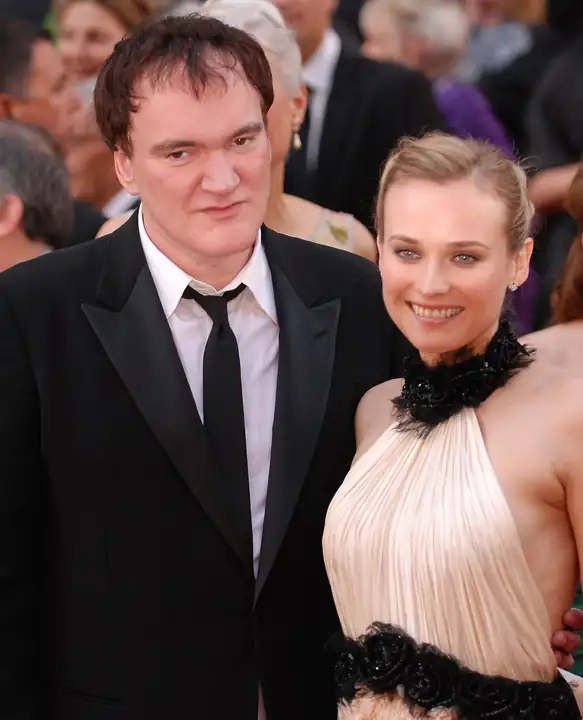
    Inglourious Basterds (2009) — Bridget Von Hammersmark, behind the scenes
    Inglourious Basterds (2009): Bridget Von Hammersmark, behind the scenesImage: Wikimedia Commons · Photo by Sgt. Michael Connors, Public domain

    CHARACTERS & CAST · SOURCED

  9. #219
    Contains a major spoiler — show

    Aldo Raine's neck scar is never explained. The script hints that he survived a lynching, a common punishment in the 1920s and 1930s, but beyond that it states outright that the scar will never be explained.

    CHARACTERS & CAST · SOURCED

  10. #220

    Rod Taylor prepared for Winston Churchill by working through dozens of DVDs of the man, studying his posture, body language and voice, lisp and all.

    CHARACTERS & CAST · SOURCED

  11. #221

    Sitting down with Brad Pitt for a roundtable, Quentin Tarantino explained that Til Schweiger had always turned down film roles that meant wearing a Nazi uniform, mainly because he was born and raised in Germany and truly hates anything to do with the Nazis. But when he heard he would brutally kill a Nazi in every scene in which he wore the uniform, he was happy to sign on as Hugo Stiglitz.

    CHARACTERS & CAST · SOURCED

  12. #222

    Diane Kruger was best known for English-language films, so, ironically, Quentin Tarantino assumed she was American and wasn't sure she could manage the German dialogue and accent. The audition settled it at once: German was her mother tongue.

    CHARACTERS & CAST · SOURCED

  13. #223

    While Quentin Tarantino was searching for an actor for the role of Colonel Hans Landa, he considered shelving the film, because he feared he had written a character that was impossible to play. But when Christoph Waltz came in to audition, both Tarantino and producer Lawrence Bender decided they had found the perfect actor for the role.

    CHARACTERS & CAST · SOURCED

  14. #224

    In a roundtable interview with Brad Pitt and Quentin Tarantino, Tarantino said that Til Schweiger had previously refused to wear a Nazi uniform for a film role, largely because he was born and raised in Germany and had a deep hatred of everything connected with Nazism. When Schweiger was told that in every scene where he wore the uniform he would brutally kill a Nazi, he gladly accepted the role of Hugo Stiglitz.

    CHARACTERS & CAST · SOURCED

  15. #225

    Ironically, because Diane Kruger's best-known performances were in English-language films, Quentin Tarantino thought she was American and doubted whether she could manage the German dialogue and accent. At the audition, Kruger immediately proved that she was a native German speaker.

    CHARACTERS & CAST · SOURCED

  16. #226

    After the film's release, Daniel Brühl admitted that his French was not perfect at the time he took the role. When Quentin Tarantino asked him to read French lines, he sometimes bluffed by mixing French with Spanish, correctly guessing that Tarantino would not notice. Brühl was able to perfect his French pronunciation once he received a translated version of the script.

    CHARACTERS & CAST · SOURCED

  17. #227

    Michael Fassbender's performance as Lieutenant Archie Hicox is full of layers of irony. Fassbender was born in Heidelberg, Germany (then West Germany) to a German and Irish family and was raised in Ireland. He now lives in London; his native language is German, his second language is Irish Gaelic and his third is English, and he has mastered English accents and dialects. In this film, he plays an Englishman on a secret mission posing as a German who speaks German fluently but has trouble hiding his accent.

    CHARACTERS & CAST · SOURCED

  18. #228

    To prepare for her role, Mélanie Laurent worked for several weeks as a film projectionist at the New Beverly Cinema, mostly projecting cartoons and trailers before screenings. The real test set by Quentin Tarantino was showing Reservoir Dogs (1992).

    CHARACTERS & CAST · SOURCED

  19. #229

    Shosanna Dreyfus's father Jakob (briefly seen hiding under the floorboards at Perrier LaPadite's farmhouse) was played by Patrick Elias. Elias's father, Buddy Elias, was Anne Frank's first cousin.

    CHARACTERS & CAST · SOURCED

  20. #230

    When Eli Roth was asked how he got into the violent, baseball-bat-swinging "Bear Jew" mindset, he attributed his performance partly to the historically accurate costumes: "Wearing wool underwear makes you want to kill everything." He also said (in another interview) that he had secretly added Hannah Montana (2006) music to his girlfriend's iPod; when he listened to it, he was inexplicably able to access the Bear Jew's savage nature.

    CHARACTERS & CAST · SOURCED

  21. #231

    When Michael Fassbender said at the audition in Berlin that he was after the role of Colonel Hans Landa, Quentin Tarantino's answer was clear: "Look, pal, any guy who gets cast as Heathcliff is not German enough to play my Landa, all right?"

    CHARACTERS & CAST · SOURCED

  22. #232

    Quentin Tarantino personally called Rod Taylor to offer him the role of Sir Winston Churchill. When Taylor learned the film would be shot in Germany, he pointed out that Albert Finney lived in England and had played Churchill to great acclaim in The Gathering Storm (2002). Tarantino replied, "If Rod Taylor turns me down, I'll call Albert Finney." Taylor accepted the role.

    CHARACTERS & CAST · SOURCED

  23. #233

    In the basement bar scene, Fassbender, who was born in Germany and speaks fluent German, adopted an unusual accent: he mispronounced certain sounds and disrupted the natural rhythm.

    CHARACTERS & CAST · SOURCED

  24. #234

    Quentin Tarantino met with Brad Pitt at Chateau Miraval in France, where Pitt was living with Angelina Jolie. They discussed the role of Aldo Raine over the course of a night, drinking five bottles of the chateau's own Pink Floyd rosé, and Pitt accepted the part.

    CHARACTERS & CAST · SOURCED

  25. #235

    When Major Hellstrom (August Diehl) questions Hicox's (Michael Fassbender) accent, he addresses Corporal Wilhelm Wicki (Gedeon Burkhard) as "Lieutenant Munich" and Sergeant Hugo Stiglitz (Til Schweiger) as "Lieutenant Frankfurt," based on their dialects. In real life, Burkhard (Wicki) and Schweiger (Stiglitz) are from the Munich and Frankfurt regions, respectively.

    CHARACTERS & CAST · SOURCED

  26. #236

    Quentin Tarantino met with Mélanie Laurent in three rounds: in the first he played all the characters, in the second he shared the lines with her, and in the third they ate a meal face to face. During the meal, Tarantino told Laurent, "You know what? There's something I don't like. You're famous in your own country, and I really want to discover someone." Laurent replied, "No, no, no... I'm not that famous," and four days later Tarantino called to confirm her for the role of Shosanna.

    CHARACTERS & CAST · SOURCED

  27. #237

    Quentin Tarantino stated that he believes Frederick Zoller (Daniel Brühl) genuinely loved Shosanna (Mélanie Laurent) and that their final encounter was tragic. He also explained that Zoller forcing his way into the projection booth and threatening Shosanna represents Zoller succumbing to his emotions at the worst possible moment.

    CHARACTERS & CAST · SOURCED

  28. #238

    Bridget von Hammersmark, a German film star and double agent, was partly inspired by Marlene Dietrich. Although Dietrich never worked as an agent abroad, she worked with the Office of Strategic Services (OSS) during World War II. In 1944, Dietrich made recordings for the OSS's Morale Operations Branch as part of the Musak project, a series of musical propaganda broadcasts designed to demoralize enemy soldiers. Dietrich recorded several songs in German, including 'Lili Marleen,' and made German-language recordings announcing Allied victories and German defeats. For her efforts, Dietrich received thanks and the Medal of Freedom from OSS commander William J. Donovan. Also during the war, Dietrich's sister and her husband were still in Germany, running a cinema in Belsen that German officers frequented. Dietrich and her sister were reunited after the war.

    CHARACTERS & CAST · SOURCED

  29. #239

    Eli Roth put on fifteen kilos of muscle for the role of Sergeant Donny Donowitz, "the Bear Jew." Roth also learned to cut hair for the role; he acquired the skill from Umberto, the father of producer Pilar Savone, at his barbershop in Beverly Hills, California.

    CHARACTERS & CAST · SOURCED

  30. #240

    The name of Lieutenant Aldo Raine, played by Brad Pitt, is a tribute to actor and World War II veteran Aldo Ray and to the character Charles Rane (William Devane) in Rolling Thunder (1977). Casting director Johanna Ray is Aldo Ray's former wife.

    CHARACTERS & CAST · SOURCED

  31. #241

    Mike Myers (in the role of General Ed Fenech), as a Quentin Tarantino fan, wanted to appear in the film because his parents served in the British Armed Forces. Myers described his character's accent as Received Pronunciation meeting the officer class, but said it mostly reflects an attitude of "I'm sick of this war, and if this man can finish it, great, because my country is in ruins."

    CHARACTERS & CAST · SOURCED

  32. #242

    Among the three Basterds who enter the cinema disguised as Italian filmmakers, the one described as "speaking the least Italian" is actually Er Omar Ulmer (Omar Doom), who has the most convincing Italian accent.

    CHARACTERS & CAST · SOURCED

  33. #243

    Sergeant Hugo Stiglitz, played by Til Schweiger, takes his name from Mexican B-movie actor Hugo Stiglitz; it is Tarantino's nod to cinema history.

    CHARACTERS & CAST · SOURCED

  34. #244

    Mélanie Laurent came to the audition without knowing English but told Quentin she spoke it fluently. She learned the language intensively through episodes of Gossip Girl.

    CHARACTERS & CAST · SOURCED

  35. #245

    Shosanna Dreyfus's surname comes from Julie Dreyfus, who plays Francesca Mondino in the film.

    CHARACTERS & CAST · SOURCED

  36. #246

    Babe Buchinsky, whom Michael Madsen was initially planned to play, was inspired by Charles Bronson (real name Charles Buchinsky); Bronson had appeared in The Dirty Dozen, a film that inspired this one.

    CHARACTERS & CAST · SOURCED

  37. #247

    In his recruitment monologue, Lieutenant Aldo Raine says he is descended from "mountain man Jim Bridger"; Bridger had Native American wives, hence the nickname "Aldo the Apache." In reality, none of Bridger's three wives was Apache (Flathead, Ute and Shoshone).

    CHARACTERS & CAST · SOURCED

  38. #248

    Frederick Zoller is largely inspired by Audie Murphy. Daniel Brühl was brought in to auditions for the French actresses competing for the role of Shosanna.

    CHARACTERS & CAST · SOURCED

  39. #249

    One of the Basterds also played the painter in the background of the scene where Hitler is introduced; Levine admitted this on Twitter.

    CHARACTERS & CAST · SOURCED

  40. #250

    Isabelle Huppert was the first choice for the role of Madame Mimieux; due to a scheduling conflict the role went to Maggie Cheung and was ultimately cut from the film.

    CHARACTERS & CAST · SOURCED

  41. #251

    Archie Hicox's uniform: a Commando Green Beret, the Combined Operations badge on his left arm, a "No.4 COMMANDO" patch on his shoulders and the Intelligence Corps badge on his beret. This indicates that he is an Intelligence Officer who passed the Commando Course at Achnacarry and served in No.4 COMMANDO. His medals are the Military Cross (gallantry in the face of the enemy) and the Africa Star; they indicate that he was in Africa between 1942-43 and won the Military Cross.

    CHARACTERS & CAST · SOURCED

  42. #252

    Although Harvey Keitel's small role in this film is likened to the character Winston "Wolf" Wolfe in Pulp Fiction, Eli Roth confirmed that the person Keitel plays is not Wolf. He also jokingly added that Samuel L. Jackson does not narrate in the guise of Jules Winnfield.

    CHARACTERS & CAST · SOURCED

  43. #253

    Due to scheduling conflicts, David Krumholtz could not play Private Hirschberg. He was replaced by Samm Levine, who had played his brother on Freaks and Geeks.

    CHARACTERS & CAST · SOURCED

  44. #254

    After playing Burger, a Jew, in The Counterfeiters, August Diehl played SS officer Major Hellstrom in this film. He had said, "I would never put myself in the place of an SS criminal."

    CHARACTERS & CAST · SOURCED

  45. #255

    Bridget von Hammersmark's question "Can you Americans speak any language other than English?" is reinforced by the fact that the American and Canadian members of the cast do not know foreign languages. Brad Pitt, Eli Roth and Omar Doom, meanwhile, speak Italian with a terrible accent.

    CHARACTERS & CAST · SOURCED

  46. #256

    Julie Dreyfus, who plays Francesca Mondino, is Joseph Goebbels's French translator and mistress. Through her father, Dreyfus is partly Alsatian and Romanian Jewish.

    CHARACTERS & CAST · SOURCED

  47. #257

    Quentin Tarantino, comparing Shosanna Dreyfus to the title character of Jackie Brown, explains her strength as follows: 'Her ability to remain calm in tight situations where everyone else would fall apart. While everyone else melts, she stands firm.'

    CHARACTERS & CAST · SOURCED

  48. #258

    Colonel Aldo Raine's demand for Nazi scalps is a nod to the character Brad Pitt played in Legends of the Fall, who really did scalp German soldiers.

    CHARACTERS & CAST · SOURCED

Easter Eggs & References (60)

  1. #259

    (at around 1h 13 mins) In the basement bar scene, one of the enlisted men mentions Karl May and says his character is Winnetou. Karl May (1842-1912) wrote Western adventure books in which Winnetou is a Native American hero, and he was one of Adolf Hitler's favorite authors. The man's gesture, touching his heart and greeting with three fingers, is an anachronism, though: it was Winnetou's signature move in the films of the sixties.

    EASTER EGGS & REFERENCES · SOURCED

  2. #260

    The opening credits use the label "Guest Starring" for some of the major roles and actors. It's a joke on Tarantino's part, an Easter Egg, since that wording is normally reserved for actors appearing in a television series, as opposed to the regular weekly cast.

    EASTER EGGS & REFERENCES · SOURCED

  3. #261

    A deleted scene shows The Bear Jew buying and decorating his trademark bat in Boston before going off to war: Donny Donowitz (Eli Roth) had Jews from his neighborhood sign it before he shipped out, and wrote the names of prominent Jews next to their autographs. One of the names carved into the bat is Anne Frank, the young Jewish girl who recorded her life in hiding from 1942-44 and died of typhus in the Bergen-Belsen concentration camp in Germany in 1945.

    EASTER EGGS & REFERENCES · SOURCED

  4. #262

    (at around 2h 25 mins) Right after the cinema explodes, someone can be seen and heard screaming as they are hurled violently out of the burning building. The scream belongs to Kurt Russell's 'Stuntman Mike' in Quentin Tarantino's Death Proof (2007), from the moment after the chase when Zoe and the other girls climb out of the car to beat the crashed Mike to death.

    EASTER EGGS & REFERENCES · SOURCED

  5. #263

    (at around 1h 12 mins) A group of German soldiers are playing the game where you guess the famous name written on your forehead. The card on the soldier played by Ken Duken says Mata Hari, the Dutch exotic dancer and courtesan who became notorious as a double agent for Germany in World War I, mirroring Diane Kruger's character, a famous actress turned double agent for the Allies in World War II.

    EASTER EGGS & REFERENCES · SOURCED

  6. #264

    (at around 1h 50 mins) At the premiere, Colonel Landa wears a gold medal at his throat, covering his tie: the Knight's Cross of the War Merit Cross, in gold with swords, given for non-combat contributions to the Third Reich's war effort. Only nine were ever awarded, and it wasn't instituted until October 1944, so Landa couldn't actually have had one. Then again, this is a fictional story set against the backdrop of World War II, so given Quentin Tarantino's way with storytelling, the point is moot.

    EASTER EGGS & REFERENCES · SOURCED

  7. #265

    (at around 2h 20 mins) Hiding under the floor of the LaPadite house, Shosanna couldn't understand the conversation the French dairy farmer and S.S. Colonel Landa held in English. Yet she films her message to the German political elite, about to be burned alive, in fluent English, which many of the German audience in the theater, Adolf Hitler included, wouldn't have understood.

    EASTER EGGS & REFERENCES · SOURCED

  8. #266

    (at around 1h 55 mins) The three girls getting Zoller's autograph in the theater are wearing the distinctive brown jackets of the Bund Deutscher Mädel (BDM), the girls' branch of the Hitler Youth.

    EASTER EGGS & REFERENCES · SOURCED

  9. #267

    (at around 1h 50 mins) In the movie theater, Sergeant Donny Donowitz (Eli Roth) goes by the alias "Antonio Margheriti," after the cult Italian director of films such as Cannibal Apocalypse (1980), a favorite of both Roth and Quentin Tarantino.

    EASTER EGGS & REFERENCES · SOURCED

  10. #268

    (at around 1h 50 mins) Tarantino often has a trio of identical background characters moving in unison; here it's three German schoolgirls in matching uniforms passing Colonel Hans Landa as he walks down the theater staircase.

    EASTER EGGS & REFERENCES · SOURCED

  11. #269

    (at around 1h 9 mins) An Easter egg: before meeting Bridget von Hammersmark in the basement of a tavern, Lieutenant Aldo (Brad Pitt) complains that "fighting in a basement offers a lot of difficulties". Ten years earlier, Pitt had starred in Fight Club (1999), where most of the fights take place in a bar basement.

    EASTER EGGS & REFERENCES · SOURCED

  12. #270

    WILHELM SCREAM: At around 1 hour 30 minutes, when Mathilda is shot in the bar scene, you get just the first half-second of the clip. The Wilhelm scream proper turns up later in the film-within-the-film "Nation's Pride," as a soldier is shot and drops from an upper window, at around 2 hours 20 minutes.

    EASTER EGGS & REFERENCES · SOURCED

  13. #271

    On German advertisement materials, all swastikas were removed or covered up, as it was unclear to the distributor if the swastikas violated German law (which prohibits the exhibition of Nazi symbols except for purposes such as historical accuracy).

    EASTER EGGS & REFERENCES · SOURCED

  14. #272

    (at around 1h 35 mins) Several Quentin Tarantino scripts include a Mexican standoff (Reservoir Dogs (1992), Pulp Fiction (1994), True Romance (1993), Natural Born Killers (1994), Kill Bill: Vol. 2 (2004)), but this is the first in which the characters caught in one openly point out that they are in a Mexican standoff. (In Natural Born Killers, Mickey Knox says, "What we've got here is a Mexican Standoff," as he breaks out of the cell with Mallory.)

    EASTER EGGS & REFERENCES · SOURCED

  15. #273

    (at around 2h 10 mins) In Eli Roth's German propaganda film-within-a-film, "Nation's Pride", Tarantino voices an American soldier who shouts, "I implore you, we must destroy that tower!" A Tarantino dummy also plays the first German we see scalped, at around 26 minutes.

    EASTER EGGS & REFERENCES · SOURCED

  16. #274

    In the Heer, the Third Reich's army, both regulations and custom would have kept an Oberfeldwebel (Master Sergeant) like Willie/Wilhelm from socializing with a Gefreiter (Private First Class) and a Soldat (Private).

    EASTER EGGS & REFERENCES · SOURCED

  17. #275

    (at around 15 mins) Colonel Hans Landa's speech to LaPadite comparing Jews to rats draws on a real German film, The Eternal Jew (1940), made in Poland during World War II by an SS propaganda team. It set out to degrade the image of Jews across Europe, showing rats and other animals spreading diseases that would infect the Aryan people unless the Jewish Question was "solved" by extermination.

    EASTER EGGS & REFERENCES · SOURCED

  18. #276

    (at around 1h 8 mins) Nadine, the French village in the film, doesn't exist. On the map Lieutenant Hicox is shown, though, its location matches the real town of Nanteuil-le-Haudouin, and "Haudouin" can still be made out, as if the first part of the name was swapped for "Nadine" and the rest was left behind by mistake.

    EASTER EGGS & REFERENCES · SOURCED

  19. #277

    (at around 1h 10 mins) Stiglitz's knife is inscribed "Meine Ehre heisst Treue", meaning "Loyalty is my honor" (literally "My honor is named loyalty"), the motto on every knife carried by soldiers of the SS ("Schutzstaffel").

    EASTER EGGS & REFERENCES · SOURCED

  20. #278

    (at around 1h 1 min) Francesca (Julie Dreyfus) mentions the former UFA actress Lilian Harvey, and Joseph Goebbels (Sylvester Groth) explodes, screaming that the name must never be uttered in his presence. In real life, Harvey had to flee Nazi Germany in 1939 for helping the Jewish choreographer Jens Keith get away to Switzerland.

    EASTER EGGS & REFERENCES · SOURCED

  21. #279

    (at around 46 mins) The film on the second marquee is Le Corbeau (1943), made during the Nazi occupation of France, which slipped hidden anti-Nazi messages past the censors.

    EASTER EGGS & REFERENCES · SOURCED

  22. #280

    The British operation to kill the German officers is called "Kino", German for "movie theater".

    EASTER EGGS & REFERENCES · SOURCED

  23. #281

    (at around 17 mins) Sherlock Holmes gets at least two nods in the film. The first is Landa's pipe, a Calabash Meerschaum just like the one Holmes smoked; the second is his line "A damn good detective. Finding people is my specialty", at around 2 hours.

    EASTER EGGS & REFERENCES · SOURCED

  24. #282

    The first two acts closely mirror the opening of Pulp Fiction (1994). There, Jules and Vincent visit the apartment of Bret and his roommates, one of whom is hiding in the bathroom; they kill everyone except Marvin, and the guy in the bathroom nearly gets away too, and the next scene has Marcellus interrogating Butch. Here, the Colonel visits the home of the family hiding Jews and, after some casual chat, has the Jewish family under the floorboards executed; everyone dies except Shosanna, who escapes, and the next scene has Brad Pitt grilling his troops.

    EASTER EGGS & REFERENCES · SOURCED

  25. #283

    (at around 1h 7 mins) In the scene between Archie Hicox (Michael Fassbender) and General Ed Fenech (Mike Myers), Fenech likens getting all the top Nazis to the premiere of Nation's Pride to "putting all the rotten eggs in one basket". The line comes from The Great Escape (1963), where Luftwaffe Colonel Von Luger (Hannes Messemer) uses it to explain to Squadron Leader Bartlett (Richard Attenborough) why the prisoner-of-war camp is escape-proof.

    EASTER EGGS & REFERENCES · SOURCED

  26. #284

    (at around 24 mins) One of the Basterds also plays the painter in the background when Adolf Hitler is introduced. Levine owned up to it by posting a photo of himself in the role on his Twitter account at 4:03 p.m. on August 21, 2009.

    EASTER EGGS & REFERENCES · SOURCED

  27. #285

    (at around 2h 5 mins) Lt. Aldo tells Col. Hans Landa he's from Maynardville, TN, a real town 28 miles from Knoxville, TN, Quentin Tarantino's hometown.

    EASTER EGGS & REFERENCES · SOURCED

  28. #286

    (at around 42 mins) The paperback Shosanna is reading in the café before Zoller arrives looks like a French edition of Leslie Charteris's "The Saint in New York" (first published in 1934). The novel stands out in the Saint series as unusually grim and violent: the suave crime-fighter turns cold and ruthless and executes a string of gangland killers to avenge a murder, not unlike the mission Lieutenant Raine lays out at the start of the film.

    EASTER EGGS & REFERENCES · SOURCED

  29. #287

    (at around 38 mins) As Shosanna changes the marquee outside her cinema, the old film whose name is coming down is The White Hell of Pitz Palu (1929), the same one Lieutenant Hicox, disguised as a German officer, mentions in the basement tavern at around 1 hour and 20 minutes, claiming he and his brother were extras in it. It was directed by Leni Riefenstahl.

    EASTER EGGS & REFERENCES · SOURCED

  30. #288

    (at around 48 mins) The eye-catching leopard-face fascinator worn by Francesca Mondino, Goebbels's French interpreter and mistress, is a direct homage to one by the Italian designer Schiaparelli, a celebrated name who was living in Paris at the time. When the Nazi occupation of France began, Elsa Schiaparelli fled Paris for New York City and stayed there until the war ended.

    EASTER EGGS & REFERENCES · SOURCED

  31. #289

    (at around 1h 40 mins) Backing up Bridget von Hammersmark's (Diane Kruger's) sneer, "can you Americans speak any other language besides English?", none of the American (or Canadian) actors speaks a foreign language except Brad Pitt, Eli Roth and Omar Doom, whose Italian is, as she also notes, atrociously accented.

    EASTER EGGS & REFERENCES · SOURCED

  32. #290

    (at around 1h 8 mins) Being briefed on Operation Kino by General Ed Fenech (Mike Myers), Archie Hicox (Michael Fassbender) says "And like the snows of yesteryear, gone from this earth." He is quoting a French poem known in English by the line "Where are the snows of yesteryear?", about lost youth and the finality of death. In Catch-22, another WW2 book and film, Capt. Yossarian asks "Where are the Snowdens of yesteryear?" after a crewman on his bomber named Snowden is killed by enemy fire, playing on the same quote.

    EASTER EGGS & REFERENCES · SOURCED

  33. #291

    (at around 28 mins) The music introducing Hugo Stiglitz is the theme from the blaxploitation film Slaughter (1972), starring retired NFL fullback Jim Brown, who also played Jefferson in The Dirty Dozen (1967), one of the main inspirations for Quentin Tarantino's Inglourious Basterds. Fittingly, the original The Inglorious Bastards (1978) starred another retired football player, Fred Williamson, an AFL cornerback who played Private Fred Canfield; Williamson also made many blaxploitation films, several of them with Jim Brown. Brown and Williamson eventually starred together in Original Gangstas (1996) alongside Pam Grier, another 1970s blaxploitation star, who would soon headline Jackie Brown (1997).

    EASTER EGGS & REFERENCES · SOURCED

  34. #292

    One poster shows a bloody German helmet hanging off an equally bloody baseball bat. Normally a bat would be branded "Hillerich and Bradsby Louisville, Kentucky", but this one says "Knoxville, TN", Quentin Tarantino's hometown.

    EASTER EGGS & REFERENCES · SOURCED

  35. #293

    (at around 2h 15 mins) As Zoller heads to the projection room to see Shosanna, the background music is the same piece heard in Kelly's Heroes (1970) during the climax in town, when Kelly (Clint Eastwood) and his men attack the tanks guarding the bank.

    EASTER EGGS & REFERENCES · SOURCED

  36. #294

    (at around 40 mins) Shosanna explains that she puts directors' names on her marquee out of respect, even German ones, much as she hates the occupation of France. At the premiere of the Nazi propaganda film "Nation's Pride," a split-second shot shows the marquee with only the title and the star (at around 2 hours and 25 minutes), no director, a quiet sign of her contempt.

    EASTER EGGS & REFERENCES · SOURCED

  37. #295

    (at around 36 mins) Near the end of Chapter 2, Wicki is interpreting between Raine and the German prisoner, Butz, when a golden leaf lands on his chest near his left shoulder, looking much like the yellow six-pointed Star of David the Nazis forced Jews to wear on the left side of their chests so they could be picked out. The leaf stays put while Raine says, "See, we like our Nazis in uniforms; that way you can spot 'em, just like that."

    EASTER EGGS & REFERENCES · SOURCED

  38. #296

    As in all his films, there are glaring errors put in on purpose. One is in the English subtitles for foreign-language dialogue, where the foreign word sometimes stays in. When Colonel Landa (Christoph Waltz) talks to the French farmer, for instance, he says "Oui," French for "Yes," and the subtitle reads "Oui" rather than "Yes," even though the rest of the French is translated into English.

    EASTER EGGS & REFERENCES · SOURCED

  39. #297

    (at around 38 mins) As Major Hellstrom (August Diehl) pulls up outside Shosanna's (Mélanie Laurent) cinema, we hear the very same music that plays when Beatrix Kiddo's (Uma Thurman) sword gets stuck in one of the Crazy 88s in Kill Bill: Vol. 1 (2003), a signal that danger is coming.

    EASTER EGGS & REFERENCES · SOURCED

  40. #298

    Sergeant Donny Donowitz belongs to the "Quentin Tarantino Universe": he shares a surname with Lee Donowitz, the film producer in the Tarantino-written True Romance (1993), who made a war film called "Comin' Home in a Body Bag". Tarantino told Ron Bennington in an interview that Donny is Lee's father.

    EASTER EGGS & REFERENCES · SOURCED

  41. #299

    (at around 1h 50 mins) Of the three Basterds who walk into the cinema posing as Italian filmmakers, the one said to "speak the least Italian", Private First Class Omar Ulmer (Omar Doom), actually has the most convincing Italian accent.

    EASTER EGGS & REFERENCES · SOURCED

  42. #300

    (at around 1h 12 mins) The names on the cards in the bar game include Winnetou, Genghis Khan, Mata Hari, Ludwig van Beethoven, Pola Negri, Edgar Wallace, Georg Wilhelm Pabst, King Kong, Marco Polo, Brigitte Horney and Brigitte Helm.

    EASTER EGGS & REFERENCES · SOURCED

  43. #301

    (at around 22 mins) In his recruiting speech early in the film, Lieutenant Aldo Raine says he is descended from "the mountain man Jim Bridger," who really did have Native American wives, hence the nickname "Aldo the Apache." In fact none of Bridger's three Indian wives was Apache; they were, in order, Flathead, Ute and Shoshone.

    EASTER EGGS & REFERENCES · SOURCED

  44. #302

    General Ed Fenech (Mike Myers) takes his name from Giallo scream queen Edwige Fenech, who has since quit acting; her last film was Hostel: Part II (2007), directed by Eli Roth, the film's Sergeant Donny Donowitz, "The Bear Jew".

    EASTER EGGS & REFERENCES · SOURCED

  45. #303

    (at around 1h 25 mins) In the last round of the card game at the LaLouisiane tavern, Major Hellstrom's card is King Kong; King Kong (1933) was one of Adolf Hitler's favorite movies.

    EASTER EGGS & REFERENCES · SOURCED

  46. #304

    (at around 20 mins) Shosanna is barefoot as she escapes from Colonel Hans Landa at the end of the opening scene, and again in the final scenes in the projection room, at around 2 hours 20 minutes.

    EASTER EGGS & REFERENCES · SOURCED

  47. #305

    In "Quentin Tarantino's Universe", Lieutenant Aldo Raine is the great-grandfather of Floyd, the stoner on the couch in True Romance (1993); Brad Pitt plays both.

    EASTER EGGS & REFERENCES · SOURCED

  48. #306

    (at around 1h 20 mins) Questioning Hicox's (Michael Fassbender's) accent, Major Hellstrom (August Diehl) calls Corporal Wilhelm Wicki (Gedeon Burkhard) "Lieutenant Munich" and Sergeant Hugo Stiglitz (Til Schweiger) "Lieutenant Frankfurt" from their dialects, and in real life Burkhard does come from Munich and Schweiger from the Frankfurt area.

    EASTER EGGS & REFERENCES · SOURCED

  49. #307

    (at around 34 mins) Look closely at the Jewish names carved on The Bear Jew's (Eli Roth's) bat: one of them is Anne Frank.

    EASTER EGGS & REFERENCES · SOURCED

  50. #308

    (at around 2h 10 mins) In the German propaganda film-within-a-film, "Nation's Pride", directed by Eli Roth, Tarantino voiced an American soldier, who says, "I implore you, we must destroy that tower!" A Tarantino dummy also appeared as the first scalped German in the film (at around 26 mins).

    EASTER EGGS & REFERENCES · SOURCED

  51. #309

    (at around 26 mins) Nobody says the word "inglorious" anywhere in the film, but it is scratched into the stock of Lieutenant Raine's (Brad Pitt's) gun.

    EASTER EGGS & REFERENCES · SOURCED

  52. #310

    (at around 1h 10 mins) As Hicox talks to Stiglitz, who is sharpening his knife on a belt, the theme from Dark of the Sun (1968) plays; Rod Taylor, this film's Sir Winston Churchill, starred in Dark of the Sun (1968).

    EASTER EGGS & REFERENCES · SOURCED

  53. #311

    (at around 1h 50 mins) When Lieutenant Aldo Raine (Brad Pitt) poses as an Italian actor near the end, he calls himself "Enzo Gorlomi", the birth name of Enzo G. Castellari, director of The Inglorious Bastards (1978).

    EASTER EGGS & REFERENCES · SOURCED

  54. #312
    Contains a major spoiler — show

    (at around 1h 25 mins) In the tavern scene, Lt. Hicox's card says Brigitte Horney, a German actress who starred in a British film, a hint that the Gestapo Major who wrote it may already suspect Hicox is British.

    EASTER EGGS & REFERENCES · SOURCED

  55. #313
    Contains a major spoiler — show

    (at around 2h 20 mins) The odd glove guns Donny (Eli Roth) and Omar (Omar Doom) use to break into Hitler's box are Sedgley OSS.38s, originally designed as a last-ditch weapon for U.S. Navy construction crews in the South Pacific.

    EASTER EGGS & REFERENCES · SOURCED

  56. #314
    Contains a major spoiler — show

    (at around 2h 25 mins) For all his reputation as leader of the Basterds, Aldo Raine is seen killing only one person on screen, the radio operator he shoots at the end.

    EASTER EGGS & REFERENCES · SOURCED

  57. #315
    Contains a major spoiler — show

    (at around 38 mins) Chapter Three is the only chapter in which nobody dies, and the only one with no English spoken.

    EASTER EGGS & REFERENCES · SOURCED

  58. #316
    Contains a major spoiler — show

    (at around 2h 25 mins) At the end, Lieutenant Raine shoots Landa's driver, Hermann, in the stomach, judging by the angle of his pistol, and when Hermann falls he orders Utivich to scalp him. Since a gut shot can take several minutes or even a few hours to kill someone, as past Quentin Tarantino movies show, Hermann may well have been alive while he was being scalped.

    EASTER EGGS & REFERENCES · SOURCED

  59. #317
    Contains a major spoiler — show

    (at around 1h 55 mins) Colonel Hans Landa (Christoph Waltz) slipping the high-heeled shoe onto Bridget von Hammersmark's (Diane Kruger) foot is a twisted take on 'Cinderella'. In the fairy tale, the Prince finds Cinderella by having her try on the glass slipper she lost at the ball; here, Landa unmasks von Hammersmark as the double agent by having her try on the heel she lost in the bar fight.

    EASTER EGGS & REFERENCES · SOURCED

  60. #318
    Contains a major spoiler — show

    (at around 1h 35 mins) The shooting script has Raine and his men frighten the veterinarian into treating Bridget Von Hammersmark's bullet wound by shooting two of the dogs in their cages. The scene was apparently filmed and cut, because behind Hammersmark on the table you can make out two cages with holes in the wire mesh, bloodstains and dead dogs inside.

    EASTER EGGS & REFERENCES · SOURCED

Deeper Meaning (47)

  1. #319

    (at around 1h 25 mins) As Major Hellstrom works out that his card says King Kong (1933), he is laying out Quentin Tarantino's own reading of the movie as an allegory of the American slave trade, which Tarantino explained to Terry Gross in an interview on National Public Radio.

    DEEPER MEANING · SOURCED

  2. #320

    Quentin Tarantino likened Shosanna Dreyfus to the heroine of his earlier film Jackie Brown (1997): "Shosanna's strength is keeping it together in tight situations, where anyone else would crumble. When anyone else would melt, she manages to keep her poise."

    DEEPER MEANING · SOURCED

  3. #321

    (at around 55 mins) What Landa orders for Shosanna is loaded, another way of testing her and toying with her mind. The glass of milk harks back to LaPadite's farm, where Landa drank milk and her family was killed; the strudel, in World War II, would most likely have been made with pork lard, which isn't kosher and so is forbidden under Jewish dietary law.

    DEEPER MEANING · SOURCED

  4. #322

    One of the names carved into the Bear Jew's bat is Anne Frank.

    DEEPER MEANING · SOURCED

  5. #323

    The film is fictional but was partly inspired by a real OSS operation, 'Operation Greenup.' In February 1945, three agents parachuted into Austria: German-born American spy Frederick Mayer, Dutch Jewish agent Hans Wijnberg and former Austrian Wehrmacht officer Franz Weber. For months, Mayer posed as a Nazi officer and an electrician while gathering intelligence about the 'Alpine Fortress.' Staying with Weber's family, Wijnberg and Weber radioed information to OSS operators in Italy. When a black marketeer betrayed Mayer, the Gestapo captured and tortured him, but he did not betray the others. General Franz Hofer, commander of Nazi forces in western Austria, had realized the war was lost and wanted to surrender to the Allies rather than to the Red Army. He had Mayer brought to his home and offered to send a message to OSS offices in Switzerland through a German agent. Mayer helped bring about the surrender of Germany's Austrian forces in Innsbruck on May 3, 1945. Mayer and Wijnberg then returned to America. In 2012 they reunited for a webcam interview for the History Channel documentary 'The Real Inglourious Basterds'; Wijnberg died a day after the interview. Weber died in April 2016.

    DEEPER MEANING · SOURCED

  6. #324

    When Francesca mentions former UFA actress Lilian Harvey, Goebbels furiously shouts that her name is never to be spoken again. Harvey had been forced to flee Nazi Germany in 1939 after helping Jewish choreographer Jens Keith escape to Switzerland.

    DEEPER MEANING · SOURCED

  7. #325

    The layout posters prepared for the propaganda film 'Stolz der Nation' are historically accurate: they carry the German censorship stamp and, according to the book 'Film Posters of the Third Reich,' were made in the style of the period.

    DEEPER MEANING · SOURCED

  8. #326

    The foods Landa chooses for Shosanna are symbolic: the glass of milk is a reference to the farm where her family was killed; the strudel, likely made with lard, is not kosher, which violates Jewish dietary laws.

    DEEPER MEANING · SOURCED

  9. #327

    Aldo Raine uses the name 'Enzo Gorlomi' while impersonating an Italian actor. It is the birth name of Enzo G. Castellari, director of the 1978 film The Inglorious Bastards.

    DEEPER MEANING · SOURCED

  10. #328

    The reason for the scar on Aldo Raine's neck is never explained. The script implies he survived a lynching but states that the scar will never be explained.

    DEEPER MEANING · SOURCED

  11. #329

    In the cinema, Donny Donowitz uses the alias 'Antonio Margheriti.' It is a tribute to cult Italian director Antonio Margheriti, one of Tarantino and Roth's favorite directors.

    DEEPER MEANING · SOURCED

  12. #330

    Stiglitz's knife bears the inscription 'Meine Ehre heisst Treue,' meaning 'My honor is loyalty.' This inscription appeared on all SS knives.

    DEEPER MEANING · SOURCED

  13. #331

    The operation to kill the German officers is called 'Kino,' which means 'cinema' in German.

    DEEPER MEANING · SOURCED

  14. #332

    When Major Hellstrom produces the King Kong card, he voices Tarantino's interpretation of the film as an allegory for the American slave trade. Tarantino explained this interpretation in an interview with Terry Gross on NPR.

    DEEPER MEANING · SOURCED

  15. #333

    The three girls who get Zoller's autograph at the cinema wear the brown jackets of the Bund Deutscher Mädel.

    DEEPER MEANING · SOURCED

  16. #334

    When Aldo Raine is introduced, he wears the insignia of the 1st Special Service Force, the 'Black Devils.'

    DEEPER MEANING · SOURCED

  17. #335

    In the final card game at LaLouisiane, the card Major Hellstrom has to identify is King Kong. King Kong (1933) was one of Hitler's favorite films.

    DEEPER MEANING · SOURCED

  18. #336

    Donny Donowitz mentions 'Teddy Ballgame.' It is one of Ted Williams's nicknames; Williams was a war hero who interrupted his baseball career twice to serve in World War II and the Korean War.

    DEEPER MEANING · SOURCED

  19. #337

    The film shown in the second major reel, Le Corbeau (1943), was produced during the Nazi occupation of France and contains hidden anti-Nazi messages that slipped past the censors.

    DEEPER MEANING · SOURCED

  20. #338

    The book Shoshanna reads in the cafe is the French edition of Leslie Charteris's novel 'The Saint in New York.' The novel is one of the bleakest and most violent entries in the Saint series; the gentleman crime fighter is cold and ruthless as he executes gangsters to avenge a murder, much like Raine's mission.

    DEEPER MEANING · SOURCED

  21. #339

    A group of German soldiers play a game in which one of them guesses which famous name is written on his forehead. The note of the soldier played by Ken Duken reads Mata Hari; Mata Hari was a Dutch dancer and prostitute who served as a double agent for Germany in World War I. This mirrors the role of the actress played by Diane Kruger, a double agent working for the Allies in World War II.

    DEEPER MEANING · SOURCED

  22. #340

    Shoshanna is barefoot as she flees Colonel Hans Landa at the end of the opening scene and in the final scenes in the projection room.

    DEEPER MEANING · SOURCED

  23. #341

    The word 'Inglorious' is never spoken in the film; it appears only carved into the stock of Lieutenant Raine's rifle.

    DEEPER MEANING · SOURCED

  24. #342

    At the end of Chapter Two, Wicki translates between Raine and the German prisoner Butz. During the translation, a golden leaf falls onto his chest near his left shoulder; it resembles the yellow Star of David that the Nazis forced Jews to wear on the left breast. As Raine says, "Look, we like our Nazis in uniform; that way you can spot them right away," the leaf stays in place.

    DEEPER MEANING · SOURCED

  25. #343

    When Zoller goes to the projection room to see Shosanna, the music playing in the background is the same music that plays at the climax of Kelly's Heroes (1970).

    DEEPER MEANING · SOURCED

  26. #344

    One of the film's posters shows a bloody German helmet hanging from a bloody baseball bat. The bat normally bears the logo "Hillerich and Bradsby Louisville, Kentucky," but here the city is written as "Knoxville, TN," which is Quentin Tarantino's hometown.

    DEEPER MEANING · SOURCED

  27. #345

    While hiding under the floor of the LaPadite house, Shoshanna could not understand the English conversation between the French dairy farmer and SS Colonel Landa. Yet later she films her speech to the German political elite who are to be burned, in fluent English. Most of the German audience, Hitler included, would not have understood what she was saying.

    DEEPER MEANING · SOURCED

  28. #346

    A subtle but accurate historical detail in the script: the rank distinction between German Army (Heer) and SS characters. The SS was not part of the Wehrmacht and used different rank titles. Hicox, Wicki, Stiglitz, Landa and Hellstrom wear SS uniforms but are addressed with Heer ranks. The subtitles always use Heer ranks.

    DEEPER MEANING · SOURCED

  29. #347

    When Major Hellstrom (August Diehl) gets out of the car in front of Shosanna's cinema, the music heard is the music that plays in Kill Bill: Vol. 1 (2003) during the scene where Beatrix Kiddo's sword is driven into one of the Crazy 88; it hints at approaching danger.

    DEEPER MEANING · SOURCED

  30. #348

    In the restaurant scene, the striking sound effect that plays when Emmanuelle Mimieux hears the name 'Colonel Hans Landa,' the man who killed her family, and realizes he is behind her, is a quotation from the music Charles Bernstein composed for The Entity (1982).

    DEEPER MEANING · SOURCED

  31. #349

    THE WILHELM SCREAM: It is heard at two moments of death in the film. The first half-second of the sound clip is heard at the ninetieth minute, and the rest twenty minutes later. The scream is also heard in the film 'Nation's Pride' when a soldier is shot and falls from a window.

    DEEPER MEANING · SOURCED

  32. #350

    Sherlock Holmes is mentioned at least twice in the film: the Calabash Meerschaum pipe Landa uses, and the line 'A very good detective. Finding people is my specialty.'

    DEEPER MEANING · SOURCED

  33. #351

    In the scene at Perrier LaPedite's dinner table, Colonel Hans Landa savors a glass of milk. A moth crawls onto the rim of the glass and eventually spirals down to the bottom inside it.

    DEEPER MEANING · SOURCED

  34. #352

    On the poster for her cinema, Shosanna includes the names of directors, including German directors; although she does not approve of the occupation of France, she respects art. At the premiere of 'Nation's Pride,' however, the poster bears only the film's title and its star, with no director's name — a sign of her disrespect.

    DEEPER MEANING · SOURCED

  35. #353

    In the basement bar scene, a soldier mentions Winnetou, the western hero of Karl May. May was one of Hitler's favorite authors. But the character's touching his heart and giving a three-fingered salute is an anachronism; that gesture belongs to the 1960s Winnetou films.

    DEEPER MEANING · SOURCED

  36. #354

    Colonel Landa's speech likening Jews to rats was inspired by the Nazi propaganda film The Eternal Jew (1940). The film portrays Jews as disease-spreading rats who contaminate the Aryan race.

    DEEPER MEANING · SOURCED

  37. #355

    The tense waiting in the LaLouisiane scene between Aldo and Sergeant Wilhelm recalls the scene between the Bride and the assassin in Kill Bill: Vol. 2. In both scenes the characters negotiate by saying 'Then let's talk.' The difference is that the Bride honors the deal, whereas Bridget shoots the Sergeant despite Aldo's agreement.

    DEEPER MEANING · SOURCED

  38. #356

    The voice of the person who bursts screaming from the burning building after the cinema explosion is the scream of Stuntman Mike from Tarantino's Death Proof.

    DEEPER MEANING · SOURCED

  39. #357

    A similarity between the film and the film within the film: in both, dialogue in a foreign language is translated with subtitles. In Nation's Pride, when Zoller speaks English, German subtitles are shown.

    DEEPER MEANING · SOURCED

  40. #358

    At the gala night, Landa wears a gold medal over his tie at his neck: the Knight's Cross of the Gold War Merit Cross with Swords. This award was established in October 1944 and was given only nine times, so Landa wearing it is an anachronism. However, since the film is fictional, this is debatable.

    DEEPER MEANING · SOURCED

  41. #359

    Francesca Mondino's leopard-print hat is a tribute to a design by Elsa Schiaparelli. Schiaparelli fled from Paris to New York at the start of the Nazi occupation.

    DEEPER MEANING · SOURCED

  42. #360

    Hans saying '999,999 out of a million' is not a mistake; in Europe the decimal separator is a period, not a comma.

    DEEPER MEANING · SOURCED

  43. #361

    Operation Kino aims to kill Hitler and the top leadership; however, names such as Himmler and Speer are not in the cinema. The survival of these two could have jeopardized the operation's purpose.

    DEEPER MEANING · SOURCED

  44. #362

    Omar Ulmer's surname is a nod to German Expressionist filmmaker Edgar G. Ulmer.

    DEEPER MEANING · SOURCED

  45. #363

    In the scene between Archie Hicox (Michael Fassbender) and General Ed French (Mike Myers), General French describes all the high-ranking Nazis attending the premiere of Nation's Pride as 'putting all the rotten eggs in one basket.' This is a line from the 1963 film The Great Escape, in which Luftwaffe Colonel Von Luger (Hans Messemer) explains to Squadron Leader Bartlett (Richard Attenborough) that escaping from the prisoner-of-war camp is impossible.

    DEEPER MEANING · SOURCED

  46. #364

    In the tavern scene, Lieutenant Hicox's card reads 'Brigitte Horney'; this is the name of a German actress who appeared in British films.

    DEEPER MEANING · SOURCED

  47. #365

    If you research the 'Iroquois Theatre Fire,' you will find many similarities with the film in terms of where the fire started in the theater and what actually determined the audience's fate. Of course, the film has also added its own small touches.

    DEEPER MEANING · SOURCED

Career & Awards (1)

  1. #366

    The great filmmaker Claude Lanzmann, director of the definitive Holocaust documentary Shoah (1985) and often a harsh critic of fiction films about Nazism, told the Israeli newspaper Haaretz that he enjoyed this one very much.

    CAREER & AWARDS · SOURCED

Related pages

  • Bird on a Wire — Inglourious Basterds comes up in the facts on that page
  • Deadpool & Wolverine — Inglourious Basterds comes up in the facts on that page
  • Iron Sky — Inglourious Basterds comes up in the facts on that page

Sources & editorial notes

Reference databases

  • Wikipedia English Wikipedia article
  • IMDb IMDb title page (trivia)

Sources for the entries on this page

  1. Wikipedia Inglourious Basterds — WikipediaEncyclopedia · accessed 17 Sep 2026

Information from external sources is independently selected, consolidated and edited by Arka Evren. Sources are listed for verification and further reading. Encyclopedia text is used under its licence (CC BY-SA). How we work