FILM · 1960 · USA
Inherit the Wind
55 archived facts 6 topics 1 source Last reviewed Oct 2026
All facts (55)
- #001
Unlike his fictional counterpart Matthew Harrison Brady, William Jennings Bryan did not object to the $100 fine on the grounds that it was too lenient. Instead, he offered to pay the fine himself. Bryan supported state laws banning the teaching of Darwin's theory of human origins in public schools, but he believed such laws should not include penalties for those who violated them.
- #002
To heighten the tension of Spencer Tracy's final summation to the jury, the scene was shot in a single take.
- #003
The real-life John Thomas Scopes, on whom the character Bertram Cates is based, had a distinctive and unusual epilogue. After the famous trial, a representative from the University of Chicago approached him and offered him a scholarship for graduate study in geology. Scopes later did geological field work in Venezuela for Gulf Oil of South America and continued to make a name for himself in geology.
- #004
It was the first in-flight film shown on Trans World Airlines.
- #005
It was Dick York's last feature film. He continued his television career with programs such as The Twilight Zone (1959) and Bewitched (1964), the latter of which gave him his most famous role.
- #006
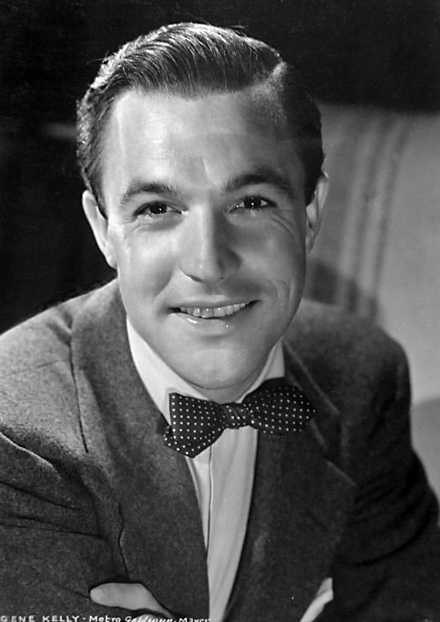
Stanley Kramer offered the role of E. K. Hornbeck to Gene Kelly, who initially turned it down. Kramer told him his co-stars would be Fredric March and Spencer Tracy, and Kelly changed his mind. This was a risky move for Kramer, since he had not yet secured March or Tracy.
- #007
Stanley Kramer was advised not to cast Fredric March and Spencer Tracy in the lead roles, on the assumption that younger audiences would not want to see veteran stars.
- #008
The Hillsboro County Courthouse is the same building as the Hill Valley Courthouse in Back to the Future (1985) and the Maycomb Courthouse in To Kill a Mockingbird (1962). It was originally built for An Act of Murder (1948), in which Fredric March and Florence Eldridge played a married couple.
- #009
Word of Fredric March's and Spencer Tracy's performances spread through the studio and across Hollywood to such an extent that many extras flocked to the set just to watch the action. At one point the extras applauded one of March's dramatic speeches so much that they ruined the take by not waiting for it to finish.
- #010
In real life, Clarence Darrow wanted the jury to find John Thomas Scopes guilty so that he could appeal to the Tennessee Supreme Court and strike an even greater blow against the law. The guilty verdict was overturned, but on a technicality rather than as Darrow had hoped.
- #011
Because of criticism directed at producer Stanley Kramer by the American Legion for hiring Nedrick Young, whom they considered subversive, Moss Hart, president of the Writers Guild of America, sent Kramer a telegram: "The council of the Writers Guild of America, which has always been unalterably opposed to the blacklisting of writers in any form, voted unanimously at a meeting today to praise and applaud you for your courageous stand in publicly rejecting, on so-called patriotic grounds, efforts to interfere with American literature. The right of writers to work."
- #012
The actual testimony of the Scopes Monkey Trial was rather dull until Clarence Darrow (Drummond) called William Jennings Bryan (Brady) as a defense witness. Questioning him about the origin of the world and Adam and Eve, Darrow quickly drove Bryan into fierce contradictions and proved his view that the Bible cannot be interpreted literally in light of scientific knowledge.
- #013
The play Inherit the Wind and its various film adaptations decisively shaped popular assumptions about the Scopes Trial, even though the story differs from the trial's real background in many respects. For example, the people of Dayton, Tennessee, were not ready to lynch John T. Scopes for teaching Darwinism. Instead, leading citizens invited Scopes to be the defendant in a test case to challenge the law. Scopes's students had to be coached to state that Scopes had taught them Darwinism, so that a trial could be held in the first place. The portrayal of the town's leading citizens seeing the trial as a chance to put their community on the map is much more accurate.
- #014
In the scene where Drummond (Spencer Tracy) tells Brady (Fredric March) the story of his rocking horse, "Golden Dancer," they sit in rocking chairs on the boarding house porch. Both actors rock their chairs, but they are never in sync with each other, emphasizing their differences of opinion.
- #015
The film's opening and closing vocals are performed by Leslie Uggams.
- #016
Although the defense in real life lost the John Thomas Scopes Monkey Trial, the verdict was later reversed on a technicality.
- #017
It is the second of three consecutive Stanley Kramer films in which former MGM musical stars took on unexpected dramatic roles: Gene Kelly in this film, following Fred Astaire in On the Beach (1959), and preceded by Judy Garland in Judgment at Nuremberg (1961).
- #018
William Jennings Bryan, like his fictionalized counterpart Matthew Harrison Brady, ran for president three times and lost each time.
- #019
Throughout the film there are various references to "chautauqua meetings" and "chautauqua tents." Chautauqua was an adult education movement in the United States, highly popular in the late 19th and early 20th centuries, and chautauqua gatherings spread across rural America until the mid-1920s. William Jennings Bryan (represented in the film by "Matthew Brady") was a popular speaker on the chautauqua circuit. Chautauqua meetings brought various forms of entertainment and culture to whole communities through assorted speakers, musicians and others.
- #020
At the end of the trial, Judge Coffey declared the court adjourned sine die. "Sine die" is Latin for "without day," meaning "indefinitely" (that is, with no plan to reconvene). The *galluses* that attorney Henry Drummond mentions in the hot courtroom is another word for suspenders.
- #021
Many of the character actors playing the townspeople of Hillsboro also appeared as the townspeople of Mayberry throughout The Andy Griffith Show (1960), which premiered the same year.
- #022
The film is notable for featuring a large number of actors who would later be recognizable from popular television programs: Dick York, Harry Morgan, Claude Akins, Norman Fell, Noah Beery Jr. and Hope Summers.
- #023
This was Florence Eldridge's last film released in cinemas.
- #024
Spencer Tracy appeared in Stanley Kramer-directed films for his last three movies as well: Judgment at Nuremberg (1961), It's a Mad, Mad, Mad, Mad World (1963) and Guess Who's Coming to Dinner (1967).
- #025
The film's US premiere was held as a drive-in screening on 21 July 1960 at the Rhea Drive-In Theatre in Dayton, Tennessee. According to Motion Picture Daily, about 5,000 people attended, among them John T. Scopes, the real defendant in the trial on which the story is based.
- #026
A young Burt Reynolds visited the set and watched some of the courtroom scenes being filmed, because he was doing a television job nearby and Spencer Tracy was one of his idols.
- #027
William Jennings Bryan (unlike his fictional counterpart Matthew Brady) died of a stroke in his sleep five days after the trial.
- #028
When Drummond's attempt to call scientific experts to the stand to testify for the defense is blocked, Stanley Kramer adds several elements from the real John Thomas Scopes trial, combining the heated closing of Clarence Darrow's speech on his motion to quash the indictment with the change Judge Raulston made on the grounds that Darrow had shown contempt of court.
- #029
Fredric March and Spencer Tracy each played the dual roles of Dr. Jekyll and Mr. Hyde, in Dr. Jekyll and Mr. Hyde (1931) and Dr. Jekyll and Mr. Hyde (1941) respectively. March won the Oscar for Best Actor for the role, his first appearance in a horror film and the first Oscar of his career. Both actors have 2 Oscars; Tracy was the first actor to win Academy Awards in consecutive years, a feat not repeated until Tom Hanks won his Oscars in 1994 and 1995.
- #030
As shown in the film, the trial began on 10 July 1925 during an extreme heat wave. The town was packed with spectators and vendors, and the trial was covered by reporters from around the world. After Scopes was found guilty and fined 100 dollars, the verdict was overturned by a higher court on technical grounds. Although the Butler law was upheld by the court, the trial succeeded in embarrassing its defenders, and no one in the state was ever again prosecuted for violating the law. In 1967 Tennessee courts struck down the law.
- #031
Venireman is the technical name for a person summoned to jury duty by a judge's order (known as a "venire facias").
- #032
The legal basis of the trial in the play, the film and the real case in Tennessee was whether Cates (Scopes) had broken the law by teaching evolution. However, the famous Darrow-Bryan clash, which was only a small part of the real case, and the larger debate over evolution and creationism had to be greatly expanded and embellished in the fictional versions to give the audience drama and depth.
- #033
Commercial radio came into use in 1920. That its presence in the Hillsboro courtroom in 1925 was a surprise to people is another sign of the town's lack of progress.
- #034
Dick York (Bertram T. Cates) was only two years younger than Claude Akins, who played Reverend Jeremiah Brown, the father of Cates's fiancée Rachel.
- #035
Gene Kelly says, "O tempora, o mores!" when it first appears. The phrase, first attributed to Cicero, means "Oh the times! Oh the customs!"
- #036
It is based on the real events of the Scopes Monkey Trial, which took place in Dayton, Tennessee, in 1925. The defendant is John Thomas Scopes.
- #037
The film is included on Roger Ebert's "Great Movies" list.
- #038
Despite the deliciously bold and youthful irreverence he displays in the film, Gene Kelly was 47 years old during shooting.
- #039
Robert Vaughn was offered the role of E. K. Hornbeck in case Gene Kelly turned it down. Instead, he chose to make The Magnificent Seven (1960).
- #040
Hornbeck refers to Cates as Copernicus, the Polish astronomer of the Renaissance who dared to suggest that the center of the solar system was the sun, not the earth. Because religious belief held that God had placed the earth at the center of the system, if not the universe itself, his theories were considered a form of heresy at the time.
- #041
Writers Jerome Lawrence and Robert E. Lee named the overzealous prosecutor "Matthew Brady." When Roscoe 'Fatty' Arbuckle was tried three times for involuntary manslaughter in 1921 and 1922, the real overzealous San Francisco District Attorney who prosecuted the case was named Matthew Brady. Matthew Brady was also the name of many real historical figures, including the English "Gentleman Bandit" who robbed several farms in Tasmania in the 1820s but refused to harm women. The name Mathew Brady (with only one t), however, is best known in connection with the famous mid-1800s portrait and landscape photographer, celebrated for immortalizing the casualties of the American Civil War.
- #042
The film has two Oscar winners, Spencer Tracy and Fredric March, and one Oscar nominee, Gene Kelly.
- #043
In the theatrical trailer, hosted by Stanley Kramer, Kramer, Gregory Peck and his wife Veronique Peck (also known as Celia Peck), Jeff Chandler, Otto Preminger, Walter Wanger and West Berlin Mayor Willy Brandt are seen attending the Berlin Film Festival premiere, where Kramer received an award presented by Harold Lloyd, who was on the festival committee.
- #044
In the first courtroom scene, the judge suggests that, because of the heat, the men may remove their jackets in the courtroom. A sign on a building outside the window (and across the street) reads HOT AND COLD SANDWICHES. When the judge gives his approval, the director frames the HOT part of the sign within the inner window. After most of the spectators have removed their jackets, the director frames the COLD part of the sign.
- #045
In the film's opening title sequence, the council members heading to the Hillsboro school building walk off Universal's famous Courthouse Square set toward the northwest. Had they gone the opposite way, they would quickly have found themselves on Finch's residential street from To Kill a Mockingbird (1962).
- #046
Both Spencer Tracy and Fredric March were born in Wisconsin.
- #047
As the first council member walks toward the town square, the blindfolded eyes of the statue of Justice are visible.
- #048
This was Sandee Marriott's last film.
- #049
When the town leaders discover that Matthew Brady is coming to try Cates, they grow excited in anticipation of all the money that will come in. The handiwork of one of the town's tradesmen, a sign painter, can be seen on nearly every street, since all the protest signs and banners bear professional calligraphy and illustrations.
- #050
The street and rally scenes in the film suggest a fairly large population in Hillsborough. At the time of the trial, the population of Dayton, Tennessee was about 1,800.
- #051
Bernard Herrmann's influence on composer Ernest Gold is clearly evident in the film's first minute, which shows the Hillsboro courthouse. The chords, instruments and motifs not only recall Herrmann's early films but also seem taken directly from his final work, Taxi Driver.
- #052
Immediately after Henry tells Rachel that defending one's own beliefs can make you feel like the loneliest person in the world, Matt is seen eating alone while speaking at a table full of reporters and townspeople.
- #053
Hope Summers plays a religious role in this film, but eight years later she portrays a member of a diabolical council in Rosemary's Baby.
- #054
During filming, Claude Akins was 33 years old. Donna Anderson, who played his daughter, was only 13 years younger than him at age 20.
- #055
Both Fredric March and Spencer Tracy played their own rivals in Dr. Jekyll and Mr. Hyde (March in March 1931 and Tracy in 1941).
Continue through the archive

Sources & editorial notes
Reference databases
Sources for the entries on this page
- IMDb IMDb kaydı
Information from external sources is independently selected, consolidated and edited by Arka Evren. Sources are listed for verification and further reading. Encyclopedia text is used under its licence (CC BY-SA). How we work