
FILM · 2004 · FRANCE
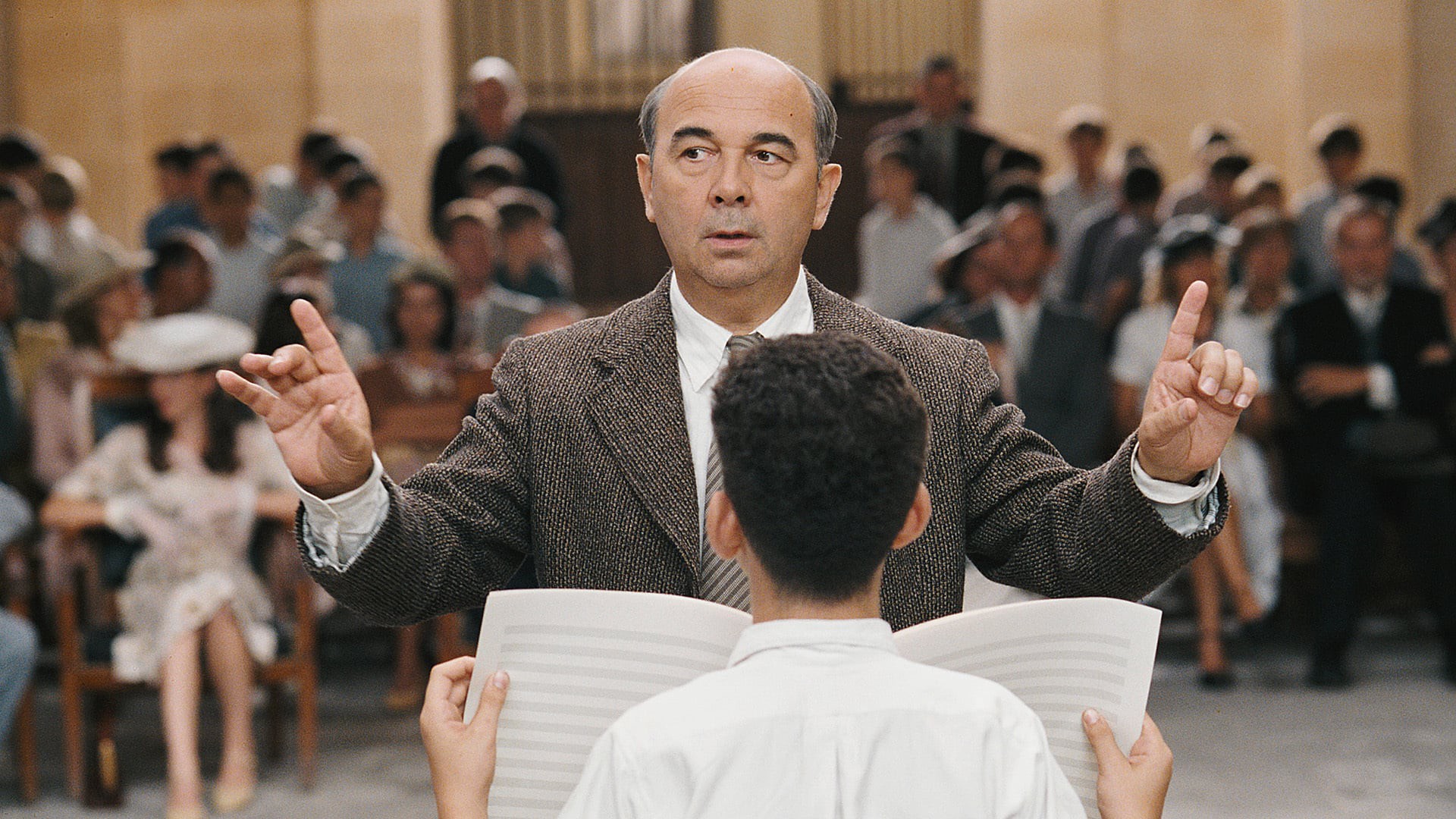
Les choristes
10 archived facts 4 topics 1 source Last reviewed Oct 2026
All facts (10)
- #001
Actor and co-producer Gérard Jugnot mortgaged his Paris apartment to help finance the film. The gamble paid off, and he ultimately earned more than 5 million Euros for Les Choristes as actor and co-producer. In 2004 he became the highest-earning French actor, ahead of Jean Reno and Gérard Depardieu.
- #002
The producers chose to cast a real boys' choir soloist for the role of Pierre Morhange (Jean-Baptiste Maunier). Jean-Baptiste was the soloist of the Petits Chanteurs de Saint-Marc choir, which also performed the songs in the film.
- #003
The film was shot in the middle of summer, and since the scenes were meant to take place in winter (in January), it was hard for the actors to wear winter clothing.
- #004
In 2004 the film was number one at the French box office, with more than 8.6 million admissions.
- #005
It was inspired by the 1945 film La Cage aux rossignols (The Cage of Nightingales).
- #006
After The Chorus (2004), Jean-Baptiste Maunier changed musical genres so as not to be seen as an angel face any longer.
- #007
Shortly after the film, Jean-Baptiste Maunier left Les Petits Chanteurs de Saint-Marc because he had a problem with choirmaster Nicholas Porte repeatedly bringing up the line "no one is irreplaceable" from the film that made him famous. He kept singing, however, proving in a sense that the choirmaster too had been replaced.
- #008
(34 minutes) At the choir auditions, Boniface sings "Maréchal, nous voilà!" (Marshall, here we are!) very loudly, and Matthieu says it is "old fashioned." It had been dedicated to Marshall Pétain in 1941. The music was stolen from the Jewish composer Oberfeld, who was killed at Auschwitz. The song was used heavily at public and sporting events during Vichy France under Marshall Pétain, Nazi Germany's puppet government. Matthieu tried to tell Boniface, in a gentle way, that he should no longer sing that song.
- #009
France's official submission for Best Foreign Language Film at the 2005 Oscars.
- #010
Mathieu's diary gives the following dates: 15 January – Mathieu arrives at the school on 23 January – Maxence 30 January – the choir auditions are held 8 February – rehearsals begin on 15 February – the new student Mondain arrives on 3 March – Morhange begins singing with the choir 13 May – Mondain is sent back to the school by the police.
Sources & editorial notes
Reference databases
Sources for the entries on this page
- IMDb IMDb kaydı
Information from external sources is independently selected, consolidated and edited by Arka Evren. Sources are listed for verification and further reading. Encyclopedia text is used under its licence (CC BY-SA). How we work