
FILM · 2000 · UK
O Brother, Where Art Thou?
17 archived facts 3 topics 1 source Last reviewed Oct 2026
All facts (17)
- #001
The film's soundtrack unexpectedly became a blockbuster in its own right, even surpassing the film's success. By early 2001 it had sold five million copies; it spawned a documentary film, three follow-up albums ("O Sister" and "O Sister 2") and two concert tours; and it won Country Music Awards for Album of the Year and Single of the Year (for "Man of Constant Sorrow"). It also won five Grammys, including Album of the Year, and in the week of March 15, 2002 — 63 weeks after its release and a year after the film's premiere — it rose to number 1 on the Billboard album charts.
- #002
About 350 extras were hired for the Klan rally scene. Many were members of a military formation group, and most were Black. Joel Coen later recalled hearing one of them say, "This is a very strange thing!"
- #003
Although Homer is credited as a co-writer of the film, Joel Coen and Ethan Coen claim they have never read "The Odyssey" and know it only through cultural osmosis and film adaptations.
- #004
George Clooney rehearsed the singing for weeks, but the singing voice in the song was ultimately provided by bluegrass singer Dan Tyminski.
- #005
According to Joel Coen, there was a snake catcher on set. "We hired this guy and he showed up on set with a golf club, and what he would do was look around for snakes. If he saw a snake, he'd tie it to the golf club and put it in this bag. I asked him what you call someone who does that for a living, and he said 'An idiot.'".
- #006
The childhood home that Ulysses Everett McGill goes to at the end of the film in search of the ring is actually based on the cabin from The Evil Dead (1981). Joel Coen was an assistant editor on that film, his first feature.
- #007
The prisoner's musical chant at the beginning of the film (and on the soundtrack) was actually an old recording of a chain gang.
- #008
"Po Lazarus" is a recording of actual prisoners at Parchman Farm prison in 1959. The Coens tracked down one of those prisoners, Joe Carter, and paid him $20,000 for the use of his voice.
- #009
When George Clooney read the script he did not immediately understand his character, so he sent it to his uncle Jack, a tobacco farmer living in Kentucky, and asked him to read the entire script onto a recording device. Unbeknownst to Clooney, Jack, a devout Baptist, removed every instance of the words "damn" and "hell" from the Coens' script in his recording; Clooney only learned of this midway through shooting, after the directors pointed it out to him. Jack had never flown on a plane before coming to the premiere.
- #010
Joel Coen stated that the film was inspired by The Wizard of Oz (1939). "It started out as a 'three stooges' kind of film, and then at a certain point we looked at each other and said, 'You know, they're trying to get home, let's say it's The Odyssey. We were thinking of it more as The Wizard of Oz. We wanted the film's tagline to be 'There's no place like home.'".
- #011
On set, John Turturro told Tim Blake Nelson: "Look, the way it works on their films — and I've been in enough of them to consider myself an authority — if you take the script, the film will be twice as good as the script. And this script is a classic. Tim, we're going to be part of a classic."
- #012
The film playing in the cinema is Myrt and Marge (1933), starring Eddie Foy Jr., Ted Healy and The Three Stooges.
- #013
Baby Face Nelson was a murderous gangster named Lester M. Gillis, known for his angry, itchy trigger finger. Three years before this film was made, on November 27, 1934, he was shot by FBI agents and died of his wounds.
- #014
The gravediggers are three members of the Fairfield Four, a gospel group that has existed for over 90 years.
- #015
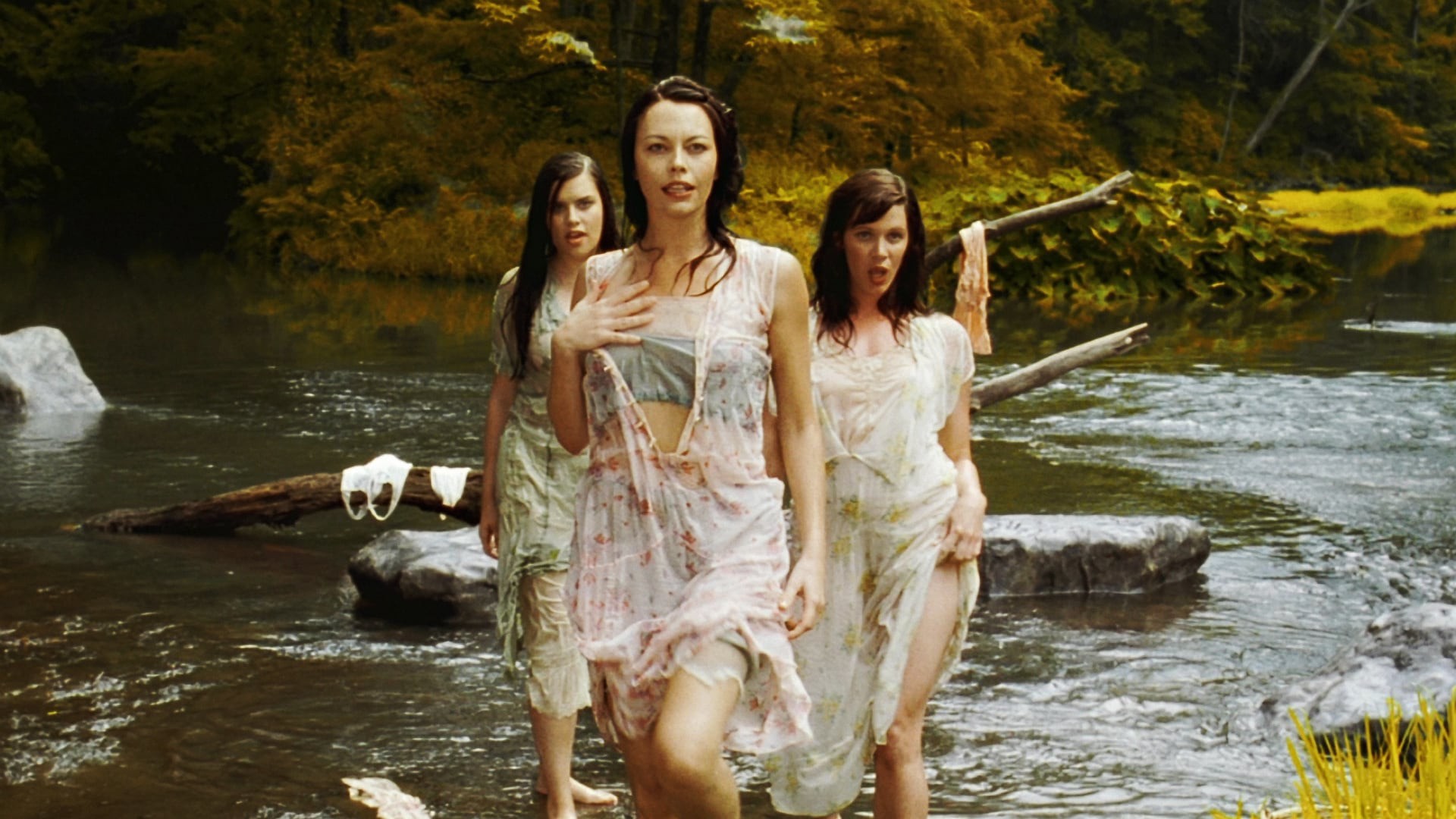
One of the film's notable features is its use of digital color correction to give it a sepia-toned look. Joel Coen said this was because the actual set was "greener than Ireland." Cinematographer Sir Roger Deakins said: "Ethan and Joel favored a dry, dusty Delta look with golden sunsets. With the color intensity the scene dictated and natural skin tones made up entirely of shades of the rainbow, they wanted it to look like an old hand-painted picture." The team initially tried to achieve the color correction using a physical process, but after several attempts with various chemical processes proved inadequate, it became necessary to perform the process digitally.
- #016
Tim Blake Nelson was Joel Coen's neighbor. Joel had never seen him act in anything. When the Coens sent him the script, he thought they wanted advice from him as a former Classics student.
- #017
The entire film was digitally graded on a computer. The negative was scanned at 2K resolution with a Spirit Datacine, and the colors were then fine-tuned digitally. The process took several weeks. The resulting digital master was re-filmed with a Kodak laser recorder to create a printing master. This was the first time this had been done for an entire film in Hollywood (though not in other countries).
Sources & editorial notes
Reference databases
Sources for the entries on this page
- IMDb IMDb kaydı
Information from external sources is independently selected, consolidated and edited by Arka Evren. Sources are listed for verification and further reading. Encyclopedia text is used under its licence (CC BY-SA). How we work