FILM · 1965 · UK
Operation Crossbow
34 archived facts 4 topics 1 source Last reviewed Oct 2026
All facts (34)
- #001
Hannah Reitsch (Barbara Rütting) was a real person. She was a German aviator and was once Adolf Hitler's personal pilot. During the Battle of Berlin, Reitsch tried to persuade Hitler to flee the city in a small, light Fieseler Storch aircraft.
- #002
For the scene in which a street is obliterated by a V2, the producers destroyed a row of apartment buildings that were scheduled for demolition.
- #003
MGM executives did not know until they saw the rough cut that the German characters would speak German (with subtitles). They wanted the German dialogue dubbed into English, but director Michael Anderson persuaded them to keep the subtitled dialogue.
- #004
Duncan Sandys (Richard Johnson) was a real person. He was the Chairman of the British War Cabinet Committee responsible for defence against German rockets and flying bombs. He was the son-in-law of Britain's wartime Prime Minister Sir Winston Churchill and had been wounded in Norway in 1941, which left him permanently lame.
- #005
Despite receiving top billing, Sophia Loren appeared in only an extended cameo. Loren's husband, producer Carlo Ponti, believed his wife's popularity in the United States would improve the film's box-office chances and billed her accordingly. The film was nevertheless a major box-office disappointment.
- #006
Because Sophia Loren had been blacklisted in Arab countries for playing a Jewish woman who survived a concentration camp, Daniel Mann's Judith (1966), shot in Israel, was shown in Beirut, Lebanon, with all of Loren's scenes removed. The film's poster was altered and her name was taken off the top billing. The film was shown at the Cinema Strand, and audiences never suspected that Loren was part of the production.
- #007
George Peppard (1st Lieutenant John Curtis, U.S.A.A.F.) was under contract to MGM and was eager to be released from it. MGM agreed on the condition that he make one more film for them, and this was that film.
- #008
The parachute instructor seen in the jump-tower scenes was Frank Foley. He was actually an Irishman who was a Parachute Instructor.
- #009
Unusual among the many war films of the 1960s, the Germans speak German throughout.
- #010
For the segment in which Royal Air Force Bomber Command raids the Peenemunde rocket research site, the producers used Avro Lancaster PA474, which was operated by the Cranfield Institute of Technology. PA474 was painted in 83 Squadron colours for this film in the summer of 1964. PA474 now flies as part of the British Royal Air Force Battle of Britain Memorial Flight.
- #011
The film was a major hit in the United Kingdom, one of 1965's blockbusters, but it failed in the United States.
- #012
The V2 rocket and Meillerwagen assembly trailer, together with the Vidalwagen road transport trailer, are now held at the Royal Air Force Museum Cosford in Shropshire, England.
- #013
Although it was the most expensive British-made film of the year, it was a major box-office disappointment. Several theories have been put forward to explain this. The first is that Sophia Loren, who received top billing, played only a very small role, not appearing until forty-seven minutes in (in a film under two hours long) and remaining on screen for less than half an hour. Her character is then killed (about forty minutes before the film ends) and never mentioned again. Some critics noted that her part could have been removed entirely without significantly affecting the plot. Beyond that, the film is also quite bleak, as all three of the saboteur heroes die very badly over the course of the film, and some very well-known British actors are given little to do in small supporting roles. By the mid-1960s, films about the Second World War were less popular, especially among young people.
- #014
The sets were the largest ever built at MGM's British studios. Stages 6 and 7 were combined into a single large set of thirty thousand square feet (nine thousand one hundred and forty-four square metres).
- #015
The screenwriting credit for "Richard Imrie" was a pseudonym of Emeric Pressburger.
- #016
The title is the code name of the real Second World War espionage mission called "Crossbow". After the Second World War, references to these events became popularly known as "Operation Crossbow" because of the film's name.
- #017
Sir Richard Attenborough was offered the role of Professor Lindemann. He was a real person: throughout the Second World War he was Winston Churchill's chief scientific adviser and the architect of the Allies' bombing of Dresden. He was known as a brilliant scientist, but he was as arrogant and unlikeable as Trevor Howard portrays him in this film — though, unlike Howard on screen, he spoke with a pronounced German accent that he never lost. He was an outspoken racist who harboured an open hatred of working-class people and homosexuals, and he ardently embraced the notorious "eugenics theory" that was widely debated in the early years of the twentieth century. (Churchill was also a great supporter of eugenics, particularly the forced sterilisation of the mentally disabled.) Late in life he became Lord Cherwell; he never married and died in 1957 at the age of 71.
- #018
A brief subplot featuring Victor Beaumont as Rudolf Hess was cut from the final version.
- #019
George Peppard (1st Lieutenant John Curtis, U.S.A.A.F.) does not appear until twenty-eight minutes into the film. Sophia Loren (Nora Van Ostamgen) does not appear until forty-seven minutes in.
- #020
At around 1:35: during the V-2 rocket attack, a building is seen exploding without any warning sound of an approaching rocket. This is not an error: V-2 rockets travelled at more than twice the speed of sound, meaning the rocket reached its target before its sound did.
- #021
The V1 and V2 bombs were developed late in the war and therefore mostly targeted Britain, as well as previously occupied areas such as Paris, Antwerp and Luxembourg. About 40% of them were destroyed en route by fighter aircraft, anti-aircraft guns and barrage balloons. Those that hit their target or population centres usually killed two or three people and were therefore not cost-effective in the war effort.
- #022
William Douglas Home, the brother of the famous playwright and one-time Prime Minister Sir Alec Douglas-Home, wrote the first draft of the screenplay.
- #023
Gordon Jackson shot scenes as a Royal Air Force pilot, but they were cut.
- #024
John Le Mesurier and Basil Dignam shot scenes as British Army officers, but their scenes were cut; Dignam, however, can be seen very briefly in one scene that remains in the film.
- #025
The V rockets (Vergeltungswaffen, or 'retaliation weapons') were seen by Hitler as a way to change the course of the Second World War. The Allied response, known as Operation Crossbow, was one of the first large-scale uses of 3D aerial photography, in this case to find, locate and destroy these revolutionary weapons before they could be launched.
- #026
Despite being a British co-production, it has not yet been released on DVD in the United Kingdom.
- #027
In addition to the detailed sets, realistic props contributed to the authentic look of the recreated German secret weapons projects.
- #028
About half of Richard Johnson's scenes (as Duncan Sandys) were cut.
- #029
George Peppard and Jeremy Kemp play two Allied spies who infiltrate a German rocket base from the Second World War. The following year, in The Blue Max (1966), they would play two rival fighter pilots of the First World War German air force, the Luftstreitkräfte.
- #030
Paul Henreid (General Ziemann) and Helmut Dantine (General Linz) both appeared in Casablanca (1942), but, as in this film, they had no scenes together.
- #031
The buzz bombs were rocket-powered aerial vehicles. However, the rev counters used to show engine speed during manned tests can be made out. Jet aircraft show speed not with an RPM gauge but with a percentage of thrust, such as V1 or N1. These are clearly VDO RPM gauges from a late-1960s sports car. You will also notice that they never become 'live' by showing speed. These gauges are found in a late-1960s Porsche.
- #032
George Peppard and Jeremy Kemp appeared in The Blue Max (1966).
- #033
Sir John Mills, Sylvia Syms and Sir Anthony Quayle appeared in Ice Cold in Alex (1958), which won the BAFTA award for Best Film.
- #034
Patrick Whymark was only 38 years old and was playing the 68-year-old Winston Churchill.
Continue through the archive
- Sophia Lorenas Nora Van Ostamgen
- George Peppardas 1st Lt. John Curtis USAAF
- Trevor Howardas Professor Frederick Lindemann
- John Millsas General Boyd
- Richard Johnsonas Duncan Sandys
- Tom Courtenayas Robert Henshaw
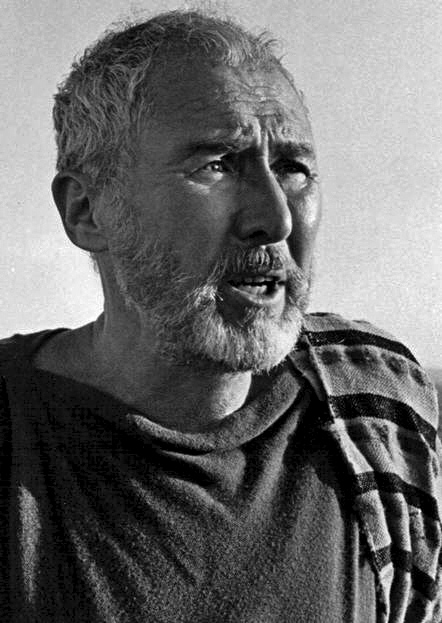 Anthony Quayleas Bamford
- Lilli Palmeras Frieda
- Richard Toddas Wing Commander Kendall
- Sylvia Symsas Flight Officer Constance Babington Smith
Sources & editorial notes
Reference databases
Sources for the entries on this page
- IMDb IMDb kaydı
Information from external sources is independently selected, consolidated and edited by Arka Evren. Sources are listed for verification and further reading. Encyclopedia text is used under its licence (CC BY-SA). How we work