FILM · 1979 · UK
Quadrophenia
45 archived facts 6 topics 1 source Last reviewed Oct 2026
All facts (45)
- #001
When director Franc Roddam first met Pete Townshend, Townshend brought tapes of orchestral arrangements he had produced himself, assuming the film would be made as a 'rock opera' in the manner of Ken Russell's Tommy (1975). Roddam explained that he wanted to do the opposite and make it far more realistic in tone and style. Townshend put the tapes aside and never mentioned them again.
- #002
John Lydon (formerly Johnny Rotten) was initially approached for the role of Jimmy and was even screen-tested for it. However, distributors refused to insure him for the part and someone else was cast instead.
- #003
Despite the somewhat ambiguous ending, director Franc Roddam, Phil Daniels and several other cast members agree that Jimmy does not commit suicide at the end. Most likely, he abandons the Mod life and drifts into a more conformist, conventional adult existence.
- #004
The pinball machine Jimmy (Phil Daniels) plays is Buckaroo, made by Gottlieb in 1965. It is the same machine Elton John played in the film Tommy (1975).
- #005
In the original script, the sex scene between Jimmy and Steph took place in a basement and specified that she would be shown nude. Leslie Ash made it clear she would not do nudity even if it meant losing the role. In the end the producers agreed to shoot the scene with her clothed and changed the setting to an alleyway.
- #006
During the 40th anniversary cast reunion, Trevor Laird, who played Ferdy, recalled arriving on set on the day the house party scenes were to be shot, only for producer John Peverall to approach him with a bottle of champagne in hand (he had won an Oscar with The Deer Hunter (1978)). Peverall told him he was not needed for those scenes and to step aside and have a drink with Phil Davis, who was also not in the scene. An angry Franc Roddam confronted Peverall, telling him it was not his job to discuss such matters with the actors. A visibly embarrassed Roddam later admitted to Laird that the scenes had been cut for commercial reasons, because the film would be released in the southern states of the US and in South Africa, and those audiences would not allow or tolerate a black man being beside or intimate with white girls.
- #007
The cast spent a month learning to ride scooters before filming.
- #008
Although widely seen as 'mistakes', the many vehicles shown in public and in shop windows that did not belong to the correct period were there for entirely practical and logistical reasons. Closing roads (including busy streets during the day) and filling them with period-appropriate cars, pedestrians and shop-window extras was simply not realistic. There was also the exorbitant cost of road closures, which required the cooperation and approval of the local council and police and pushed up the limited budget. In addition, by 1979 there were strict laws on helmet use on public roads, and since none of the main cast could be doubled by stunt performers, obtaining the necessary insurance for those scenes would have been difficult and expensive. In the end the producers had to compromise and accept that some scenes would inevitably look anachronistic, and instead shot many scenes at night or on quieter roads, where there was less traffic and less chance of the public and police being around.
- #009
Before filming began, several of the main cast were taken to the Metropolitan Police Training College in Hendon, North London, where a police sergeant taught them how to handle their scooters properly. According to Franc Roddam, the policeman liked Lesley Ash and chatted her up, trying to ask her out.
- #010
The person who throws the table through the window is former Charlton Football Club manager Alan Curbishley. This was arranged by his brother Bill Curbishley, who was The Who's manager.
- #011
The scene in which Jimmy and his friends look out over the sea and the pier on their bikes and Jimmy says 'This is Brighton' is actually Eastbourne. So although they are supposed to be in Brighton, Beachy Head is on their right when it should be on their left.
- #012
The film's ending was shot on the first day of filming.
- #013
When Quadrophenia (1979) was first released in cinemas in Ireland, the alleyway sex scene between Jimmy and Steph was completely cut by the Irish censor of the time, Frank Hall.
- #014
It was Timothy Spall's first feature film.
- #015
The film is directed by Franc Roddam, who also created the television series Auf Wiedersehen, Pet (1983). Many actors appeared in both Quadrophenia (1979) and AWP, including Gary Holton, Timothy Spall, Ray Winstone, Michael Elphick and Vincenzo Nicoli.
- #016
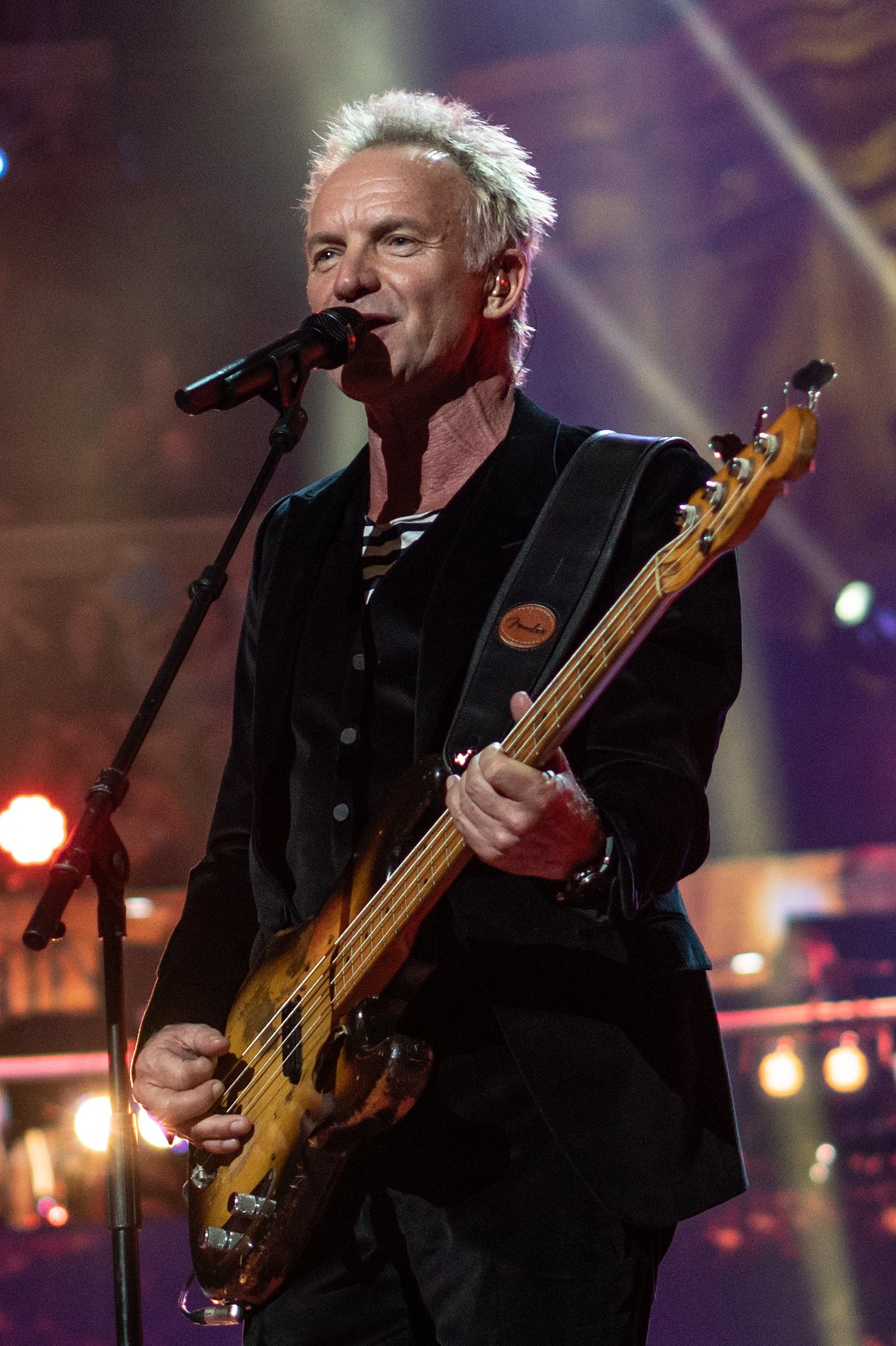
The scooter Jimmy steals from Ace has yellow 'GS' letters on its front. These initials do not in fact stand for the real name of Sting, who plays Ace Face, Gordon Sumner. 'GS' stands for Grand Sport, a popular model of Vespa scooter in the 1960s.
- #017
Phil Davis auditioned for Jimmy but was cast as Chalky instead.
- #018
Quadrophenia deliberately plays on dissociative identity disorder, the more familiar medical term being schizophrenia, to reflect the four different personalities of the film's protagonist, Jimmy Cooper. Each personality type is said to represent a member of The Who. The band's film company released the film, and its story and music are of course based on the group's album of the same name, an opera-style record released six years earlier.
- #019
Amanda Barrie was cast as Jimmy's mother and had completed some photographs. In his commentary for the Criterion Collection, director Franc Roddam stated that he did not consider her right for the role and recast it.
- #020
Cameron Crowe has said this is his favourite film.
- #021
As Jimmy works on his scooter in his shed, he is reflected in four side mirrors at once, a visual metaphor for the film's themes and its title.
- #022
Michael Elphick, who played Jimmy's father, was in fact only twelve years older than his on-screen son (Phil Daniels). Ten years later the two would appear together again in an episode of Boon.
- #023
The street where Jimmy and Steph have sex during the riot still exists and has been known as "Quadrophenia Alley" since the 1980s. It lies between numbers 10 and 11 on East Street in Brighton and has been a pilgrimage site for The Who's fans and for fans of the film and of Mod subculture in general for more than forty years. People regularly visit the spot to leave graffiti or mementos, and in some cases try to recreate the scene from the film with their romantic partners.
- #024
Phil Daniels and Sting worked again with director Franc Roddam on The Bride (1985), which also featured Gary Shail and Timothy Spall.
- #025
This was DOP Brian Tufano's debut as a feature film cinematographer. He was Ridley Scott's first choice to shoot Alien (1979), but 20th Century Fox rejected him because of his lack of feature film experience and largely television background, and he was instead hired by Franc Roddam to shoot Quadrophenia (1979).
- #026
At 58 minutes and 35 seconds, the start of the scene between the scooters and the motorcycles was shot not on a public highway but on the Alpine track at the Millbrook test circuit, which is usually seen in car magazines and television series. It has also been used in Scream and Scream Again (1970), Tales from the Crypt (1972) and Endeavour (2012) (the episode "Apollo").
- #027
This was John Bindon's last feature film.
- #028
Phil Daniels, Ray Winstone, Julian Firth, John Blundell, Perry Benson, Patrick Murray and P. H. Moriarty also appeared in the controversial youth prison drama Scum (1979), released the same year.
- #029
This was actor and singer John Altman's first role in a film, although he was not credited in the titles. He later became famous for the role of Nick Cotton in the long-running BBC soap opera EastEnders (1985).
- #030
As part of his audition for the role of Spider, Gary Shail performed a backflip.
- #031
Linda Robson auditioned for the role of Steph before Leslie Ash was cast.
- #032
The film's events take place around May 1964, with the Whitsun Weekend Riots at its centre. In real life the Beatles had appeared on the Ed Sullivan Show three months earlier, which marked the end of the "Mods vs. Rockers" era in London youth culture and the beginning of the Swinging London period. The film is therefore intended as a snapshot of the last days of a particular moment in London's cultural history and as a tribute to the transition from one era of popular culture to the next.
- #033
Although the "Mods" were all meant to be teenagers, at the time of filming Phil Davis ("Chalkie") was 25 and John Altman ("John") and Sting ("Ace Face") were 26.
- #034
Though its significance is lost on young and non-UK audiences, "Mods" and "Rockers" were two of the dominant youth subcultures in early 1960s Britain. Mods were defined by their love of pop music, Italian-style Vespa scooters, styled hair and smart clothes such as ties, blazers and suits. Rockers took inspiration from American hot-rod culture, rode motorcycles and listened to rock. Although both groups were working class, Mods tended to come from slightly more upwardly mobile families and had disposable income to spend on designer clothes, which added an element of class warfare. Although the two groups had a certain antipathy towards each other, there were only isolated incidents of violence. The British media, however, seized on "Mods vs. Rockers" as a serious social problem and ultimately created a crisis that did not exist; in the early 60s many older Britons lived in fear of all-out gang warfare breaking out between the two. In the end, the media's sensationalism over the rivalry led to the 1964 Whitsun Weekend Riots, in which more than 1000 Mods and Rockers were involved in clashes on Brighton Beach, as depicted in the film. The event was a turning point for both subcultures; both began to decline following the booming economy, Beatlemania and the rise of the Swinging London era.
- #035
Kate Williams was cast as Jimmy's mother at the last minute, replacing Amanda Barrie.
- #036
The film is part of the Criterion Collection as spine number 624.
- #037
When "Chalkie" encounters a gang of Rockers on the way to Brighton, a road sign behind them reads "Iver Heath" (in Buckinghamshire), indicating that the film was shot very close to Pinewood Studios.
- #038
The radio station Jimmy listens to in his bedroom, Radio London 266 mw ("The Big L"), was a 'pirate' station that broadcast the top 40 pop songs between 1964 and 1967. It operated from a ship in the North Sea, just outside British territorial waters, but was shut down in 1967 after the Marine Offences Act outlawed illegal pirate radio stations. The DJ heard is Dave Cash, who later joined BBC Radio 1 along with many other former 'pirate' DJs.
- #039
Sting has said he has since felt somewhat uncomfortable about playing the character Ace Face, because he had to play an 18-year-old but actually turned 26 during filming and was older than the other actors playing youths. He said his then-wife Frances Tomelty, who thought he would benefit from the experience, pushed him to take the role.
- #040
Lead actor Phil Daniels and singer Toyah Willcox had a close relationship before making Quadrophenia (1979); he had previously supported Toyah's first foray into original singing and songwriting at the dawn of her career in the entertainment industry.
- #041
Linda Regan, who plays the blonde rocker girl in the film, turned 29 during filming and was about ten years older than the character she portrayed.
- #042
The newspaper articles pasted on the wall of Jimmy's bedroom are taken from national newspapers rather than local ones, since all of the various publications in Brighton had ceased trading before 1964, the year the film is supposedly set.
- #043
Another actor was initially cast in the role of Ace Face.
- #044
On Rotten Tomatoes, the film holds a 100% score based on reviews from 15 critics.
- #045
Leslie Ash (Steph) plays a promiscuous lead role in Quadrophenia (1979) associated with the free-loving hippies of the 1960s, whereas nearly 20 years later, in the somewhat less liberal 1990s, she took another lead role. In Men Behaving Badly (1992), her character Deborah Burton is monogamous and often plays hard to get with her boyfriend Tony Smart.
Continue through the archive
Sources & editorial notes
Reference databases
Sources for the entries on this page
- IMDb IMDb kaydı
Information from external sources is independently selected, consolidated and edited by Arka Evren. Sources are listed for verification and further reading. Encyclopedia text is used under its licence (CC BY-SA). How we work