FILM · 1985 · USA
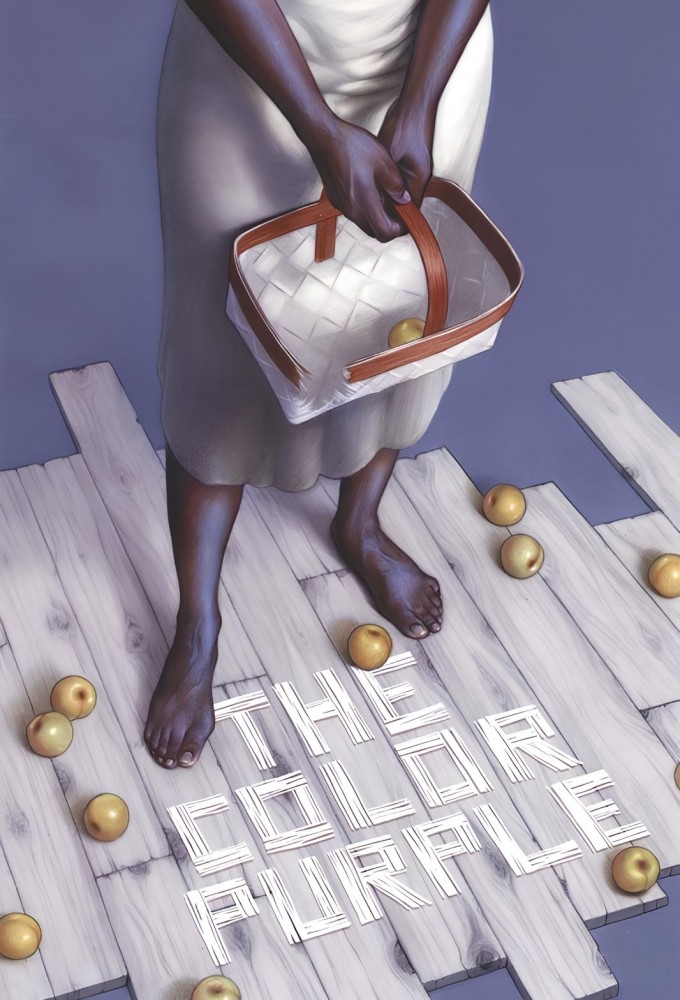
The Color Purple
- Directed by
- Steven Spielberg
- Runtime
- 154 min
- Studio
- Amblin Entertainment, Warner Bros. Pictures, The Guber-Peters Company
24 archived facts 5 topics 1 source Last reviewed Oct 2026
An epic tale spanning forty years in the life of Celie, an African-American woman living in the South who survives incredible abuse and bigotry. After Celie's abusive father marries her off to the equally debasing 'Mister' Albert Johnson, things go from bad to worse, leaving Celie to find companionship anywhere she can. She perseveres, holding on to her dream of one day being reunited with her sister in Africa.
Summary: TMDB

All facts (24)
- #001
Sofia's speech at the dinner table was improvised, encouraged by Steven Spielberg while shooting the scene. He asked Winfrey to tell Celie how Sofia felt the day she saw her in the store while shopping for Miss Millie.
- #002
Steven Spielberg's first child was born during the filming of this movie, and while he was preparing Celie's first childbirth scene he happened to be called off the set and left the scene to the assistant director. Spielberg later used his newborn baby's crying sounds in the childbirth scene he missed directing.
- #003
In an early interview about his role in Titanic (1997), Leonardo DiCaprio said this was the film that made him want to become an actor.
- #004
During the dinner scene, Oprah Winfrey improvised all of her lines while talking with Whoopi Goldberg. After the scene, Goldberg went up to Winfrey, hugged her and told her she was now an actress.
- #005
Steven Spielberg pursued Chaka Khan intensively for the role of Shug Avery. Khan, however, admitted that she was too afraid to take on the role at the time.
- #006
Whoopi Goldberg and Oprah Winfrey were nominated for an Oscar® for their first feature-film acting roles in this movie. Neither won, a choice for which the Academy was criticized, especially Goldberg's loss of the Best Actress Oscar.
- #007
Steven Spielberg admits that his biggest mistake in directing this film was his lack of courage in depicting the lesbian relationship between Celie and Shug. During filming, Spielberg feared that explicit sexuality between the two characters would alienate audiences, and he now regrets that decision.
- #008
Alice Walker, the author of the source novel, joined the rush at the end of each day's filming but was horrified by the film's final scene, particularly the one she called an "Oklahoma"-style opening scene. However, when she watched the film at the gala with an enthusiastic audience, she changed her mind. She now says she likes the film very much but finds it very different from her book.
- #009
With Whoopi Goldberg nominated for Best Actress and Margaret Avery and Oprah Winfrey nominated for Best Supporting Actress, this film is the first to feature three Oscar®-nominated performances by Black actors of any gender. It is also the first film to feature more than one Oscar®-nominated performance by Black women and the first in which two Black actors of any gender were nominated in the same category (in this case Best Supporting Actress). None of them won an Oscar® for their performances in this film, though Goldberg eventually won Best Supporting Actress for Ghost (1990).
- #010
When Oprah Winfrey learned she had won the role of Sofia, she was at a "weight-loss camp." Because the role required her to be heavy, she had to leave immediately.
- #011
This film tied with The Turning Point (1977) for the most Oscar® nominations (eleven) without a single win.
- #012
After Tina Turner turned it down, producers Steven Spielberg and Kathleen Kennedy cast Margaret Avery as Shug Avery.
- #013
The person whistling as Harpo sits while his children are taken from him one by one is Steven Spielberg (along with the music on the soundtrack).
- #014
The town scenes in the film were shot in Marshville, North Carolina. Because the utility pole in the middle of the street could not be removed, trees were planted to hide it.
- #015
Quincy Jones argued with Steven Spielberg about the screen time Oprah Winfrey, whom he was then mentoring, would get in the film. After she proved to Spielberg that she had acting ability, extra scenes were added for the first-time actress.
- #016
The film adaptation of Alice Walker's novel was anticipated so eagerly that casting had to be conducted under the code name "Moon Song."
- #017
It was the first PG-13 rated film to be nominated for the Best Picture Oscar. (It was not exactly a long wait: the PG-13 rating was first used in 1984.)
- #018
Patti LaBelle auditioned for the role of Shug Avery.
- #019
It was the only Best Picture Oscar® nominee that year whose director was not nominated for Best Director.
- #020
Rae Dawn Chong said of working with Oprah Winfrey: "Oprah is a great brown-noser. If you're in a room with her, she'll pick the most powerful person and become their best friend. When we worked with her… she was that fat chick… the wannabe cheerleader, the student council president, the principal's best friend… she was the fat chick who did everything at school and everyone loved her. That's Oprah — love me, love me, love me." Chong said she "had to respect Oprah" because "she changed the DNA of the universe," but she also said "Oprah is boring, because in the end it's all about Oprah."
- #021
Alfre Woodard was considered for the role of Celie Johnson.
- #022
Despite being the film's friend, co-producer (he convinced Steven Spielberg to direct Purple) and music director, Quincy Jones was intrusive about Spielberg's work during production. Although the film's score was nominated for an Oscar®, Spielberg did not work with any composer other than John Williams for the next 30 years.
- #023
Brian Dennehy told Entertainment Weekly that Danny Glover's performance moved him to tears.
- #024
Lola Falana and Diana Ross turned down the role of Shug Avery.
Sources & editorial notes
Reference databases
Sources for the entries on this page
- IMDb IMDb kaydı
Information from external sources is independently selected, consolidated and edited by Arka Evren. Sources are listed for verification and further reading. Encyclopedia text is used under its licence (CC BY-SA). How we work