

FILM · 2001 · NEW ZEALAND
The Lord of the Rings: The Fellowship of the Ring
- Directed by
- Peter Jackson
- Runtime
- 179 min
- Studio
- New Line Cinema, WingNut Films, The Saul Zaentz Company
1,213 archived facts 8 topics 2 sources Last reviewed Nov 2026
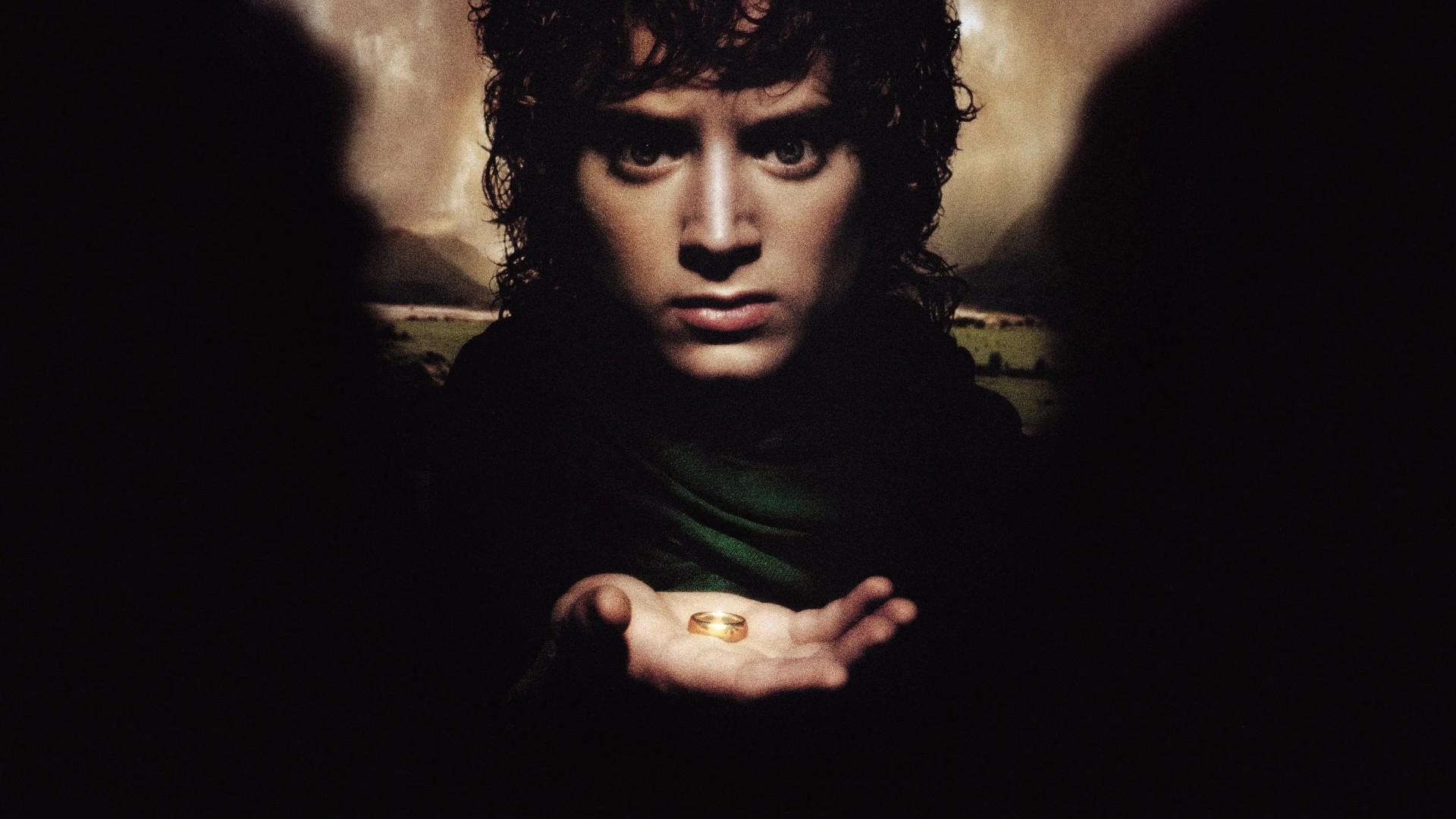
Young hobbit Frodo Baggins, after inheriting a mysterious ring from his uncle Bilbo, must leave his home in order to keep it from falling into the hands of its evil creator. Along the way, a fellowship is formed to protect the ringbearer and make sure that the ring arrives at its final destination: Mt. Doom, the only place where it can be destroyed.
1213 Interesting Facts About The Lord of the Rings: The Fellowship of the Ring
Interesting Facts (25)
- #001
Sir Ian McKellen and Sir Christopher Lee both played Sherlock Holmes: McKellen in Mr. Holmes (2015) and Lee in Sherlock Holmes and the Deadly Necklace (1962), Sherlock Holmes and the Leading Lady (1991) and Sherlock Holmes: Incident at Victoria Falls (1992). Lee also played Sherlock's brother Mycroft in The Private Life of Sherlock Holmes (1970), and John Rhys-Davies played Sherlock's partner Dr. Watson in Tom and Jerry Meet Sherlock Holmes (2010).
- #002
- #003
- #004
Tolkien began writing another sequel in the Middle-Earth series; taking place 200 years after the events in Lord of the Rings. The name of the book was to be A New Shadow, and it was to be about the rise of a Satanic type cult in the world of man; under the aegis of King Eldarian (son of Aragorn). Tolkien only wrote about 10 or 15 pages and he abandoned it.
- #005
- #006
- #007
When the dragon firework goes off at the party, the shriek heard is Billy Boyd actually screaming, as he was unaware at the time that the firework was really going to explode on-set (he thought that it would be in a separate shot). It was not scripted, but the take ended up in the final cut.
- #008
- #009
Viggo Mortensen joined the movie when it was already shooting, never having met director Sir Peter Jackson before, nor indeed having read the J.R.R. Tolkien book. It was Mortensen's eleven year old son Henry Mortensen, a fan of the book, who was the chief instigator in convincing Mortensen to sign on as Aragorn.
- #010
The two most renowned Tolkien artists are Alan Lee and John Howe, and so it was important to Sir Peter Jackson to have those two on-board. Lee was tracked down to a tiny little village in Dartmoor, England, and was FedExed a package of Jackson's Heavenly Creatures (1994) and a letter outlining his intentions. They monitored the progress of the FedEx package every step of the way, but were somewhat surprised when Lee rang them only three hours after delivery to say he'd love to work with them. Howe, meanwhile, was living in Switzerland, and because someone hadn't worked out the time differences between Switzerland and New Zealand correctly, he was called at about 2 a.m. He says that the biggest frustration with that phone call was waiting for Jackson to finish his pitch before he could say yes.
- #011
- #012
- #013
- #014
- #015
The narration in the prologue was initially meant to be spoken by Elijah Wood, but the information conveyed was thought to have too little effect on Frodo's character. Sir Ian McKellen also recorded a narration, but once again it was felt that Gandalf was not the right character to speak it; neither he nor Frodo was present at the events described in the prologue. In the end they settled on Cate Blanchett as Galadriel because she emphasized the timelessness of the elves.
- #016
- #017
- #018
- #019
When the dragon firework goes off at the party, the scream heard is actually Billy Boyd screaming, because he did not realize at the time that the fireworks would really explode on set (he thought it would happen in a separate shot). It was not scripted, but the take ended up in the final cut.
- #020
For high-tech tasks, a computer program called MASSIVE created armies of CGI orcs, elves and humans. Thanks to their individual fields of view, these digital creations could "think" and fight independently, identifying friend or foe. Director Sir Peter Jackson's team could click on a single creature in a crowd scene of twenty thousand and see behind its "eyes." Different species even have unique fighting styles.
- #021
- #022
- #023
The two most famous Tolkien artists are Alan Lee and John Howe, so it was important to Sir Peter Jackson to have both on the crew. Lee was tracked down to a small village in Dartmoor, England, and a package was sent via FedEx with a letter explaining Jackson's intention, along with something from his film Heavenly Creatures (1994). They tracked the FedEx package's progress at every step, but were somewhat surprised when Lee called them only three hours after delivery to say he wanted to work with them. Howe, meanwhile, was living in Switzerland and was called at around 2 a.m. because someone failed to calculate the time difference between Switzerland and New Zealand correctly. He said the biggest frustration in that phone call was waiting for Jackson to finish talking so he could say yes.
- #024
- #025
Production Story (592)
- #026
- #027
- #028
Opening the movie was the hardest part of the film according to director Sir Peter Jackson. During the editing phase, he had compiled a lengthy prologue that served as a "crash course in Middle-Earth history", but it got so long and overstuffed with information and names that it nearly collapsed under its own weight. Jackson decided to do away with the prologue entirely, opting to open with a monologue by Bilbo Baggins about Hobbits, and divulging the necessary background information through expository dialogue by Gandalf in the rest of the movie. However, upon screening the finished film, New Line thought the beginning was too confusing, so they insisted on a brief 2-minute prologue, against Jackson's wishes. So it was after production had wrapped and Jackson was recording the musical score with Howard Shore in London that Jackson and editor John Gilbert were huddled in a corner with an Avid machine, hastily compiling a prologue from the footage with which he had originally dispensed. They decided to keep things manageable by telling the prologue from the perspective of the One Ring, ending up with a 7-minute prologue that New Line begrudgingly accepted. Bilbo's monologue about Hobbits, with which Jackson originally intended to open the film, was ironically cut from the theatrical version, but would later become the second scene of the Extended Edition of the film ("Concerning Hobbits").
- #029
Although this is the first time that three movies have been shot concurrently, it is not the first time that more than one movie in a planned trilogy has been shot simultaneously. In fact, the cast of this movie features actors from other projects. Sir Christopher Lee appeared in The Three Musketeers (1973) and The Four Musketeers (1974), although those movies were shot as one and then later decided to be split in two. Elijah Wood made his movie debut in Back to the Future Part II (1989), which was shot back-to-back with Back to the Future Part III (1990). Hugo Weaving, and later Bruce Spence (who played the Mouth of Sauron in The Lord of the Rings: The Return of the King (2003) Extended Edition), also appeared in The Matrix Reloaded (2003) and The Matrix Revolutions (2003), which were shot at the same time.
- #030
- #031
- #032
- #033
- #034
- #035
Johnny Vegas auditioned for the role of Samwise Gamgee. He recalled, "I was dreadful. I'm in front of a bluescreen, they go, 'Imagine a spider' and there's me going, 'Oooh, Shelob! Shelob!' Peter Jackson's taking his glasses off and rubbing his eyes, saying: I flew from New Zealand for this."
- #036
Miramax spent $14 million to develop the project, but because of the projected budget, the Weinstein brothers needed Disney's approval to proceed. Harvey Weinstein pitched two movies with a projected budget of no more than $180 million. Disney's head Michael Eisner rejected his proposal, thinking that The Lord of the Rings would not translate well to film and that there was a limited audience for the fantasy genre. After Eisner's rejection, the Weinsteins reluctantly let Sir Peter Jackson shop the project to other studios. Jackson later said that he was happy that the deal with Harvey Weinstein fell through, calling him "a real bully" who ruled through "mafia thuggery." Weinstein reportedly wanted to take the project from Jackson and give it to Quentin Tarantino, and also forbade him from casting Mira Sorvino and Ashley Judd (who would later accuse Weinstein of sexual assault). Jackson vowed never to work with Weinstein again and instead took the project to New Line Cinema's chief executive, Robert Shaye, who finally approved the project for three movies with a combined budget of $300 million.
- #037
- #038
Sir Sean Connery and Christopher Plummer both turned down the role of Gandalf. The two actors had previously appeared together in The Man Who Would Be King (1975). Director John Huston voiced Gandalf in The Hobbit (1977) and The Return of the King (1980). Cast member Jack May went on to play Theoden in the BBC Radio adaptation.
- #039
- #040
Sir Peter Jackson wanted either Russell Crowe or Sir Daniel Day-Lewis for Aragorn. Both turned it down; Crowe chose A Beautiful Mind (2001) instead, even though he is from New Zealand. He was also unwilling to play a role similar to his one in Gladiator (2000). Both The Lord of the Rings: The Fellowship of the Ring (2001) and A Beautiful Mind (2001) would later contend for the 2002 Academy Awards (Oscars) for Best Picture, Director, Screenplay, Score, Editing and Make-up, with Fellowship winning Best Make-up and Score, and A Beautiful Mind winning Best Picture, Director and Screenplay.
- #041
- #042
- #043
- #044
- #045
Sean Astin was paid $250,000 for the entire trilogy. He said, "I was not prepared for that level of visibility and access, and there was a disconnect between the attention that I was getting and how much money we had. It was not a lot of money! In fact, I had to sell my house because I negotiated such a small amount on the trilogy."
- #046
- #047
- #048
- #049
- #050
A scene involving the Fellowship escaping the Uruk-hai via some river rapids had to be abandoned because extreme flooding in the Queenstown area had washed the set away. A similar scene in which Bilbo's Dwarf company escapes the Orcs via river rapids was finally featured in the prequel The Hobbit: The Desolation of Smaug (2013).
- #051
The origin and nature of the Uruk-hai has always remained vague in J.R.R. Tolkien's work, as he suggested at one point that they are cross-breeds of Orcs and Men or Goblin-Men. For their depiction in the movies, however, Sir Peter Jackson apparently took inspiration from an early description of Tolkien's that Orcs "worm their way out of the ground like maggots". Although the movie seems to imply that they are introduced by Saruman, in the books they were supposedly bred under Sauron's supervision centuries before the Fellowship was formed. Behind-the-scenes books indeed corroborate that Saruman replicated Sauron's methods, and that Mordor Uruk-hai, as seen in The Lord of the Rings: The Return of the King (2003), have noticeably rougher features to set them apart from Isengard Uruk-hai.
- #052
Sir Peter Jackson was concerned that the executives at New Line Cinema would object to the amount of smoking in this movie. He jokingly suggested that if there was an objection, that Gandalf would be re-written to have recently given up smoking, and instead would suck on candies, in an effort to curb his addiction. Fortunately, for the filmmakers, there was no objection to the smoking.
- #053
- #054
As well as being the only member of the cast and crew to have met J.R.R. Tolkien face to face, Sir Christopher Lee was also the first person to be cast in the trilogy, because of his extensive knowledge of the books. He frequently visited the make-up department, and often gave tips about the facial design of the monsters.
- #055
The lyrics of the song "A Knife in the Dark" are sung in the fictional language Adûnaic. Translated into English, the lyrics give insight into the minds of the Nazgûl: "We deny our maker. We cling to the darkness. We grasp for ourselves power and glory. Now we come, the Nine, Lords of Eternal Life. The earth groans... and the wind... the wind is crying!"
- #056
- #057
- #058
Russell Crowe was offered 10% of the gross to play Aragorn, but he turned it down because he could tell Sir Peter Jackson already had another actor in mind. Crowe presumed, "I think he was forced into talking to me [by the studio] because there was a moment in time when everybody wanted me in everything." Had he accepted, he would've earned around $100 million.
- #059
- #060
- #061
Gino Acevedo's initial colour schemes for the Balrog were based on dark but organic, animal-like patterns. However, it was ultimately established that Durin's Bane would be a fantastic being composed of lava, taking into consideration that the Fellowship encounters it deep within a mountain. Most importantly, this expedient also resolved the question of how to convey the "Shadow and Flame" description. Scenographer Grant Major said that the demon "appears to be made of fire, of lava almost. It's as if the environment it is in, the base of the mountain, because it is volcanic, infused in this fiery monster." Taylor added: "The skin just happened to be congealed, cold lava. By basing it in this physical reality, the audience could believe in this fantastical, bizarre creature." Wooten's maquette was finally scanned to obtain a rough digital model, which was then refined manually and completed with the rest of the Balrog's anatomical components, such as the wings.
- #062
- #063
- #064
- #065
Gollum looks different in this movie than in later installments, because scheduling forced those scenes to be filmed based on an early design (made before Andy Serkis was cast in the role). He is only seen in brief glimpses, partly due to this discrepancy, and partly to tease audiences before his entrance in The Lord of the Rings: The Two Towers (2002). Sir Peter Jackson (jokingly) said in the commentary on the Extended DVD that sometime in the future he would enjoy creating a "Special Edition" (à la Star Wars: Episode IV - A New Hope (1977)) where this inconsistency could be fixed.
- #066
- #067
In the films, the shards of Narsil are kept at Rivendell and are not reforged and given to Aragorn until midway through the third film. This is a notable difference from the book, in which Aragorn already possesses the broken sword when the Hobbits first meet him in Bree. According to Sir Peter Jackson's DVD commentary, one reason for this change was that he felt Aragorn would look silly wielding a broken sword.
- #068
- #069
Originally, executives maintained that the Watcher sequence in Fellowship of the Ring could be excised, being essentially superfluous; Peter Jackson was against the idea and was adamant in retaining the scene. "I loved the notion of the scene," Jackson stated, "and I thought the film needed a good Monster sequence at this [narrative] point in time. I fought for it." Compared to the scene in the novel, the Watcher in the Water's attack in Peter Jackson's Fellowship of the Ring film adaptation was greatly emphasized. In the original version of the sequence, the Watcher attacks the Fellowship with its twenty-one, faintly luminous green tentacles -- remaining otherwise unseen. In the film, the action of the scene is larger, and the Watcher reveals its appearance, emerging from the water. Given this intention, the Watcher had to be designed as a whole creature in every detail. Initially, the Weta crew was given absolute freedom to steer in any direction they wanted. Some concepts emphasized the ancient quality of the creature by combining traits of extinct arthropods and mollusks -- such as Trilobites and Ammonites. Others were inspired by crustaceans, cnidarians and other deep sea animals. Ultimately, the crew settled upon a creature that would convey malicious intelligence. Visual effects supervisor Richard Taylor related: "we didn't want the Watcher to be just a tentacled mess, out of control. It had to feel as if it was going specifically for Frodo because it was pursuing the ring."
- #070
- #071
- #072
- #073
Stanley Kubrick once considered directing a Lord of the Rings adaptation. Ironically, his death indirectly allowed Sir Peter Jackson to get the cast he wanted. Sir Ian McKellen and Cate Blanchett were going to appear in Minority Report (2002), but Kubrick's death caused Steven Spielberg to delay that movie and make A.I. Artificial Intelligence (2001) first.
- #074
- #075
- #076
- #077
- #078
- #079
Originally, the narration at the prologue was to be spoken by Elijah Wood, but it was felt that the information imparted had little bearing on the character of Frodo. Sir Ian McKellen also recorded a narration, but once again, it was felt that Gandalf wasn't the right character to speak it; neither he nor Frodo were present at the events described in the prologue. They eventually settled on Cate Blanchett as Galadriel, as it emphasizes the timelessness of the elves.
- #080
Sir Sean Connery was offered $10 million per film plus 15% of the trilogy's gross for the role of Gandalf (that is, 15% of the studio's take, or 7.5% of the total gross). He turned it down, reportedly due to "not understanding the story." Had he accepted, he would have earned a total of $210 million.
- #081
- #082
- #083
Compared to the novel, the introduction to the Balrog is greater in scope. The crew designed the Moria Goblins' armour to channel the appearance of the Balrog, implying that they worship it as a deity. In addition, as Durin's Bane approaches the scene, the photography of the film leans towards progressively warmer colours.
- #084
- #085
The city visited by Gandalf when he's looking for information about Bilbo's ring after his birthday party is Minas Tirith, shown extensively in The Lord of the Rings: The Return of the King (2003). Director Sir Peter Jackson briefly considered identifying the location in an on-screen text, but decided against it.
- #086
According to various music websites, director Peter Jackson originally wanted either the heavy metal bands Marillion or Blind Guardian to compose the score for the trilogy. Both bands are heavily influenced by Tolkien's saga in their music, but also by Stephen King's fantasy novels and other works.
- #087
- #088
- #089
- #090
- #091
The next challenge was to properly convey the lava-like texture of the Balrog's body. As envisioned, the Balrog's outer surface acted like solidified lava, containing the creature's innards -- molten lava. Taylor elaborated the concept in the commentary for the film: "we very much wanted the feeling that the surface of the Balrog was like congealed lava, and that if he [remained] still for a long time it would turn completely black -- but through his actions, the lava would split, revealing a more molten mass of heated lava underneath the skin -- as if his skin is running with liquid veins of heat and fire. His eyes glow like white embers and when he roars, the heat wave flows out of the inner forms of his body, where this massive energy is stored. We wanted his back to erupt into this huge flaming furnace as if all the energy is pouring off his back like a huge mane; and his wings are almost like shadows of smoke writhing around him." Gray Horsfield also described the Balrog's skin moving "like tectonic plates". The Balrog's outer surface was defined and texture-painted by Paul Campion and Rob Shrider.
- #092
- #093
Howard Shore was hired due to his frequent collaboration with David Cronenberg. Ian Holm had previously worked with Cronenberg on Naked Lunch and eXistenZ. Viggo Mortensen later became a frequent collaborator of Cronenberg's as well, appearing in A History of Violence, Eastern Promises and A Dangerous Method.
- #094
Development of a live-action adaptation of the book "The Lord of the Rings" had been in process as far back as 1957, when Hugo Award-winning science fiction magazine editor Forrest J. Ackerman had successfully convinced J.R.R. Tolkien to grant him permission to attempt one. In the forty plus years before Sir Peter Jackson finally managed to film the trilogy, Sir John Boorman, Stanley Kubrick, and The Beatles had all either attempted or expressed interest in filming their own adaptations.
- #095
- #096
One of the more interesting but often overlooked parts of the genesis of The Lord of the Rings trilogy is the time in the 1990s when Peter Jackson's vision was set to be produced by Harvey Weinstein. But that was going to be a cheap, two-movie version that would have been called The Fellowship of the Ring and The War of the Ring. Jackson knew that wouldn't work and suspected that Weinstein would eventually take the project away from him, so he fought to get it away from Weinstein and Miramax and over to New Line Cinema, where it eventually landed. He specifically "sabotaged" the project by leaking the scripts, and writer Drew McWeeny, who at the time worked for the extremely popular Ain't It Cool News, read them and gave them a positive review. His review and comment that "this is too short and needs to be three movies with a huge budget" was a big deal and helped change the playing field for Jackson. The franchise then ended up at New Line with producers who understood the property and weren't just trying to turn it into a quick cash-grab and keep an up-and-coming director under their control.
- #097
- #098
- #099
Sir Peter Jackson originally wanted to cast Lucy Lawless as Galadriel and Uma Thurman as Arwen. However, both became pregnant after being asked to read, and the roles were filled in by Cate Blanchett and Liv Tyler, respectively. Thurman was also considered to play Éowyn in the sequels, but Miranda Otto landed that role, again because Jackson's preferred choice, Alison Doody, became pregnant.
- #100
- #101
- #102
New Line Cinema asked Sir Peter Jackson to prepare 25 minutes of the film to screen at the Cannes Film Festival in May 2001, seven months before the general release. Jackson said that New Line wanted to dissuade the negative press surrounding the trilogy, which was widely seen as the big gamble for the studio. Jackson decided on the Mines of Moria sequence for the festival. Some of the cast was in attendance, and it was the first time any of the actors had seen any completed footage.
- #103
About 3,100 shots (78% of the Super 35 film) were color graded at Colorfront in Wellington, New Zealand, using 5D Colossus software, after being scanned by an Imagica XE scanner at full 2K resolution (2048x1536). The color-graded shots were then recorded on Kodak 5242 intermediate film by two Arri Laser film recorders at ten bits per channel. Because only 78% of the film was digital, a digitally-squeezed anamorphic print could not be made for the whole movie. Instead, the digital shots were recorded on an inter-negative hardmatted at 1.77:1, intercut with the non-digital original negative (which had been color timed by The Film Unit, New Zealand), and printed to 2.39:1 anamorphic Kodak film, using an optical printer at Deluxe, Los Angeles, California. Fuji 3519-D was used for release prints.
- #104
The two most renowned Tolkien artists are Alan Lee and John Howe, and so it was important to Sir Peter Jackson to have those two on board. Lee was tracked down to a tiny little village in Dartmoor, England, and was FedExed a package of Jackson's Heavenly Creatures (1994) and a letter outlining his intentions. They monitored the progress of the FedEx package every step of the way, but were somewhat surprised when Lee rang them only three hours after delivery to say he'd love to work with them. Howe, meanwhile, was living in Switzerland, and because someone hadn't worked out the time differences between Switzerland and New Zealand correctly, he was called at about 2 a.m. He says that the biggest frustration with that phone call was waiting for Jackson to finish his pitch before he could say yes.
- #105
- #106
- #107
Twenty of the thirty minutes of the end credits of the Extended Edition are dedicated to listing the charter members of the official Lord of the Rings Fan Club. Included as charter members are Sir Peter Jackson, Elijah Wood, Sean Astin, Dominic Monaghan, Billy Boyd, Sir Ian McKellen, Viggo Mortensen, and many other cast and crew members.
- #108
Tom Bombadil was a character in the book who never made it into the movie. He appears early on when he saves Frodo and Sam, who are trapped by an evil sentient willow tree after having just left the Shire. Sir Peter Jackson originally contemplated having Bombadil incorporated into a cameo scene in which the Hobbits are walking through the forest and see a man with a feathered cap dart through the trees. They then hear Tom singing and begin running through the forest. However, the production ran out of time to film it. A small reference to Bombadil is made in the extended edition of The Lord of the Rings: The Two Towers (2002) instead, where Treebeard saves Merry and Pippin from the roots of a sentient tree.
- #109
- #110
Sir Peter Jackson originally planned to adapt the book The Hobbit into the first part of a trilogy, with the other two being adapted from The Lord of the Rings. The Hobbit was eventually adapted by Jackson into not one, but three films: The Hobbit: An Unexpected Journey (2012), The Hobbit: The Desolation of Smaug (2013), and The Hobbit: The Battle of the Five Armies (2014).
- #111
- #112
- #113
- #114
Sir Peter Jackson's original plan was to exclusively hire British actors for the roles of the hobbits. As it turned out, Billy Boyd and Dominic Monaghan were the only ones, and one of the tasks he charged them with was to coach Elijah Wood and Sean Astin in the ways of British pub culture.
- #115
- #116
Tom Wilkinson was offered a role in the trilogy, but he did not like the prospect of a sixteen-month-long production keeping him away from his family. He did In the Bedroom (2001) instead, which would contend with this movie for Best Picture and Best Screenplay at the 2002 Academy Awards. Neither film won.
- #117
Sir Peter Jackson had only read J.R.R. Tolkien's novel once before he decided to adapt it, and that was after seeing Ralph Bakshi's much-maligned animated version The Lord of the Rings (1978). Some shots of Jackson's live-action trilogy were visibly influenced by scenes from Bakshi's version.
- #118
- #119
Before production began, it had to be determined whether computer effects could convincingly create battle scenes featuring thousands of warriors. Sir Peter Jackson invested his own money in the pursuit of this software, using the computers of his special effects company Weta Digital, Ltd. that had been purchased to make his previous movie, The Frighteners (1996).
- #120
- #121
- #122
- #123
- #124
- #125
The Balrog's 'man-shape' was always a defining aspect of its silhouette, and was initially taken literally -- with muscular, prominently humanoid iterations. The turning point was represented by a published illustration by John Howe -- made before the film's production -- which portrayed the Balrog as a more bestial and demonic creature than a simple human form, a concept that proved pivotal for the design process. The film Balrog thus steered towards a similar direction: the "man-shape" would only be suggested by the anatomy of its torso, as well as its upright and imposing posture. A mane of fire running down the creature's neck and back was another element that was established early during the design process -- as well as the ram-like horns curving downwards and forwards. Based on their interpretation of Tolkien's writing, Jackson and crew also decided to endow the Balrog with wings -- a choice stemmed from two brief passages in Fellowship of the Ring: Howe commented on this choice: "Tolkien was always a little brief in his description, so people interpret it in different ways. I mean, I've always drawn him [the Balrog] with wings because it just seems so cool to have wings! There's a hint of it in the book when Tolkien says, 'there are shadows, like wings', and frankly that was all the excuse I needed to stick wings on it. It doesn't say they don't have wings, so why not? That was Peter's tongue-in-cheek approach, too! If it doesn't say it's not there -- then we can do it!"
- #126
- #127
Although the books were originally published as a trilogy, the films were initially going to be made into two Lord of the Rings films preceded by The Hobbit. These plans changed after Sir Peter Jackson brought the project to New Line Cinema: the previous studio, Miramax, initially wanted the trilogy covered as a duology.
- #128
- #129
While Sir Christopher Lee was always Sir Peter Jackson's first choice for the role of Saruman, Jackson also considered Tim Curry, Jeremy Irons, and Malcolm McDowell for the role, due to Lee's advanced age. But not only did Lee play the role of Saruman in these three movies, he would later reprise it in two films of Jackson's The Hobbit trilogy.
- #130
Despite Liv Tyler's significant role in the movies, the character of Arwen only appeared very sparingly in the books. She briefly appeared in one scene in The Fellowship of the Ring before the Council of Elrond, and again with just one spoken line in The Return of the King after the One Ring is destroyed. In the book, it was an Elf called Glorfindel who safely delivered Frodo to Rivendell, not Arwen. Other key scenes from the books were not shown in the movies, while many others were altered for the sake of entertainment. Several characters from the books, including Tom Bombadil, Radagast, and Bill Ferny, were never shown, or hinted at, in the movie trilogy.
- #131
Viggo Mortensen joined the movie when it was already shooting, never having met director Sir Peter Jackson before, nor indeed having read the J.R.R. Tolkien book. It was Mortensen's eleven-year-old son Henry Mortensen, a fan of the book, who was the chief instigator in convincing Mortensen to sign on as Aragorn.
- #132
Sir Peter Jackson's first two choices for the role of Aragorn were Sir Daniel Day-Lewis and Russell Crowe. Crowe was excited about the prospect of being involved with a major movie in New Zealand, but couldn't commit due to scheduling conflicts in the U.S. Crowe was born and lived in New Zealand until he was four years old, when his family moved to Australia.
- #133
- #134
- #135
- #136
- #137
Miramax was the first studio to express an interest in Sir Peter Jackson's interpretation of the books, but wanted to do it all in one movie. Jackson refused, leaving him with four weeks to find another studio for funding. Thinking that no studio would agree to three movies, Jackson was prepared to settle, and touted the project as two movies. Even then, most studios didn't want to take the risk. Calling upon his friend Mark Ordesky, who was an executive at New Line Cinema, a pitch was set up with New Line Cinema President Robert Shaye. Shaye's only quibble with the presentation was that it should really be three movies.
- #138
- #139
- #140
- #141
The Tolkien estate was never in favor of director Sir Peter Jackson's movie adaptation, but seeing as J.R.R. Tolkien signed the rights away in 1968 for $15,000 ($99,233 in 2012 dollars), there was nothing they could do about it. Tolkien's grandson Simon Tolkien came out in support of the production, and was, according to some accounts, disowned by his relatives, although Simon's father Christopher Tolkien later denied this. The relationship has remained tenuous over time, despite the commercial and artistic success of the trilogy: there were several legal issues between New Line, Jackson and the Tolkien family prior to the Hobbit movies; and when Amazon bought the rights to the novels in 2018 for their own series The Lord of the Rings: The Rings of Power (2022), two of the estate's conditions were reportedly that the show could not redo the movies, and that Jackson could not be directly involved.
- #142
An octopus-like concept penned by Daniel Falconer became the basis of the final Watcher; the only changes Jackson requested were to move its eyes up higher and to move its mouth to the top of the face. "We designed it to have two fingers and an opposed thumb at the end of its tentacles," Taylor continues, "with squid-like suckers on the inside. Its mouth was like a sphincter, and it had six huge wing-like structures down its back, which are closed when it's below water, but flare into massive wings when it's above water. We analyzed how and where it would intake air, how it would shield its eyes. We put a lot of time developing its eyes, to give it a look of an old man's intelligence, with puffy, soft, weepy eye sacs. We deemed it necessary to put in all that time and research, to create a creature that was worthy of the project."
- #143
- #144
- #145
The shots that were too visually complex to be conveyed on a storyboard were rendered digitally on a computer, in a stage known as pre-visualization. Sir Peter Jackson received a lot of pointers on this from George Lucas and his Star Wars producer Rick McCallum at Skywalker Ranch. When he returned to New Zealand, he hired a lot of recent digital artist graduates to help him create his pre-visualization concepts.
- #146
- #147
- #148
- #149
James Horner was contacted to compose the music for this movie, but he was unavailable because of his work on A Beautiful Mind (2001). The choice of Howard Shore as composer took some people by surprise, because he was associated with dark thrillers and had never worked on an epic movie of this scale. Both Horner and Shore were Oscar nominated for their respective scores, with Shore ultimately winning his first Academy Award for this movie.
- #150
During the council scene in Rivendell, as Boromir makes his plea for the Ring to be brought to Gondor, the "Gondor theme" can faintly be heard. In The Lord of the Rings: The Return of the King (2003), when the characters finally reach Gondor, this theme is heard as a full orchestral piece. Composer Howard Shore didn't plan for that Rivendell background music to develop into the "Gondor main theme" by the third movie, but it ultimately did evolve into it.
- #151
- #152
- #153
- #154
- #155
- #156
Contains a major spoiler — show
The appearances of Sauron as either a person or as the massive eye on top of the tower of Barad-dûr were largely inventions of the movie. Sauron never appears directly in the Lord of the Rings novels, and as most of his dealings occur indirectly via his underlings, descriptions of what he looks like remain very vague; at one point, Gollum, who was tortured by Sauron, mentions that he has four fingers on a black hand, suggesting that he has a physical body. In 'The Silmarillion', Sauron is described as a shape-changer who has appeared as various animals over the ages, and once even with fair Elvish features, but author J.R.R. Tolkien described his final years as "a man of more than human stature, [...] an image of malice and hatred made visible", who apparently gave off intense heat and had "dreadful presence [and] daunting eyes". Sauron's depiction as a heavy armor-clad giant in the movie's prologue was mostly based on descriptions of Morgoth, the first Dark Lord of Middle-earth (and Sauron's former superior), who was defeated at the end of the First Age. The movies' eye on the tower may have been inspired by Tolkien's many references to the "Eye of Sauron", although many have interpreted this metaphorically, as Sauron's watchful presence rather than a physical manifestation. Sir Peter Jackson later admitted that he may have misread this particular element.
- #157
Contains a major spoiler — show
The climax of the movie actually intercuts the last chapter of the first book (Boromir trying to take the Ring from Frodo, Frodo's decision to leave the Fellowship) with the first chapter of the second book, which shows Boromir's death and funeral, Merry and Pippin's capture, and Aragorn, Gimli, and Legolas beginning their pursuit of the Orcs.
- #158
Contains a major spoiler — show
In the original book, the time between Gandalf departing after Bilbo's party, his visit to a stone city in Gondor looking for information about the ring and his return to Frodo in his home at night spans about 17 years. This is shortened in this film to a few weeks at most, although it was kept in the animation version The Lord of the Rings (1978). Likewise, while Frodo leaves the Shire with the Ring the same night that Gandalf visits him in the film, in the novels, he takes weeks or even months to sell his house and lands, and move to another area as a way of explaining his departure from the Shire. Not revealed in the movie, the stone city visited by Gandalf is Minas Tirith in Gondor, which would have more relevance in The Lord of the Rings: The Return of the King (2003).
- #159
Contains a major spoiler — show
During Boromir's death scene, a choir can be heard on the soundtrack singing in Elvish. The translation of the lyrics is taken from the books: "I do not love the sword for its sharpness nor the arrow for its swiftness nor the warrior for his glory/I only love for what they can defend."
- #160
Contains a major spoiler — show
Lurtz, the Uruk-Hai leader, does not appear in the books; Boromir is killed by an anonymous group of Orcs who are gone by the time that Aragorn finds him dead; his death goes unwitnessed and Aragorn does not fight any of them. Lurtz was invented for the film to give the Uruk-Hai a face. His name is never spoken aloud in the theatrical release, and only appears in the end credits. However, in the Extended Edition, Lurtz's name is spoken by Saruman. Despite some initial fears that he was an entirely new character, he really wasn't much different from other "generic Uruk-hai leaders" already present in the book.
- #161
- #162
- #163
- #164
- #165
- #166
- #167
- #168
- #169
- #170
The prologue narration was first given to Elijah Wood, but it was felt that what was being narrated had nothing to do with Frodo. Sir Ian McKellen also recorded it, but he was not deemed suitable either, since Gandalf does not appear in the prologue. In the end, with the choice of Cate Blanchett as Galadriel, the timelessness of the elves was emphasized.
- #171
- #172
The two most famous Tolkien artists were Alan Lee and John Howe; for Sir Peter Jackson, having this pair on the project was very important. Lee was found in a small village in England's Dartmoor region, and a letter explaining Jackson's 1994 film Heavenly Creatures and his intentions was sent to him by FedEx. The package was tracked meticulously, but it was a surprise when Lee called just three hours after delivery to say he wanted to work on it. Howe, meanwhile, was living in Switzerland, and because someone miscalculated the time difference, he was phoned at around 2 a.m. Howe says the biggest disappointment in that conversation was having to wait for Jackson to finish making his offer.
- #173
- #174
Before production, it had to be determined whether computer effects could convincingly create battle scenes featuring thousands of warriors. Sir Peter Jackson put up his own money to develop this software, using the computers Weta Digital Ltd. had bought for its previous film, The Frighteners (1996).
- #175
In the original book, about 17 years pass between Gandalf's departure after Bilbo's party and Frodo's return home. In the film this period is reduced to a few weeks, although the 1978 animated version preserved it. In the film, Frodo leaves the Shire the same night Gandalf visits, whereas in the novels it takes weeks to sell his home and explain his departure. A detail not stated in the film is that the stone city Gandalf visits is Minas Tirith; this city would gain greater importance in The Return of the King.
- #176
Elrond's Council was changed considerably from the book; in the book the scene is more of a moment of regrouping, while the screenwriters turned it into a heated argument. Maintaining the visual layout was difficult, and the scene was rewritten even during shooting: Boromir's speech was read from a piece of paper in Sean Bean's lap, because this speech had been given to him the night before.
- #177
- #178
Miramax was the first studio to show interest in Sir Peter Jackson's interpretation of the books, but it wanted to do everything in a single film. Jackson refused and had four weeks left to find another studio. Believing no studio would agree to three films, Jackson was prepared to present the project as two films. Even so, most studios did not want to take the risk. He called his friend Mark Ordesky and a meeting was arranged with New Line Cinema President Robert Shaye. Shaye's only objection was that it should actually be three films.
- #179
- #180
Miramax spent 14 million dollars developing the project, but because of the projected budget the Weinstein brothers needed Disney's approval to continue. Harvey Weinstein offered two films with an estimated budget not exceeding 180 million dollars. Disney president Michael Eisner rejected the offer, thinking that The Lord of the Rings could not be adapted well to cinema and that the fantasy genre had a limited audience. After Eisner's rejection, the Weinsteins reluctantly allowed Jackson to take the project to other studios. Jackson later said he was glad the deal with Harvey Weinstein fell through and described him as a 'real bully' who ran things with 'mafia thuggery.' It was reported that Weinstein wanted to take the project from Jackson and give it to Quentin Tarantino, and that he also forbade Jackson from casting Mira Sorvino and Ashley Judd. Jackson vowed never to work with Weinstein again and took the project to New Line Cinema CEO Robert Shaye, who ultimately greenlit three films with a total budget of 300 million dollars.
- #181
- #182
- #183
Tom Bombadil is a character who appears in the book but did not make it into the film. Sir Peter Jackson initially considered including Bombadil in a cameo scene in which the Hobbits, walking through the forest, see a man in a feathered hat passing quickly among the trees. However, the production did not have time to shoot it. A small nod to Bombadil is made in the extended version of The Two Towers, in the scene where Treebeard rescues Merry and Pippin from the roots of a tree.
- #184
- #185
- #186
- #187
James Horner was approached to compose the score for this film, but was unavailable due to his work on A Beautiful Mind (2001). The selection of Howard Shore as composer surprised some, since he was known for dark thrillers and had never worked on an epic film of this scale. Both Horner and Shore were nominated for an Oscar for their scores, and Shore won his first Academy Award for this film.
- #188
- #189
- #190
- #191
The Tolkien estate never supported Peter Jackson's adaptation; J.R.R. Tolkien had sold the rights in 1968 for $15,000, so there was nothing they could do. His grandson Simon Tolkien supported the production, but his father Christopher Tolkien denied it. Despite the trilogy's success, relations remained tense: there were legal problems before The Hobbit films; when Amazon acquired the series rights in 2018, it was stipulated that the films could not be remade and that Jackson could not be directly involved.
- #192
- #193
- #194
- #195
- #196
The Uruk-Hai leader Lurtz does not appear in the books; Boromir is killed by an unnamed group of Orcs. Lurtz was created for the film to give the Uruk-Hai a face. His name is not spoken in the theatrical version, only appearing in the credits; in the Extended Version it is spoken by Saruman. He was not much different from the other 'credit-only Uruk-hai leaders' in the book.
- #197
- #198
- #199
According to Jackson, the hardest part of the film was the opening. He had assembled a long prologue but it was overloaded with information; he planned to remove the prologue and open with Bilbo's monologue. However, New Line found the beginning confusing and insisted on a short prologue. Jackson and editor John Gilbert hastily assembled a 7-minute prologue on an Avid machine in a corner while recording the music in London. The Bilbo monologue was cut from the theatrical version and appeared in the Extended Version as 'Concerning Hobbits'.
- #200
- #201
- #202
- #203
- #204
The Beatles wanted to appear in an adaptation of The Lord of the Rings and approached Stanley Kubrick to direct. Kubrick turned down the offer, believing the book was unfilmable. The cast would have featured Paul McCartney as Frodo, George Harrison as Gandalf, Ringo Starr as Samwise and John Lennon as Gollum.
- #205
- #206
- #207
- #208
- #209
- #210
Author Brian Sibley had previously written the BBC radio adaptation (with Sir Ian Holm) and the text for two maps of Middle-earth. When he visited the set, he met co-writer Fran Walsh and discovered that they were both interested in genealogy. They learned that their common ancestors were buried in New Zealand and that they were distant relatives.
- #211
In the films, the shards of Narsil are kept in Rivendell and are not given to Aragorn until the middle of the third film. In the book, however, Aragorn already possesses the broken sword when he meets the Hobbits at Bree. According to Peter Jackson's DVD commentary, one reason for this change is that he thought Aragorn would look foolish with a broken sword.
- #212
- #213
Stanley Kubrick once considered directing an adaptation of The Lord of the Rings. Ironically, his death indirectly enabled Peter Jackson to assemble the cast he wanted. Ian McKellen and Cate Blanchett were set to appear in Minority Report (2002), but Kubrick's death led Steven Spielberg to postpone that film and make A.I. (2001) first.
- #214
This was not the first instance of three films being shot simultaneously. Christopher Lee had appeared in The Three Musketeers (1973) and The Four Musketeers (1974); those films were shot as a single piece and then split in two. Elijah Wood made his film debut with Back to the Future Part II (1989), which was shot back-to-back with Back to the Future Part III (1990). Hugo Weaving and Bruce Spence also appeared in The Matrix Reloaded (2003) and The Matrix Revolutions (2003); those films were shot at the same time.
- #215
- #216
- #217
Christopher Tolkien drew the maps in the books because his father could not afford a secretary. In 1943 he was stationed at a South African air base and received weekly letters from his father detailing the progress of the books. "I was a fighter pilot. When I landed, I would read a chapter," he said.
- #218
One of the most interesting but often overlooked parts of the genesis of The Lord of the Rings trilogy is the period in the 1990s when Peter Jackson's vision was planned to be made by Harvey Weinstein. However, this was to be a cheap, two-film version titled The Fellowship of the Ring and The War of the Ring. Jackson knew this would not work and suspected Weinstein would take the project away from him, so he fought to move the project from Miramax to New Line Cinema. He "sabotaged" the project by leaking the scripts, and Drew McWeeny, a writer working at the then hugely popular Ain't It Cool News, read the scripts and gave them a positive review. McWeeny's comment that "this is too short, it should be three films and it should have a big budget" caused a great stir and made Jackson's job easier. The franchise eventually moved to New Line, and the producers were people who understood the project and were not merely out for a quick profit.
- #219
- #220
- #221
- #222
- #223
- #224
Although the books were initially published as a trilogy, the films were first planned as two "Lord of the Rings" films before "The Hobbit." These plans changed when Peter Jackson brought the project to New Line Cinema; the previous studio, Miramax, had wanted to treat the trilogy as a "two-parter."
- #225
- #226
Peter Jackson initially planned to adapt "The Hobbit" as the first film of a trilogy, with the other two adapted from "The Lord of the Rings." The Hobbit was eventually adapted by Jackson into three films: The Hobbit: An Unexpected Journey (2012), The Hobbit: The Desolation of Smaug (2013) and The Hobbit: The Battle of the Five Armies (2014).
- #227
- #228
- #229
- #230
- #231
- #232
- #233
- #234
- #235
- #236
- #237
- #238
- #239
- #240
- #241
"Harry Potter" and "The Lord of the Rings" revived interest in the fantasy film genre, which had fallen out of favor since the 1980s. In the 2000s and 2010s, many more fantasy novel adaptations were made, such as "The Chronicles of Narnia", Eragon, "The Golden Compass", "Inkheart" and "Percy Jackson & the Olympians: The Lightning Thief".
- #242
- #243
- #244
- #245
Sir Christopher Lee was a passionate Tolkien fan long before he played Saruman. He read The Lord of the Rings once a year from its first publication in 1954 until his death in 2015. He was also the only cast or crew member who had met Tolkien in person. According to Peter Jackson's documentary, Lee wanted to play Gandalf, but Jackson considered him better suited to Saruman.
- #246
- #247
- #248
- #249
- #250
During filming, most members of the fellowship took up surfing in their spare time. When Viggo Mortensen took a bad fall and bruised one side of his face, the makeup artists could not hide the bruise. Jackson therefore shot Mortensen from only one side for the entire scene. When they find the tomb in the Mines of Moria, Aragorn is visible from only one side.
- #251
- #252
- #253
- #254
The narration in the prologue was initially going to be given to Elijah Wood, but it was felt that Frodo had no connection to the events being described. Ian McKellen was also tried, but Gandalf was not there either. In the end they settled on Cate Blanchett as Galadriel, because it emphasized the timelessness of the elves.
- #255
- #256
- #257
- #258
- #259
- #260
A computer program called MASSIVE created the CGI armies. Thanks to their individual fields of view, these digital creatures could 'think' and fight independently and tell friend from foe. The directing team could click on a creature in a crowd scene of twenty thousand and see through its 'eyes.' Different species had unique fighting styles.
- #261
- #262
- #263
- #264
- #265
- #266
- #267
One of Peter Jackson's most important moves was bringing the famous Tolkien artists Alan Lee and John Howe onto the team. A FedEx package was sent to Lee containing a letter describing Jackson's film Heavenly Creatures (1994) and his intentions; the package was tracked at every step, but everyone was surprised when Lee called just three hours after delivery to say he wanted to work on it. Howe, meanwhile, was living in Switzerland and was called at 2 a.m. because the time difference had been miscalculated. He says his biggest frustration was having to wait until Jackson finished his offer, because he wanted to say 'yes' immediately.
- #268
- #269
- #270
During filming, more than 1,600 latex ears and feet were used; each was baked in a dedicated oven that ran twenty-four hours a day, seven days a week. Because there was no way to remove the feet without damaging them, each pair could be used only once. The feet that were used were destroyed to prevent a black market, though Dominic Monaghan (Merry) was seen keeping a pair.
- #271
- #272
- #273
- #274
- #275
- #276
In the book, about 17 years pass between Gandalf's departure from Bilbo's party, his visit to the stone city in Gondor to gather information about the ring, and his return to Frodo. In the film this period is reduced to a few weeks, but it was preserved in the 1978 animated version. Also, in the film Frodo leaves the Shire the night Gandalf visits, whereas in the novel selling his home and moving takes weeks. A detail not stated in the film: the stone city Gandalf visits is Minas Tirith, and it will gain greater importance in The Return of the King (2003).
- #277
Elrond's Council was changed considerably compared with the book. In the book, this scene is a moment of regrouping in which the characters report on the situation and Frodo continues his task (Frodo has already decided to take the ring to Mount Doom). The screenwriters turned it into a heated argument in which Frodo makes his decision, but it was difficult to keep all the quarreling parties in the visual arrangement. The scene was rewritten during shooting because it had begun to be too long and expository: Boromir's speech was read from a piece of paper in Sean Bean's lap because the text had been given to him the night before.
- #278
- #279
- #280
- #281
The hobbits needed to appear about 90-120 cm tall and small next to the seven-foot Gandalf. This was generally achieved with forced perspective: McKellen was constantly placed closer to the camera than Wood so that the eye would perceive him as larger. Special props and sets were designed to preserve the effect when the camera moved.
- #282
- #283
- #284
- #285
- #286
- #287
- #288
- #289
- #290
- #291
Eight of the nine members of the Fellowship got a small tattoo reading 'nine' in the Tengwar alphabet. John Rhys-Davies refused and sent his stunt double in his place. Elijah Wood's tattoo is on his lower abdomen, Sean Astin's and Billy Boyd's are on their ankles, Orlando Bloom's is on his forearm, Sir Ian McKellen's is on his shoulder, Dominic Monaghan's is on his shoulder, Sean Bean's is on his right shoulder, and Viggo Mortensen's is on his left shoulder. Bloom's tattoo is visible in a fight scene in Pirates of the Caribbean: The Curse of the Black Pearl, and Mortensen's is visible in some photos from the film Eastern Promises.
- #292
Miramax was the first studio to show interest in Peter Jackson's idea of adapting the books, but it wanted to do everything in a single film. Jackson refused and had to find another studio within four weeks. Believing that no studio would go for three films, Jackson was prepared to present the project as two films. Through his friend Mark Ordesky, a meeting was arranged with New Line Cinema President Robert Shaye. Shaye's only objection was that it really needed to be three films.
- #293
- #294
- #295
- #296
- #297
Legolas's arrows in the final battle are computer-generated. For a long time, firing that many arrows that quickly and accurately was considered physically impossible. But after the film, many skilled archers showed that even Legolas's fastest rate of fire could be replicated in real life. This is only possible when the quiver hangs from the hip, not carried on the back as Legolas does. Another strategy is to use no quiver at all and hold multiple arrows between the fingers of the drawing hand.
- #298
- #299
- #300
- #301
- #302
- #303
When Boromir's body is placed in a boat to be sent over the Falls of Rauros, we see Aragorn putting Boromir's bracers on his own arms. This was Viggo Mortensen's idea: that Aragorn wears them both as a tribute to his fallen friend and to remind himself of the promise he made to Boromir. He wears the bracers for the rest of the trilogy, and they are still on him when he is buried more than a hundred years later.
- #304
- #305
- #306
John Rhys-Davies had an allergic reaction to his prosthetics; there was inflammation especially around his eyes. Because of this, back-to-back shooting was not possible, and at least a day had to be left for his skin to return to normal. He never spent less than three hours in the makeup chair.
- #307
- #308
- #309
- #310
Miramax spent 14 million dollars developing the project, but because of budget estimates the Weinstein brothers needed Disney's approval. Harvey Weinstein proposed two films with a total budget not exceeding 180 million dollars. Disney chairman Michael Eisner rejected the offer, believing that The Lord of the Rings could not be adapted into a film and that the fantasy genre had a limited audience. Once rejected, the Weinsteins reluctantly allowed Sir Peter Jackson to take the project to other studios. Jackson later said he was glad the deal with Weinstein fell through and accused him of being 'a real bully' and of 'mafia-style thuggery'. It was alleged that Weinstein wanted to take the project away from Jackson and give it to Quentin Tarantino, and that he forbade Jackson from casting Mira Sorvino and Ashley Judd (who would later accuse Weinstein of sexual assault). Jackson vowed never to work with Weinstein again and took the project to Robert Shaye, CEO of New Line Cinema. Shaye eventually approved a three-film series with a total budget of 300 million dollars.
- #311
In the council scene at Rivendell, as Boromir pleads for the Ring to be taken to Gondor, the 'Gondor theme' is faintly heard in the background. In The Lord of the Rings: The Return of the King, when the characters finally reach Gondor, this theme plays as a full orchestral piece. Composer Howard Shore had not planned that this Rivendell background music would become the 'Gondor main theme' in the third film, but in the end it did.
- #312
- #313
- #314
When Frodo abandons the group on the Anduin River and sets off on the journey alone, divers checked the water to clear it of sharp objects and debris. Despite their saying 'It's fine,' Sean Astin stepped on a piece of glass while running after Sam; the glass went all the way through his foot, and he had to be taken by helicopter to the nearest hospital for stitches.
- #315
When Frodo flees from Boromir and climbs the hill with the Ring, he sees that he is approaching Sauron's lair at Barad-dur. This is not an effect of putting on the Ring. The place he runs to is Amon Hen - the 'Hill of the Eye', a place that guards the borders of Gondor - and it has a magical property that grants those at its summit the ability to see distant places as if looking through a telescope.
- #316
- #317
- #318
- #319
- #320
- #321
- #322
- #323
- #324
- #325
- #326
- #327
- #328
In the novel, the fate of all the Dwarves who survived the Hobbit is told. Gimli originally comes to Rivendell to accompany his father Gloin; Gloin is a Dwarf who took part in Bilbo's adventure and has come to inform the Elves that Sauron's servants are looking for Bilbo. Gimli is ultimately chosen so that the Dwarves are also represented in the Fellowship of the Ring. Balin, whose tomb they find in Moria, had also taken part in that adventure; most of the other surviving Dwarves had accompanied Balin and were killed because of the Orcs and the Balrog.
- #329
- #330
Tom Bombadil is a character who is in the book but did not make it into the film. He rescues Frodo and Sam from a malevolent willow tree after they leave the Shire. Jackson initially considered using Bombadil in a cameo scene: as the Hobbits walk through the forest they see a man with a feathered hat darting among the trees, then hear Tom singing and start running through the forest. However, production ran out of time to shoot this scene. Instead, in the extended version of The Two Towers, a small nod to Bombadil is made in the scene where Treebeard rescues Merry and Pippin from the roots of a sentient tree.
- #331
- #332
- #333
In the scene of Elrond's Council, leaves fall continuously, implying that the meeting is being held outdoors. For this, half a dozen crew members dropped leaves onto the set at regular intervals. The production department had to collect a large number of bags of leaves in autumn; because dead leaves quickly turned brown, each leaf had to be painted.
- #334
- #335
In close-ups of the Ring, a muffled voice is sometimes heard murmuring something. This voice belongs to Sauron, and the words he speaks in the Black Speech of Mordor are 'One Ring to rule them all, One Ring to find them, One Ring to bring them all and in the darkness bind them.' It is also Sauron who speaks to Frodo when he puts on the Ring.
- #336
To make the forced perspective more interesting, the filmmakers developed a new system consisting of a pulley and a platform. When the camera moved, the actors moved too, and the perspective (a seven-foot Gandalf, four-foot hobbits) always stayed correct. They also used props in three different sizes for interaction with characters of different sizes.
- #337
- #338
Although Bill the pony appears in the novel, the screenwriters initially decided not to include him during the Fellowship's journey, for the simple logistical reason of transporting a horse deep into the mountains. In difficult shots, the problem was solved with a classic pantomime trick: two people posing as a horse, one in front and one behind.
- #339
- #340
In one of the most hidden references to the book, Bilbo proudly tells Gandalf that Frodo is 'a Baggins, not some blockheaded Bracegirdle from Hardbottle.' The relative knocking at the door in this scene, Lobelia Sackville-Baggins, is the one stated in the book to have been born a Bracegirdle from Hardbottle.
- #341
While Frodo is leafing through Bilbo's book in Rivendell, a page written in dwarf runes appears. The runes translate as: 'Stand by the grey stone when the thrush knocks and the setting sun with the last light of Durin's Day will shine upon the keyhole.' This is in fact a direct copy of a map from the book The Hobbit, and the runes describe the secret entrance to the Lonely Mountain. On another page Frodo turns, there is a drawing of two swords on one page and a key on the other. Although they look different from their counterparts in the film, these swords are Glamdring and Orcrist, which Bilbo and the Dwarves found in the troll cave. The key is the one used to enter the stone trolls' treasure in the novel The Hobbit; this event did not appear in the film The Hobbit: An Unexpected Journey.
- #342
- #343
- #344
- #345
James Horner was considered for the film's score but was busy with A Beautiful Mind. The choice of Howard Shore caused surprise because he was known for dark thrillers and had not worked on an epic of this scale. Both were nominated for an Oscar; Shore won his first Academy Award for this film.
- #346
- #347
- #348
- #349
- #350
- #351
- #352
- #353
- #354
- #355
The spell Arwen speaks while fleeing the Black Riders is not subtitled. According to the Encyclopedia of Arda, she says: 'Nîn o Hithaeglir lasto beth daer; rimmo nîn Bruinen dan in Ulaer,' meaning 'Waters of the Hithaeglir, hear the word of power; rush, waters of the Bruinen, against the Nazgûl!'
- #356
- #357
- #358
- #359
- #360
Gollum looks different in this film than in later productions, because programming problems meant the scenes were shot according to an early design from before Andy Serkis was cast. He appears only in brief glimpses, partly because of this inconsistency and partly to make the audience curious before his introduction in The Two Towers. In the Extended DVD commentary, Peter Jackson joked that he would enjoy making a "Special Edition" in which the inconsistency could be fixed.
- #361
- #362
- #363
The Tolkien estate never supported Peter Jackson's film adaptation, but there was nothing they could do, since J.R.R. Tolkien had sold the rights in 1968 for $15,000. Tolkien's grandson Simon Tolkien supported the production and, according to some sources, was rejected by his relatives, but Simon's father Christopher Tolkien denied this. Despite the trilogy's success, relations remained tense: before the Hobbit films, New Line, Jackson and the Tolkien family had legal problems; when Amazon bought the novel rights for its own series in 2018, one of the estate's two conditions was that the series could not remake the films, and the other was that Jackson could not be directly involved.
- #364
- #365
- #366
- #367
The film does not explicitly state why only the nine Kings of Men were corrupted, and not the Elves or the Dwarves. According to the books, the Elves had made their own three rings and Sauron could not corrupt them, only see their thoughts. The Dwarf lords were largely immune to the enslaving effects of their seven rings, but the rings awakened an overwhelming greed in them; the film touches on this partly when Elrond says, "Dwarves toil in caves, they seek wealth. They care nothing for the troubles of others."
- #368
Gandalf has clearly existed for ages; but a fact the film does not state is that all the Wizards came to Middle-earth from Valinor, about 1000 years after Sauron's first defeat at the end of the Second Age. None of them took part in the Last Alliance of Men and Elves, which explains why no wizard is present in the prologue.
- #369
- #370
Bret McKenzie made a silent cameo as an elf in the Council of Elrond scene. His attractive character was noticed by fans, who named him "Figwit" (short for "Frodo is great... who is that?!?"). His internet fame was so great that Peter Jackson brought him back in The Return of the King with two lines of dialogue.
- #371
- #372
- #373
Unlike in the original Tolkien, Gandalf's sword Glamdring does not glow near orcs and is never named. In the Extended Edition commentary, Jackson and Philippa Boyens joked that "budget cuts" led to there not being enough blue left. However, the commentary on one of the Hobbit films explained that a glowing Glamdring would look too much like a lightsaber.
- #374
- #375
- #376
New Line Cinema asked Jackson to prepare 25 minutes of the film to be shown at the Cannes Film Festival in May 2001. Jackson said they wanted to discourage the negative press surrounding the trilogy, which was seen as a big gamble for the studio. He chose the Mines of Moria sequence for the festival; some of the cast were present and saw the finished footage for the first time.
- #377
- #378
- #379
- #380
- #381
- #382
- #383
- #384
- #385
- #386
- #387
During one take of the Buckleberry Ferry scene, a large splinter pierced Dominic Monaghan's prosthetic foot and lodged in his real foot. While the crew removed the splinter, Monaghan bragged about how big it was, but in the end it turned out to be small. Billy Boyd made a habit of teasing him with splinters. Monaghan still keeps the splinter.
- #388
- #389
- #390
- #391
- #392
- #393
- #394
- #395
Because of jetlag, Christopher Lee nearly cut off two fingers of his left hand while feeling for the bathroom in the dark of his hotel room at night. Peter Jackson worked around the injury by keeping his left hand out of frame and postponing scenes. Lee said that thanks to Ian McKellen's support, he got through the pain.
- #396
- #397
- #398
- #399
- #400
- #401
- #402
When Gandalf and the others leap across the stairwell while fleeing the Balrog in Moria, the arrows fired by the goblins appear to flex. This is not an accidental effect; the arrows really move that way and achieve balanced flight through the gyroscopic effect. The fact that one of Legolas's arrows does not flex may suggest that elf arrows are magical or that the filmmakers wanted to avoid a distracting element.
- #403
According to director Sir Peter Jackson, the opening of the film was the hardest part. During editing, he had prepared a long prologue recounting the history of Middle-earth in an accelerated way, but this prologue nearly collapsed under a pile of information and names. Jackson decided to remove the prologue entirely and open the film with Bilbo's monologue about Hobbits, spreading the background information throughout Gandalf's dialogue. However, when New Line watched the finished film, they found the beginning confusing and insisted on a short prologue despite Jackson's wishes. After production ended and while Jackson was recording the music with Howard Shore in London, Jackson and editor John Gilbert holed up in a corner with an Avid machine and hastily assembled a prologue from footage he had initially abandoned. To keep the work manageable, they told the prologue from the perspective of the One Ring, and a 7-minute prologue emerged that New Line reluctantly accepted. The Bilbo monologue Jackson had planned was cut from the theatrical version, but it appeared in the Extended Edition as the 'Concerning Hobbits' scene.
- #404
- #405
- #406
Production designer Grant Major oversaw the translation of all the writing on Balin's tomb into Dwarvish. A Tolkien scholar who later visited was upset to see the phrase 'Joe was here' among the inscriptions. Major was horrified, and they scanned the contents of the tomb but found nothing. It turned out to be a joke by a crew carpenter. Curious fans later posted screenshots and translations of the Moria walls; the runes read 'John was here' and 'Made in New Zealand'. During pre-production, Weta artists asked Tolkien expert Michael Martinez whether the book contained any example of Orc graffiti. Martinez found the passage in which Frodo, Sam and Gollum see a defaced statue in Gondor and argued that Orcs could have scratched graffiti in runes onto the walls of Moria.
- #407
- #408
- #409
- #410
- #411
- #412
- #413
The development of a live-action adaptation of 'The Lord of the Rings' dates back to 1957, when Hugo Award-winning science fiction magazine editor Forrest J. Ackerman persuaded J.R.R. Tolkien to attempt an adaptation. In the more than forty years before Sir Peter Jackson made the trilogy, Sir John Boorman, Stanley Kubrick and The Beatles had either attempted or shown interest in their own adaptations.
- #414
- #415
- #416
- #417
- #418
- #419
- #420
- #421
- #422
- #423
- #424
- #425
- #426
- #427
At the film's first screening, a rumor arose that a car was visible in the scene where Sam says 'the furthest point from home'. Although Jackson said he had examined every frame and that there was no car, editor John Gilbert admitted in a DVD documentary that there was one. Jackson acknowledged the car in a later interview.
- #428
- #429
- #430
- #431
- #432
- #433
- #434
- #435
- #436
Peter Jackson was worried that New Line Cinema executives would object to the amount of smoking in the film. Jokingly, he said that if there were an objection, he would rewrite Gandalf as someone who had recently quit smoking and sucked on candy to control his addiction. Fortunately for the producers, there was no objection to the smoking.
- #437
- #438
- #439
- #440
- #441
- #442
- #443
- #444
- #445
- #446
- #447
- #448
In the Extended Edition, Galadriel gives Merry and Pippin blades she calls 'Noldoli daggers'. The term 'Noldoli' was briefly used in Tolkien's early work 'The Book of Lost Tales' to describe the Noldor Elves. In these works, he borrowed folkloric names for creatures such as Elves, Dwarves, Giants and Goblins. However, its use here is quite ambiguous.
- #449
- #450
- #451
- #452
- #453
- #454
- #455
- #456
- #457
- #458
- #459
- #460
- #461
- #462
- #463
- #464
- #465
- #466
- #467
- #468
- #469
- #470
- #471
- #472
- #473
- #474
Arwen has very little presence in the books: in The Fellowship of the Ring she has a brief appearance before Elrond's Council, and in The Return of the King she has a single line. It is Glorfindel, not Arwen, who takes Frodo to Rivendell. Characters such as Tom Bombadil, Radagast and Bill Ferny do not appear in the films at all.
- #475
- #476
- #477
- #478
- #479
- #480
- #481
This film is not the first example of a planned trilogy being shot simultaneously. Actors in the cast had taken part in similar projects before: Christopher Lee in The Three Musketeers films; Elijah Wood in Back to the Future II and III; and Hugo Weaving and Bruce Spence in the Matrix sequels.
- #482
- #483
- #484
- #485
- #486
- #487
- #488
- #489
- #490
- #491
- #492
- #493
Peter Jackson shot the 'Proudfeet!' scene at Bilbo's birthday party as a shot-for-shot copy of the scene in Ralph Bakshi's 1978 animated film. There are other tributes to Bakshi elsewhere in the film: the One Ring bouncing off the rock after Gollum, the circular shot of the four hobbits at Weathertop (in Jackson's version the camera is faster and Aragorn is absent), and the Nazgûl bending down as the hobbits hide under a root by the roadside. The Nazgûl's attack on the hobbits' room at the Prancing Pony is also taken from Bakshi; in the book, however, Aragorn says the Nazgûl will not attack directly and that the attackers are Bree-folk under their influence.
- #494
In the prologue, three Elven ring-bearers are seen: Galadriel, Gil-galad and Círdan. In the book, Gil-galad dies in the war against Sauron and is later remembered; in the film he is seen only once more in the prologue (played by Mark Ferguson, his death scene cut, and he is not named). Círdan is played by Michael Elsworth, who is uncredited. In the book, Círdan and Elrond beg Isildur to destroy the Ring; in the film this role is given to Elrond alone. Elsworth also appears as a Gondorian archivist during Gandalf's research and in a brief shot of Círdan in The Return of the King (again uncredited).
- #495
- #496
- #497
Gandalf tells Elrond that their hope of defeating Sauron must rest on Men. Elrond says that Men are weak and that the blood of Númenor is all but spent. Númenor was an island given by the Valar to the Men who helped them defeat Morgoth. Over time the Númenóreans grew powerful and, under Sauron's influence, became corrupted and rebelled against the Valar. Their armies were crushed and the island sank; only a few uncorrupted families survived. Led by their king Elendil and his son Isildur, they founded Gondor and Arnor. A century later they helped the Elves defeat Sauron, but Isildur's refusal to destroy the Ring allowed evil to endure.
- #498
- #499
The lyrics of the song "A Knife in the Dark" are in the fictional language Adunaic. The English translation reflects the minds of the Nazgûl: 'We deny our maker. We cling to the darkness. We crave power and glory for ourselves. We come now, the Nine, Lords of Eternal Life. The earth groans... and the wind weeps!'
- #500
- #501
Peter Jackson's vision was initially backed by Harvey Weinstein; a cheap two-film version was planned: The Fellowship of the Ring and The War of the Ring. Jackson knew this would not work and sabotaged the project by leaking the scripts in order to take it from Miramax to New Line Cinema. At Ain't It Cool News, Drew McWeeny read the scripts and wrote 'Too short, it should be three films and it needs a big budget'; this caused a stir and made Jackson's job easier. The series eventually moved to New Line.
- #502
- #503
The easter egg Lord of the Piercing (2002), MTV's parody of the Council of Elrond, is not included in the UK version of the four-disc set. This is because the BBFC required the set to receive a '12' certificate instead of a 'PG'. For the same reason, some profanity was cut from one of the documentaries.
- #504
- #505
As Gandalf reads Isildur's account, he begins with 'the year 3434 of the Second Age'. This is not elaborated on in the films, but the history of Middle-earth is divided into ages: the First Age, from the creation of the Elves to the defeat of Morgoth; the Second Age, from the rise of Sauron and the creation of the Rings of Power to the Last Alliance; the Third Age, from Sauron's re-emergence to the destruction of the Ring; and the Fourth Age, which corresponds to what follows. The prologue takes place in the Second Age, and the rest of the film in the Third Age.
- #506
- #507
- #508
- #509
- #510
- #511
Sauron's War of Conquest in the prologue summarizes the centuries-long conflicts in The Silmarillion: it begins with the War of Gwathló, Sauron is driven into Mordor, and after 1,400 years he grows strong again and the War of the Last Alliance breaks out. Within five years the Free Peoples defeat Sauron at Dagorlad, and after a seven-year siege of Barad-dûr, Isildur defeats Sauron in a duel. According to the book, Sauron's body is left soulless and falls to the foundations of the tower.
- #512
- #513
Tom Wilkinson was offered a role in the trilogy but turned it down, thinking the sixteen-month production would keep him away from his family. Instead, he appeared in In the Bedroom (2001), which competed against this film at the 2002 Oscars in the Best Picture and Best Screenplay categories; neither film won.
- #514
When Gandalf meets Bilbo at Bag End, Bilbo takes his hat and staff and says, 'Tea, or perhaps something stronger? There's a bottle from the Old Winyards laid down in 1296, nearly as old as I am!' According to Tolkien's calendar, 1296 in the Hobbit calendar corresponds to 2896 of the Third Age; Bilbo's farewell feast takes place in 1401 (Third Age 3001).
- #515
- #516
- #517
- #518
The origin of the Uruk-Hai is unclear in Tolkien; at one point he suggested they were Orc-Man hybrids. For the depiction in the films, Peter Jackson drew inspiration from Tolkien's description of Orcs 'coming out of the ground like maggots.' Although the film implies that Saruman created them, in the books they are assumed to have been bred by Sauron centuries earlier. The behind-the-scenes books confirm that Saruman copied Sauron's methods and that the Mordor Uruk-Hai had rougher features.
- #519
At the beginning of the film, Isildur refuses to destroy the Ring, then is struck three times in the back while fleeing an orc attack with the Ring. At the end, Boromir tries to take the Ring from Frodo, realizes his mistake, charges at the orcs to redeem himself, and is struck three times in the front.
- #520
- #521
- #522
- #523
- #524
- #525
- #526
- #527
More than 1,600 prosthetic feet and ears were used in the production; each was individually shaped and sized, and because they were removed at the end of the day, none could be used more than once. A special foam latex oven ran 24 hours a day, 7 days a week. The actors' foot hair was regularly shaved so the latex would adhere. Discarded feet were broken apart to prevent theft.
- #528
- #529
- #530
- #531
The 'Dies irae' music is heard in the scene where the Ring tempts Bilbo one last time. After it becomes clear that the Ring is dangerous, his slowly opening his hand and dropping the Ring to the ground conveys a sense of weight. It is also heard again in the scene where the Nazgûl corner the Hobbits at Weathertop and as the motif of the Isengard forces.
- #532
- #533
- #534
Early in the film, while four Hobbits hide under a grassy bank, a black rider approaches above them. There is a gap between the tree on the right of the screen and the path, and the rider would have to pass through this gap, but he does not. This may be a deliberate choice to show the supernatural abilities of the Nazgûl.
- #535
- #536
- #537
- #538
About 78% of the Super 35 film (3,100 shots) was color graded at Colorfront in New Zealand using 5D Colossus software; it was first scanned at full 2K resolution with an Imagica XE scanner. The graded shots were then recorded onto Kodak 5242 intermediate film with two Arri Laser film recorders. Because only 78% of the film was digital, a digital anamorphic print could not be made for the entire film. The digital shots were recorded onto a hard-matted internegative at 1.77:1, combined with the non-digital original negative and printed onto 2.39:1 anamorphic Kodak film with an optical printer at Deluxe. Fuji 3519-D was used for release prints.
- #539
- #540
- #541
Tolkien's Christian symbolism is subtly carried into the film: as the Fellowship leaves Lothlórien, Galadriel in white robes makes a blessing gesture reminiscent of statues of the Virgin Mary. Jackson bows respectfully to Tolkien: the film opens in complete darkness and Cate Blanchett's voice begins speaking Elvish. Because in Tolkien, languages come first, then the peoples who speak them and their stories. In the beginning was the word.
- #542
- #543
- #544
- #545
- #546
- #547
- #548
- #549
- #550
- #551
- #552
The Balrog's 'human form' was initially described with muscular, distinctly humanoid interpretations. The turning point was John Howe's illustration published before the film's production; this drawing depicted the Balrog as a more animalistic and demonic creature and played a key role in the concept design. The Balrog in the film went in a similar direction: the 'human form' is only implied through its anatomy and upright stance. The fire mane running from its neck to its back and the ram's horns were also established in the early stages. Jackson and the team decided to add wings to the Balrog based on what Tolkien wrote; this choice stemmed from two short passages in The Fellowship of the Ring. Howe commented on this decision: 'Tolkien was always brief in his descriptions, so people interpret him differently. I always drew the Balrog with wings because having wings is so cool! There is a hint in the book where Tolkien says "shadows, like wings", and frankly that was my only excuse for giving it wings. He doesn't say it doesn't have wings, so why not? That was Peter's cheeky approach too: If it doesn't say it's not there, we can do it!'
- #553
- #554
- #555
Sir Christopher Lee was the first actor to appear in both Star Wars and The Lord of the Rings films; he played Count Dooku in Star Wars and Saruman in The Lord of the Rings. Both are similar wizard/lord characters who were once benevolent but ultimately chose evil. Later Andy Serkis followed the same path, playing Gollum in The Lord of the Rings and Supreme Leader Snoke in Star Wars (he also appeared as Kino Loy in Andor). Dominic Monaghan became the third; he played Merry in The Lord of the Rings and a rebel leader in The Rise of Skywalker. However, Lee remained the only actor to appear in both a Star Wars and a Lord of the Rings film in the same year (Attack of the Clones, 2002 and The Two Towers, 2002).
- #556
- #557
- #558
- #559
- #560
- #561
Although the producers initially thought the Watcher scene was unnecessary, Peter Jackson defended and kept it. Jackson said, 'The film needed a good monster scene at that point, so I fought for it.' When adapting the invisible tentacle attack from the novel to film, he designed the Watcher as a fully visible creature. The Weta team was first given free rein; some concepts drew inspiration from extinct creatures such as trilobites and ammonites, while the final design reflected a malevolent intelligence. Visual effects supervisor Richard Taylor said, 'We didn't want the Watcher to be just tentacles out of control; it specifically had to target Frodo, because it was after the ring.'
- #562
- #563
Sir Ian McKellen and Sir Christopher Lee both portrayed Sherlock Holmes: McKellen in the film Mr. Holmes (2015), and Lee in three different productions. Lee also played Mycroft Holmes in The Private Life of Sherlock Holmes; John Rhys-Davies, meanwhile, voiced Dr. Watson in Tom and Jerry Meet Sherlock Holmes.
- #564
- #565
- #566
- #567
- #568
- #569
- #570
- #571
- #572
- #573
Daniel Falconer's octopus-like concept formed the basis of the Watcher; Jackson's only requested change was that the eyes be moved upward and the mouth to the upper part of the face. Taylor said, 'The tips of the tentacles had two fingers and an opposed thumb, with squid suckers on the inner side. Its mouth was like a sphincter, and it had six large wings on its back; closed underwater, they turned into enormous wings above. We analyzed where it would get air and how it would protect its eyes. We designed the eyes as wrinkled, soft sacs that would reflect the intelligence of an old man.'
- #574
The Watcher's movements were based on cephalopods. The hardest part was coordinating the twelve tentacles as parts of a single intelligence. Valdez said, 'It was really difficult to animate all the tentacles as fluid, powerful and as if coming from a single mind.' The animation was first created with a lightweight model, then finalized with skin and muscle simulations. The skin texture was achieved with displacement maps. Software development supervisor Richard Addison-Wood said, 'Our system was much closer to reality because muscle movement was driven by skeletal movement, and skin movement was determined by the muscles.'
- #575
Compared to its introduction in the novel, the Balrog makes a far more magnificent entrance in the film. The armor of the Moria Goblins was designed to reflect the Balrog's appearance, elevating it almost like a god. As the Balrog, the Durin's Bane, approaches the scene, the cinematography shifts toward increasingly warm colors.
- #576
The Balrog's appearance was developed in stages through a series of concept maquettes. Because it would take on an ethereal look digitally, a realistic foundation was needed. The most influential artist was Ben Wooten, who was responsible for the final design. Visual effects supervisor Richard Taylor said its skeletal structure was a mix of dog and bull, and its wings were based on bat wings. It had a lizard's tail, and its horns were shaped to resemble real horn material. The 1.2-meter maquette showing the head and body of the final design was made by Wooten and Jamie Beswarick.
- #577
Accurately rendering the lava-like tissue on the Balrog's body was a major challenge. The outer surface behaved like solidified lava encasing the creature's interior. In his commentary on the film, Taylor explained: 'We wanted the Balrog's surface to be like solidified lava, turning completely black if it stayed still for a long time, but with its movements cracking the lava open to reveal a hotter molten lava mass beneath the skin. It's as if its skin flows with veins of liquid heat and fire. Its eyes glow like white embers, and when it roars, a wave of heat flows from its inner forms. We wanted its back to become a giant fiery furnace where all the energy pours out like a great mane, and its wings almost like shadows of smoke curling around it.' Gray Horsfield described the Balrog's skin as moving 'like tectonic plates.' The outer surface was defined and texture-painted by Paul Campion and Rob Shrider.
- #578
Gino Acevedo's first color schemes for the Balrog were based on dark but organic, animalistic patterns. In the end, however, it was decided that the Balrog of Moria would be a fantastical being made of lava encountered by the Fellowship deep within a mountain. This solution also answered the question of how to convey the description 'Shadow and Flame.' Set designer Grant Major said the demon 'looked as if it were made of fire, almost of lava; the environment it was in, with the mountain's foot being volcanic, inspired this fiery monster.' Taylor added: 'The skin was made of solidified, cold lava. By grounding it in this physical reality, we made the audience believe in this fantastical, strange creature.' Wooten's maquette was eventually scanned to produce a rough digital model, which was then refined by hand and completed with other anatomical components such as the wings.
- #579
- #580
- #581
Before she began working on this film, Cate Blanchett did an uncredited voice performance in Stanley Kubrick's Eyes Wide Shut. Although she was in fact hired by Tom Cruise and Nicole Kidman rather than Kubrick, this made her the fourth actor to appear in both a Kubrick film and a Lord of the Rings adaptation. Kubrick's Barry Lyndon featured Andre Morell and Philip Stone, who later voiced Elrond and Theoden in Ralph Bakshi's film; and Michael Hordern, who voiced Gandalf in the BBC radio play. In the 1960s the Beatles had wanted to make and star in an adaptation and hoped Kubrick would direct. Abbey Road Studios was eventually used for the music and sound mixing of these films.
- #582
- #583
- #584
In the book, the Hobbits buy the pony Bill in Bree, but this scene was not filmed. Also, while Bill is frightened by the Watcher in the Water, in the film Sam releases Bill before the Watcher appears. In the third book, the Hobbits are reunited with Bill in Bree on their way back to the Shire.
- #585
When entering the Prancing Pony inn, Frodo uses the name 'Mr. Underhill.' In the prequel The Hobbit: The Desolation of Smaug (2013), it is revealed that this name comes from Bilbo's encounter with the dragon Smaug: Bilbo says he came 'from under the hill,' and Smaug replies, 'Underhill?' In the Chevy Chase film Fletch (1985), Chase's character also uses the fake surname 'Underhill' while sneaking into a club, likely inspired by the Lord of the Rings novels.
- #586
- #587
- #588
- #589
The animation of the Balrog, like the film's other creatures, drew inspiration from Ray Harryhausen's stop-motion effects. The animators also wanted the Balrog's movements to be noble and intelligent. Animation supervisor Randall William Cook said: 'The Balrog, another member of the Harryhausen family, was a huge challenge. It had to be more supernatural than just a big, boring monster, and so we tried to bring a sense of nobility to its movements. It had to be a monster, but also malevolent and intelligent.' This concept had to be applied to the simulated fire and smoke erupting from the creature as well. Cook said, 'The fire needed to be animated so that it behaved dramatically.' The Weta team had to design an advanced fire and smoke simulator; they also had to find a way to give it a dramatic character. The team chose to complete most of the animation (the Balrog's actual body) before adding the fire and smoke effects, thus buying time to develop a technique that would portray them properly. Cook recounted: 'We semi-finalized the animation months before seeing the smoke, which made it difficult to know how much we needed to animate. As a result, given how much of the Balrog is covered in smoke, we put in more work than was needed. We had thought there would be a more solid shape and more definable movement. I even had a big theatrical idea that the Balrog carried a tail sweeping behind it like the train of a costume, but in the end it was just smoke.' Technical director Jim Callahan initially designed a complex physics-based fluid dynamics system and volume renderer; however, it was shelved because it was 'render intensive' and the fire it produced did not behave as dramatically as Jackson wanted. After attempts to use real gas jets as puppets failed, the team settled on a combination of practical and digital effects developed by Gray Horsfield. Horsfield explained: 'Initially I did a test, it was just a single, lumpy little cell-like thing moving down a slope. It burned and burned. I did this using sprites, which are basically images on particles. For the Balrog, we shot fire - explosions and the bursting of propane tanks, flames rippling and curling - and then we put these images into fairly primitive Maya particle systems. Each particle was a fire image doing its job. We did the same thing for smoke. In both cases the images were animated, not just still, so they evolved over time. There were many of these little sprite projections synchronized in different ways, and we layered them until they looked good. We added fire where we saw fit and removed it where it didn't work. So basically, using Maya as a compositing package, we were repositioning the fire pieces to the right place and to move in the right way.' This process significantly sped up the rendering process, allowing the team to render two frames per second.
- #590
- #591
Sean Bean had previously appeared in the James Bond film GoldenEye. Boromir had previously been played by Michael Graham Cox, who appeared alongside the original James Bond, Sean Connery, in A Bridge Too Far. A Bridge Too Far was also directed by Richard Attenborough, who directed Bernard Hill in Gandhi, the first film to win the Best Picture Oscar.
- #592
Sean Connery and Christopher Plummer turned down the role of Gandalf. The two actors had previously appeared together in The Man Who Would Be King. Director John Huston voiced Gandalf in The Hobbit and The Return of the King. Jack May from the cast played Theoden in the BBC Radio adaptation.
- #593
Four actors played figures from Greek mythology: Orlando Bloom - Paris in Troy (2004); John Rhys-Davies - Zeus in Goddess of Love (1988) and Priam in Helen of Troy (2003); Sean Bean - Odysseus in Troy (2004) and Zeus in Percy Jackson & the Olympians: The Lightning Thief (2010); Sir Christopher Lee - Tiresias in The Odyssey (1997).
- #594
The Watcher's design was turned into a small-scale model, digitally scanned to obtain a rough digital model, which was then refined in Maya. As with all large-scale creatures in The Lord of the Rings films, the Watcher's animation was designed to resemble stop-motion work. Animation supervisor Adam Valdez said, 'Both Randy Cook and I come from the stop-motion world. I apprenticed under Phil Tippett for eight years and learned just about everything I know from him. So that was a factor in the classic style of the creature shots. But more importantly, it was Peter's preference. He is a big fan of classic animation, so an element of homage to Ray Harryhausen's work was included in the creature designs and sequences. Not because we aimed for a stop-motion look in the animation; rather, Peter and Randy staging the scenes with big reveals and other theatrical elements was reminiscent of the stop-motion sequences of the past.'
- #595
- #596
- #597
Viggo Mortensen formed close relationships with the stunt performers and would playfully headbutt them in greeting. One night at a bar, he told stuntman Sala Baker to play a prank on Orlando Bloom; Baker refused at first but then agreed. A small red mark appeared on Bloom's head, and Mortensen said, "He had that perfect pale elf skin and he had this spot on his head."
- #598
John Rhys-Davies auditioned for the role of Denethor and was more open to that part because of the short commitment. When Gimli was offered to him, he was upset: "I've been trying to be recognized for 30 years, why would I put myself in prosthetics? Besides, who wants to spend three years shooting?" He admitted he was skeptical about the trilogy's success and expected the first film to fail and the sequels to go straight to video.
- #599
The Argonath statues were made of rigid foam at a scale of 1:60 and added to the film with blue screen. They were struck with stones to make them look old. Richard Taylor said the statues were carved from the cliff rock surrounding the river, but that a quarry was opened to build the upper sections (the arms and heads). For this reason a quarry can be seen near the Argonath, and the upper sections consist of square blocks; the seams are noticeable in close-ups.
- #600
- #601
- #602
According to Elijah Wood, Sean Astin was extremely meticulous about safety on set. Wood said, "He always had to check other people's work and make sure they were doing it right." On a helicopter trip to the mountains, Astin was giving instructions to the pilot while the others enjoyed the flight.
- #603
- #604
- #605
Christopher Lee was surprised that Peter Jackson sometimes wanted more than 10 takes, because most films don't have time for that. But he said they got used to it. While shooting the scene in Saruman's garden, Lee told Ian McKellen they were on the 11th or 12th take and that he was worried. McKellen noted that the other day he had done 24 takes on a scene of just a few lines.
- #606
- #607
- #608
- #609
- #610
Kiran Shah was the scale double for Frodo and Bilbo but was not credited. He grew close to Ian McKellen. In the scene where Aragorn throws Frodo into the room at the Prancing Pony, Shah had to tell Viggo Mortensen to stop being too gentle. He returned as Bilbo's scale double in "The Hobbit" trilogy.
- #611
- #612
Some have suggested that J.R.R. Tolkien based the nine kings of Men on the nine kings who ruled Europe during World War I: George V, Wilhelm II, Alfonso XIII, Frederik VIII, Haakon VII, Ferdinand I, Manuel II, George I and Albert I. The nine kings were photographed together only once, at the funeral of King Edward VII in 1910. However, Tolkien always rejected the idea that it was allegory.
- #613
- #614
- #615
- #616
- #617
Behind the Scenes (278)
- #618
The Balrog's animation, much like the other creatures of the film, was inspired by Ray Harryhausen's stop-motion effects. The animators also wanted the Balrog's movements to have regality and intelligence. Animation supervisor Randall William Cook related: "The Balrog, another member of 'the Harryhausen family', was a huge challenge. He had to be more supernatural than just a big, dull monster, and so we set out to give a sort of sense of regality to his movements. He had to be a monster, but also malevolent and intelligent." This concept also had to be applied to the simulated fire and smoke that burst forth from the creature. "He had to be animated in a way that the fire would behave dramatically," Cook said. Not only did the Weta crew need to devise an improved fire and smoke simulator; they also needed to find a way to give it a dramatic character. The crew chose to finalize the bulk of the animation, i.e. the Balrog's actual body, before adding smoke and fire effects, in order to maximize the time to develop a technique to portray them properly. Cook related: "We semi-finaled the animation months before we saw smoke, which made it difficult to know exactly how much to animate. As it turned out, we put more work into the animation than we should have, given how much of the Balrog was covered up with smoke. We thought there was going to be more of a real shape, and more definable locomotion. I even had a grand theatrical notion of the Balrog carrying a tail behind him, sweeping like a train on a costume, but it ended up just smoke." Technical director Jim Callahan initially devised a complex physics-based fluid dynamics system and volume renderer; it was discarded because it was deemed "too render-intensive", and the fire produced with it did not behave dramatically as Jackson intended. After failed experiments in puppeteering actual gas jets, the crew settled on a combination of practical and digital effects, a system developed by Gray Horsfield. He explained: "I did a test initially, which was just a single, blobby little cell-shaped thing moving down a slope. It was on fire and it was burning. I did that using sprites, which are basically just pictures on particles. For the Balrog, we shot fire -- explosions and propane tanks going off, flames billowing and curling around -- and then we put those pictures on fairly rudimentary Maya particle systems. Each particle was a picture of fire doing its stuff. We did the same thing for smoke. In both cases, the pictures were animated, not just still, so they would evolve over time. There were a lot of these little sprite projections going, synchronized differently, and we layered them together until it looked appealing. We added fire where we felt we needed it, and took it away where it didn't seem to be working. So basically, we were just utilizing Maya as a compositing package to reposition the pieces of fire so that they were in the right place and moving the right way." This process considerably quickened the rendering process, allowing the crew to render two frames per second.
- #619
- #620
- #621
- #622
- #623
The watcher's design was sculpted into a small-scale maquette, which was digitally scanned to obtain a rough digital model -- in turn refined in Maya. As with all of the large scale creatures of The Lord of the Rings films, the animation of the Watcher was designed to resemble stop-motion work. "Both Randy Cook and I come from the stop-motion world," Animation supervisor Adam Valdez said. "I apprenticed under Phil Tippett for eight years, and learned just about everything I know from him. So that was a factor in the classic style of the creature shots. But, more importantly, it was Peter's preference. He is a big fan of classic animation, so some element of homage to the work of Ray Harryhausen was incorporated into the creature designs and sequences. It's not so much that we went for a stop-motion look in the animation; it was more that Peter's and Randy's staging of the scenes, with big reveals and other theatrical elements, was reminiscent of stop-motion sequences of the past."
- #624
The Weta Workshop produced fifty-eight miniatures, which were so large and detailed that they were nicknamed "bigatures". Conventional wisdom states that miniatures should always be filmed from a certain distance, since zooming in on them always reveals that they're fake, but director took great pride in the fact that their "bigatures" were so incredibly detailed that he could film them at extreme close-up, and they still looked realistic.
- #625
- #626
The statues at Argonath were 1:60 scale, and were made of rigid foam. A blue screen was used to composite the statues into the shot. The foam statues were hit with rocks to make them appear old and weathered. Sir Richard Taylor of Weta Workshop said that, in-universe, the statues were carved out of the cliff rock flanking the river, but only up to a certain point. A quarry had to be created to mine more rock to build the upper part, including the arms and heads. Thus, a quarry can be seen near Argonath, and the upper portions of the statues are made up of square-cut blocks, the seams of which can be seen in close-ups.
- #627
- #628
- #629
- #630
- #631
Production designer Grant Major personally supervised the translation of all the writings in Balin's tomb into Dwarvish. He was then horrified to learn that a visiting J.R.R. Tolkien scholar had taken great offense at seeing the phrase "Joe was here" among the writings. They scoured the contents of Balin's tomb and found nothing, only to learn that the scholar, who was overly serious about everything to do with Tolkien, had been told this by a crew carpenter who was having a joke at his expense. Intrepid fans later published screen captures and translations of Moria wall segments, where the runes spelled "John was here" and "Made in New Zealand". During pre-production, Weta artists asked Tolkien expert Michael Martinez if there were any examples of Orc graffiti in the book. Martinez found one citation (in the chapter where Frodo, Sam, and Gollum see a defaced statue in Gondor). He used other passages to argue that the Orcs would have used runes to carve graffiti on Moria's walls.
- #632
Over twelve and a half million plastic rings were made in order to fabricate simulated chain mail for the movie. Two crew members spent the length of the shoot linking the rings by hand into suits of armor. By the end of production, they had worn the fingerprints off their thumbs and index fingers.
- #633
In order to make forced perspective a bit more interesting, the filmmakers devised a new system consisting of a pulley and a platform. When the camera moved (which is normally impossible, as the forced perspective would become obvious), the actors also moved, and the perspective (seven-foot Gandalf, four-foot hobbits) would always be okay. They also used three differently sized props (large, medium, and small) to interact with the different-sized characters.
- #634
- #635
- #636
- #637
The Nazgûl scream was created by the foley artists rubbing two plastic party cups together to create the base sound before adding a few effects to complete the impression. The sound was simultaneously alien and organic, and it was accomplished using objects available for pennies at any grocery store.
- #638
Legolas' arrows in the final battle are computer generated. For a long time, it was thought to be physically impossible for even the most gifted archer to fire off so many arrows so quickly yet accurately. However, in the years after the film was released, multiple highly-skilled archers have demonstrated that even Legolas' fastest arrow-firing rate across the whole trilogy can be replicated in real life - and indeed improved upon. This is only possible with the quiver hung from the hip, though, instead of how Legolas wears it on the back. Another strategy is to forego the quiver entirely, in favor of holding multiple arrows between the fingers of the draw hand.
- #639
Kiran Shah served as the scale double for Frodo and Bilbo but went uncredited for his work. He became very close with Sir Ian McKellen during filming and said, "I love working with Ian." For the scene in which Aragorn throws Frodo into the room at the Prancing Pony, Shah had to tell Viggo Mortensen to stop being too gentle. Shah returned as Bilbo's scale double in The Hobbit trilogy.
- #640
- #641
Viggo Mortensen became close with the stunt performers, and he would often headbutt them playfully as a greeting. One night at a bar, Mortensen told stuntman Sala Baker to headbutt Orlando Bloom as a prank. Baker initially refused, but ultimately agreed, and recalled, "It wasn't the best thing to do because I think we got in trouble from the makeup artist. [Bloom] had a little red spot on his head." Mortensen said, "He had that... perfect, pale elven complexion, and this [red spot] on his head."
- #642
- #643
- #644
- #645
- #646
- #647
- #648
- #649
- #650
- #651
The cast often had to fly to remote shoot locations by helicopter. Sean Bean (Boromir) was afraid of flying and would only do it when absolutely necessary. When they were shooting the scenes of the Fellowship crossing the snowy mountains he'd spend two hours every morning climbing from the base of the mountain to the set near the top, already dressed as Boromir. The crew, as they were flown up, could see him from their helicopters.
- #652
Sir Christopher Lee nearly severed two fingers on his left hand when he suffered from jet lag in his hotel room, having woken up late in the night and stumbled in the dark while trying to find the bathroom. Sir Peter Jackson shot around the Saruman actor's injury by having every camera shot avoid including his left hand in frame in many scenes, even holding off shooting scenes to allow for his injury to heal, allowing several brief moments for his left hand to be shown such as when Saruman shows the Palantir to Gandalf. In many other scenes, Lee's left hand is covered by his sleeve for when his hand was still healing. Despite his injury, Lee credited Sir Ian McKellen for helping him through the pain through the strong friendship they formed while working on set and their shared sense of humor. In his autobiography, Lee would write of McKellen, "Nobody could have been more helpful when I had this accident than Ian McKellen. Immortal enemies while the cameras rolled, we became great friends and shared a lot of laughs between the times."
- #653
- #654
- #655
- #656
- #657
- #658
- #659
- #660
- #661
- #662
- #663
- #664
- #665
- #666
- #667
The cast received native New Zealand bracelets, called Pounamu, and wore them to the Academy Awards. Dame Maggie Smith saw Sir Ian McKellen with his and asked what it was for. He told her it was meant to bring good luck. After the awards, the film had won several Oscars, but not for McKellen. Smith met McKellen after the awards, and said, "Didn't work, did it?"
- #668
- #669
Because Lawrence Makoare's vision was impaired while he was made up to look like Lurtz, he could not pull punches during the sequences when he battles Aragorn in hand-to-hand combat. Rather than having Makoare do this sequence over until he could pull his punches, Viggo Mortensen decided to fight back just as realistically, making the physical blows completely real.
- #670
- #671
For high-tech tasks, a computer program called MASSIVE made armies of CGI orcs, elves, and humans. These digital creations could "think" and battle independently, identifying friend or foe, thanks to individual fields of vision. Director Sir Peter Jackson's team could click on one creature, in a crowd scene of twenty thousand, and see through his "eyes". Different species even boast unique fighting styles.
- #672
- #673
- #674
Sir Christopher Lee was initially surprised at Sir Peter Jackson's demands for many takes, sometimes upwards of 10, because "There just isn't time in most films." However, he said, "We got used to it, and realized that was the way he works." While filming the scene of Gandalf and Saruman talking in Saruman's garden, Lee said to Sir Ian McKellen, "I'm getting a bit worried about this now because I think we got to take 11 or 12 or something, and I think I got it right." McKellen responded, "Oh, you don't have to worry about that. I had 24 takes the other day, and it was only a couple of lines."
- #675
- #676
- #677
- #678
- #679
- #680
- #681
During filming, most of the members of the Fellowship took up surfing in New Zealand in their spare time. Amongst them was Viggo Mortensen, who wiped out terribly one day and bruised one whole side of his face. The next day, make-up artists tried to mask the bruising and swelling, but were unsuccessful. Instead, Sir Peter Jackson opted to film Mortensen from one side for the entire scene. In the Mines of Moria, when they find the tomb, Aragorn is only seen from one side in the whole scene.
- #682
- #683
- #684
- #685
- #686
- #687
- #688
- #689
- #690
During one take of the Buckleberry Ferry scene, a very strong splinter found its way through Dominic Monaghan's prosthetic foot and into his own, causing him considerable pain. While crew members took the splinter out of his foot, Monaghan bragged to his fellow hobbits about how large the splinter would be, but it ended up being very small. From that point on, Billy Boyd would tease him about splinters whenever something happened to Monaghan, much to Monaghan's frustration. Monaghan kept the splinter and still has it to this day.
- #691
- #692
- #693
- #694
During the Council of Elrond, leaves are continually falling in the background to suggest that this is a meeting taking place outside. This meant that about half a dozen crew members were positioned above the set, dropping leaves at various intervals. It also meant that the production department had to collect numerous sacks of leaves during autumn, and of course dead leaves turn brown fairly quickly, which also meant that every one of those leaves had to be painted.
- #695
- #696
- #697
- #698
- #699
The movements of the Watcher were based on cephalopods and other mollusks. The most complex element of the animation was coordinating all twelve tentacles of the creature in order to convey the fact they were part of a single intelligence. "It was one of those scenes where, as an animator, you're fighting to integrate some sort of character and style into it, while dealing with all the technical difficulties," Valdez related. "Just animating all the tentacles to keep them fluid and powerful and looking as if they were all coming from a single mind was really tough." The animation was first established with a lightweight model, which was then finalized with skin and muscle simulations. The skin texture was achieved with displacement maps. Software development supervisor Richard Addison-Wood related: "Compared to many others in use, our system was a lot closer to reality, because, just like on a real body, muscle movement was driven by skeletal motion, and the movement of the skin was determined by what the muscles were doing."
- #700
- #701
Although Bill the pony is a feature of the novel, the writers initially decided not to include him as the Fellowship make their journey, for the simple logistical reason of transporting a horse deep into the mountains. The problem was solved in the more difficult shots by using the classic pantomime trick of dressing two people up as a horse, one at the front and one at the back.
- #702
The Balrog's look was ultimately developed progressively through a series of conceptual maquettes. Given it would obtain its ethereal appearance through digital enhancement, the Balrog also needed to be a reality-based form. Ben Wooten was the artist with the most influence in the process, being responsible for the final iteration of the design. Visual effects supervisor Richard Taylor said: "Its skeletal structure was a mixture of a dog and a bull, with wings based on the structure of bat wings. It had the tail of a lizard, and its horns were fashioned to look like actual horn material." The 4' tall maquette depicting the final design's head and torso was sculpted by Wootten himself and Jamie Beswarick.
- #703
- #704
The main sound elements for the cave troll's roar were a walrus, a tiger, and a horse. Despite its fierce nature, Sir Peter Jackson considered the cave troll not to be an inherently bad creature: "I wanted to not make it an over-the-top movie monster but a creature that you could sort of believe in, so we wanted to make him a little stupid, like he is not really evil; [..] he's like a big simple kid who just has got bad friends. [..] I always imagined that the troll has a mother [..] and she's probably got his bed turned down and a glass of warm milk by his bed, and he's just not going to come home, [..] and I always felt quite sad really."
- #705
- #706
- #707
During production, writer Brian Sibley visited the set. Sibley had previously written the BBC radio adaptation (with Sir Ian Holm), as well as the text to two maps of Middle-earth. In this case, he was researching for two books about the production of the movie version. He met co-writer Dame Fran Walsh and discovered that they both had an interest in genealogy. They discovered that they had common ancestors buried in New Zealand, and were, therefore, distant cousins.
- #708
- #709
- #710
- #711
- #712
John Rhys-Davies suffered from a reaction to his prosthetics, usually inflammation around the eyes. That meant that he could never be filmed on consecutive days, and would always require at least a day off for his skin to return to normal. He was never anything less than three hours in the make-up chair.
- #713
- #714
Aragorn decapitating Lurtz was not in the script; it was Viggo Mortensen's idea, as he was so in the moment that he just went for it, and Peter Jackson decided to keep it, so a dummy prosthetic of Lawrence Makoare's character Lurtz was made. It was also Mortensen's idea to cut off Lurtz's right arm after having the real knife thrown at him, which he luckily deflected in time.
- #715
- #716
- #717
- #718
More than 1,600 pairs of latex ears and feet were used during the shoot, each "cooked" in a special oven running twenty-four hours a day, seven days a week. There was no way of removing the feet at the end of the day without damaging them, and so each pair could only be used once. The used feet were shredded to prevent a black market in stolen hobbit feet, but apparently Dominic Monaghan (Merry) kept a pair.
- #719
The Council of Elrond was changed quite a bit from the book, where it is much more a debriefing of several characters about the current state of affairs, and a regrouping moment from where Frodo proceeds with his quest (as in the book, he has already decided to take the Ring to Mount Doom from the very beginning). The screenwriters changed it to a fierce debate where Frodo makes his decision, but keeping visual order in all the quarreling parties was quite a challenge. Because the scene was starting to get too long and expository, it was rewritten even during filming: Boromir's speech at the Council was read from a sheet of paper sitting on Sean Bean's lap, as it was only given to him the night before.
- #720
- #721
Eight of the nine members of the Fellowship got a small tattoo of the word "nine" spelled out in Tengwar, which is the Elvish script created by Tolkien. They got it at a tattoo parlor in Wellington, New Zealand, to commemorate the experience of the movie. The ninth member, John Rhys-Davies, declined, and sent his stunt double in his place. Elijah Wood's tattoo is on his lower stomach. Sean Astin and Billy Boyd have the tattoo on their ankles (to commemorate all those hours in the hobbit feet). Orlando Bloom, who plays the archer elf Legolas, has his on his forearm. His tattoo is visible during a fight scene in Pirates of the Caribbean: The Curse of the Black Pearl (2003). Sir Ian McKellen's is on his shoulder. Dominic Monaghan's is on his shoulder. And the eighth member, Sean Bean, has his tattoo on his right shoulder. Viggo Mortensen has his tattoo on his left shoulder. It is visible on some pictures from the movie Eastern Promises (2007).
- #722
- #723
To make the actors playing Hobbits and Dwarves look noticeably smaller than humans, Wizards and Elves, roughly three techniques were used. The easiest was simply to place some actors farther from the camera than others, using forced perspective to make some appear taller than others. In other situations, a small actor was used as a scale double, with the face of the real actor digitally superimposed over the double's face. Finally, for several shots, actors were filmed separately against a greenscreen and digitally composited together into the same shot at the desired height (the final shot at the end of the Council of Elrond was filmed this way). In Middle-earth lore, Dwarves are slightly taller than Hobbits. Luckily, John Rhys-Davies (Gimli the Dwarf) was slightly taller than the actors playing the Hobbits, so in every shot in which Gimli and a Hobbit actor appear, he did not have to be filmed separately from his fellow actors.
- #724
Over 1,600 pairs of prosthetic feet and ears, individually shaped and sized, were used in the making of the trilogy, and no feet could be used more than once since they had to be ripped off at the end of the day. To make the number required, a special foam latexing oven ran 24 hours a day, 7 days a week for feet to be fitted, and the actors had to have their toes shaved regularly so that hairs wouldn't stick to the glue used to fix the latex. At the end of each day's shoot, the discarded feet, worth hundreds of pounds, were shredded to prevent anyone stealing them.
- #725
The hobbits needed to appear about three to four feet tall, tiny compared with the seven-foot Gandalf. This was often accomplished using forced perspective, placing Sir Ian McKellen (Gandalf) consistently closer to the camera than Elijah Wood, in order to trick the eye into thinking McKellen is towering. In some cases, the camera would be moving, something that would normally break the effect, so special props and sets were designed to maintain the illusion in-camera.
- #726
- #727
- #728
- #729
- #730
- #731
- #732
According to Elijah Wood, Sean Astin was a massive stickler for safety on set. Wood said, "He always had to check out everybody else's job, and make sure that they were doing their job properly." During a helicopter ride into the mountains, Astin was "drilling" the pilot while Wood, Billy Boyd, and Dominic Monaghan were enjoying the flight.
- #733
- #734
- #735
A rubber puppet with a horrific face was superimposed over Sir Ian Holm's face when Bilbo Baggins covets the ring in Rivendell. Holm was so delighted with the puppet that the design team had a cast iron version of it made for his mantelpiece, and gave it to him as a parting gift when Holm wrapped all of his scenes on this movie.
- #736
At Bree, when the Nazgûl "kill" the hobbits, Sir Peter Jackson does a close-up reaction shot of Merry; as he pulls back, you can see Frodo come into frame. To facilitate the shot he wanted, Jackson had Elijah Wood sit on the edge of the bed and then slide in as the camera pulled back. If you watch carefully, you can see he is in motion.
- #737
- #738
- #739
- #740
- #741
- #742
- #743
- #744
- #745
Contains a major spoiler — show
When Frodo is leaving everyone behind at the River Anduin to take up the quest on his own, divers went into the water to make sure it would be free of any sharp objects or debris for Sean Astin to run into when Sam goes chasing after him. Although they gave the "OK," Sean ended up stepping on a piece of glass that completely pierced his foot from bottom to top, requiring a helicopter to transport him to the nearest hospital, and receive several stitches.
- #746
- #747
- #748
Contains a major spoiler — show
When Gandalf had his big stand-off scene with the Balrog, Sir Ian McKellen was actually acting to a green ping pong ball, which was used, along with the greenscreen technology employed during filming, to give him and other cast members a reference point for some of the larger CGI characters.
- #749
- #750
- #751
- #752
The actors often had to fly by helicopter to remote shooting locations. Sean Bean (Boromir) was afraid of flying and did so only when absolutely necessary. While filming the scenes in which the Fellowship crosses the snowy mountains, he spent two hours every morning climbing from the foot of the mountain to the set near the summit already dressed as Boromir. The crew could see him from their helicopters as they flew.
- #753
During filming, many members of the Fellowship took up surfing in New Zealand in their free time. Among them was Viggo Mortensen, who one day suffered a nasty accident that left one side of his face bruised. The next day the makeup artists tried to conceal the bruise and swelling but could not manage it. Instead, Sir Peter Jackson chose to shoot Mortensen from only one side for the entire scene. When they find the tomb in the Mines of Moria, Aragorn is seen from only one side throughout the scene.
- #754
- #755
- #756
More than 1,600 pairs of latex ears and feet were used during filming; each pair was "cooked" in a special oven that ran twenty-four hours a day, seven days a week. There was no way to remove the feet at the end of the day without damaging them, so each pair could be used only once. To prevent stolen hobbit feet from reaching the black market, used feet were destroyed, though apparently Dominic Monaghan (Merry) kept a pair.
- #757
- #758
- #759
- #760
During filming, most members of the Fellowship took up surfing in their spare time. Viggo Mortensen took a bad fall one day and one side of his face was bruised. The next day the makeup artists could not hide the bruise; Jackson chose to shoot Mortensen from a single side for the entire scene. When they find the tomb in the Mines of Moria, Aragorn is visible from only one side.
- #761
- #762
- #763
- #764
A computer program called MASSIVE created armies of CGI orcs, elves and men. These digital creatures could think and fight independently thanks to their individual fields of vision, and could distinguish friend from foe. Jackson's team could click on a creature in a crowd scene of twenty thousand and see through its eyes. Different species even had their own distinctive fighting styles.
- #765
- #766
More than 1,600 pairs of latex ears and feet were used during filming; each was baked in a special oven that ran twenty-four hours a day, seven days a week. There was no way to remove the feet without damaging them, so each pair could be used only once. The feet that were used were destroyed to prevent a black market in stolen hobbit feet, though Dominic Monaghan is said to have kept a pair.
- #767
- #768
- #769
- #770
- #771
- #772
The hobbits needed to appear small, about 90-120 cm tall, compared to the seven-foot Gandalf. This was usually done using forced perspective; Ian McKellen was constantly placed closer to the camera than Elijah Wood so that the eye would perceive McKellen as taller. In some cases the camera was moving, which would normally break the effect, so special props and sets were designed to preserve the illusion.
- #773
- #774
- #775
In the scene where Bilbo Baggins eyes the ring in Rivendell, a rubber puppet with a horrifying face was placed over Ian Holm's face. Holm was so pleased with the puppet that the design team made him a cast-iron version to put on his mantelpiece and gave it to him as a farewell gift when Holm finished all his scenes in the film.
- #776
Eight of the nine members of the Fellowship got a small tattoo reading 'nine' in Tengwar, the Elvish alphabet created by Tolkien. They got them at a tattoo parlor in Wellington, New Zealand, to commemorate the film experience. The ninth member, John Rhys-Davies, refused and sent his stunt double in his place. Elijah Wood's tattoo is on his lower abdomen. Sean Astin's and Billy Boyd's tattoos are on their ankles (to commemorate the hours spent in hobbit feet). Orlando Bloom's tattoo is on his forearm; his tattoo is visible in a fight scene in Pirates of the Caribbean: The Curse of the Black Pearl (2003). Ian McKellen's tattoo is on his shoulder. Dominic Monaghan's tattoo is on his shoulder. Sean Bean's tattoo is on his right shoulder. Viggo Mortensen's tattoo is on his left shoulder; it is visible in some photos from Eastern Promises (2007).
- #777
- #778
- #779
- #780
Legolas's arrows in the final battle were computer-generated, because it was considered physically impossible for even the most skilled archer to shoot that fast and that accurately. After the film, however, many master archers demonstrated that even Legolas's fastest rate of fire could be replicated in real life, and even improved upon. This is possible, though, when the quiver hangs at the hip, not when it is carried on the back. Another strategy was to abandon the quiver altogether and hold several arrows between the fingers of the drawing hand.
- #781
- #782
- #783
- #784
- #785
- #786
When Frodo leaves everyone behind on the Anduin River to take on the task alone, divers entered the water to make sure there were no sharp objects Sean Astin could hit while running after him as Sam. Despite their saying "It's fine," Sean stepped on a piece of glass that went all the way through his foot, and he was airlifted to the nearest hospital and given stitches.
- #787
- #788
- #789
- #790
- #791
- #792
- #793
- #794
- #795
- #796
- #797
The leaves that fall constantly in the background of the Council of Elrond scene give the feeling that the meeting is taking place outdoors. For this, half a dozen crew members dropped leaves over the set at different intervals, while the production team had collected bags of leaves in autumn and painted each one individually so they would not turn brown.
- #798
To make forced perspective more flexible, the film's crew developed a new system consisting of a pulley and a platform. When the camera moves (normally this is impossible), the actors move too, so the height difference between the seven-foot Gandalf and the four-foot Hobbits was maintained at every moment. In addition, props were used in three separate scales (large, medium, small) for characters of different heights.
- #799
Although Bill the pony appears in the novel, the screenwriters initially considered not including him in the Fellowship's journey, because taking a horse deep into the mountains was a logistical nightmare. The problem was solved with a classic pantomime trick: two people wore a horse costume, one in front and one behind.
- #800
- #801
- #802
- #803
- #804
- #805
- #806
- #807
- #808
- #809
- #810
- #811
Gollum looks different in this film compared to later installments, because the scenes are based on an early design made before Andy Serkis was cast for the role. One reason he is only seen in brief moments is this difference, and another is to make the audience curious before his introduction in Two Towers. In the Extended DVD commentary, Peter Jackson jokingly said he would enjoy making a 'Special Edition' in which this inconsistency would be fixed.
- #812
- #813
- #814
Gandalf's sword Glamdring, unlike in Tolkien, does not glow near Orcs and is never named. In the Extended Edition commentary, Jackson and Boyens joked that there wasn't enough blue left due to 'budget cuts.' In the commentary for the Hobbit films, it was explained that a glowing Glamdring would look too much like a Star Wars lightsaber.
- #815
- #816
- #817
- #818
- #819
- #820
- #821
Shots that were too complex to convey in storyboards were created digitally on computer during the previsualization stage. Peter Jackson picked up many tips on this from George Lucas and Rick McCallum at Skywalker Ranch. When he returned to New Zealand, he hired many new digital artist graduates to help him create the previsualization concepts.
- #822
During one take of the Buckleberry Ferry scene, a large splinter went through Dominic Monaghan's prosthetic foot and into his own foot, causing him serious pain. While the crew removed the splinter, Monaghan bragged to the other hobbits about how big it was, but the splinter turned out to be very small. From that moment on, whenever something happened to Monaghan, Billy Boyd would tease him about splinters to annoy him. Monaghan kept the splinter and still has it.
- #823
- #824
- #825
The main sound elements of the cave troll's roar were a walrus, a tiger and a horse. Despite its wild nature, Jackson did not see the troll as an inherently evil creature: "I didn't want to make it an over-the-top movie monster, I wanted it to be a creature you could believe in; so we wanted to make it a bit stupid, not really evil; like a big, simple child who just has bad friends. I imagined the troll had a mother and she probably made his bed and left a glass of warm milk beside it, but he won't be coming home and that always made me sad."
- #826
- #827
- #828
While suffering from jet lag in his hotel room, Christopher Lee woke late at night, stumbled while trying to find the bathroom in the dark, and nearly severed two fingers on his left hand. Peter Jackson worked around the Saruman actor's injury by adjusting every camera to keep his left hand out of frame in many scenes and even postponing scenes to allow him to heal; so his left hand could be seen for a few brief moments, such as when Saruman shows Gandalf the Palantir. In many other scenes, Lee's left hand was covered with his arm during the healing process. Despite his injury, Lee thanked Ian McKellen, who helped him get through the pain thanks to the strong friendship they formed on set and their shared sense of humor. In his autobiography he wrote of McKellen: "When I had this accident, no one could have been more helpful than Ian McKellen. While the cameras rolled, we were deadly enemies, but between us we became great friends and shared many laughs."
- #829
- #830
When Gandalf and the others leap from the stairway while fleeing the Balrog in Moria, the arrows fired by the goblins above appear to flex rapidly. This is not an accidental special-effects error; the arrows really do flex like that, and this contributes to a stable flight similar to the gyroscopic effect. The fact that one of Legolas's arrows does not flex in the point-of-view shot from its flight angle may suggest either that elf arrows are magical or that the filmmakers wanted to spare the audience this extra distraction in that shot.
- #831
- #832
Production designer Grant Major personally oversaw the translation of all the inscriptions on Balin's tomb into Dwarvish. He was later horrified to learn that a visiting J.R.R. Tolkien expert had seen the phrase "Joe was here" among the inscriptions and been greatly upset by it. They searched the interior of Balin's tomb thoroughly but found nothing; it turned out that a crew carpenter had told the expert, who took everything related to Tolkien extremely seriously, this as a joke. Curious fans later posted screenshots and translations of the Moria wall sections; the runes read "John was here" and "Made in New Zealand." During pre-production, Weta artists asked Tolkien expert Michael Martinez whether the book contained any example of Orc graffiti. Martinez found a reference (in the passage where Frodo, Sam and Gollum see a defaced statue in Gondor). He used other passages to argue that Orcs would use runes to scratch graffiti onto the walls of Moria.
- #833
- #834
- #835
- #836
- #837
Weta Workshop produced fifty-eight miniatures so large and detailed that they were called "bigatures." Conventional wisdom says miniatures can only be filmed from a certain distance; zoom in and they reveal themselves as fake. But the director was proud that these bigatures looked realistic even in extreme close-up.
- #838
- #839
- #840
- #841
At the film's first screening, a rumor spread that a car was visible in the background of the scene where Sam tells Frodo, "We're the furthest point from home." Debate flared: some said it was chimney smoke, others sunlight reflecting off a windshield. In the DVD version there is no car, only smoke and a single frame of light flare. In the Extended DVD commentary, Peter Jackson said he had examined every frame and seen nothing resembling a car, calling the rumor nonsense. However, in the Extended DVD documentary, editor John Gilbert admitted that there was a car but that they thought no one would notice. Jackson later acknowledged the car in a magazine interview.
- #842
- #843
- #844
- #845
- #846
- #847
- #848
- #849
- #850
- #851
- #852
- #853
- #854
- #855
- #856
Aragorn cutting off Lurtz's head was not in the script; Viggo Mortensen was so immersed in the moment that he did it, and Peter Jackson decided to keep it in the film. A fake prosthetic head was made for Lurtz for this purpose. Another of Mortensen's ideas was to cut off Lurtz's right arm after the real blade was thrown at him; he had luckily deflected the blade in time.
- #857
- #858
Three techniques were used to make the Hobbit and Dwarf actors appear smaller than the humans, wizards and elves: forced perspective, scale doubles and green screen. In forced perspective, the actors were positioned at different distances from the camera. In scale doubles, a small actor was used and their face was digitally replaced. Actors shot separately in front of a green screen were combined in the same frame at the desired sizes (as in the final shot of the Council of Elrond). In Middle-earth mythology, Dwarves are somewhat taller than Hobbits; since John Rhys-Davies (Gimli) is taller than the Hobbit actors, no separate shooting was needed for scenes featuring Gimli and the Hobbits together.
- #859
- #860
- #861
- #862
- #863
- #864
- #865
Peter Jackson shot the 'Proudfeet!' moment at Bilbo's birthday party as an exact copy of a shot from Ralph Bakshi's 1978 animated film. Other homages include the moment the One Ring bounces down a rock, the spinning shot of the four hobbits at Weathertop (in Jackson's version the camera is faster and Aragorn is absent) and the scene where the four hobbits hide under a root by the roadside. The Nazgûl attacking the hobbits' room at The Prancing Pony was also taken from Bakshi; in the books the attackers are Men of Bree.
- #866
- #867
- #868
- #869
- #870
- #871
More than 1,600 prosthetic feet and ears were used in the making of the trilogy; each was individually shaped and sized and used once. A special foam latex oven ran 24 hours a day, 7 days a week. The actors' toe hair was regularly shaved so that the adhesive would not stick to the hair. The feet discarded at the end of the day were broken apart to prevent them from being stolen.
- #872
Early in the film, while the four hobbits hide under a grassy bank, a black rider approaches them. On the right of the screen there is a gap between a tree and the path, and the rider should pass through it, but does not. This may be intentional to show the Nazgûl's supernatural abilities; it appears unexpectedly and passes without being seen.
- #873
Approximately 3,100 shots (78% of the Super 35 film) were color graded at Colorfront in Wellington, New Zealand, using 5D Colossus software, after being scanned at full 2K resolution (2048*1536) with an Imagica XE scanner. The color-graded shots were then recorded onto Kodak 5242 intermediate film at ten bits per channel with two Arri Laser film recorders. Because only 78% of the film was digital, a digitally compressed anamorphic print could not be made for the entire film. Instead, the digital shots were recorded to a hard-matted internegative at 1.77:1, combined with the non-digital original negative and printed onto 2.39:1 anamorphic Kodak film using an optical printer at Deluxe, Los Angeles, California. Fuji 3519-D was used for release prints.
- #874
The Balrog's 'human shape' was always a defining aspect of its silhouette; it was initially approached with muscular, distinctly humanoid iterations. The turning point was John Howe's illustration, published before the film's production, which depicted the Balrog as a more bestial and demonic creature. The film's Balrog went in a similar direction: the 'human shape' was only implied through the anatomy of its torso and its upright stance. A mane of fire flowing down the creature's neck and back and downward-curving ram horns were other elements of the design. Jackson and the team decided to give the Balrog wings based on Tolkien's writings; this choice stemmed from two short passages in The Fellowship of the Ring. Howe commented on this choice: 'Tolkien was always a bit short on his description, so people interpret it differently. I always drew him with wings because having wings looks so cool! There's a hint in the book where Tolkien says "wings like shadows," and that was the only excuse I needed to give him wings. He doesn't say he doesn't have wings, so why not? That was Peter's attitude too!'
- #875
- #876
- #877
Although executives initially thought the Watcher in the Water scene was unnecessary and suggested cutting it, Peter Jackson opposed this. Jackson said, 'I loved the idea of the scene and thought the film needed a good monster sequence at that point. I fought for it.' Compared to its version in the novel, the Watcher's attack is much more emphatic in the film. In the original, the creature attacks with twenty-one faintly glowing green tentacles and is invisible, whereas in the film it emerges from the water in all its glory. For this reason, the Watcher had to be designed as a complete creature in every detail. The Weta team was initially given complete freedom; some concepts combined features of extinct creatures such as trilobites and ammonites, while others drew inspiration from crustaceans, cnidarians and deep-sea animals. In the end, the team settled on a creature that reflected a malevolent intelligence. Visual effects supervisor Richard Taylor said, 'We didn't want the Watcher to just be a pile of tentacles out of control. It especially had to feel as if it were targeting Frodo, because it was after the ring.'
- #878
Howard Shore was hired thanks to his frequent collaboration with David Cronenberg. Ian Holm had previously worked with Cronenberg on Naked Lunch and eXistenZ. Viggo Mortensen later became one of Cronenberg's frequent collaborators, starring in A History of Violence, Eastern Promises and A Dangerous Method.
- #879
- #880
- #881
The octopus-like concept drawn by Daniel Falconer formed the basis of the final Watcher. The only change Jackson requested was to move its eyes higher and shift its mouth to the upper part of its face. Taylor said, 'We designed it so that the tips of its tentacles had two fingers and an opposing thumb, with squid-like suckers on the inside. Its mouth was like a sphincter, and on its back there were six large wing-like structures; these were closed underwater and turned into enormous wings above water. We analyzed how and where it would breathe and how it would protect its eyes. We spent a lot of time improving its eyes, giving it bulging, soft, watery eye sacs reminiscent of an old man's intelligence. We felt it necessary to put in all that time and research to create a creature worthy of the project.'
- #882
The Watcher's movements were based on cephalopods and other molluscs. The most complex element of the animation was coordinating the creature's twelve tentacles to convey that they were part of a single intelligence. Animator Valdez said, 'Keeping all the tentacles fluid and powerful and making them all seem to come from a single mind was really difficult.' The animation was first created with a lightweight model, then finalized with skin and muscle simulations. The skin texture was achieved with displacement maps. Software development supervisor Richard Addison-Wood said, 'Our system was much closer to reality, because just as in a real body, muscle movement was driven by skeletal movement and the movement of the skin was determined by what the muscles were doing.'
- #883
Compared to its version in the novel, the Balrog's introduction is far more extensive in the film. The team designed the armor of the Moria Goblins to reflect the Balrog's appearance and implied that they worshipped it as a god. Additionally, as Durin's Bane approaches the scene, the film's color palette shifts increasingly toward warmer tones.
- #884
The Balrog's appearance was gradually developed through a series of concept maquettes. Although it would gain an ethereal look through digital enhancement, it also had to have a form grounded in reality. The most influential artist in the process was Ben Wooten, who was responsible for the final iteration of the design. Visual effects supervisor Richard Taylor said, 'The skeletal structure was a mix of a dog and a bull, and its wings were based on the structure of bat wings. It had a lizard's tail, and its horns were shaped to resemble real horn material.' The 4-foot maquette showing the head and body of the final designs was made by Wootten and Jamie Beswarick.
- #885
The next challenge was to accurately convey the lava-like texture of the Balrog's body. As conceived, the Balrog's outer surface behaved like solidified lava containing its internal organs (molten lava). Taylor said, "We very much wanted the Balrog's surface to be like solidified lava, turning completely black if it stayed still for a long time, but with its movements cracking the lava to reveal a more molten mass of hot lava beneath the skin - as if its skin were flowing with liquid veins of heat and fire. Its eyes glow like white embers, and when it roars, a wave of heat flows from the internal body forms where this great energy is stored. We wanted its back to become a gigantic furnace of fire, as if all the energy were flowing down its back like a great mane; its wings almost like shadows of smoke curling around it." Gray Horsfield also described the Balrog's skin as moving "like tectonic plates." The Balrog's outer surface was designed and the texture painted by Paul Campion and Rob Shrider.
- #886
Gino Acevedo's first color schemes for the Balrog were based on dark but organic, animalistic patterns. In the end, however, given that the Fellowship encounters it deep within a mountain, it was decided that the Balrog of Moria would be a fantastical being made of lava. This solution also resolved the question of how to convey the description 'Shadow and Flame.' Set designer Grant Major said the demon "looked as if it were made of fire, almost of lava." "The environment it was in, the base of the mountain, being volcanic, seemed to have fed this fiery monster." Taylor added: "Its skin was simply solidified, cold lava. By grounding it in this physical reality, the audience could believe in this fantastical, strange creature." Wooten's maquette was eventually scanned to obtain a rough digital model, which was then refined by hand and completed with other anatomical components such as the wings.
- #887
The Balrog's animation, like the film's other creatures, was inspired by Ray Harryhausen's stop-motion effects. The animators also wanted the Balrog's movements to carry nobility and intelligence. Animation supervisor Randall William Cook said, "The Balrog, another member of the 'Harryhausen family,' was a great challenge. It had to be more supernatural than just a big, dull Monster, and so we decided to give its movements a sense of nobility. It had to be a Monster, but also malevolent and intelligent." This concept had to be applied to the simulated fire and smoke erupting from the creature as well. Cook said, "We had to animate the fire for it to behave dramatically." The Weta team not only had to design an advanced fire and smoke simulator, but also had to find a way to give it a dramatic character. To maximize the time available to develop a technique for depicting these properly, the team chose to finish the bulk of the animation (that is, the Balrog's actual body) before adding the smoke and fire effects. Cook recounted: "We semi-finalized the animation months before we saw the smoke, which made it difficult to know exactly how much animation we needed to do. As a result, given how much of the Balrog is covered in smoke, we put more work into the animation than was necessary. We thought there would be a more realistic shape and a more identifiable movement. I even had a grand theatrical idea that the Balrog carried a tail sweeping behind it like a train on a costume - but in the end it was just smoke." Technical director Jim Callahan initially designed a complex physics-based fluid dynamics system and volumetric generator; it was shelved because it was 'render intensive' and the fire it produced did not behave as dramatically as Jackson wanted. After failed experiments with using real gas jets as puppets, the team settled on a combination of practical and digital effects developed by Gray Horsfield. He explained: "Initially I did a test, it was just a single, puffy little cell shape moving down a slope. It was on fire and burning. I did this using sprites, which are basically images on particles. For the Balrog, we filmed fire - explosions and bursts of propane tanks, flames flickering and curling - and then put these images into fairly simple Maya particle systems. Each particle was a picture of fire doing its own thing. We did the same for the smoke. In both cases the images were animated, not just still, so they would evolve over time. There were many of these little sprite projections synchronized in different ways, and we layered them until they looked pleasing. We added fire where we felt it was needed and removed it where it didn't work. So basically, using Maya as a compositing package, we were repositioning the fire elements so they would be in the right place and move in the right way." This process significantly sped up the rendering process, allowing the team to render two frames per second.
- #888
The Watcher's design was shaped as a small-scale maquette, then digitally scanned to produce a rough digital model that was later refined in Maya. As with all the large-scale creatures in The Lord of the Rings films, the Watcher's animation was designed to resemble stop-motion work. Animation supervisor Adam Valdez said, "Both Randy Cook and I come from the stop-motion world. I apprenticed under Phil Tippett for eight years and learned just about everything I know from him. So that was a factor in the classic style of the creature shots. But more importantly, it was Peter's preference. He is a big fan of classic animation, so a kind of homage to Ray Harryhausen's work was incorporated into the creature designs and sequences. Rather than aiming for a stop-motion look in the animation, Peter and Randy staging the scenes with big reveals and other theatrical elements was reminiscent of stop-motion sequences of the past," he said.
- #889
- #890
Viggo Mortensen grew close to the stunt performers and would often headbutt them playfully in greeting. One night in a bar, Mortensen told stunt performer Sala Baker to headbutt Orlando Bloom as a joke. Baker refused at first, but eventually agreed and recalled: "It wasn't the best thing to do because I think we got in trouble with the makeup artist. [Bloom] had a little red spot on his head." Mortensen said, "He had that perfect, pale elf skin, and he had this [red spot] on his head."
- #891
The statues at the Argonath were at 1:60 scale and made of rigid foam. Blue screen was used to place the statues into the shot. The foam statues were struck with rocks to make them look old and weathered. Sir Richard Taylor of Weta Workshop said that within the universe the statues were carved from the cliff rock surrounding the river, but only up to a certain point. A quarry had to be created to remove more rock in order to build the upper portion, including the arms and heads. For this reason, a quarry can be seen near the Argonath, and the upper portions of the statues consist of square-cut blocks; the seams are visible in close-ups.
- #892
According to Elijah Wood, Sean Astin was overly meticulous about safety on set. Wood said, "He always had to check other people's work and make sure they were doing their jobs properly." During a helicopter trip into the mountains, while Astin was "pressing" the pilot, Wood, Billy Boyd and Dominic Monaghan were enjoying the flight.
- #893
- #894
- #895
Christopher Lee was initially surprised by Peter Jackson's demands, which sometimes ran to as many as ten takes: 'In most films there is no time for that.' But they got used to it. In the garden scene between Gandalf and Saruman, Lee told Ian McKellen, 'We're on the 11th or 12th take, I'm worried I'm doing it right.' McKellen replied, 'The other day I did 24 takes for a scene of a few lines.'
Characters & Cast (208)
- #896
- #897
- #898
- #899
- #900
- #901
- #902
- #903
- #904
- #905
Sir Christopher Lee (Saruman) was an avid J.R.R. Tolkien fan and read "The Lord of the Rings" once a year from its publication in 1954 until his death in 2015. He was also the only member of the cast and crew who had met Tolkien. According to Sir Peter Jackson in The Life and Deaths of Christopher Lee (2024), Lee wanted to play Gandalf in the movie, but Jackson believed he was better suited to playing Saruman.
- #906
- #907
- #908
- #909
- #910
- #911
- #912
- #913
- #914
- #915
Andy Serkis played another bald character, who is a CGI character, Supreme Leader Snoke in the third Star Wars trilogy. Fans speculated that The Lord of the Rings was one of George Lucas's influences behind the Star Wars saga. Sir Christopher Lee played Count Dooku in the Star Wars prequels.
- #916
John Rhys-Davies originally auditioned to play Denethor, and was more interested in that part, since it was a short time commitment. When he was offered the role of Gimli, he was dismayed, "I've spent 30 years trying to be recognized. Why would I want to put myself in a prosthetic like that?... And more than that, who wants to spend three years [filming]?" He admitted that he was initially skeptical of the trilogy's success, expecting the first film to fail, and the sequels to be released direct-to-video.
- #917
- #918
- #919
Contains a major spoiler — show
Sir Ian McKellen enjoyed playing Gandalf the Grey more than his transformed state (Gandalf the White) in the next two movies. Fortunately, McKellen got to repeat the role in the prequel-trilogy The Hobbit, where he played Gandalf the Grey in the three movies.
- #920
- #921
Contains a major spoiler — show
"Death Is Such an Odd Thing" Orlando Bloom said in the commentaries for the extended edition that this is what he was trying for, when the camera had its closeup on his face in the wailing montage after Gandalf fell: he was coming to grips with what death was, as an elf whose only experience with it previously had been seeing enemies die in battle.
- #922
Contains a major spoiler — show
When Boromir's body has been placed in a boat to go over the Falls of Rauros, we cut to Aragorn strapping Boromir's vambraces (armour for the forearms) onto his own arms. It was Viggo Mortensen's idea for Aragorn to take them, both as a tribute to their fallen companion and to constantly remind himself of the promise he made to Boromir: to save Minas Tirith and their people. He wears them throughout the rest of the trilogy, and is even buried in them over a century later, showing he never forgot his promise.
- #923
Contains a major spoiler — show
Sir Christopher Lee played a similar role in the Star Wars prequels, Star Wars: Episode II - Attack of the Clones (2002) and Star Wars: Episode III - Revenge of the Sith (2005). In those movies, Count Dooku (Lee) is a former Jedi who has turned to the Dark Side and become apprentice to Darth Sidious (Ian McDiarmid).
- #924
- #925
- #926
- #927
Sir Christopher Lee was a great fan of J.R.R. Tolkien and read The Lord of the Rings once a year from its publication in 1954 until his death in 2015. He was also the only member of the crew who met Tolkien in person. Lee actually wanted to play Gandalf, but Peter Jackson found him better suited to the role of Saruman.
- #928
The actors often had to travel to remote shooting locations by helicopter. Sean Bean was afraid of flying and only flew when he had to. For the scenes in which the Fellowship crosses the snowy mountains, he spent two hours every morning climbing from the foot of the mountain to the set in his Boromir costume; the crew, who went up by helicopter, could see him.
- #929
- #930
- #931
- #932
- #933
- #934
- #935
- #936
- #937
- #938
- #939
- #940
- #941
- #942
- #943
- #944
- #945
- #946
When Boromir's body was placed in a boat to be sent over the Rauros Falls, the scene in which Aragorn puts Boromir's bracers on his own arms was Viggo Mortensen's idea. It was both a tribute to his fallen friend and a reminder of the promise he made to Boromir. Aragorn wears these bracers for the rest of the trilogy, and they are still on him when he is buried more than a hundred years later.
- #947
- #948
- #949
- #950
- #951
- #952
- #953
- #954
- #955
- #956
- #957
- #958
- #959
- #960
- #961
- #962
- #963
- #964
- #965
- #966
- #967
- #968
- #969
- #970
The cast members bought native New Zealand bracelets called Pounamu and wore them at the Academy Awards. Dame Maggie Smith saw Sir Ian McKellen with his bracelet and asked what it was for. McKellen said it brought good luck. After the awards, the film won several Oscars but McKellen did not. Smith met up with McKellen and said, "It didn't work, did it?"
- #971
- #972
- #973
Sir Peter Jackson initially wanted Lucy Lawless for Galadriel and Uma Thurman for Arwen. Both became pregnant after being called in to read; the roles went to Cate Blanchett and Liv Tyler. Thurman was also considered for Éowyn in the sequels, but Miranda Otto got the part, because Jackson's preferred choice Alison Doody also became pregnant.
- #974
- #975
- #976
- #977
Sir Peter Jackson wanted Russell Crowe or Sir Daniel Day-Lewis for Aragorn. Both turned it down; Crowe, despite being a New Zealander, chose A Beautiful Mind (2001) and was not willing to play a role similar to his part in Gladiator (2000). Both films competed at the 2002 Academy Awards in the Best Picture, Director, Screenplay, Music, Editing and Makeup categories; The Fellowship of the Ring won Best Makeup and Music, while A Beautiful Mind won Best Picture, Director and Screenplay.
- #978
- #979
- #980
Despite Liv Tyler's prominent role in the films, the character Arwen appears very little in the books. In The Fellowship of the Ring, she appears briefly in a scene before Elrond's Council, and in The Return of the King she has only one line after the One Ring is destroyed. In the book, it is not Arwen but an elf named Glorfindel who delivers Frodo safely to Rivendell. While other important scenes from the books are not shown in the films, many have been changed for entertainment purposes. Many characters such as Tom Bombadil, Radagast and Bill Ferny are never shown or even hinted at in the film trilogy.
- #981
Pippin causes a dwarf skeleton to fall into a well, which immediately alerts the orcs to the Fellowship's presence. In the book, he throws a stone. The orcs do not attack for several more days, but it still seems as though he has alerted them, because they hear the echo of the stone's clatter.
- #982
- #983
- #984
- #985
- #986
The three Elven ring-bearers seen in the prologue are Galadriel, Gil-galad and Círdan. As in the book, Gil-galad dies in the war against Sauron; while his name is mentioned several times in the book, in the film he appears only in the prologue (played by Mark Ferguson, fighting a few Orcs), but his death scene was cut and his name is never spoken. Círdan, played by Michael Elsworth, who is not credited, is likewise never identified. In the books, the Elves who beg Isildur to destroy the One Ring are Círdan and Elrond; in the film this role is given to Elrond alone (Hugo Weaving). Elsworth has another brief role in the film: as a Gondorian archivist while Gandalf researches the One Ring; he also appears very briefly as Círdan in The Lord of the Rings: The Return of the King (again uncredited).
- #987
- #988
- #989
- #990
- #991
Tom Wilkinson was offered a role in the trilogy but turned it down, feeling that the sixteen-month production would keep him away from his family. He made In the Bedroom instead; that film competed alongside The Lord of the Rings at the 2002 Academy Awards in the Best Picture and Best Screenplay categories, but neither won.
- #992
- #993
- #994
- #995
- #996
- #997
- #998
- #999
- #1000
- #1001
- #1002
- #1003
- #1004
Sir Christopher Lee was the first actor to appear in both Star Wars and The Lord of the Rings films, the two biggest fantasy franchises to date. Lee played Count Dooku in Star Wars and Saruman in The Lord of the Rings; both characters are similar wizard/lord figures who were once benevolent but ultimately chose evil. Andy Serkis followed the same path: he played Gollum in The Lord of the Rings and Supreme Leader Snoke in Star Wars (and appeared as Kino Loy in Andor). Dominic Monaghan came third: he played Merry and a rebel leader in The Rise of Skywalker. Lee, however, remains the only actor to appear in a Star Wars and a Lord of the Rings film in the same year (Attack of the Clones and The Two Towers, 2002).
- #1005
- #1006
- #1007
Sir Ian McKellen and Sir Christopher Lee both played Sherlock Holmes. McKellen took the role in Mr. Holmes (2015), while Lee brought it to life in Sherlock Holmes and the Deadly Necklace (1962), Sherlock Holmes and the Leading Lady (1991) and Sherlock Holmes: Incident at Victoria Falls (1992). Lee also played Mycroft in The Private Life of Sherlock Holmes (1970), while John Rhys-Davies voiced Dr. Watson in Tom and Jerry Meet Sherlock Holmes (2010).
- #1008
- #1009
- #1010
- #1011
Andy Serkis once again brought a bald character to life by playing the CGI character Supreme Leader Snoke in the third Star Wars trilogy. Fans believe that The Lord of the Rings was one of the inspirations for George Lucas's Star Wars saga. Sir Christopher Lee played Count Dooku in the Star Wars prequel trilogy.
- #1012
- #1013
- #1014
Before Cate Blanchett began working on this film, she did an uncredited voice performance in Stanley Kubrick's Eyes Wide Shut. Although she was hired not by Kubrick but by Tom Cruise and Nicole Kidman, this made her the fourth actor to appear in both a Kubrick film and a Lord of the Rings adaptation. Kubrick's Barry Lyndon featured Andre Morell and Philip Stone; this pair later voiced Elrond and Theoden in Ralph Bakshi's film; Michael Hordern also voiced Gandalf in the BBC radio play. In the 1960s the Beatles wanted to make an adaptation and star in the lead roles, and hoped Kubrick would take on the directing. Abbey Road Studios was used for the music and sound mixing of these films.
- #1015
- #1016
- #1017
- #1018
- #1019
- #1020
Sean Bean had appeared in the James Bond film GoldenEye. Boromir had previously been played by Michael Graham Cox; Cox appeared with the first Bond actor, Sean Connery, in A Bridge Too Far. The director of this film, Richard Attenborough, was also the director of Gandhi, which won Bernard Hill his first Best Picture Oscar.
- #1021
- #1022
- #1023
John Rhys-Davies actually auditioned for the role of Denethor and was more interested in this role because it was a short-term commitment. When Gimli was offered to him, he was disappointed: "I've been trying to be recognized for 30 years. Why would I put myself into such a prosthesis? Besides, who wants to shoot for three years?" He admitted that he was initially skeptical about the trilogy's success, expected the first film to fail, and the sequels to go straight to video.
- #1024
- #1025
Russell Crowe was offered 10% of the gross revenue to play Aragorn, but he turned it down when he realized Peter Jackson had another actor in mind. Crowe speculated, "I think [the studio] forced him to talk to me because at one point everyone wanted me for everything." Had he accepted, he would have earned about 100 million dollars.
- #1026
- #1027
- #1028
Kiran Shah served as the scale double for Frodo and Bilbo but was not credited. During the shooting he became very close with Sir Ian McKellen and said, "I love working with Ian." For the scene where Aragorn throws Frodo into the room at the Prancing Pony, Shah had to tell Viggo Mortensen to stop being too gentle. Shah returned as Bilbo's scale double in The Hobbit trilogy.
- #1029
- #1030
- #1031
- #1032
- #1033
- #1034
- #1035
- #1036
- #1037
In the council scene at Rivendell, while Boromir pleads for the Ring to be taken to Gondor, the "Gondor theme" is faintly heard. That theme plays in full orchestral form in The Return of the King when Gondor is reached. Composer Howard Shore had not planned this connection in advance, but in the end a flawless harmony was achieved.
- #1038
When Frodo escapes from Boromir and puts on the Ring, he sees that he has drawn near to Sauron's lair, Barad-dûr. This is not an effect of the Ring; the place he is in is Amon Hen – the "Hill of the Eye" – a magical place that guards the borders of Gondor and allows those at its summit to see far away as if through a telescope.
- #1039
- #1040
Tolkien's novel recounts the fate of all the dwarves who survived The Hobbit. Gimli originally comes to Rivendell to accompany his father Glóin; Glóin has come to report that Sauron's servants are searching for Bilbo. With Gimli's selection, the Dwarves too are represented in the Fellowship. Balin, whose tomb they find in Moria, was also a member of that journey; unfortunately, most of the other surviving dwarves had accompanied Balin and were killed in the return of the Orcs and the Balrog.
- #1041
- #1042
In close-ups of the Ring, a muffled voice is sometimes heard chanting. This is Sauron's voice, and in the language of Mordor he recites these words: "One Ring to rule them all, One Ring to find them, One Ring to bring them all and in the darkness bind them." It is also Sauron who speaks to Frodo every time he puts on the Ring.
- #1043
In one of the most hidden references to the book, Bilbo tells Gandalf that Frodo is "a Baggins, not some blockheaded Bracegirdle from Hardbottle." The relative who knocks on the door, Lobelia Sackville-Baggins, is the person stated in the book to have been born a Bracegirdle from Hardbottle.
- #1044
While Frodo is leafing through Bilbo's book in Rivendell, a page written in dwarf runes is seen. The runes translate as: "Stand by the grey stone when the thrush knocks and the setting sun with the last light of Durin's Day will shine upon the keyhole." This is a direct copy of the map from The Hobbit and describes the secret entrance to the Lonely Mountain. On another page Frodo turns, there is a picture of two swords and a key; the swords are Glamdring and Orcrist, and the key is the one used to enter the stone trolls' treasure.
- #1045
- #1046
- #1047
The spell Arwen speaks as she drowns the Black Riders in the river is not subtitled. According to the Encyclopedia of Arda, she says: "Nîn o Hithaeglir lasto beth daer; rimmo nín Bruinen dan in Ulaer," meaning "Waters of the Hithaeglir, hear the word of power; flow, waters of Bruinen, against the Ringwraiths!"
- #1048
- #1049
- #1050
The film does not explicitly state why only the nine Kings of Men were corrupted through the One Ring, while Elves or Dwarves were not. According to the books, the Elves made their own three rings, and Sauron could not corrupt those who wore them, only see their thoughts. The Dwarf lords were largely immune to the enslaving effects of the seven rings, but the rings awakened an overwhelming greed in them. In the film, Elrond's mention of Dwarves who "work in the caves and seek wealth, paying no heed to the troubles of others" briefly touches on this.
- #1051
Gandalf is clearly very old; his vast knowledge and long acquaintance with many characters prove this. But a fact the film does not state outright is that all the Wizards came to Middle-earth from Valinor, roughly 1000 years after Sauron's first defeat at the end of the Second Age. None of them took part in the Last Alliance of Men and Elves, which explains why neither Gandalf nor any other wizard appears in the prologue.
- #1052
- #1053
- #1054
- #1055
- #1056
- #1057
- #1058
- #1059
- #1060
Sauron appearing as a person or as the giant eye atop Barad-dûr is largely an invention of the film. In the novels Sauron is never seen directly; his presence is felt indirectly. Gollum mentions that Sauron has four fingers on a black hand. In 'The Silmarillion,' Sauron changes shape and is even described as a beautiful Elf. In his later years Tolkien describes him as 'a man of superhuman size, an image of visible malice and hate.' The heavily armored Sauron of the film is based more on Morgoth, the Dark Lord of the First Age. The eye on the tower may have been inspired by Tolkien's metaphor of the 'Eye of Sauron'; Jackson later admitted he may have misinterpreted this element.
- #1061
- #1062
- #1063
- #1064
- #1065
- #1066
- #1067
- #1068
- #1069
The book's chapter titles 'A Long-Expected Party,' 'A Shortcut to Mushrooms,' 'The Bridge of Khazad-dûm,' 'Lothlorien' and 'The Breaking of the Fellowship' are lines spoken at the relevant points in the story. 'Riddles in the Dark' is also mentioned; that is the title of a chapter from 'The Hobbit.'
- #1070
- #1071
- #1072
In the extended version, Saruman tells Gandalf, 'Your love of the Halflings' leaf has clearly slowed your mind.' Yet the books tell of Saruman's fondness for Longbottom leaf and his importing it from the Shire; Merry and Pippin find it in his stores in the extended version of 'The Two Towers.'
- #1073
The scene in which Frodo sees the Shire burning and its people enslaved in Galadriel's mirror is a nod to Jackson's 'Scouring of the Shire' chapter in 'The Return of the King.' In the book, after the Ring is destroyed, the Hobbits return home to find that Saruman has turned the Shire into an industrial wasteland. Jackson decided early on to cut this subplot from the film, but left two elements: Saruman's defeat takes place at Isengard, and the Shire's ruin is seen in the mirror as a vision of a possible future should Sauron recover the Ring.
- #1074
In the encounter with the Balrog, Gandalf says, 'I am a servant of the Secret Fire, wielder of the flame of Anor.' The Secret Fire is the power of creation and of giving life; Maiar such as Gandalf were created by Eru Ilúvatar to carry this fire. The Balrog, by contrast, is called the 'Flame of Udûn'; Udûn is Morgoth's fortress and the source of the destroying fire. In short, the Secret Fire creates, while the flame of Udûn corrupts and destroys.
- #1075
Tolkien drew heavily on Norse mythology, especially the Völsunga saga. In Norse mythology, rings are magical but not evil; the true evil is the great gold mine at the center of the world, the Rheingold. The Völsunga saga brings figures such as Attila and Siegfried into the fray. Tolkien blended these mythological elements to create his own story.
- #1076
- #1077
- #1078
When Gandalf tells Elrond that they must pin their hopes of defeating Sauron on Men, Elrond replies that 'the blood of Númenor is all but spent, its pride and dignity forgotten'. Númenor was an island given by the Valar as a gift to the Men who fought against Morgoth. In time the Númenóreans were corrupted by Sauron's influence and attacked the Valar; their island sank, and only the Faithful such as Elendil and Isildur survived. They founded Gondor and Arnor and came to dominate Middle-earth, but Isildur's refusal to destroy the Ring showed that the power of Númenor had waned.
- #1079
- #1080
The lyrics of the song 'A Knife in the Dark' are in the Adûnaic language. Their English translation reflects the minds of the Nazgûl: 'We reject our maker. We cling to the darkness. We seize power and glory for ourselves. Now we come, the Nine, Lords of Endless Life. The earth groans... and the wind weeps!'
- #1081
- #1082
- #1083
Gandalf begins Isildur's account with 'the year 3434 of the Second Age'. The history of Middle-earth is divided into ages: the First Age ends with the defeat of Morgoth, the Second Age with Sauron's first defeat, and the Third Age with the destruction of the Ring. The films' prologue takes place in the Second Age; the main story is in the Third Age.
- #1084
- #1085
Sauron's War of Conquest in the prologue summarizes centuries of conflict. It begins with the War of the Gwathló, Sauron is driven back to Mordor, and 1,400 years later the War of the Last Alliance breaks out. The Free Peoples prevail at Dagorlad, Barad-dûr is besieged for seven years, and it ends with the duel between Sauron and Isildur. According to the book, Sauron's body is broken and the tower is thrown down to its foundations.
- #1086
- #1087
When Gandalf meets Bilbo at Bag End, Bilbo says, 'Tea, or perhaps something a little stronger? I've got a few bottles of the Old Winyard left! 1296, a very good year, almost as old as I am!' In the Shire calendar, 1296 corresponds to 2896 of the Third Age. Bilbo's farewell feast takes place in the Shire calendar in 1401 (Third Age 3001).
- #1088
- #1089
The origin of the Uruk-hai is unclear; Tolkien at one point suggested they were a crossbreed of Orcs and Men. Jackson drew inspiration from Tolkien's description of them 'coming out of the ground like maggots'. In the books, the Uruk-hai are presumed to have been bred by Sauron centuries before the Fellowship. Behind-the-scenes books note that Saruman copied Sauron's methods and that the Mordor Uruk-hai have rougher features than those at Isengard.
- #1090
At the start of the film, Isildur refuses to destroy the Ring; while fleeing an Orc attack, he is struck three times in the back. At the end, Boromir tries to take the Ring from Frodo, realizes his mistake, and throws himself into an Orc attack to redeem himself; he is struck three times from the front.
- #1091
- #1092
- #1093
As Bilbo is tempted by the Ring for the last time before leaving the Shire, 'Dies irae' music is heard. When it becomes clear that the ring may be the One Ring, this weight is felt as Bilbo opens his hand and lets the ring fall to the ground. The same melody is heard again in the scene where the Nazgûl corner the hobbits at Weathertop and as the motif of the forces of Isengard.
- #1094
- #1095
- #1096
Christian symbolism is carried over from the books in measured fashion: as the Fellowship leaves Lothlorien, Galadriel in white robes makes a gesture of blessing resembling Catholic statues of the Virgin Mary. Jackson pays subtle homage to Tolkien: the film opens in complete darkness and Cate Blanchett's voice begins speaking in Elvish. Because in Tolkien, languages come first, then the peoples who speak them and their stories. In the beginning was the word.
- #1097
At Bilbo's birthday party, Gandalf's fireworks form intricate shapes. The first firework briefly takes the shape of a beautiful tree for less than a second, then transforms into glittering jewels that rain down on the partygoers. Given that Tolkien is thought to have drawn inspiration from Norse mythology, it is possible that the tree shape is based on Yggdrasil.
- #1098
- #1099
- #1100
- #1101
- #1102
Frodo uses the name 'Mr. Underhill' when entering the Prancing Pony inn. In the prequel The Hobbit: The Desolation of Smaug, it is revealed that this name comes from Bilbo's encounter with the dragon Smaug: when asked where he comes from, Bilbo says he comes from 'under the hill'; Smaug replies, 'Underhill?' In Chevy Chase's film Fletch (1985), the character also uses 'Underhill' as a fake surname while sneaking into a club; this was likely inspired by The Lord of the Rings novels.
- #1103
Some have suggested that Tolkien based the nine human kings on the nine kings who ruled Europe during World War I: King George V of the United Kingdom, Kaiser Wilhelm II of Germany, King Alfonso XIII of Spain, King Frederik VIII of Denmark, King Haakon VII of Norway, Tsar Ferdinand I of Bulgaria, King Manuel II of Portugal, King George I of Greece and King Albert I of Belgium. These nine kings gathered at the funeral of King Edward VII in 1910 and were photographed together only once. However, Tolkien always rejected the idea that The Lord of the Rings was an allegory for any real event or person.
Easter Eggs & References (59)
- #1104
Pippin causes a dwarf skeleton to fall down a well, immediately alerting the orcs to the presence of the Fellowship. In the book, he throws a stone. The orcs don't attack for a few more days, but it still appears to have alerted them, as they hear the echo of something tapping that stone.
- #1105
When Arwen escapes from the Black Riders through the river by flooding them, the spell she speaks isn't subtitled. According to the Encyclopedia of Arda, she says: "Nîn o Hithaeglir lasto beth daer; rimmo nín Bruinen dan in Ulaer", which means roughly "Waters of the Hithaeglir, hear the word of power, rush, waters of Bruinen, against the Ringwraiths!"
- #1106
- #1107
- #1108
- #1109
Frodo uses the name 'Mr. Underhill' when checking into the Prancing Pony pub. In the prequel The Hobbit: The Desolation of Smaug (2013), it is retrospectively revealed that the name came from Bilbo's encounter with Smaug the dragon: when asked, Bilbo claims to come from "under the hill", to which Smaug replies, "Underhill?" In the Chevy Chase movie Fletch (1985), Chase's character also uses "Underhill" as his fake surname when sneaking into a club, likely derived from the Lord of the Rings novels.
- #1110
Sir Peter Jackson points out in the commentary that he shot one bit at Bilbo's birthday party ("Proudfeet!") as an exact copy of a shot in Ralph Bakshi's animated The Lord of the Rings (1978). There are several more homages to Bakshi's movie: the way the One Ring bounces down a rock after leaving Gollum in the prologue and the circling shot of the four hobbits at Weathertop are also lifted from the original, although in Jackson's version the camera moves much faster during the latter scene and Aragorn is absent. The same goes for the four hobbits hiding under a root by the wayside with the Nazgûl leaning in above them. Although not exactly an homage shot, the Nazgûl attacking the Hobbits' room at the Prancing Pony was also drawn from Bakshi's film, since in the books Aragorn explicitly states that they would not have openly attacked the inn in this manner and that their assailants were instead Men of Bree under their influence.
- #1111
Bret McKenzie made a silent cameo as an elf during the Council of Elrond scene. His attractive character was noticed by fans, who dubbed him "Figwit" (short for "Frodo is great...who is THAT?!?"). His celebrity on the Internet was such that Sir Peter Jackson (who has informally accepted the use of the name), brought him back in The Lord of the Rings: The Return of the King (2003), with two scripted dialogue lines.
- #1112
The map Gandalf picks up in Bilbo's study is a reproduction of the map J.R.R. Tolkien drew for the book "The Hobbit". The map is of Erebor, the Lonely Mountain, which is the site of the quest in The Hobbit. The map plays a significant role in director Sir Peter Jackson's trilogy based on that book.
- #1113
In the extended edition, Saruman told Gandalf "your love of the Halflings' leaf has clearly slowed your mind." The irony is that Saruman was said in the books to love Longbottom leaf so much that he imported it all the way from the Shire, which was why Merry and Pippin found it in his storehouse in "The Two Towers" extended edition (2003).
- #1114
- #1115
- #1116
- #1117
When Frodo leafs through Bilbo's book in Rivendell, a page with Dwarven runes is shown. The runes translate as: "Stand by the grey stone when the thrush knocks, and the setting sun with the last light of Durin's Day will shine upon the keyhole." This is a reference (actually a direct copy) to a map in the book The Hobbit, and the runes tell of the secret entrance to the Lonely Mountain. Another page, to which Frodo turns, shows two illustrations of swords on one page and a key on the other. While varying visually from their movie counterparts, these swords are Glamdring and Orcrist, the two swords Bilbo and the Dwarves found in the troll cave. The key is the key used to enter the stone trolls' hoard from the novel The Hobbit, which did not take place in The Hobbit: An Unexpected Journey (2012).
- #1118
- #1119
The chapter titles "A Long-expected Party", "A Short Cut to Mushrooms", "The Bridge of Khazad-dûm", "Lothlorien" and "The Breaking of the Fellowship" from the book are spoken as lines at their respective points in the story, except for "The Breaking of the Fellowship", which is foreshadowed during the scene at "The Mirror of Galadriel". "Riddles in the Dark", the name of a chapter from The Hobbit, is also mentioned. In the Extended Edition DVD, Sir Ian Holm (Bilbo) mentions the prologue title "Concerning Hobbits" in the opening scenes at Bag End, before the first chapter is named.
- #1120
- #1121
As Gandalf and the others leap the stairway gap in Moria while fleeing the Balrog, incoming arrows shot at them by goblins high above seem to rapidly flex. This is not an accidental special-effects artifact -- arrows actually do this, and it contributes to stable flight, similar to a gyroscope's effect. That one of Legolas's arrows does not flex in a flying-point-of-view shot may indicate that elvish arrows are enchanted, or that the filmmakers just wanted to spare the audience the extra distraction in that shot.
- #1122
- #1123
- #1124
- #1125
- #1126
In the book, the Hobbits bought Bill the pony in Bree, but this scene was not filmed. Also, Bill is scared off by the Watcher in the Water, whereas in the film, Sam releases Bill before the Watcher appears. In the third book, the Hobbits reunite with Bill in Bree on their way back to the Shire.
- #1127
When the four Hobbits are hiding underneath the grass verge early in the movie, the black rider approaches above them. There is a gap between the tree and the pathway to the right of the screen in which you should see the rider pass through before entering the center of the screen, however he does not pass through it. This may be deliberate, however, to further illustrate the unnatural abilities of the Nazgul by showing him appear unexpectedly, and pass by unseen.
- #1128
In one of the most obscure references to the book, Bilbo states proudly to Gandalf that Frodo is "a Baggins, not some blockheaded Bracegirdle from Hardbottle." Lobelia Sackville-Baggins, the relative who knocks on the door during this scene, was mentioned in the book as being born a Bracegirdle from Hardbottle.
- #1129
- #1130
- #1131
- #1132
- #1133
In a departure from the original Tolkien, Gandalf's sword (Glamdring) does not glow in the presence of orcs (like Bilbo's Sting) and is never named. In the commentary for the Extended Edition, Sir Peter Jackson and Philippa Boyens joked that "budgetary cuts" led to "not enough blue left" for both swords. However, the commentary for one of the Hobbit movies explained that a glowing Glamdring would have looked too much like a Star Wars light-saber.
- #1134
- #1135
- #1136
- #1137
- #1138
- #1139
- #1140
- #1141
- #1142
- #1143
- #1144
In the Extended Edition, Galadriel gives knives to Merry and Pippin which she calls the daggers of the Noldoli. The term Noldoli was briefly used in J.R.R. Tolkien's early work The Book of Lost Tales to describe the race of Elves that would become the Noldor; the same race to which Galadriel belongs. In those works he borrowed several folkloric names to describe his original creations, like Elves, Dwarves, Ogres and Goblins. However, the inclusion here is rather obscure.
- #1145
- #1146
- #1147
The MTV Council of Elrond spoof easter egg Lord of the Piercing (2002) does not appear on the U.K. version of the four-disc set. This is because the BBFC would have required a "12" certificate for the set had it been included, instead of a "PG" certificate. For the same reason, one of the documentaries has had some swearing cut out.
- #1148
Sean Bean previously appeared in the James Bond film GoldenEye. Boromir was previously played by Michael Graham Cox, who appeared in the film A Bridge Too Far with the original James Bond, Sean Connery. A Bridge Too Far was also directed by Richard Attenborough, who directed Bernard Hill's first Best Picture winner, Gandhi.
- #1149
- #1150
Sometimes when there is a close-up of the ring you can hear a gruff voice chanting. This is the voice of Sauron and the words he is chanting are "One ring to rule them all, one ring to find them, one ring to bring them all and in the darkness bind them", in the language of Mordor. Whenever Frodo puts the ring on, it is also Sauron speaking to him.
- #1151
There is a second hidden extra in the four-disc version of the DVD. It is the preview of The Lord of the Rings: The Two Towers (2002) that was attached to theatrical prints of this movie near the end of its theatrical run. You can find it by going to the chapter index of the second disc, going to the last chapter "Official Fan Club Credits" and pressing "down". An icon of The Two Towers appears. Press play and you'll see director Sir Peter Jackson presenting this feature. The same trailer is on disc two of the Blu-ray release. Just stay at the special features screen after letting the extended credits roll.
- #1152
At the birthday party, when Bilbo is naming various hobbit families, he says "Proudfoots" and a hobbit calls back "Proudfeet", with his large feet in the foreground. The shot was deliberately framed to imitate the shot used in The Lord of the Rings (1978), as an homage to the movie that introduced director Sir Peter Jackson to J.R.R. Tolkien's works.
- #1153
- #1154
In this movie's first theatrical release, a story circulated that when Sam tells Frodo that he is now the farthest he has ever been from home, a car is visible driving by in the background (top-right corner of the screen). Arguments ensued. Some said it was smoke from a chimney, others said they saw the glint of sunlight reflected from the windshield of a fast-moving vehicle. In the version of the movie released on DVD, there is definitely no car, only chimney smoke and a one-frame flash of light that could conceivably be a car, but not in any sense that could be considered a goof. Sir Peter Jackson said (in the commentary track on the Extended DVD) that he looked at every frame on a computer and has never seen anything resembling a car, and claims that it's nonsense (and certainly the original sighting remains unconfirmed by goof spotters). In the documentary of the Extended DVD version, editor John Gilbert says that there was a car in the background, but they thought no one would notice it. They got rid of it in the DVD version. In a subsequent magazine interview, Jackson agreed that the car was there.
- #1155
Contains a major spoiler — show
The sequence where Frodo peers into Galadriel's mirror, seeing the Shire burn and its people being enslaved, has been confirmed by Sir Peter Jackson to be a reference to 'The Scouring of the Shire', the controversial penultimate chapter of the third book 'The Return of the King'. In that chapter, after The One Ring has been destroyed, the Hobbits arrive home to find that the Shire has been transformed into an industrial wasteland by a vengeful Saruman, who has corrupted many Hobbits to side with him. Frodo and his friends manage to defeat the intruders and eventually restore the Shire to its former state. Jackson has explained that it was decided early on that this anticlimactic subplot would be omitted from the movie, save for two elements: Saruman's defeat occurs while he still resides in Isengard, and the spoiling of the Shire is briefly seen in Galadriel's mirror, as a vision of a possible future wherein Sauron gets the Ring back.
- #1156
Contains a major spoiler — show
When Gandalf meets Bilbo in Bag End, Bilbo takes off Gandalf's hat and staff and says to him: "Tea, or maybe something a little stronger? I've got a few bottles of the old Wineyard left! 1296, very good year, almost as old as I am! It was laid down by my father. What say we open one?" According to his creator J.R.R. Tolkien, Middle-earth's inhabitants use diverse calendars. The main one used counts three different ages: the First Age spans 590 years, from the creation of the world (Arda) until the first dark lord Morgoth is expelled from Arda and exiled in the outer void. The Second Age spans 3441 years, from the creation of Grey Havens until Sauron's defeat during the Last Alliance of Men and Elves. The Third Age spans 3021 years, from Isildur's death and the loss of the One Ring in the Anduin river until the departure of Elrond, Galadriel, Celeborn, Bilbo and Frodo from Grey Havens, two years after Sauron's death. Year 1 in the hobbit calendar is marked after the colonization of the Shire, which happened in 1600 of the Third Age. Therefore, 1296 in the hobbit calendar translates to 2896 of the Third Age. According to this timeline, Bilbo's farewell feast happens in 1401 in the hobbit calendar (3001 of the Third Age).
- #1157
Contains a major spoiler — show
At the beginning of the film, Isildur refuses to destroy the Ring. He subsequently uses it to flee from an orc attack and is shot three times in the back. At the end, Boromir tries to take the Ring from Frodo. He realizes his error, and to redeem himself, charges towards an orc attack and is shot three times in the front.
- #1158
- #1159
Contains a major spoiler — show
During Bilbo's birthday party, Gandalf is shown setting off fireworks that explode into elaborate shapes and designs. The first one shown at the party very briefly (barely over a split-second) takes the form of a beautiful tree before turning into glittering gems that slowly rain down on the party-goers who catch them excitedly. Given the fact that most of J.R.R. Tolkien's inspiration for his literary universe comes from Nordic Mythology and Legends, it's possible the tree-shape is based on Yggdrasil.
- #1160
Contains a major spoiler — show
In the Extended Version, there is an added scene before the Fellowship is granted access to Lothlorien, where Gimli mocks the famed hospitality of the Elves since they refuse to speak anything other than Elvish. When Haldir tells him that the Elves haven't had dealings with the Dwarves since the dark days, Gimli responds with the Dwarvish line "Ishkhaqwi ai durugnul!", to which Aragorn reacts with "That was not so courteous." Gimli's words roughly translate to "I spit upon your grave!"
- #1161
- #1162
Contains a major spoiler — show
The three Elven ring-bearers seen during the prologue are Galadriel, Gil-galad and Círdan. In both the book and the film, Gil-galad dies during the battle against Sauron, but he is mentioned several times thereafter in the book; in the movie, he is only seen once more during the prologue, portrayed by Mark Ferguson as he battles several Orcs, but his death scene was deleted and his name never used. Círdan, played by an uncredited Michael Elsworth, is also never identified. In the books, he and Elrond were the Elves who made a futile plea to have Isildur throw the one Ring into the fire of Mount Doom; this role was given solely to Elrond (Hugo Weaving) in the movie. Elsworth has another brief role in the movie as the Gondorian archivist when Gandalf is researching the One Ring, and appears again very briefly as Círdan at the end of The Lord of the Rings: The Return of the King (2003) (also uncredited).
Deeper Meaning (17)
- #1163
J.R.R. Tolkien's original novel describes the fate of all of the surviving dwarves from The Hobbit. Gimli originally comes to Rivendell only to escort his father, Gloin, a member of Bilbo's quest, who has come to inform the Elves that servants of Sauron are searching for Bilbo. Gimli ends up being selected, so that the Dwarves, along with all the other free peoples of Middle-earth, would be represented in the Fellowship. Balin, whose tomb they find in Moria, was also a member. Sadly, most of the other surviving dwarves accompanied Balin there and were killed when the Orcs and the Balrog returned.
- #1164
- #1165
When Gandalf tells Elrond that they should place their hope of defeating Sauron in Men, Elrond retorts that Men are weak, and that "the blood of Númenor is all but spent, its pride and dignity forgotten". Númenor was an island in the ocean west of Middle-earth, which the Valar (analogous to gods or angels) had created and gifted to the surviving Men of Middle-earth who had helped the Elves defeat the Dark Lord Morgoth. Over time, the Númenoreans became so mighty that, corrupted by the influence of Sauron (Morgoth's most trusted lieutenant), they started to rise up against the Valar for power. However, their armies were crushed and Númenor was sunk into the ocean as punishment; only a few Númenorean families who had not been corrupted by Sauron were allowed to escape the flood. Under their king Elendil and his son Isildur, the Númenoreans established the kingdoms of Gondor and Arnor, thus becoming the dominant culture on Middle-earth, and a century later, they helped the Elves defeat Sauron. However, Isildur's refusal to destroy Sauron's One Ring, which allowed evil to endure, was a clear sign that the power of Númenor and the strength of Men was declining.
- #1166
- #1167
Gandalf (Sir Ian McKellen) has clearly been around for ages, as evidenced by his vast knowledge and long-time acquaintances with many characters. However, a fact not explicitly stated by the movie is that all Wizards arrived to Middle-earth from Valinor around 1,000 years after Sauron's first defeat at the end of Second Age. None of them participated in the Last Alliance of Men and Elves, which also explains why neither Gandalf nor any other wizard is present nor alluded to in the prologue.
- #1168
J.R.R. Tolkien drew heavily from Norse mythology, especially the Viking epic Volsung Saga, for inspiration. Norse mythology describes various mystical rings used by the gods in the creation of their worlds, but they are not evil as in Tolkien's tale, merely magic. Rings are often the centerpiece in various parables and legends of the ancient Scandinavian religion. What is very evil in Volsung Saga is the Rheingold, a big goldmine at the center of the earth that all men are battling for. The Volsung Saga even brings Attila the Hun into the battle, as well as iconic mythological figures like Siegfried and Brunhilde. Tolkien essentially blended these aspects of Norse mythology in the creation of his story.
- #1169
"Dies irae" appears in the score as Bilbo's ring tempts him one last time before he leaves the Shire. It weighs heavily on him as he slowly tips his hand to let it fall to the floor, right after it has been made clear that there is something dangerous about it and it is likely the One Ring. It is heard again as the Ringwraiths corner the hobbits at Weathertop. It also reoccurs as part of the motif for the forces of Isengard.
- #1170
Christian symbolism is carried over from the books, although in a very discreet manner: when the Fellowship parts from Lothlorien, a white-clad Galadriel makes a blessing gesture looking much like Catholic statues of Virgin Mary. Jackson bows to Tolkien with subtle grace: the film opens in total darkness, and the voice of Cate Blanchett begins to speak in Elvish. Because with Tolkien the languages came first, and then the people who spoke them, and their stories. In the beginning was the word.
- #1171
When Frodo escapes from Boromir and runs up the hill with the Ring on, he sees Sauron's lair of Barad-dur zoom closer. This is not an effect of wearing the Ring. The place he runs to is Amon Hen - "Hill of the Eye," a place for guarding the borders of Gondor - and it has a magical property which allows someone at the peak to see vast distances as though looking through a telescope.
- #1172
- #1173
Some have theorized that J.R.R. Tolkien based the nine kings of men on the nine kings who ruled Europe during World War I: King George V of the United Kingdom, Kaiser Wilhelm II of Germany and Prussia, King Alfonso XIII of Spain, King Frederik VIII of Denmark, King Haakon VII of Norway, Tsar Ferdinand of Bulgaria, King Manuel II of Portugal, King George of Greece and King Albert I of Belgium. The nine kings were photographed together only once, while attending the funeral of King Edward VII in 1910. However, Tolkien always denied the notion that The Lord of the Rings was allegorical for any real-life events or people.
- #1174
- #1175
During the confrontation with the Balrog, Gandalf says "I am a servant of the Secret Fire, wielder of the Flame of Anor." These are mystical aspects of the most powerful visible force in Middle Earth: the Sun. The five Wizards, of which Gandalf was one, were Maiar, created by the god-figure of Middle-Earth, Eru Iluvatar, who held the Secret Fire (the ability to create and imbue life). The Balrog is referred to as the "Flame of Udûn." Udûn (Quenya Utumno) was a fortress of Morgoth and long home to his Balrog servants in Middle-Earth's First Age. Elsewhere, these two are compared...the Secret Fire is the flame that creates, the flame of Udûn is the flame that corrupts and destroys.
- #1176
- #1177
Contains a major spoiler — show
Sauron's War of Conquest seen in the prologue actually condenses many centuries of fighting, which are fully mentioned in the Silmarillion novel. It started with the Battle of the Gwathló, after which Sauron was driven back to Mordor, where he rebuilt his strength over the next 1,400 years and the War of the Last Alliance began. Five years in, the Free Peoples defeated Sauron's forces at the Battle of Dagorlad just outside Mordor, and invaded the region. Meeting heavy resistance at Sauron's fortress of Barad-dûr, they laid siege to the tower for 7 years, ending the war with the duel between Sauron and Isildur. According to the book, Sauron's body was left broken without its spirit, and the Alliance forces leveled the Barad-dûr tower to its foundations.
- #1178
Contains a major spoiler — show
While Gandalf is reading the account of Isildur, it starts in "the year 3434 of the Second Age". It is never elaborated in the movies, but the history of Middle-earth is divided into several large time periods. The First Age started with the creation of the Elven race, was hallmarked by the rise of the Dark Lord Morgoth, and ended with his defeat by the Elves and Men. The Second Age saw the rise of Sauron, Morgoth's most trusted lieutenant, the creation of the Rings of Power and the One Ring, and ended with Sauron's first defeat by Isildur during the Last Alliance of Elves and Men. In the Third Age, Sauron rose up again due to the continued existence of the One Ring, and it ended with his second defeat when the Ring was destroyed. The Fellowship of the Ring's prologue thus takes place during the Second Age; the remainder and the next two movies occur during the Third Age until Sauron's death, which is when the Fourth Age starts (as stated by Frodo in The Lord of the Rings: The Return of the King (2003)).
- #1179
Contains a major spoiler — show
It is never explicitly mentioned in the movie why only the nine Kings of Men were corrupted by the power of their rings through Sauron's One Ring, and not the Elves or Dwarves. According to the books, the Elves had created their three rings themselves, but did not give them powers of domination. Sauron could not corrupt their wearers, he could only see their thoughts, and when the Elves became aware of this, they simply took them off. The Dwarf lords were largely immune to the enslaving effects of their seven rings, but they did help them to become increasingly wealthy. Because their rings instilled such an overwhelming and destructive greed in them, the Dwarves were brought down anyway; this is briefly referred to in the movie when Elrond states that the Dwarves "toil away in caverns, seeking riches. They care nothing for the troubles of others."
Career & Awards (30)
- #1180
- #1181
- #1182
- #1183
- #1184
- #1185
- #1186
Four cast members played figures of Greek mythology: * Orlando Bloom - Paris in Troy (2004) * John Rhys-Davies - Zeus in Goddess of Love (1988) and Priam in Helen of Troy (2003) * Sean Bean - Odysseus in Troy (2004) and Zeus in Percy Jackson & the Olympians: The Lightning Thief (2010) * Sir Christopher Lee - Tiresias in The Odyssey (1997)
- #1187
- #1188
- #1189
- #1190
- #1191
- #1192
- #1193
- #1194
- #1195
- #1196
- #1197
Harry Potter and The Lord of the Rings are credited with reviving interest in fantasy films, which had fallen out of favor with studios and audiences since the 1980s. Several more film adaptations of fantasy novels were produced in the 2000s and 2010s, such as The Chronicles of Narnia (2005-10), Eragon (2006), The Golden Compass (2007), Inkheart (2008) and Percy Jackson & the Olympians: The Lightning Thief (2010).
- #1198
- #1199
- #1200
- #1201
- #1202
Sir Christopher Lee was the first actor to appear in both the Star Wars and the Lord of the Rings movies, arguably the two biggest fantasy franchises ever. He plays Count Dooku in Star Wars and Saruman in Lord of the Rings, two very similar wizard/lord characters who once started out as benevolent but eventually chose the side of evil. Since then, Andy Serkis has followed suit, playing Smeagol/Gollem in Lord of the Rings, and Supreme Leader Snoke in Star Wars (he also appeared as Kino Loy in the series Andor (2022)). Dominic Monaghan was the third, playing Merry in Lord of the Rings and a rebellion leader in Star Wars: Episode IX - The Rise of Skywalker (2019). However, Lee has remained the only actor to appear in a Star Wars and Lord of the Rings film in the same year (Star Wars: Episode II - Attack of the Clones (2002) and The Lord of the Rings: The Two Towers (2002)).
- #1203
- #1204
- #1205
- #1206
Before beginning work on this film, Cate Blanchett did an uncredited voice-over on Stanley Kubrick's film Eyes Wide Shut. Although she was actually hired by Tom Cruise and Nicole Kidman rather than Kubrick, this made her the fourth actor to appear in both a Kubrick film and an adaptation of The Lord of the Rings. Kubrick's film Barry Lyndon featured Andre Morell and Philip Stone, who later voiced Elrond and Theoden in Ralph Bakshi's film, and Michael Hordern, who voiced Gandalf in the BBC Radio drama. In the 1960s, the Beatles wanted to produce and appear in an adaptation, and they had hoped Kubrick would direct. Their Abbey Road Studios ended up being used to record the soundtrack and sound mix for these films.
- #1207
- #1208
- #1209
Life & Family (4)
- #1210
- #1211
- #1212
- #1213
Christopher Tolkien drew the maps in the books, since his father couldn't afford a secretary. Christopher was stationed at a South African air base in 1943, and received weekly letters from his father detailing his progress on the books. He said, "I was a fighter pilot. When I landed, I would read a chapter."
Sources & editorial notes
Reference databases
- Wikipedia
- IMDb
Sources for the entries on this page
- Wikipedia The Lord of the Rings: The Fellowship of the Ring — Wikipedia
Information from external sources is independently selected, consolidated and edited by Arka Evren. Sources are listed for verification and further reading. Encyclopedia text is used under its licence (CC BY-SA). How we work