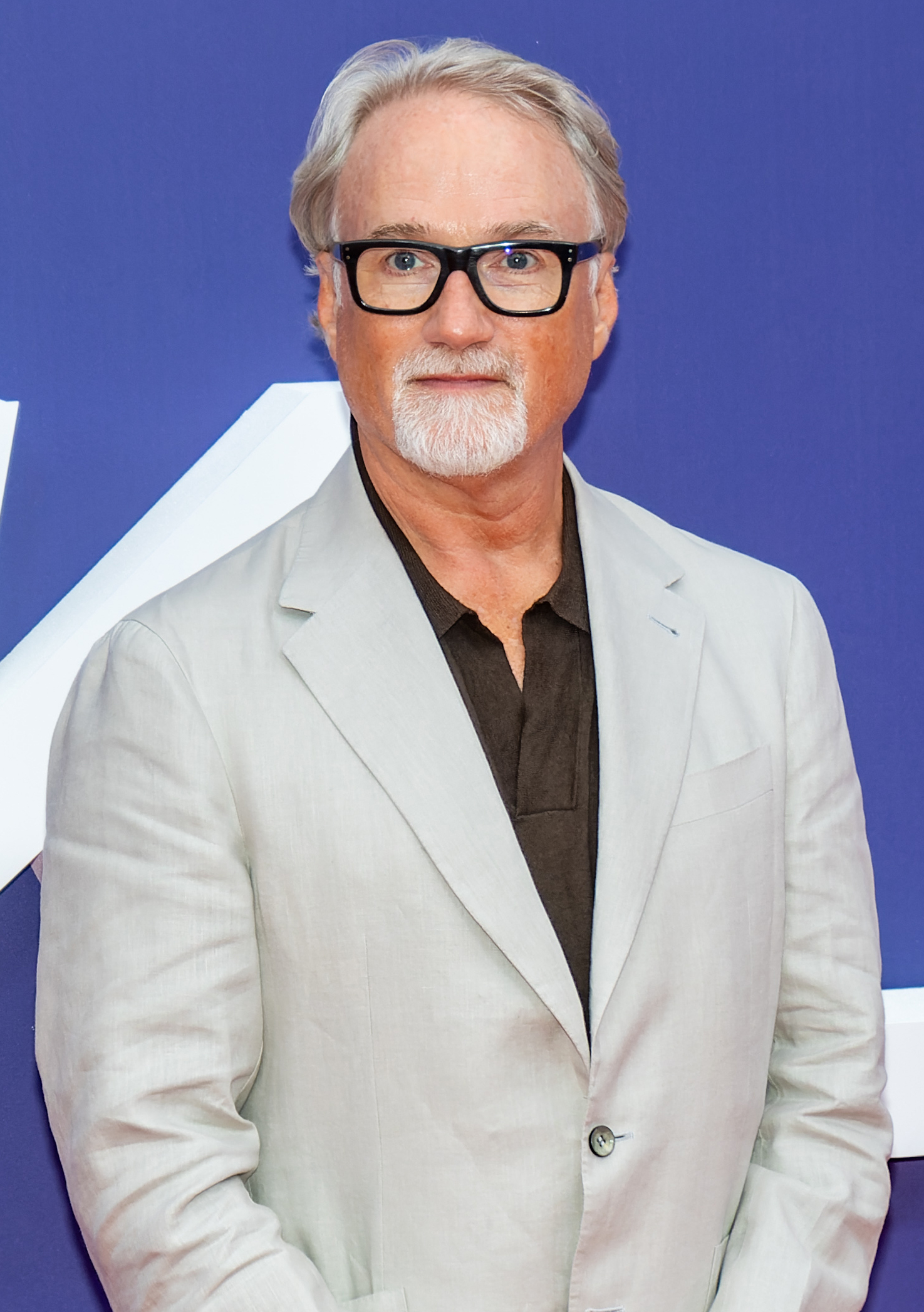
DIRECTOR · BORN 1962
David Fincher
- Born
- 28 August 1962, Denver, Colorado, USA
- Known for
- Being John Malkovich (1999), Side by Side (2012), Hitchcock/Truffaut (2015), Logorama (2009)
43 archived facts 5 topics 1 source Last reviewed Sep 2026
15 Facts From David Fincher's Career
- #001
David Fincher turned down the offer to direct Catch Me If You Can (2002), which is regarded as a Steven Spielberg masterpiece. Instead, he took an interest in the thriller Panic Room (2002), starring Jodie Foster. The choice marked a significant turning point in Fincher's career, as Panic Room cemented his reputation as a commercially successful and critically acclaimed director. His decision illustrates his selectivity in approaching projects and his movement between genres.
- #004
The 1969 film Butch Cassidy and the Sundance Kid had a major influence on David Fincher's decision to pursue a career in cinema. It was one of the first productions to ignite his passion for film and make him dream of becoming a director. Through that experience Fincher discovered the power of visual storytelling and laid the foundations of the style he would later develop. This inspiration is regarded as one of the most important turning points in his career.
- #005
While growing up in Marin County, David Fincher had the chance to meet his neighbor George Lucas. That proximity allowed him to enter the world of cinema at an early age. Fincher later worked on the special effects team of Star Wars: Episode VI - Return of the Jedi (1983), which Lucas produced and wrote. The experience increased his interest in visual effects and built an important technical foundation for his later directing career.
- #009
Over the course of his career, David Fincher has directed seven different actors in Oscar-nominated performances. These actors are Brad Pitt, Taraji P. Henson, Jesse Eisenberg, Rooney Mara, Rosamund Pike, Gary Oldman and Amanda Seyfried. This achievement proves Fincher's mastery of directing actors and his ability to bring out talent. These names, each notable for performances in different films, lay bare Fincher's influence in cinema.
- #016
With eight nominations, David Fincher holds the title of the most-nominated director at the MTV Video Music Awards. Seven of these nominations came in a three-year span between 1989 and 1991. He also broke the record for being nominated in three consecutive years. This achievement lays bare his impressive career in the music video field and his mastery of visual storytelling. Fincher also made a name for himself in the film world through his music videos.
- #017
David Fincher met his partner Ceán Chaffin in the early 1990s. At the time Fincher was directing a Japanese Coca-Cola commercial, and Chaffin was producing it. The meeting grew into a long-term collaboration, both personal and professional. Chaffin has served as a producer on many of Fincher's films and has been an important supporter of his career.
- #019
At the 1990 MTV Video Music Awards, three of the four nominees for Best Direction in a Video were videos directed by David Fincher: Don Henley's "The End of the Innocence", Aerosmith's "Janie's Got a Gun" and Madonna's "Vogue". Of these videos, "Vogue" won the award. The event proves Fincher's superior talent in the music video field and his influence in the industry. Being nominated with three different videos in the same year shows how prolific and successful a director he was.
- #021
David Fincher became the second director to be nominated for an MTV Video Music Award for three different music videos in a single year. He first achieved this in 1989 with Jody Watley's "Real Love", Steve Winwood's "Roll with It" and Madonna's "Express Yourself". He repeated the feat in 1990 with Madonna's "Vogue", Don Henley's "The End of the Innocence" and Aerosmith's "Janie's Got a Gun". Fincher went down in history as the only director to accomplish this twice.
- #023
David Fincher is one of the first figures to move from directing music videos to major Hollywood films. His success later inspired many directors, including Zack Snyder, Spike Jonze, Alex Proyas, Marc Webb, Jonathan Dayton, Valerie Faris, F. Gary Gray and Francis Lawrence. Some directors who worked at Propaganda Films, the company Fincher founded, also followed in his footsteps and found their place in the film world. This shows how wide Fincher's influence in the industry is.
- #025
David Fincher and Madonna are close friends. The friendship began when Fincher directed several of Madonna's music videos and grew stronger over the years. Fincher directed iconic videos of hers such as "Express Yourself", "Vogue" and "Oh, Father". These collaborations hold an important place in both artists' careers. Madonna's music videos were also influential in the development of Fincher's visual style.
- #028
David Fincher's collaborations with cinematographers Harris Savides and Jeff Cronenweth date back to before he began directing feature films. Both cinematographers had worked with Fincher early in his music video career. Savides worked with Fincher on Zodiac (2007), while Cronenweth worked on major films such as Fight Club (1999), The Social Network (2010), The Girl with the Dragon Tattoo (2011) and Gone Girl (2014). These long-term collaborations played a critical role in shaping Fincher's visual language.
- #030
David Fincher was one of the founding members of Propaganda Films in 1986. The company became a major production company in the music video and commercial fields. Fincher directed many iconic music videos there and established a solid place for himself in the industry. Propaganda Films later hosted the careers of many famous directors as well. Fincher's venture shows his entrepreneurial spirit and his influence in the industry.
- #035
David Fincher won his first Grammy Award on 1 March 1995 for The Rolling Stones' "Love is Strong" music video. Nearly 20 years later, on 26 January 2014, he won the same award again for Justin Timberlake's "Suit & Tie" music video. The gap between these two wins was recorded as the longest between two awards in the same category in Grammy history. This achievement shows Fincher's long-lasting and impressive career in the music video field.
- #039
David Fincher has directed three films nominated for the Best Picture Oscar: The Curious Case of Benjamin Button (2008), The Social Network (2010) and Mank (2020). These films are among the most important works of his film career. Each set in a different genre and period, they show Fincher's versatility and narrative power. These nominations reinforced his respected standing in Hollywood.
- #040
David Fincher's film The Social Network (2010) was selected for the National Film Registry by the Library of Congress, which deemed it significant in "cultural, historical or aesthetic" terms. This selection shows the film's impact on American culture and its lasting value. The Social Network, which deals with the founding of Facebook, is regarded as a work that captured the spirit of its time. This achievement solidified Fincher's place in film history.
Continue through the archive

Sources & editorial notes
Reference databases
Sources for the entries on this page
- IMDb IMDb
Information from external sources is independently selected, consolidated and edited by Arka Evren. Sources are listed for verification and further reading. Encyclopedia text is used under its licence (CC BY-SA). How we work