

ACTOR · BORN 1927 · DIED 2022
Joe Turkel
- Born
- 15 July 1927, Brooklyn, New York City, New York, USA
- Died
- 27 June 2022
- Known for
- Paths of Glory (1957), Blade Runner (1982), The Sand Pebbles (1966)
19 archived facts 4 topics 1 source Last reviewed Nov 2026
Joe Turkel (15 July 1927 – 27 June 2022) was an actor best known for Paths of Glory, Blade Runner and The Sand Pebbles.
19 Interesting Facts About Joe Turkel
Interesting Facts (2)
- #001
Joe Turkel is remembered for two unforgettable characters: Lloyd, the ghostly bartender in Stanley Kubrick's The Shining (1980), whose chilling calm became part of the film's dark atmosphere, and Dr. Eldon Tyrell, the megalomaniacal creator of superhuman beings in Ridley Scott's Blade Runner (1982), one of science fiction's most iconic villains.
- #002
Joe Turkel was one of Stanley Kubrick's favorite actors, cast in three of his films, The Killing (1956), Paths of Glory (1957) and The Shining (1980), and the only other actor to work with Kubrick as often was Philip Stone.
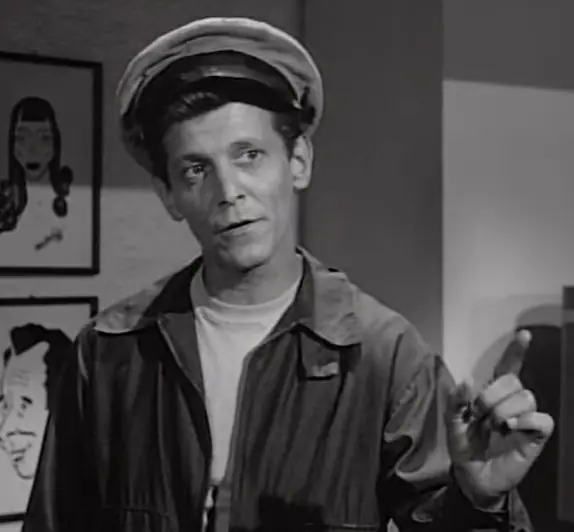
Joe Turkel: a sceneImage: Wikimedia Commons · Bert I. Gordon/Allied Artists Pictures, Public domain
Characters & Cast (7)
- #003
Joe Turkel is etched in memory for two unforgettable characters that left their mark on cinema history: the ghostly bartender Lloyd in Stanley Kubrick's The Shining (1980) and Dr. Eldon Tyrell in Ridley Scott's Blade Runner (1982). As Lloyd, the ghostly bartender who approaches the audience with a chilling calm, he became an inseparable part of the film's dark atmosphere. As Dr. Tyrell, he portrayed a megalomaniacal scientist who is the creator of superhuman beings, bringing to life one of the most iconic villains of science fiction cinema.
- #004
Joe Turkel joined the United States Army when he was only 17 and served on the European front in World War II. This experience made him confront the realities of war at a young age and added depth to the soldier characters he would later portray. Turkel, who stepped into acting after the war, carried the discipline and resilience he acquired during this period into his career as well. His war memories became an important element that shaped his worldview and his understanding of art.
- #005
Joe Turkel retired from acting in 1998 after spending nearly 50 years in the film industry. During this time, he took roles across a wide spectrum, from cult films to box-office record breakers, and added a unique depth to every character. His retirement did not mean he had lost his passion for cinema; on the contrary, it was a conscious choice to make time for new projects and personal interests. Turkel's retirement made his standing in the industry and his career, which left its mark, all the more evident.
- #006
Joe Turkel wrote a memoir titled "The Misery of Success," planned for publication in 2022. In this book, he recounts in a candid voice the experiences he had throughout his film career, the difficulties he encountered and the complex feelings that success brings. In his book, Turkel shares with readers the finer points of working with legendary directors such as Kubrick and the realities behind the scenes in Hollywood. The memoir stands as a unique resource for those interested in cinema history.
- #007
Joe Turkel appeared in three films selected by the Library of Congress for the National Film Registry as "culturally, historically or aesthetically significant": Paths of Glory (1957), The Shining (1980) and Blade Runner (1982).
- #008
Joe Turkel was an active supporter of the Occupy Wall Street movement and spoke at an Occupy Seattle rally. The movement was a grassroots protest against economic inequality and corporate greed; Turkel's support shows his sensitivity to social justice. His speech at the rally revealed that he was not only an actor but also an activist who spoke out on social issues. Turkel cared about using his fame to make his voice heard and to fight for change.
- #009
Joe Turkel supported the Democratic Party and described himself as a 'Liberal Progressive.' This political stance reflects the importance he placed on values such as social equality, justice and progress. Alongside his acting career, Turkel was also known for his political views; he was not afraid to express them openly. This attitude of his was regarded as an example of courage rarely seen in Hollywood and was met with appreciation by his fans.
Career & Awards (8)
- #010
In a 2014 interview, Joe Turkel said Paths of Glory (1957), Kubrick's searing film about the senselessness of war and the cruelty of military hierarchy, was his favorite of his own films; he played one of the soldiers at the front.
Joe Turkel: a sceneImage: Wikimedia Commons · Bert I. Gordon/Allied Artists Pictures, Public domain - #011
At just 17, Joe Turkel joined the United States Army and served in Europe in World War II, an early encounter with the realities of war that later gave depth to the soldiers he played.
- #012
Joe Turkel died on 27 June 2022, just three weeks before what would have been his 95th birthday on 15 July, mourned as one of the last links to classic Hollywood.
- #013
After about 50 years in film, Joe Turkel retired from acting in 1998, having played everything from cult films to box office hits.
- #014
Joe Turkel appeared in two Best Picture Oscar nominees, Friendly Persuasion (1956), with its anti-war themes, and The Sand Pebbles (1966), an epic drama set in 1920s China.
- #015
Joe Turkel wrote a memoir, "The Misery of Success," slated for publication in 2022, a candid account of his career, the difficulties he faced, the mixed feelings success brings and what it was like to work with legends like Kubrick.
- #016
Three of Joe Turkel's films have been chosen for the Library of Congress's National Film Registry as "culturally, historically or aesthetically significant": Paths of Glory (1957), The Shining (1980) and Blade Runner (1982).
- #017
Joe Turkel supported the Democratic Party, called himself a 'Liberal Progressive' and never hesitated to share his political views.
Life & Family (2)
Sources & editorial notes
Reference databases
- Wikipedia
- IMDb
Information from external sources is independently selected, consolidated and edited by Arka Evren. Sources are listed for verification and further reading. Encyclopedia text is used under its licence (CC BY-SA). How we work