

DIRECTOR · BORN 1946
Oliver Stone
- Born
- 15 September 1946, New York City, New York, USA
- Known for
- Wall Street (1987), American Psycho (2000), Scarface (1983)
39 archived facts 5 topics 1 source Last reviewed Nov 2026
Oliver Stone (born 15 September 1946) is a screenwriter best known for Wall Street, American Psycho and Scarface.
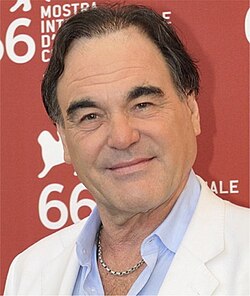
Oliver Stone over the years


39 Interesting Facts About Oliver Stone
Interesting Facts (18)
- #001
After the great controversy created by JFK (1991), Oliver Stone addressed the US Senate to protest the continued secrecy of documents related to the John F. Kennedy assassination. Stone's efforts helped push the government to begin gradually declassifying the documents. The director showed that his film was not merely a production but also a tool for bringing historical truths to light.
- #002
Oliver Stone says his military service in Vietnam was decisive in turning him toward cinema instead of the literature he had studied. Books and papers getting soaked in the jungle, while cameras were far more practical, influenced his choice of cinema. This experience led Stone to discover the power of visual storytelling and changed the direction of his career.
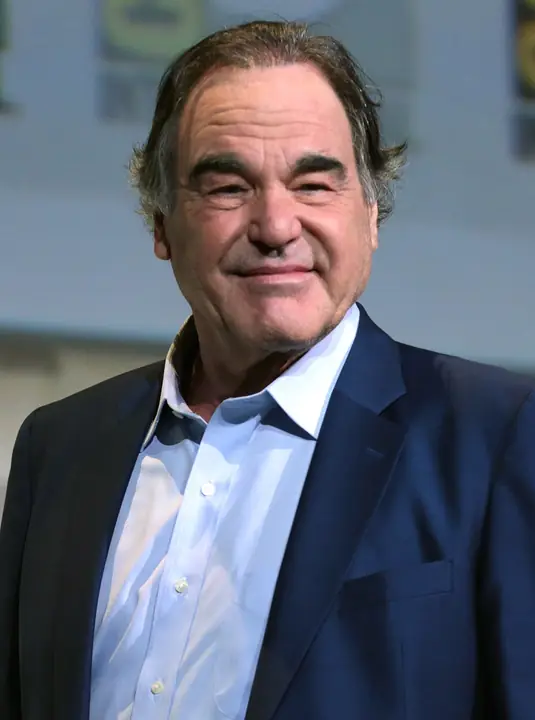
Oliver Stone: a sceneImage: Wikimedia Commons · Gage Skidmore, CC BY-SA 3.0 - #003
Oliver Stone was a friend and admirer of Cuban leader Fidel Castro; he made a documentary about him titled Comandante (2003). The documentary was scheduled to air on HBO, but it was shelved due to protests by anti-Castro Cuban-American activists. Stone later made a more pointed documentary titled 'Looking for Fidel', in which he asked Castro about human rights violations, and it aired on HBO in 2004.
- #004
Oliver Stone was one of the first directors offered American Gangster (2007) back in 2001, thanks to his expertise in Vietnam-era films. After lengthy consideration, however, he chose to make his passion project Alexander (2004). The decision shows how committed Stone is to his personal projects and how he puts his artistic vision ahead of commercial concerns.
- #005
Oliver Stone's films drew criticism from the political right, particularly accusations that he disrespected U.S. Army veterans. Yet Stone is himself a veteran who fought in the Vietnam War. The criticism lays bare the controversial nature of Stone's films and the polarization his political stance creates.
- #006
Oliver Stone went to Vietnam on September 14, 1967, and was assigned as 'Private Bill Stone' to the 25th Infantry Division stationed near the Cambodian border. He used the name Bill because he thought 'Oliver' sounded too feminine. It was a sign of his effort to adapt to combat conditions and conceal his identity.
- #007
Oliver Stone planned to make a film about Eva Perón but abandoned the project because of disagreements with Argentine President Carlos Saúl Menem. He later received a symbolic writing credit on Evita (1996) even though he contributed nothing to the screenplay. The episode shows how Stone's relationships with political figures can affect his projects.
- #008
On September 20, 2010, Oliver Stone rang the NASDAQ opening bell to celebrate the New York premiere of Wall Street: Money Never Sleeps (2010). The symbolic gesture underscored the film's connection to the financial world and recalled Stone's contribution to the Wall Street legend. Stone thus both promoted his film and experienced a moment at the heart of the financial world.
- #009
Oliver Stone still writes the first drafts of his screenplays by hand. This habit shows the importance he places on the writing process and his commitment to traditional methods. Stone says this method helps him organize his thoughts better.
- #010
The drum theme heard at the start of JFK (1991), which Oliver Stone produced, repeats three times in The Day Reagan Was Shot (2001), on which he served as executive producer. This musical connection is a subtle reference Stone makes between his own productions and a pleasant surprise for attentive viewers.
- #011
Oliver Stone's World Trade Center (2006) is his only war-themed film made with government cooperation; it was shot with the support of the Port Authority. This cooperation increased the film's realism and set it apart from Stone's other war films. In tackling the September 11 attacks in this film, Stone used the advantages that came with working with official institutions.
- #012
Oliver Stone directed comedian Rodney Dangerfield in his first and only dramatic role, in Natural Born Killers (1994). Dangerfield was a name generally known for comedy films; this dramatic role revealed a different side of his acting ability. Stone's bold choice became one of the film's surprises.
- #013
Oliver Stone is an outspoken supporter of his fellow soldier and military whistleblower Chelsea Manning, who was convicted of leaking Wikileaks documents. Stone's support reveals his stance on free expression and state secrets, and also reflects his critical position toward authority.
- #014
Oliver Stone has been friends with Lloyd Kaufman, founder and president of Troma Entertainment, since childhood. This friendship shows Stone's interest in independent cinema and his closeness to cult film culture. Kaufman's Troma is known for its low-budget and unconventional productions; Stone's connection to this world reveals how broad his understanding of cinema is.
- #015
After appearing in Stone's 2010 film Wall Street: Money Never Sleeps, Shia LaBeouf described the director as: "Like Orson Welles and the Easter Bunny combined into one man." These words emphasize that Stone is both a visionary filmmaker and an energetic, unconventional personality. LaBeouf's comparison reflects the director's legendary status in Hollywood and his childlike curiosity together.
- #016
Oliver Stone has a brief role in his film Platoon (1986): he plays a soldier talking on the phone. This cameo stands out as a rather ironic touch, given that Stone actually fought in the Vietnam War. The director's reflection of his own war experience in the film adds autobiographical depth to the production.
- #017
Oliver Stone's film Pinkville, which dealt with the Vietnam War, was cancelled because productions themed around the Iraq War failed to achieve the expected success at the box office. The situation shows that interest in war films varies from period to period and that producers avoid taking risks. Stone's project fell victim to the economic concerns of the film industry at the time.
- #018
At the age of 21, Oliver Stone was jailed in Mexico for marijuana possession. The experience lays bare the rebellious spirit of his youth and his troubles with the law. Stone has said that events of this kind matured him and gave him a different perspective on life.
Characters & Cast (3)
- #019
Oliver Stone had signed on to direct American Psycho (2000), and negotiations were under way with Leonardo DiCaprio for the lead role. However, when DiCaprio left the project to star in The Beach (2000), Stone also dropped out. This development remained one of cinema history's intriguing 'what ifs'; how Stone would have directed the film and DiCaprio's take on Patrick Bateman stretch the imagination.
- #020
Oliver Stone planned to begin shooting his fourth Vietnam film, 'Pinkville,' in late 2007, but the Writers Guild strike caused the producers to withdraw from the project and Bruce Willis moved on to other work. Stone then decided to make W. (2008), starring Josh Brolin. This episode shows how volatile Stone's projects can be.
- #021
Oliver Stone took a brief cameo role as a director in his 2012 film Savages. In this scene, Stone dances over a map of France, giving viewers both an entertaining and an unusual moment. The director's appearance in his own film in this way reveals his passion for cinema and his identity as an actor.
Deeper Meaning (1)
- #022
The friendship between Oliver Stone and Arnold Schwarzenegger began when Stone wrote the screenplay for Conan the Barbarian (1982). At one point the two shared offices on the same floor of the same building; Stone's office was on the left, Schwarzenegger's on the right. This arrangement symbolized the differences in their political views and was often a subject of joking between them. The friendship lasted for years, and the two respected each other's careers.
Career & Awards (8)
- #023
Oliver Stone worked on the documentary series The Untold History of the United States (2012) for four years; it became the longest-running production of his career. The project, which began in 2008, continued until 2012 alongside his other work. Stone contributed 1 million dollars of his own money to the documentary, showing his commitment to the project. The production drew attention for offering a critical look at American history.
- #024
On the evening of September 14, 1967, while flying west from Sacramento, California, to Vietnam, Oliver Stone crossed the international date line and arrived in Vietnam on September 16. During this journey he lost his 21st birthday. This event was an important turning point in Stone's life; on his way to war, he left a part of his youth behind.
- #025
After his military service, Oliver Stone attended New York University's film school with government support; roughly 80% of his tuition was covered by the G.I. Bill. This allowed him to complete his education and lay a solid foundation for his film career. Among his instructors was a major figure, Martin Scorsese, which played a big role in Stone's development.
- #026
Oliver Stone considered Warren Beatty for the lead in three of his films: Wall Street (1987), Nixon (1995) and W. (2008). Beatty turned down all of the offers, however; the roles went to Michael Douglas, Anthony Hopkins and James Cromwell respectively. Douglas and Hopkins earned Oscar nominations for their performances in those films. Stone's admiration for Beatty was a factor in his casting choices.
- #027
When Claire Danes applied to Yale University, Oliver Stone wrote her a letter of recommendation. With this support, Danes was accepted quickly. Stone's gesture shows the importance he places on young talent and his ties to educational institutions. Danes went on to build a successful acting career.
- #028
At the age of 19, Oliver Stone wrote a novel titled 'A Child's Night Dream', but it was not published until 1998. This early literary work is an indication of Stone's writing talent and imagination. The novel's late publication may have resulted from Stone's focus on his film career.
- #029
Oliver Stone's 11-minute student film at New York University is titled Last Year in Viet Nam (1971). This short film is the first product of Stone's desire to bring his Vietnam experiences to cinema. Made during his student years, it foreshadowed his later career.
- #030
Oliver Stone had approached the legendary actor Marlon Brando for two of his important films. James Woods, who took the role in Salvador (1986) that Brando turned down, was nominated for an Oscar for Best Actor for his performance. Similarly, Jon Voight, who played the character intended for Brando in U Turn (1997), was awarded a Razzie for Worst Supporting Actor. This curious coincidence shows that Stone's astute casting choices can bring both awards and criticism.
Life & Family (9)
- #031
Oliver Stone's father was a retired Army Colonel and fiercely opposed his son's decision to go to Vietnam. He tried to assign him to a non-combat post, but Stone refused a CIA job offered to him after he was transferred out of Bravo Company. Instead, he chose to complete his tour of duty with the 1st Cavalry Division. This decision reveals Stone's independent and courageous character.
- #032
Oliver Stone often mentions the experience of his father, Louis Stone, taking him to be with a prostitute during his adolescence. This event deeply affected Stone's perception of sexuality and masculinity and became one of the themes he frequently explored in his films. This intimate confession sheds light on the traumatic moments in the director's life.
- #033
Oliver Stone's family surname was originally Silverstein, but his father, Louis Stone, decided to change it to Stone. The change was part of the family's effort to assimilate into American society. Oliver Stone never hid the name change and remained faithful to his family's origins.
- #034
In an interview, Oliver Stone said that among his own films his favorite is Heaven & Earth (1993). The film stands apart from his other war films by telling the story of the Vietnam War through a woman's eyes. The choice stands out as one that highlights Stone's emotional and human side.
- #035
Oliver Stone was a member of Yale University's class of 1968, where he studied at the same time as Bill Clinton adviser Strobe Talbott and future President George W. Bush. Stone lasted only a year at Yale, however; he failed all his courses in the second semester and dropped out. He later joined the army and fought in Vietnam, and never returned to Yale. The experience is a major turning point in Stone's life.
- #036
Oliver Stone's father, Louis Stone, was a successful stockbroker on Wall Street, but bad investments and a bitter divorce from his wife Jacqueline left him in financial difficulty. The main character of Wall Street (1987), Gordon Gekko, is thought to have been modeled on Louis. Drawing inspiration from his father's story, Stone brought the ruthless world of capitalism to the screen.
- #037
In 2016, Oliver Stone gave the commencement address at the University of Connecticut. He told the students that he had been kicked out of Yale and how that failure steered him onto a different path. After joining the army and fighting in Vietnam, he went to film school on a friend's suggestion and ultimately built a successful career. Stone's speech showed that failures can be not an end but a door to new beginnings.
- #038
In 1965, Oliver Stone took a year's leave from Yale University to teach at a Catholic private school in Vietnam. This experience allowed him to get to know Vietnam before the war and strengthened his bond with the country. Stone's early experience also became a source of inspiration for the Vietnam films he would later direct.
- #039
A short film script Oliver Stone wrote during his student years was adapted to the screen years later by his son Sean Stone. The 2008 short film Singularity is Sean's first fiction production as a director. This creative bond between father and son lays bare the Stone family's passion for cinema.
Related pages
- Alfonso Cuarón — Oliver Stone comes up in the facts on that page
- Woody Harrelson — Oliver Stone comes up in the facts on that page
Continue through the archive

Sources & editorial notes
Reference databases
- Wikipedia
- IMDb
Information from external sources is independently selected, consolidated and edited by Arka Evren. Sources are listed for verification and further reading. Encyclopedia text is used under its licence (CC BY-SA). How we work