
ACTOR · BORN 1942 · DIED 2023
Richard Roundtree
- Born
- 9 July 1942, New Rochelle, New York, USA
- Died
- 24 October 2023
- Known for
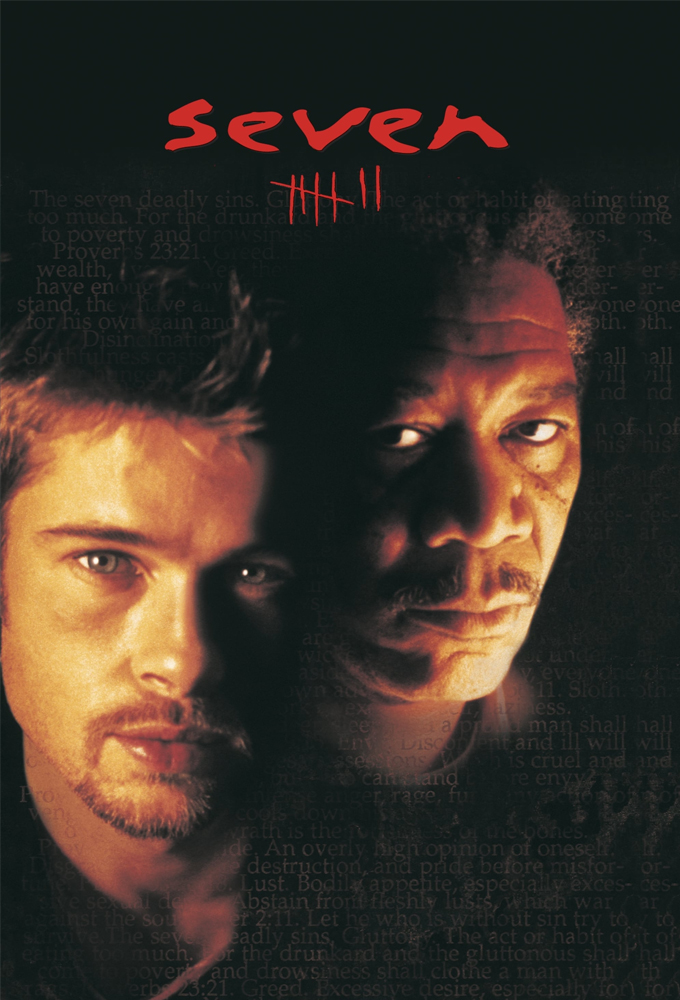
- Se7en (1995), Grey's Anatomy (2005), The Mentalist (2008), Heroes (2006)
34 archived facts 4 topics 1 source Last reviewed Sep 2026
All facts (34)
- #001
Diagnosed with breast cancer in 1993, Roundtree stressed that the disease does not affect only women and spoke to men's groups about the importance of early detection. He aimed to raise awareness by sharing his own experience and became an active advocate on the subject.
- #002
Roundtree tried to avoid being identified solely with John Shaft, the character he played in three Shaft films, and therefore chose a wide range of roles over his career, from Miles Quade, an Evel Knievel-style motorcycle stuntman in Earthquake (1974), to an elderly citizen in Soul Food (2000). In time, however, he accepted that he would always be remembered as Shaft and made peace with that legacy.
- #003
Roundtree's performance as John Shaft in the 1971 film Shaft is regarded as one of the most memorable characters in cinema history. Ranked 62nd on Premiere Magazine's list of the '100 Greatest Movie Characters of All Time', the role was one of the most important turning points of his career.
- #004
Before beginning his acting career, Roundtree worked as a model at the Ebony Fashion Fair. The experience made him comfortable in front of the camera and served as an important stepping stone in his later move into acting.
- #005
A member of New York's respected Negro Ensemble Company, Roundtree took on significant roles in his theater career. The most notable was his portrayal of black heavyweight boxing champion Jack Johnson in the play 'The Great White Hope'. The performance was highly important in demonstrating his dramatic ability.
- #006
Roundtree was accepted to Southern Illinois University on a football scholarship. This sporting achievement showed his disciplined and determined character, but he later turned to acting and chose a different career path.
- #007
In a 1999 interview with Dateline NBC, Roundtree described his breast cancer diagnosis in detail for the first time. Saying 'Breast cancer? It was something entirely exclusive to women,' he admitted he had not known the disease could occur in men. After the diagnosis he underwent a radical mastectomy at the Motion Picture and Television hospital near Los Angeles and fought his battle publicly throughout the process.
- #008
Roundtree appeared alongside Clint Eastwood and Burt Reynolds in the 1984 film City Heat. The private detective character he played once again demonstrated his talent in the action genre. Sharing the cast with such famous actors was one of the important collaborations of his career.
- #009
Roundtree's son John James was born on November 3, 1998. Although he did not share much information about his family life in relation to his career, the presence of his children held an important place in his private life.
- #010
Beyond acting, Roundtree had hobbies such as photography and golf. These pursuits showed his creative side and how he spent his free time. Golf in particular revealed his calm and sociable personality.
- #011
As an American actor, Roundtree earned the title of 'the first black action hero' in cinema history. His portrayal of private detective John Shaft in the 1971 film Shaft made him an internationally recognized star. The role continued in four sequels made between 1972 and 2019 and became the cornerstone of his career.
- #012
For his performance in the original Shaft film, Roundtree was nominated in 1972 for the Golden Globe Award for 'New Star of the Year - Actor'. The nomination showed that his acting ability was recognized on an international platform and marked an important turning point in his career.
- #013
In 2019 Roundtree appeared in the comedy film What Men Want and then returned to the character of John Shaft in Shaft, a sequel to the 2000 film. In the new production he worked with Samuel L. Jackson and Jessie Usher; Jackson played John Shaft II and Usher played John Shaft III. Roundtree's character was this time presented as the father of Jackson's character, and it was acknowledged that he had played the uncle in the 2000 film.
- #014
During his high school years, Roundtree played on his school's undefeated and nationally successful football team. His athletic achievements in this period helped him develop a disciplined personality inclined toward teamwork. Football held an important place in his life, and he continued the sport later at university.
- #015
Roundtree appeared in David Fincher's critically acclaimed 1995 film Seven. The film allowed him to take part in a different genre and demonstrated his ability in psychological thriller. Since Seven holds an important place in cinema history, Roundtree's presence in the production revealed his artistic range.
- #016
As a member of New York's famous Negro Ensemble Company, Roundtree took important steps in his theater career. One of his most notable early roles was black heavyweight boxing champion Jack Johnson (1878-1946) in the play 'The Great White Hope'. The performance was highly important in demonstrating his dramatic ability and gaining recognition in the theater world.
- #017
Although Roundtree appeared in many films throughout the 1990s, most of these productions did not attract the expected attention. During this period, however, he focused on stage plays and delivered successful work in the theater. In this way he kept his career alive and developed himself in different fields.
- #018
In the early 1970s Roundtree came to the fore as a leading actor in blaxploitation films. His best-known role was detective John Shaft in the 1971 film Shaft. The character continued in the sequels Shaft's Big Score! (1972) and Shaft in Africa (1973), cementing his place in cinema history.
- #019
In a 2019 interview with The Times, Roundtree said he still remembered his meeting with director Parks, the man who changed his career. After his modeling experience at the Ebony Fashion Fair, he recounted, Parks said in his office that they were 'looking for a guy who looks like that', and realizing he had appeared in a commercial, Roundtree said, 'That's me!' That moment marked the beginning of his acting career.
- #020
In 1963 Roundtree decided to drop out of university and focus on his acting career. This bold step was an important turning point in his life and soon allowed him to establish a place for himself in the worlds of theater and cinema.
- #021
Richard Roundtree voiced the lead character Akuji in the PlayStation game Akuji the Heartless. In the game, Akuji had to fight his way out of the depths of hell on the Baron's orders. The experience showcased his voice-acting ability and brought him recognition in the video game world.
- #022
In 1961, while a senior at New Rochelle High School, Roundtree was voted "Most Popular," "Best Dressed" and "Best Looking" in the school poll. The honors showed that he had a personality that stood out at a young age, and those qualities served him in his later career.
- #023
Roundtree was the father of Kelli Roundtree and Tayler Roundtree. Although he did not share much information about his relationship with his children, he was known to be a devoted father.
- #024
Roundtree attended New Rochelle High School and graduated in 1961. His high school years were marked by both academic and athletic achievements, and his experiences during that period laid the foundation for his later career.
- #025
Roundtree's career spanned five decades and included a wide range of productions. He worked across a broad spectrum, from his most popular blaxploitation role to an early appearance on the 1956 series As the World Turns, and even a main-cast role in the second season of Ava DuVernay's OWN series Cherish the Day. That variety was a sign of his long and successful career.
- #026
On television, Roundtree played the slave Sam Bennett in the 1977 series Roots. He then appeared as Dr. Daniel Reubens in Generations, which ran from 1989 to 1991. These productions strengthened his presence on television and displayed his acting ability across different genres.
- #027
After Roundtree's death, he was survived by four daughters, Kelli, Nicole, Taylor and Morgan, a son, John, and a grandson. His family organized various events to keep his memory alive and worked to preserve his legacy.
- #028
After high school, Roundtree attended Southern Illinois University in Carbondale, Illinois. He studied there on a football scholarship and began his college life, but later turned to acting and left his education unfinished.
- #029
Roundtree began his professional career around 1963, when he was discovered by Eunice W. Johnson and started modeling at the Ebony Fashion Fair. After his success there, he appeared in advertisements for products such as Johnson Products' Duke hair oil and Salem cigarettes. These experiences made him comfortable in front of the camera and eased his transition to an acting career.
- #030
Roundtree had a cousin named Maxine Austin. Although little information exists about his family ties, this relationship was recorded as a small detail of his personal life.
- #031
Roundtree's body was cremated following a service at Hollywood Forever Cemetery, and his ashes were scattered in the Pacific Ocean by his family. A memorial service was held for him on 17 February 2024 at Saint Catherine African Methodist Episcopal Zion Church in New Rochelle, New York. The service was a meaningful event at which his loved ones had the chance to remember him one last time.
- #032
According to J. E. Franklin, Roundtree appeared in the Off-Off-Broadway production of the play Mau Mau Room, staged at St. Mark's Playhouse in 1969. The play was performed as part of the Negro Ensemble Company Workshop Festival and was directed by Shauneille Perry. The experience was one of the important steps in his theater career.
- #033
In 1967, Roundtree joined the Negro Ensemble Company, and his first role with the group was playing boxing legend Jack Johnson in the play "The Great White Hope." The performance brought him recognition in the theater world and was an important starting point in his career.
- #034
Roundtree's only experience in a Disney production was the 1997 film George of the Jungle, based on Jay Ward's 1960s animated television series. Appearing in the film showed that he was open to projects of different genres and proved that he could succeed in family films as well.
Continue through the archive
Sources & editorial notes
Reference databases
Sources for the entries on this page
- IMDb IMDb
Information from external sources is independently selected, consolidated and edited by Arka Evren. Sources are listed for verification and further reading. Encyclopedia text is used under its licence (CC BY-SA). How we work