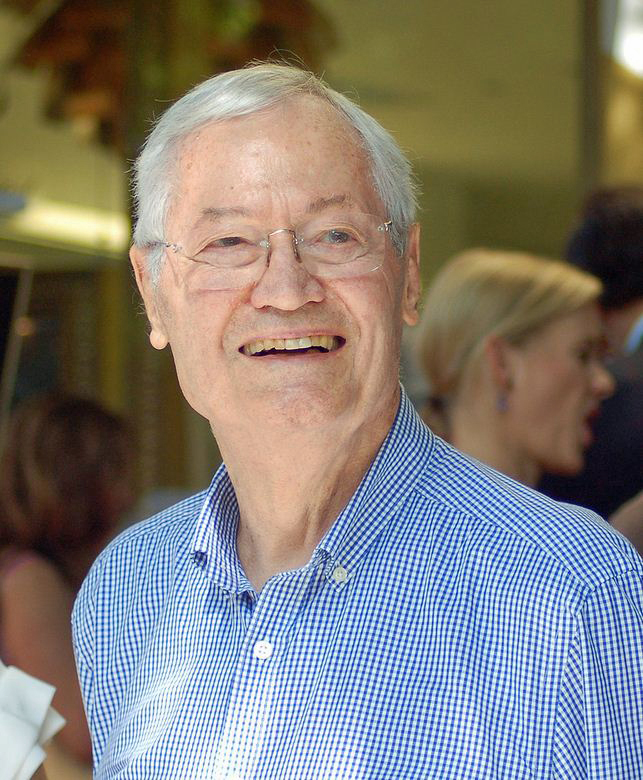
PRODUCER · BORN 1926 · DIED 2024
Roger Corman
- Born
- 5 April 1926, Detroit, Michigan, USA
- Died
- 9 May 2024
- Known for
- The Silence of the Lambs (1991), The Godfather Part II (1974), Apollo 13 (1995), Philadelphia (1993)
37 archived facts 6 topics 1 source Last reviewed Sep 2026
All facts (37)
- #001
A classic Hollywood joke held that Roger Corman could close a film deal from a payphone, then shoot the film in that same booth and cover its cost with the coins in the slot. The gag sums up his remarkable practicality and budget-friendly production style. Corman was known throughout his career for low-cost, high-output productions, a trait that made him one of Hollywood's most prolific independent producers.
- #002
Corman's 1960 horror-comedy classic The Little Shop of Horrors holds the record for the shortest shooting schedule of any feature film in cinema history: exactly two days. That extraordinary speed showcased Corman's efficiency and improvisational skill on set. The film later gained cult status and inspired musical adaptations.
- #003
As a director and producer, Roger Corman is known for launching or mentoring the careers of now-legendary directors such as Jonathan Demme, Francis Ford Coppola, Ron Howard, John Sayles, James Cameron, Joe Dante and Martin Scorsese. He also helped major screenwriters including Robert Towne and John Sayles take their first steps. In addition, he discovered then-unknown actors such as Jack Nicholson, Charles Bronson, Robert De Niro, Sylvester Stallone, Talia Shire, Diane Ladd and Sandra Bullock and gave them their first significant roles. Many of these names entered the film world by working on Corman's low-budget productions.
- #004
One of the most striking proofs of Corman's influence on Hollywood came at the 1974 Academy Awards. That year no Corman production was nominated for an Oscar, yet the people who won or were nominated in nearly every major category had come out of his "Corman school." This shows how great a mark the talents he supported and guided early in their careers left on the industry. His patronage played a decisive role in shaping the New Hollywood era.
- #005
Corman frequently appears in small cameo or background roles in films by people such as Jonathan Demme, Joe Dante and Francis Ford Coppola, who began their careers working for him and later became successful directors. This shows the strong bonds he built with his former employees and the respect he holds for them. It also reinforces Corman's continuity in the film world and his place in popular culture.
- #006
When Corman had to shoot a film on location, he always tried to shoot a second film at the same location to spread out the costs. This strategy demonstrates his mastery of budget management and his ability to use resources as efficiently as possible. For example, he would bring more than one production to life using the same sets and decor. The approach was seen as a practical way of coping with the difficulties of independent cinema.
- #007
Corman turned down the chance to direct Easy Rider (1969) when it was offered to him. The decision was a major turning point in his career, because the film, directed by Dennis Hopper and Peter Fonda, became a huge success and a symbol of counterculture cinema. Corman's refusal of the offer shows that he focused on personal preferences rather than commercial concerns. Still, the decision also reveals the limits of his understanding of cinema.
- #008
On 12 June 1991, Roger Corman received his star on the Hollywood Walk of Fame at 7013 Hollywood Boulevard, crowning his lasting impact on the film world. The honor was official recognition of his contributions to both independent cinema and mainstream Hollywood. The star ceremony was recorded as one of the most important moments of Corman's career.
- #009
In the early 1960s Corman took a bold step to advance his career. When American International Pictures (AIP) offered him money for a low-budget black-and-white double feature, he proposed instead to shoot a single film in color and CinemaScope for the same money. AIP accepted, and House of Usher (1960) was the result. When the film became a big box-office success, this risky move opened a new period in Corman's career and paved the way for his series of Edgar Allan Poe adaptations.
- #010
In the early years of American Releasing Corporation (later renamed American International Pictures), Corman became one of the company's most important sources of films for distribution. He would be given a set budget and an advertising campaign (sometimes just a title), and with those limited means he would write the scripts and produce the films. This system sharpened Corman's creativity and practical intelligence, and it also made him one of the pioneers of independent cinema.
- #011
Although Corman's films are known for their mastery of widescreen, in an interview in issue 18 of "Cinema Retro" he admitted that he did not want to shoot his cult Poe film series in Panavision. In his view, anamorphic lenses suited the Western genre better, whereas he was working on narrow, confined sets. American International Pictures (AIP) management, however, was convinced the format would make the films look bigger and more impressive. The decision illustrates the balance between Corman's vision and the studio's commercial concerns.
- #012
Roger Corman began his education at Stanford University and then studied at Oxford University. The education he received at these prestigious institutions shaped his intellectual background and his perspective on cinema. Writing film reviews as a student at Stanford was an early sign of his passion for film. This academic past stands out as a trait that set him apart from Hollywood's other producers.
- #013
Corman appeared in four films selected for the National Film Registry by the Library of Congress as "culturally, historically or aesthetically" significant: The Godfather Part II (1974), The Silence of the Lambs (1991), Philadelphia (1993) and Apollo 13 (1995). In addition, House of Usher (1960), which he directed, was included in the registry. This achievement proves his lasting place in film history as both an actor and a director.
- #014
In the last week of October 1999, Roger Corman hosted Monsterfest, AMC's horror-themed programming. The program brought classics and cult productions of horror cinema to viewers. Corman's presence at the event demonstrated his authority in genre cinema and his continuity in popular culture. It also offered a chance to introduce a new generation of viewers to one of horror cinema's key figures.
- #015
Director James Cameron's career began as a set decorator and production designer on Roger Corman's low-budget films. The experience taught Cameron the practical sides of the film world and gave him the skills needed for big-budget productions. Cameron later went down in film history by directing some of the most expensive films of their time, including Terminator 2: Judgment Day (1991), True Lies (1994), Titanic (1997) and Avatar (2009). Corman's patronage was an important stepping stone in helping Cameron realize his vision.
- #016
In the 1999 film Attack of the Bat Monsters, the character Francis Gordon, played by Fred Ballard, was designed as a figure "distinctly inspired" by Roger Corman. The character humorously reflects Corman's image as a low-budget filmmaker and his legendary status in the film world. Such references show how deep Corman's place in culture runs.
- #017
Corman shot The Terror (1963) in a single weekend using the same actors and sets when filming on The Raven (1963) finished ahead of schedule. This extraordinary speed reveals his ability to use resources as efficiently as possible and his practical intelligence on set. The film later gained cult status and became a symbol of Corman's productivity.
- #018
Roger Corman was born the son of Ann and William Corman. His paternal grandparents were Jacob Corman and Bessie Arst, Russian Jewish immigrants, while his maternal grandparents were Jozef High (Chajewski) and Clara Dolny (Dolney), Polish Catholic immigrants. This multicultural family background helped shape Corman's identity and worldview. His family's immigrant story also fed his belief in the American dream.
- #019
Corman appeared in three films nominated for the Best Picture Oscar: The Godfather Part II (1974), The Silence of the Lambs (1991) and Apollo 13 (1995). The first two won the award in that category, while Apollo 13 had to settle for the nomination. This achievement shows that he took part in some of the most prestigious productions in film history not only as a producer but also as an actor.
- #020
In 1998 Roger Corman won the first Producer Award given by the Cannes Film Festival. The prize was a sign that his contributions to independent cinema and the productivity he showed throughout his career were recognized internationally. Receiving this award at a prestigious festival like Cannes reinforced Corman's influence on world cinema.
- #021
Roger Corman was known by nicknames such as "King of the B Movies," "Pope of Pop Cinema," "Godfather of New Hollywood" and "King of the Cult." These titles reflect his pioneering role in the independent film world and his deep influence on cult films. With his low-budget productions, Corman pushed the boundaries of genre cinema and inspired many directors. His legacy remains a reference point for independent filmmakers today.
- #022
In 1964, Roger Corman became the youngest filmmaker to have retrospectives held at the Cinémathèque française in Paris, the British Film Institute and the Museum of Modern Art in New York. This honor shows how early he gained respect in the film world. The retrospectives introduced the milestones of his career and his contributions to genre cinema to wide audiences.
- #023
At the Flanders International Film Festival held in Ghent, Belgium, a tribute to Roger Corman was presented in the Film Memory section. The event honored his place in film history and his international influence. The festival presented a program focused on Corman's career and his contributions to independent cinema.
- #024
In 2004, Roger Corman was awarded the Governors Award (CAMMY) by the Society of Operating Cameramen (SOC). The award recognized his contributions to cinematography and his collaboration with directors of photography. Corman's films were always striking in terms of visual storytelling, and this award confirmed his mastery in this field.
- #025
In Tom Weaver's book "A Sci-Fi Swarm and Horror Horde" (McFarland & Co., 2010), Roger Corman gives a detailed interview about his own film House of Usher (1960). The book brings together interviews with important figures of science fiction and horror cinema. Corman's interview offers valuable information about the film's production process and the cinematic understanding of the period.
- #026
Roger Corman attended and graduated from Beverly Hills High School. This education formed his foundation before he stepped into the film world. His years in Beverly Hills brought him into contact with the Hollywood milieu at an early age. His high school years are significant as the period when the first steps of Corman's career were taken.
- #027
Roger Corman is the father of Catherine Corman and the uncle of Todd Corman. His family was an important source of support in his film career. Catherine Corman followed in her father's footsteps and worked in the film field. These family ties played a role in passing Corman's legacy on to new generations.
- #028
Roger Corman is the brother of producer Gene Corman. The two brothers worked together in the film industry and realized many projects. Gene Corman frequently served as a producer on Roger's productions and was an important partner in his career. This brotherly relationship strengthened the Corman family's influence in the film world.
- #029
Roger Corman produced four science fiction films with Starfield Independent Studios: Falling Fire (1997), Future Fear (1997), Shepherd (1998) and Shepherd II (1999). These productions show that he maintained his commitment to independent cinema in the later stages of his career. With these films, Corman continued to contribute to genre cinema.
- #030
Roger Corman's biography appears on pages 234-242 of the reference book "World Film Directors Volume Two (1945-1985)," edited by John Wakeman. The book was published in 1988 in New York by The H.W. Wilson Company. This comprehensive biography of Corman examines his career and contributions to the film world from an academic perspective.
- #031
Many of Roger Corman's students showed their respect for their mentor by giving him cameo roles in their own films. These films include The Godfather Part II (1974), The Silence of the Lambs (1991), Apollo 13 (1995) and Jonathan Demme's 2008 film Rachel Getting Married. These gestures reveal the gratitude and loyalty of the people Corman mentored toward his career. They also reinforce Corman's continuity and popularity in the film world.
- #032
In 2009, Roger Corman was sued by his children. After asking questions about the family trust, his children claimed they were wrongfully fired from the family production business. The lawsuit brought the difficulties in Corman's family relationships to light. The legal process exposed the turmoil in his private life and the disagreements over the management of the family company.
- #033
Mark Damon, who starred in Roger Corman's film House of Usher (1960), died three days after Corman's death. This coincidence shows how intertwined the lives of the two film workers were. Damon held an important place in Corman's career and became known with this film. The fact that both died in the same period symbolizes the closing of an era in the film world.
- #034
While a student at Stanford University, Roger Corman wrote film reviews for the university's newspaper, The Stanford Daily. This experience developed his interest in cinema and his critical perspective. Corman's writings show that he found the opportunity to express his thoughts on cinema at an early age. These writings are considered one of the first steps in his career.
- #035
In a 2022 interview with Sight & Sound magazine, Roger Corman chose the following productions as his "ten best films of all time": Chinatown (1974), Citizen Kane (1941), Dr. Strangelove (1964), The Godfather (1972), La dolce vita (1960), Lawrence of Arabia (1962), Rashomon (1950), The Seventh Seal (1957), The Tin Drum (1979) and War and Peace (1967). This selection shows that he had a broad film culture and appreciated films from different genres and periods. Corman's list reveals the depth of his understanding of cinema.
- #036
In Tom Weaver's book "Creature Feature Creators" (McFarland & Co., 2025), Roger Corman recounts in detail the process of making his first film, the 1954 production Monster from the Ocean Floor. This interview reveals the difficulties and experiences at the beginning of Corman's career. The book details his entry into independent cinema and the story of his first production.
- #037
Roger Corman never retired throughout his life and continued making films until his death. This was an indication of his passion for cinema and his productivity. Even in the later stages of his career, Corman was developing new projects and supporting young filmmakers. This determination of his is remembered as an example representing the spirit of independent cinema.
Sources & editorial notes
Reference databases
Sources for the entries on this page
- IMDb IMDb
Information from external sources is independently selected, consolidated and edited by Arka Evren. Sources are listed for verification and further reading. Encyclopedia text is used under its licence (CC BY-SA). How we work