
ArkaEvren
Avatar: The Last Airbender

TV SERIES · 2005–2008 · SOUTH KOREA

Avatar: The Last Airbender

Created by
Michael Dante DiMartino, Bryan Konietzko
Network
Nickelodeon
Seasons
3
Episodes
61
Studio
Nickelodeon Animation Studio, JM Animation, DR Movie

294 archived facts 7 topics 1 source Last reviewed Nov 2026

In a war-torn world of elemental magic, a young boy reawakens to undertake a dangerous mystic quest to fulfill his destiny as the Avatar, and bring peace to the world.

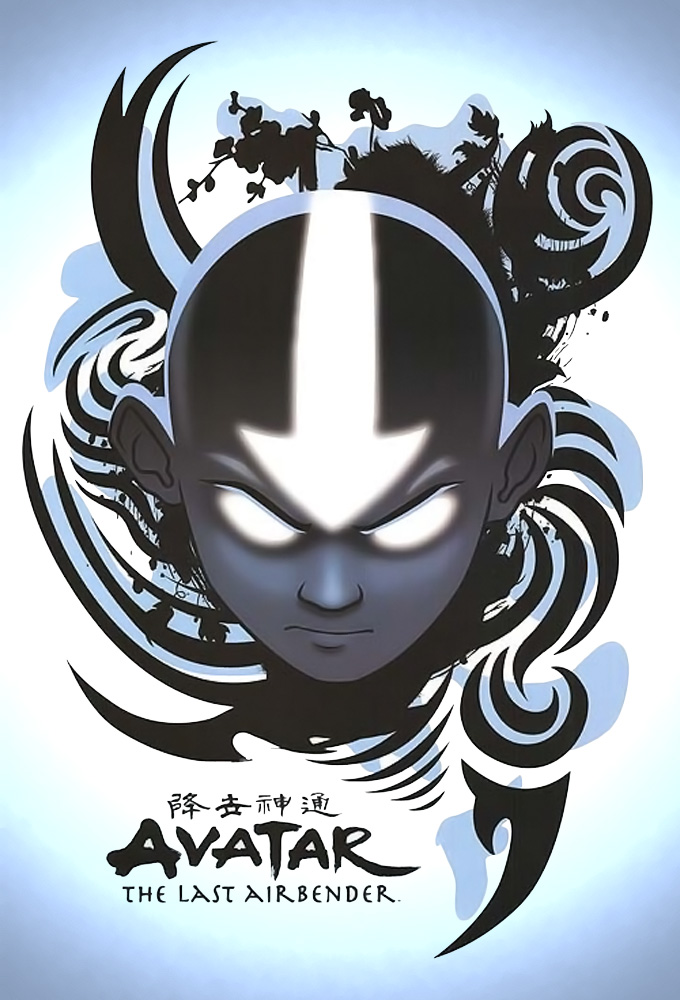
  • Avatar: The Last Airbender — production image

294 Interesting Facts About Avatar: The Last Airbender

Interesting Facts (34)

  1. #001

    Counting the episodes where they do not have any lines, the most prominent characters of the show are Aang, Katara and Sokka, who appear in every episode of the series except episode 27, Zuko Alone (2006) (although Aang's spiritless body can be seen during the "Previously, on Avatar..." introduction). The second place belongs to Momo, who appears in 56 episodes, followed by Appa with 54, Zuko with 48, Iroh with 39 and Toph with 36 episodes. The most infrequently recurring central character is Azula, who appears in 22 episodes.

    INTERESTING FACTS · SOURCED

  2. #002

    The map of the Avatar world is actually quite small; if scaled to Earth, the entire world would be roughly the size of Australia, which explains why the characters can travel between nations relatively quickly.

    INTERESTING FACTS · SOURCED

  3. #003

    Many have wondered if this series is considered to be anime. United States fans stated that since it is not animated in Japan, it is not an anime series. However, many fans from Japan say that anime is not based on nationality but on animation style. Because of this, the Complete Series box set has been reported to be found with other anime box sets in video stores.

    INTERESTING FACTS · SOURCED

  4. #004

    Throughout the series, only five characters have their ages explicitly stated: Aang is 112 (though only 12 biologically), Zuko and Yue are both 16, Toph is 12, and Tom-Tom (Mai's brother) is 2. Ty Lee also mentions that Mai is 15 years older than her brother, which would make Mai 17, but canonically, Mai is only 15, suggesting a possible writing error in Ty Lee's line. Aside from Aang, at least two other characters are over 100 years old: Bumi, who knew Aang before he was frozen, and Guru Pathik, who knew Monk Gyatso. Various episodes also suggest that Firelord Sozin lived for around 100 years, and Avatar Kyoshi lived for 230 years. Avatar Kuruk died at 33, making him the shortest-lived avatar.

    INTERESTING FACTS · SOURCED

  5. #005

    Other than Air, Water, Earth, and Fire, there are considered to be other elements that can be bent, such as Spirit, Ice, Plant, Combustion, Lava, Metal, Sound, Blood, and Lightning (though technically, all of these are considered sub-skills of Air, Water, Earth and Fire).

    INTERESTING FACTS · SOURCED

  6. #006

    During the opening credits, the silhouetted figures demonstrating bending styles are future characters (first appearance): The Waterbender is Master Pakku of the northern water tribe (episode 18). The Earthbender is Sud, Roku's earthbending teacher, and he was also an early prototype scrapped character design for Toph (episode 46). The Firebender is Princess Azula (episode 12). The Airbender is the only bender not equal to any named character. The Avatar demonstrating all four bending arts is Roku, the Avatar before Aang (episode 7, but also a statue in episode 3).

    INTERESTING FACTS · SOURCED

  7. #007

    Iroh was not originally meant to be Zuko's uncle. He was originally meant to be merely a Fire Bending mentor to Zuko.

    INTERESTING FACTS · SOURCED

  8. #008

    Admiral Zhao, much like Zuko, was one of the final characters added to the show. The creators needed a clear villain in season 1 to ignite viewers' hatred-Zuko's sympathetic nature made him hard to despise, and Ozai hadn't yet established himself as a formidable villain. So, Zhao was introduced alongside Zuko as the season's primary antagonist, intensifying the conflict and fueling audience tension.

    INTERESTING FACTS · SOURCED

  9. #009

    Almost all of the animals in the show are a combination of two animals. For example, Appa is half bison, half manatee, Momo is half bat, half lemur, except Bosco, a full bear, and Miyuki, the cat that was the pet of the old herbalist.

    INTERESTING FACTS · SOURCED

  10. #010

    None of the characters, except for Toph Bei Fong, have a last name. They are known from their respected Nations (i.e. Zuko of the Fire Nation; Katara of the Southern Water Tribe).

    INTERESTING FACTS · SOURCED

  11. #011

    The music for the credits is the same throughout all of the episodes except in the the series finale, "Sozin's Comet, Part 4: Avatar Aang," where they went for more heroic music.

    INTERESTING FACTS · SOURCED

  12. #012

    WWE Hall of Famer Mick Foley, who voices The Boulder in three episodes, based his performance on fellow WWE alum and wrestling friend Dwayne "The Rock" Johnson-mimicking The Rock's speech mannerisms and referring to himself in the third person. Mick Foley and The Rock have been rivals and friends in the ring, even teaming up as The Rock 'n' Sock Connection.

    INTERESTING FACTS · SOURCED

  13. #013

    Suki was originally written as a guest character for season 1 who wasn't meant to return. However, the character grew in popularity with the fans, and she was brought back for a few more episodes in season 2. She eventually became a main character in the second half of season 3, participating in the plan to take down Ozai's airships with Sokka and Toph.

    INTERESTING FACTS · SOURCED

  14. #014

    Jet was reintroduced in season 2 after his guest appearance in season 1, and he is canonically deceased according to the writers. His death was made deliberately ambiguous because Nickelodeon wouldn't let the creators kill off a child character explicitly. After Long Feng stabs him with an earth pillar, Katara tries unsuccessfully to heal him with her waterbending, and Jet tells her and the rest of the group to leave because he'll be fine. Toph, who can sense lies, tells Katara that Jet is lying. This was the only way the writers could confirm that Jet died. Despite this, it remained confusing for viewers, and the writers even made a joke about it in The Ember Island Players episode, where Zuko asks if actor Jet died in the play, and Sokka replies that it's unclear.

    INTERESTING FACTS · SOURCED

  15. #015

    Zuko was one of the last characters added to the series. The Fire Lord was initially conceived as the series' main antagonist, but the writers realized he could not cause trouble for Aang and his friends while sitting on his throne. Zuko was then brought into the show and grew into a major character arc.

    INTERESTING FACTS · SOURCED

  16. #016

    "Avatar" is derived from a Sanskrit word that literally means "those who descend."

    INTERESTING FACTS · SOURCED

  17. #017

    The Cabbage Man was not originally intended to be a recurring character, but because of fan reaction and the writers finding him very funny, he became a running gag throughout the series.

    INTERESTING FACTS · SOURCED

  18. #018

    Bloodbending, introduced in season 3 with the guest character Hama, was originally written to be more brutal. The idea was for blood-covered characters to show visible pain and suffering from the technique. Nickelodeon nevertheless asked the writers to soften the bloodbending scene because it was considered too horrifying for a children's series.

    INTERESTING FACTS · SOURCED

  19. #019

    Aang's airbending teacher, Monk Gyatso, was named after the current Dalai Lama, whose full name is Tenzin Gyatso. In the spin-off series The Legend of Korra (2012), Aang has a son named Tenzin.

    INTERESTING FACTS · SOURCED

  20. #020

    In the early stages of development, the series was going to be set thousands of years in the future.

    INTERESTING FACTS · SOURCED

  21. #021

    During the opening title sequence, the silhouetted figures demonstrating the bending styles are future characters (first appearance): the Waterbender is Master Pakku of the Northern Water Tribe (episode 18). The Earthbender is Sud, Roku's earthbending teacher, and was also one of the first prototypes of the character design later scrapped for Toph (episode 46). The Firebender is Princess Azula (episode 12). The Airbender is the only bender who does not correspond to any named character. The Avatar showing all four bending arts is Roku, the Avatar before Aang (episode 7, also a statue in episode 3).

    INTERESTING FACTS · SOURCED

  22. #022

    Suki was originally written as a guest character who was not supposed to return in season 1. However, the character's popularity grew among fans and she was brought back for a few more episodes in season 2. She eventually became a main character in the second half of season 3 and joined Sokka and Toph in the plan to take down Ozai's airships.

    INTERESTING FACTS · SOURCED

  23. #023

    Iroh was not originally planned to be Zuko's uncle. At first he was only meant to be Zuko's firebending mentor.

    INTERESTING FACTS · SOURCED

  24. #024

    Admiral Zhao, like Zuko, was one of the last characters added to the series. The creators needed a clear villain in season 1 to spark the audience's hatred; Zuko's sympathetic nature made him hard to despise, and Ozai had not yet proven himself a formidable villain. So Zhao was introduced as the season's main antagonist alongside Zuko, which intensified the conflict and raised viewer tension.

    INTERESTING FACTS · SOURCED

  25. #025

    Almost all of the animals in the series are combinations of two animals. For example, Appa is half bison and half manatee, and Momo is half bat and half lemur; the exceptions are Bosco, who is a full bear, and Miyuki, the cat who is the pet of the old herbalist.

    INTERESTING FACTS · SOURCED

  26. #026

    Aang wakes up in the first episode of every season: in Season 1 he emerges from inside an iceberg; in Season 2 he wakes from a nightmare; and in Season 3 he wakes after having been knocked out by Azula in the previous season.

    INTERESTING FACTS · SOURCED

  27. #027

    None of the characters except Toph Bei Fong have a surname. They are identified by their respected nations (for example, Zuko of the Fire Nation; Katara of the Southern Water Tribe).

    INTERESTING FACTS · SOURCED

  28. #028

    The theme music is the same throughout all episodes except for the series finale, "Sozin's Comet, Part 4: Avatar Aang," for which they went with more heroic music.

    INTERESTING FACTS · SOURCED

  29. #029

    The character Admiral Zhao was inspired by the character William Tavington in the film The Patriot (2000). Casting director Maryanne Dacey was asked to find someone similar to the character, and she found Jason Isaacs, who played Tavington in the film.

    INTERESTING FACTS · SOURCED

  30. #030

    Fire Lord Ozai was voiced by Star Wars alum Mark Hamill, because they wanted to see him play a warlord that would echo Palpatine.

    INTERESTING FACTS · SOURCED

  31. #031

    WWE Hall of Famer Mick Foley, who voiced The Boulder in three episodes, based his performance on WWE alumnus and wrestling friend Dwayne "The Rock" Johnson; he imitated The Rock's speech patterns and referred to himself in the third person. Mick Foley and The Rock were rivals and friends in the ring, and even teamed up as The Rock 'n' Sock Connection.

    INTERESTING FACTS · SOURCED

  32. #032

    Each episode took about nine months to produce, from the moment scriptwriting began to the moment the episode was complete and ready to air. (These periods naturally overlapped, since the series consists of 61 episodes; if production had been sequential, it would have taken more than 45 years.)

    INTERESTING FACTS · SOURCED

  33. #033

    "Lake Laogai," the headquarters of the Dai Li agents, has a meaning in Chinese; Laogai is short for Laodonggaizao and means "reform through labor," and it is the name of the Chinese political prison camps where many political dissidents were imprisoned in the 1960s and which still exist.

    INTERESTING FACTS · SOURCED

  34. #034

    Azula was originally conceived as a boy in the early stages of writing. However, the writers quickly realized that having Zuko and his brother fight throughout the series would resemble Cain and Abel too closely, so they changed the character's gender to a sister. Ty Lee was intended to be the character's love interest. Some of that characterization remains in the series, as Ty Lee constantly kisses and worships Azula. The in-universe explanation is that, since Ty Lee is canonically afraid of Azula, she always tries her best not to get on her bad side.

    INTERESTING FACTS · SOURCED

Production Story (52)

  1. #035

    A scrapped plotline for season 3 would have had Azula forced to enter an arranged marriage.

    PRODUCTION STORY · SOURCED

  2. #036

    Momo was originally conceived as a robot monkey from the future in a very early sci-fi version of the show before the creators switched to the high-fantasy setting we see now.

    PRODUCTION STORY · SOURCED

  3. #037

    The show's title in many countries had to be changed to Legend of Aang because James Cameron already owned the trademark for the word "Avatar" for his blue-alien movie franchise.

    PRODUCTION STORY · SOURCED

  4. #038

    The show was one of the first Western animations to use a 'continuous story' format, which was a huge risk at the time because most Nickelodeon shows were episodic and didn't require viewers to see every chapter.

    PRODUCTION STORY · SOURCED

  5. #039

    Zuko was not part of the original pilot script; he was added later because the writers felt the Fire Lord was too distant of a villain and they needed a constant "threat" on the ground.

    PRODUCTION STORY · SOURCED

  6. #040

    Originally, Toph Bei Fong was conceived as a 16-year-old male, with her initial design being the earthbender in the intro. Created to serve as a foil to Sokka, she was envisioned as a muscular jock to his nerdy personality. However, the creators, DiMartino and Konietzko, later considered a humorous twist: making Toph a 12-year-old blind girl, which they initially opposed but eventually embraced after discussions with the writers. This prototype of Toph didn't go to waste—her design was repurposed for minor characters like The Boulder, her opponent in the earthbending wrestling ring, and Sud, Avatar Roku's earthbending mentor.

    PRODUCTION STORY · SOURCED

  7. #041

    The Dalai Lama is the real-world inspiration for Monk Gyatso; in fact, the current Dalai Lama's name is Tenzin Gyatso, which is where the names for Aang's mentor and his future son come from.

    PRODUCTION STORY · SOURCED

  8. #042

    The series premiere aired three days after the release of Constantine (2005).

    PRODUCTION STORY · SOURCED

  9. #043

    The original voice of Aang was Mitchell Musso, playing him in the show's pilot. However, the final voice for Aang was Zach Tyler Eisen.

    PRODUCTION STORY · SOURCED

  10. #044

    During the very early stages of development, the show was going to take place thousands of years into the future.

    PRODUCTION STORY · SOURCED

  11. #045

    The series finale aired the same weekend as the release of The Dark Knight (2008) and started production when the very first episode aired.

    PRODUCTION STORY · SOURCED

  12. #046

    The show was intended to replace SpongeBob SquarePants (1999) after the latter's movie was released. But Nickelodeon kept SpongeBob going. A trailer for the show is on the extras menu in The SpongeBob Squarepants Movie (2004).

    PRODUCTION STORY · SOURCED

  13. #047

    The character of Toph was originally supposed to be a muscular male character who would act as a love interest for Katara, but the writers decided a small, blind girl who was the world's strongest bender would be more subversive.

    PRODUCTION STORY · SOURCED

  14. #048

    Koh the Face Stealer, a spirit introduced in season 1, had two other names for consideration during the writing process. Originally, the two other names were "Koh the Mug Mugger" and "Koh the Expression Taker".

    PRODUCTION STORY · SOURCED

  15. #049

    In the Greek dubbing of the show, the name Katara was changed to Tamara because "katara" is the Greek word for curse.

    PRODUCTION STORY · SOURCED

  16. #050

    Mark Hamill, famous for playing Luke Skywalker, was chosen to voice Fire Lord Ozai specifically because the creators wanted a voice that sounded like 'pure, cold authority' without being a typical 'cartoon villain.'

    PRODUCTION STORY · SOURCED

  17. #051

    The elemental bending movements are based on martial arts: Earthbending on Hung Gar Kung Fu, Firebending on Northern Shaolin Kung Fu, Waterbending on Tai Chi, and Airbending on Baguazhang.

    PRODUCTION STORY · SOURCED

  18. #052

    The subtitle "The Last Airbender" had to be added because James Cameron had already copyrighted the title "Avatar" for his film Avatar (2009), which was still in development at the time.

    PRODUCTION STORY · SOURCED

  19. #053

    After the cancellation of Justice League Unlimited (2004), Joaquim Dos Santos joined to lead the season 3, becoming the last new director to this animated series.

    PRODUCTION STORY · SOURCED

  20. #054

    Mako, who voiced Uncle Iroh, passed away while recording his parts for the last seven episodes of season 2. The part of Iroh had to be recast quickly, which halted production on season 3. Greg Baldwin took over Mako's role in the third season.

    PRODUCTION STORY · SOURCED

  21. #055

    Fire Lord Ozai is voiced by Mark Hamill of Star Wars fame, as they wanted to see him play an overlord that would reflect that of Palpatine.

    PRODUCTION STORY · SOURCED

  22. #056

    The creators, Bryan Konietzko and Michael Dante DiMartino, originally pitched the show to Nickelodeon as a concept sketch of a middle-aged man with a staff and a flying bison; it eventually evolved into the 12-year-old Aang we know.

    PRODUCTION STORY · SOURCED

  23. #057

    Uncle Iroh's voice actor, Mako Iwamatsu, passed away during the production of Book 2. Greg Baldwin took over the role for Book 3 and spent months practicing to match Mako's specific rasp and tone.

    PRODUCTION STORY · SOURCED

  24. #058

    Jeff Goldblum was rumored to have been cast as Zuko, but dropped out due to scheduling conflicts.

    PRODUCTION STORY · SOURCED

  25. #059

    Creator Michael Dante DiMartino left Family Guy (1999) to work on Avatar: The Last Airbender (2005).

    PRODUCTION STORY · SOURCED

  26. #060

    In the early stages of writing, Momo, the flying lemur that acts as an animal guide to the group, was initially conceived as the reincarnation of Monk Gyatso, Aang's long-dead airbending mentor and friend. This idea was scrapped.

    PRODUCTION STORY · SOURCED

  27. #061

    According to creators DiMartino and Konietzko, Grey DeLisle won the role of Azula in the audition because, unlike the other voice actresses trying out for the part, DeLisle did not yell any of her lines. Based on what she read about the character, she felt Azula was powerful enough that she didn't need to shout to establish her dominance.

    PRODUCTION STORY · SOURCED

  28. #062

    The "Cabbage Man" was not originally meant to be a recurring character, but due to the fans' response and the writers finding it so comedic, the Cabbage Man became a running gag throughout the series.

    PRODUCTION STORY · SOURCED

  29. #063

    Admiral Zhao, much like Zuko, was one of the final characters added to the show. The creators needed a clear villain in season 1 to ignite viewers' hatred—Zuko's sympathetic nature made him hard to despise, and Ozai hadn't yet established himself as a formidable villain. So, Zhao was introduced alongside Zuko as the season's primary antagonist, intensifying the conflict and fueling audience tension.

    PRODUCTION STORY · SOURCED

  30. #064

    Azula was originally conceived as a boy during the early writing stages. However, the writers quickly realized that having Zuko and a brother feuding throughout the series would be too similar to Cain and Abel, so she was gender-swapped into his sister. Ty Lee was intended to be the character's love interest. Some of this characterization remains in the show, as Ty Lee constantly kisses up to Azula and worships her. The in-universe explanation is that, since Ty Lee is canonically terrified of Azula, she's always trying her best not to get on her bad side.

    PRODUCTION STORY · SOURCED

  31. #065

    The "Cabbage Man" was only intended to be a one-time joke in a single episode, but the fans and writers loved his misfortune so much that he became a recurring "running gag" throughout all three seasons.

    PRODUCTION STORY · SOURCED

  32. #066

    The music for the credits is the same throughout all of the episodes except in the series finale, "Sozin's Comet, Part 4: Avatar Aang," where they went for more heroic music.

    PRODUCTION STORY · SOURCED

  33. #067

    Each episode, from the time the script writing began to the time the episode was finished and ready to air, took about nine months to make. (These periods overlap, of course, as the show has 61 episodes, which would take more than 45 years if production had been sequential.)

    PRODUCTION STORY · SOURCED

  34. #068

    The character of Admiral Zhao was inspired by the character William Tavington from The Patriot (2000). The casting director Maryanne Dacey was asked to find someone like the character and got Jason Isaacs, who portrayed Tavington in the film.

    PRODUCTION STORY · SOURCED

  35. #069

    Avatar: The Last Airbender (2005) is the only animated series directed by Dave Filoni that was not produced by Lucasfilm Animation.

    PRODUCTION STORY · SOURCED

  36. #070

    Iroh was not originally meant to be Zuko's uncle. He was originally meant to be merely a firebending mentor to Zuko.

    PRODUCTION STORY · SOURCED

  37. #071

    The main character, Aang, is based on Captain America (Steve Rogers) from Marvel Comics; both were frozen for decades.

    PRODUCTION STORY · SOURCED

  38. #072

    Bloodbending, introduced in season 3 with guest character Hama, was originally written to be more brutal. The idea was that any bloodbent characters would show visible pain and agony to the technique. Still, Nickelodeon asked the writers to tone down the bloodbending, as the idea was considered too horrific for a children's show.

    PRODUCTION STORY · SOURCED

  39. #073

    Azula was originally intended to have an arranged marriage in Book 3, but the writers scrapped the idea to focus more on her psychological breakdown and her relationship with her friends.

    PRODUCTION STORY · SOURCED

  40. #074

    The elemental bending movements are based on martial arts. Earthbending: Hung Gar Kung Fu; Firebending: Northern Shaolin Kung Fu; Waterbending: Tai Chi; Airbending: Baguazhang.

    PRODUCTION STORY · SOURCED

  41. #075

    Originally, Toph Bei Fong was conceived as a 16-year-old male, with her initial design being the earthbender in the intro. Created to serve as a foil to Sokka, she was envisioned as a muscular jock to his nerdy personality. However, the creators, DiMartino and Konietzko, later considered a humorous twist: making Toph a 12-year-old blind girl, which they initially opposed but eventually embraced after discussions with the writers. This prototype of Toph didn't go to waste-her design was repurposed for minor characters like The Boulder, her opponent in the earthbending wrestling ring, and Sud, Avatar Roku's earthbending mentor.

    PRODUCTION STORY · SOURCED

  42. #076

    Katara's name was originally Kya in the unaired pilot episode but was changed before the start of the proper series, as it was discovered that Kya was the name of a video game character, and the creators wanted to avoid a potential lawsuit. Her name was Kanna, but her name was finally changed to Katara. However, Kya was used as the name of Katara and Sokka's mother, and then Katara and Aang's daughter in the next series, The Legend of Korra (2012) Kanna became the name of Katara and Sokka's grandmother.

    PRODUCTION STORY · SOURCED

  43. #077

    Zuko was one of the last characters added to the show. The Fire Lord was originally meant as the show's main antagonist, but the writers realized he would not be able to cause Aang and his friends trouble while sitting from his throne. Zuko was then written into the show but became a major character arc.

    PRODUCTION STORY · SOURCED

  44. #078

    The fate of Zuko and Azula's mother, Ursa, is never revealed in the series. One of the last scenes in the series features Zuko visiting his father in prison, asking what happened to their mother. The creators originally intended to make a television movie special about this quest, making the near-series ending scene make sense. However, the idea was scrapped in favor of The Legend of Korra (2012-2014). The story was instead revealed in "The Search" comic books.

    PRODUCTION STORY · SOURCED

  45. #079
    Contains a major spoiler — show

    Though they are never shown doing so on-screen, the writers confirmed that twin sisters Lo and Li, Azula's firebending teachers, are the ones who were operating the tanks seen in The Chase and the giant Drill that was penetrating Ba Sing Se's walls.

    PRODUCTION STORY · SOURCED

  46. #080
    Contains a major spoiler — show

    Near the season 2 finale, Guru Pathik explains to Aang that to master the Avatar State, he needs to sever his romantic connection to Katara, as Avatars cannot love. This idea was eventually scrapped by season 3, as it would have conflicted with several bits of established lore, such as the fact that Avatar Kuruk canonically had a wife, as confirmed by Koh in season 1. Avatar Roku was also revealed to be Zuko's maternal grandfather in season 3, indicating that he married and had children, which wouldn't have been possible if the show had stuck with the notion that Avatars couldn't love. It also would have raised the question of how Aang would repopulate the world with Airbenders if he couldn't love.

    PRODUCTION STORY · SOURCED

  47. #081
    Contains a major spoiler — show

    The opening shot of every episode (which contains the episode's number and title) is accompanied by a melody. The melody for any given episode is unique and never repeated exactly in any other opening shot. Often, this melody characterizes the episode's most significant event. For example, the melody in "The Painted Lady" is part of the theme, and in "The Firebending Masters," it is a slow version of the Sun Warriors chanting. The melodies of the first and the last episodes of the series are different versions of the Avatar theme.

    PRODUCTION STORY · SOURCED

  48. #082
    Contains a major spoiler — show

    Zuko was one of the last characters added to the show. The Fire Lord was originally meant to be the show's main antagonist, but the writers realized he would not be able to cause trouble for Aang and his friends while sitting on his throne. Zuko was then written into the show and became a major character arc.

    PRODUCTION STORY · SOURCED

  49. #083
    Contains a major spoiler — show

    Katara's name was originally Kya in the unaired pilot episode but was changed before the start of the proper series, as it was discovered that Kya was the name of a video game character, and the creators wanted to avoid a potential lawsuit. Her name was Kanna, but her name was finally changed to Katara. However, Kya was used as the name of Katara and Sokka's mother, and then Katara and Aang's daughter in the next series, The Legend of Korra (2012). Kanna became the name of Katara and Sokka's grandmother.

    PRODUCTION STORY · SOURCED

  50. #084

    Toph Bei Fong was initially designed as a 16-year-old male, and her first design was the earthbender in the intro. Created to be an obstacle for Sokka, he was conceived as a muscular athlete to match his jock personality. However, the creators DiMartino and Konietzko later considered a humorous change: making Toph a 12-year-old blind girl. They initially objected to this, but eventually embraced it after discussions with the writers. This prototype of Toph did not go to waste; his design was reworked for minor characters such as The Boulder, her opponent in the earthbending wrestling ring, and Sud, Avatar Roku's earthbending mentor.

    PRODUCTION STORY · SOURCED

  51. #085

    In the early stages of writing, Momo, the flying lemur who serves as the group's animal guide, was originally conceived as the reincarnation of Aang's long-dead airbending mentor and friend Monk Gyatso. This was a nod to the Buddhist belief in reincarnation and showed that Gyatso would always be by his side, even in death. The idea was shelved.

    PRODUCTION STORY · SOURCED

  52. #086

    The fate of Ursa, the mother of Zuko and Azula, is never explained in the series. One of the final scenes of the series has Zuko visiting his father in prison and asking him what happened to his mother. The creators initially intended to make a dedicated television movie about this search and to make the near-final scene of the series meaningful. However, the idea was shelved in favor of The Legend of Korra (2012-2014). The story instead emerged in "The Search" comics.

    PRODUCTION STORY · SOURCED

Behind the Scenes (15)

  1. #087

    In the pilot episode (which never aired on TV), the voice of Sokka was much more serious and stoic; the actor Jack DeSena changed the performance to be more comedic and sarcastic for the actual series.

    BEHIND THE SCENES · SOURCED

  2. #088

    Every episode of the series begins with a sequence of martial arts moves. Each bending style is based on a real-world Chinese martial art: Tai Chi for Water, Hung Gar for Earth, Northern Shaolin for Fire, and Ba Gua for Air.

    BEHIND THE SCENES · SOURCED

  3. #089

    Sifu Kisu, a real-life martial arts master, was the primary consultant for the show; he performed all the bending moves in live-action so the animators could trace his movements for realism.

    BEHIND THE SCENES · SOURCED

  4. #090

    Zach Tyler Eisen (Aang) had all of his recording sessions in New York while most of the cast had theirs in Los Angeles. Eisen did not meet the cast in person until the series concluded.

    BEHIND THE SCENES · SOURCED

  5. #091

    The Fire Nation military uniforms are based on samurai uniforms, but are more streamlined.

    BEHIND THE SCENES · SOURCED

  6. #092

    The death of Mako, who brought Uncle Iroh to life with his voice, while the second season was still airing left the production team facing both an emotional and a technical void. Although Greg Baldwin, who took over the role, successfully carried the torch in the third season, this change caused a brief pause in the production schedule.

    BEHIND THE SCENES · SOURCED

  7. #093

    The bending arts in the series are an aesthetic reflection of real martial arts disciplines: waterbending comes to life through the fluidity of Tai Chi, earthbending through the hardness of Hung Gar, firebending through the dynamism of Northern Shaolin, and airbending through the circular movements of Baguazhang. Martial arts consultant Sifu Kisu personally demonstrated these techniques to guide the animators.

    BEHIND THE SCENES · SOURCED

  8. #094

    The original melody heard in the opening of each episode was composed specifically to reflect the spirit of that episode and is never repeated; only in the first and last episodes are different variations of the main theme used.

    BEHIND THE SCENES · SOURCED

  9. #095

    That iconic theme, which remains unchanged throughout the series' closing credits, gives way to a more epic and heroic sound in the fourth part of the series finale, 'Sozin's Comet'.

    BEHIND THE SCENES · SOURCED

  10. #096

    Because Zach Tyler Eisen, who voiced Aang, completed his recordings alone in New York, he was only able to meet his co-stars after the series ended; this situation forced the actor to shape his performance entirely with his own imagination.

    BEHIND THE SCENES · SOURCED

  11. #097

    While it took about nine months for an episode to go from script draft to final broadcast, the production schedule was structured as a back-to-back relay system so that the massive 61-episode adventure could continue without interruption.

    BEHIND THE SCENES · SOURCED

  12. #098

    The armor of the Fire Nation soldiers was designed as a modern and functional interpretation of traditional samurai aesthetics.

    BEHIND THE SCENES · SOURCED

  13. #099

    Ba Sing Se's iconic monorail system was inspired by the historical railway vehicles used in pre-steam-locomotive Japan that were pushed along rails by human power.

    BEHIND THE SCENES · SOURCED

  14. #100

    The geographical scale of the Avatar world is actually much smaller than assumed; this world, similar in size to the continent of Australia, makes the characters' rapid transitions between nations geographically possible.

    BEHIND THE SCENES · SOURCED

  15. #101

    Dave Filoni, who left the project after the first season, departed from his position at Nickelodeon and set out on a new path to direct the Star Wars: The Clone Wars project within Lucasfilm Animation.

    BEHIND THE SCENES · SOURCED

Characters & Cast (156)

  1. #102

    Zuko's hair in season 1 is inspired by the Japanese topknot worn by the nobility and samurai. However, the topknot hairstyles did not include shaving the entire head except for the topknot like we see Zuko do; only the top was shaved, and the sides and back of the head still had hair. In the novel The Rise of Kyoshi, it is explained that this hairstyle is worn by people who have lost an Agni Kai or a firebending duel.

    CHARACTERS & CAST · SOURCED

  2. #103

    Mark Hamill thought the series would be canceled immediately because it was "too smart."

    CHARACTERS & CAST · SOURCED

  3. #104

    Aang is technically the oldest character in the main cast at 112 years old, but because he spent 100 years in the iceberg, his biological age and development remained at 12.

    CHARACTERS & CAST · SOURCED

  4. #105

    None of the characters, except for Toph Bei Fong, have a last name. They are known by their respective Nations (i.e. Zuko of the Fire Nation; Katara of the Southern Water Tribe).

    CHARACTERS & CAST · SOURCED

  5. #106

    Firelord Ozai's face isn't seen until season 3.

    CHARACTERS & CAST · SOURCED

  6. #107

    WWE Hall of Famer Mick Foley, who voices The Boulder in three episodes, based his performance on fellow WWE alum and wrestling friend Dwayne "The Rock" Johnson, mimicking The Rock's speech mannerisms and referring to himself in the third person. Mick Foley and The Rock have been rivals and friends in the ring, even teaming up as The Rock 'n' Sock Connection.

    CHARACTERS & CAST · SOURCED

  7. #108

    Azula's character design is actually based on Grey DeLisle's (her voice actress) headshots.

    CHARACTERS & CAST · SOURCED

  8. #109

    Mako, who played Uncle Iroh, passed away while recording his parts for the last seven episodes of season 2. They had to quickly re-cast the part of Iroh. The re-casting put a halt to production on season 3. Greg Baldwin succeeded Mako's part in the third season.

    CHARACTERS & CAST · SOURCED

  9. #110
    Contains a major spoiler — show

    Jet was reintroduced in season 2 after his guest appearance in season 1, and according to the writers, he is canonically deceased. His death was made deliberately ambiguous because Nickelodeon would not let the creators explicitly kill off a child character. After Long Feng stabs him with an earth pillar, Katara tries unsuccessfully to heal him with her waterbending, and Jet tells her and the rest of the group to leave because he will be fine. Toph, who can sense lies, tells Katara that Jet is lying. This was the only way the writers could confirm that Jet died. Despite this, it remained confusing for viewers, and the writers even made a joke about it in the episode The Ember Island Players, where Zuko asks if actor Jet died in the play, and Sokka replies that it is unclear.

    CHARACTERS & CAST · SOURCED

  10. #111

    Mako, who voiced Uncle Iroh, died while recording his lines for the last seven episodes of season 2. The role of Iroh had to be recast quickly, and the recasting halted production during season 3. Greg Baldwin took over Mako's role in the third season.

    CHARACTERS & CAST · SOURCED

  11. #112

    According to the creators DiMartino and Konietzko, Grey DeLisle won the role of Azula at the audition because, unlike the other voice actors who tried out for the part, DeLisle did not shout any of her lines. Based on what they had read about the character, she felt Azula was powerful enough that she would not need to shout to assert her dominance.

    CHARACTERS & CAST · SOURCED

  12. #113

    Zach Tyler Eisen (Aang) did all of his recording sessions in New York, while most of the cast was in Los Angeles. Eisen did not meet the cast in person until the series ended.

    CHARACTERS & CAST · SOURCED

  13. #114

    Toph Bei Fong was initially designed as a muscular young male rival to Sokka. The writers' decision to abandon that idea and turn the character into a 12-year-old blind girl became one of the series' most iconic choices; the original prototype design went on to inspire supporting characters such as The Boulder and Sud.

    CHARACTERS & CAST · SOURCED

  14. #115

    Suki was originally planned as a one-episode guest character who would appear only in the first season. After strong interest from viewers, her story was expanded, the character returned in the second season, and by the third season she had become an indispensable part of the main cast.

    CHARACTERS & CAST · SOURCED

  15. #116

    Grey DeLisle won the role of Azula by performing her lines without shouting. She believed the character's power was dominant and unshakable enough that she would not need to raise her voice to establish authority.

    CHARACTERS & CAST · SOURCED

  16. #117

    Admiral Zhao was created with inspiration from William Tavington in the film 'The Patriot'. Working from that resemblance, casting director Maryanne Dacey signed Jason Isaacs, who had played Tavington, directly for the role.

    CHARACTERS & CAST · SOURCED

  17. #118

    Mark Hamill, who voiced Fire Lord Ozai, successfully conveyed the cold and absolute authority the producers were looking for. Hamill's performance carried an unsettling seriousness reminiscent of Palpatine in the Star Wars universe rather than a classic cartoon villain.

    CHARACTERS & CAST · SOURCED

  18. #119

    Mick Foley, who voiced The Boulder, shaped his performance after the style of his wrestler friend Dwayne 'The Rock' Johnson. Foley built the character's habit of speaking in the third person and his mannerisms by drawing inspiration from Johnson's demeanor in the ring.

    CHARACTERS & CAST · SOURCED

  19. #120

    Azula was initially conceived as male, but the character's gender was changed so that no 'Cain and Abel'-style dynamic would form between her and Zuko. The character's blue fire color carries a nod to 'Azul', the word for 'blue' in Spanish and Portuguese, while her design was inspired by photographs of voice actress Grey DeLisle.

    CHARACTERS & CAST · SOURCED

  20. #121

    Aang's voice in the pilot episode belonged to Mitchell Musso; however, by the time the series aired, the role had been passed to Zach Tyler Eisen. A similar change occurred with the character Sokka; in the pilot episode Sokka was quite serious and solemn, but with Jack DeSena's interpretation he gained a more sarcastic and comedic tone.

    CHARACTERS & CAST · SOURCED

  21. #122

    Dante Basco and Mae Whitman, who voiced Zuko and Katara, were also working together at the same time on the animated series 'American Dragon: Jake Long'.

    CHARACTERS & CAST · SOURCED

  22. #123

    Rumors that Jeff Goldblum would voice Zuko stayed in circulation for a long time, combined with claims that the actor left the project due to scheduling conflicts.

    CHARACTERS & CAST · SOURCED

  23. #124

    When Mako Iwamatsu, the voice of Uncle Iroh, passed away during production of the second season, Greg Baldwin took over the role. Baldwin worked intensively for months to mirror Mako's distinctive husky tone and inflections exactly.

    CHARACTERS & CAST · SOURCED

  24. #125

    Monk Gyatso was created with inspiration from the Dalai Lama. 'Tenzin Gyatso', the name of the current Dalai Lama, directly inspired the names of both Aang's mentor and Aang's future son.

    CHARACTERS & CAST · SOURCED

  25. #126

    Zuko and Admiral Zhao were characters that took shape later in the production process. Initially, Zuko was planned to be the sole main villain; however, when the writers realized the difficulty of creating a direct threat to Aang from the Fire Lord's throne, they introduced the figure of Zhao to make room for Zuko's character development.

    CHARACTERS & CAST · SOURCED

  26. #127

    The Cabbage Man was originally designed as a mere one-episode extra. With fans' intense interest and the writers embracing this absurd detail, the character turned into an indispensable running joke of the series.

    CHARACTERS & CAST · SOURCED

  27. #128

    Jet's death in the second season was deliberately left ambiguous due to Nickelodeon's policy prohibiting the explicit depiction of child characters' deaths. The writers confirmed this ending with the scene where Toph senses Jet's lie, and later, in the episode 'Ember Island Players,' they humorously reckoned with this ambiguity.

    CHARACTERS & CAST · SOURCED

  28. #129

    The bloodbending technique introduced in the third season was initially conceived in a scene that portrayed the characters' pain in a much harsher manner. However, channel management requested that this sequence be softened on the grounds that it was a production aimed at children.

    CHARACTERS & CAST · SOURCED

  29. #130

    In the early stages of development, the series was planned to be a story set thousands of years in the future.

    CHARACTERS & CAST · SOURCED

  30. #131

    Momo was originally designed as the reincarnation of Monk Gyatso, a nod to Buddhist beliefs; however, this idea was later completely shelved.

    CHARACTERS & CAST · SOURCED

  31. #132

    In the original script, Iroh was conceived not as Zuko's uncle but merely as his Firebending instructor.

    CHARACTERS & CAST · SOURCED

  32. #133

    Michael Dante DiMartino, one of the series' creators, left his job on 'Family Guy' to devote his full focus to the 'Avatar: The Last Airbender' project.

    CHARACTERS & CAST · SOURCED

  33. #134

    The fate of Ursa, the mother of Zuko and Azula, was not resolved in the series. Although the creators planned to tell it in a television film, this idea was canceled in order to focus on 'The Legend of Korra,' and the story was ultimately completed in the comic book series 'The Search.'

    CHARACTERS & CAST · SOURCED

  34. #135

    Katara's name was 'Kya' in the unaired pilot episode but was changed due to potential legal issues with a video game character. After briefly remaining as 'Kanna,' it was finally decided on the name 'Katara.' The name 'Kya' was later given to Katara's mother and Aang's daughter, while 'Kanna' was given to Katara's grandmother. In the Greek dub, the name was changed to 'Tamara' because the word 'katara' means 'curse.'

    CHARACTERS & CAST · SOURCED

  35. #136

    The series' name was set as 'Avatar: The Last Airbender' because James Cameron had already acquired the trademark rights for his 'Avatar' film project.

    CHARACTERS & CAST · SOURCED

  36. #137

    During the writing process, alternative names such as 'Koh the Mug Mugger' and 'Koh the Expression Taker' were also considered for the character Koh the Face Stealer.

    CHARACTERS & CAST · SOURCED

  37. #138

    There is an ongoing debate about whether the series is an anime. While some argue that it is not an anime because it was not produced in Japan, others maintain that anime is a style rather than a nationality; this leads retailers to place the series on shelves alongside anime sets.

    CHARACTERS & CAST · SOURCED

  38. #139

    Mark Hamill worried that the series would be canceled quickly because he thought it was 'too smart.'

    CHARACTERS & CAST · SOURCED

  39. #140

    In a storyline planned for the third season but later canceled, Azula was to be forced into an arranged marriage.

    CHARACTERS & CAST · SOURCED

  40. #141

    The series is the only production to have beaten 'SpongeBob SquarePants' in the 'Favorite Cartoon' category at the Kids' Choice Awards.

    CHARACTERS & CAST · SOURCED

  41. #142

    The series was one of the pioneering productions to use the 'serialized story' format, which was seen as a great risk at the time because most Nickelodeon productions of that era consisted of episodic stories.

    CHARACTERS & CAST · SOURCED

  42. #143

    This production is the only animated series directed by Dave Filoni and not produced by Lucasfilm Animation.

    CHARACTERS & CAST · SOURCED

  43. #144

    The series was actually planned to replace 'SpongeBob SquarePants,' but Nickelodeon decided to keep both productions; the series' trailer appears on the DVD of the 2004 film 'The SpongeBob SquarePants Movie.'

    CHARACTERS & CAST · SOURCED

  44. #145

    Joaquim Dos Santos joined the team to direct the third season after 'Justice League Unlimited' was canceled and became the series' last new director.

    CHARACTERS & CAST · SOURCED

  45. #146

    The series was initially conceived around the figure of a middle-aged man with a staff and a flying bison; however, this idea eventually evolved into the 12-year-old character Aang. Aang, whose biological age remains fixed at 12 due to the century he spent in an iceberg, represents a hero archetype from a frozen period of time, much like Captain America.

    CHARACTERS & CAST · SOURCED

  46. #147

    Azula was planned to be married off in an arranged marriage in the third season. However, the creative team decided that this move would overshadow the character's psychological breakdown and complex relationships, and they abandoned the idea.

    CHARACTERS & CAST · SOURCED

  47. #148

    The series' broadcast schedule intersected with important milestones in the world of cinema. The production, whose premiere took place three days after 'Constantine' was released, made its finale on the weekend when 'The Dark Knight' dominated the box office.

    CHARACTERS & CAST · SOURCED

  48. #149

    Before the series' fantasy universe had taken shape, Momo was designed in early science fiction drafts as a robotic monkey from the future.

    CHARACTERS & CAST · SOURCED

  49. #150

    The series, based on the philosophy of the four elements, specifically avoided adding a 'Heart' element in the style of 'Captain Planet.' The writers preferred to conceive the bending abilities as an extension of the physical nature rather than a mystical power.

    CHARACTERS & CAST · SOURCED

  50. #151

    James Cameron holding the trademark rights to the name 'Avatar' caused the series to be broadcast in many countries under the name 'Legend of Aang.'

    CHARACTERS & CAST · SOURCED

  51. #152

    The Cabbage Man was originally intended as nothing more than a temporary one-episode gag. But thanks to the interest of both viewers and the writers, he turned into an iconic comedic element that lasted across three seasons.

    CHARACTERS & CAST · SOURCED

  52. #153

    Zuko was not part of the original pilot script. Realizing that the Fire Lord remained too distant and unreachable for the story, the writers later added the character of Zuko to pose a direct threat to our heroes.

    CHARACTERS & CAST · SOURCED

  53. #154

    The four Chinese characters that appear in the series' opening credits mean 'divine intermediary descending to the mortal world', while the calligraphic couplets on the map sum up the philosophy of the four nations: Water represents virtue, Earth power, Fire passion and Air peace.

    CHARACTERS & CAST · SOURCED

  54. #155

    The concept of the Avatar draws on a Sanskrit root meaning 'divine being who descends to earth'.

    CHARACTERS & CAST · SOURCED

  55. #156

    The series' visual storytelling is woven through with hints of what is to come. The silhouettes in the opening credits point to key figures such as Pakku, Sud, Azula and Roku, while each season beginning with a boat scene and Aang waking in a different state of consciousness each season reinforce the cyclical nature of the narrative.

    CHARACTERS & CAST · SOURCED

  56. #157

    The age range of the characters is remarkably wide; the gulf between Kyoshi, who lived 230 years, and Kuruk, who died at 33, emphasizes the unpredictability of the Avatar cycle. The fact that the ages of only five characters are clearly stated helps the series preserve its mystical atmosphere.

    CHARACTERS & CAST · SOURCED

  57. #158

    Hybrid creatures take center stage in the world-building, such as Appa being a bison-sea cow or Momo a bat-lemur mix. Purebred animals such as Bosco and Miyuki remain rare exceptions in this fantastical universe.

    CHARACTERS & CAST · SOURCED

  58. #159

    Toph Bei Fong is the only character in the series whose surname is explicitly stated. While others are defined by their nations or tribes, the fake surnames invented by characters such as Sokka and Aang are small details that feed the story's humorous side.

    CHARACTERS & CAST · SOURCED

  59. #160

    Although Iroh and Ozai are brothers, they never exchange even a single line of dialogue over the course of the series. This silence conveys the ideological gulf and estrangement between them more effectively than any conflict scene could.

    CHARACTERS & CAST · SOURCED

  60. #161

    Ba Sing Se's secret police force 'Dai Li' and their headquarters 'Lake Laogai' are direct historical references to the concept of the 'representative' in Chinese history and to 're-education' camps.

    CHARACTERS & CAST · SOURCED

  61. #162

    Character names are blended with mythological origins; the names Yue and Suki are associated with the moon, while the Agni Kai duel is derived from 'Agni', the Sanskrit god of fire, and 'Kai', the Japanese word for 'meeting'.

    CHARACTERS & CAST · SOURCED

  62. #163

    Wan Shi Tong's name means 'he who knows 10,000 things', while Zuko's hairstyle in the first seasons is not merely a fashion choice but a cultural marker of samurai tradition and the shame of having lost a duel.

    CHARACTERS & CAST · SOURCED

  63. #164

    Aang, Katara and Sokka form the backbone of the story, appearing in every episode except 'Zuko Alone'. They are followed in screen time by characters such as Momo, Appa and Zuko.

    CHARACTERS & CAST · SOURCED

  64. #165

    Guru Pathik's claim that the Avatar cannot form attachments of love remained an abandoned narrative thread in later episodes of the series, as it contradicted the marriages and life stories of previous Avatars.

    CHARACTERS & CAST · SOURCED

  65. #166

    Bending abilities that go beyond the four main elements expand into sub-branches such as metal, blood, lava and lightning. This diversity turns the series' universe from merely a martial arts spectacle into a realm of physical and spiritual exploration.

    CHARACTERS & CAST · SOURCED

  66. #167

    The sleeping bags and tents on Appa's saddle are meticulously arranged to form the Air Nomads' ancient three-swirl symbol.

    CHARACTERS & CAST · SOURCED

  67. #168

    The twins Lo and Li, Azula's firebending instructors, are also the engineers of the tanks in the episode 'The Chase' and of the giant drill used in the siege of Ba Sing Se.

    CHARACTERS & CAST · SOURCED

  68. #169

    That burst of light illuminating the sky both when Aang first emerges from the iceberg and in the finale when he defeats Ozai is like an image of the character's cyclical journey.

    CHARACTERS & CAST · SOURCED

  69. #170

    The names in the series reach deep cultural roots: Yue means 'Moon', Hei Bai 'Black White', and Dai Li 'representative'; the name Lake Laogai is a direct reference to the re-education camps in China.

    CHARACTERS & CAST · SOURCED

  70. #171

    The line 'The effects were decent' in the episode 'The Ember Island Players' is an ironic nod that foresaw the audience disappointment aimed at M. Night Shyamalan's 2010 adaptation.

    CHARACTERS & CAST · SOURCED

  71. #172

    The arrow tattoos on Aang's body are not only a mark of mastery but also cultural proof that he developed his own original technique in the art of Airbending.

    CHARACTERS & CAST · SOURCED

  72. #173

    The soldiers of the 41st Division whom Zuko tries to save in flashback scenes appear in the background in later episodes, silently proving that they survived.

    CHARACTERS & CAST · SOURCED

  73. #174

    Zuko's 'Blue Spirit' mask was inspired by the traditional 'Nuuo' masks of Chinese theater, which represent demon hunters and complex characters.

    CHARACTERS & CAST · SOURCED

  74. #175

    Mako, who brought Uncle Iroh to life with his voice, passed away during production of the second season. After this sad loss, Greg Baldwin took over the role and successfully carried on the character's legacy in the third season.

    CHARACTERS & CAST · SOURCED

  75. #176

    Zuko and Admiral Zhao were devised later to strengthen the narrative backbone of the series. When it became clear that Zuko alone would not be enough against Aang, Zhao was created as the main threat of the first season, laying a deeper foundation for Zuko's inner journey.

    CHARACTERS & CAST · SOURCED

  76. #177

    The element-bending techniques in the series were blended with the aesthetics of real martial arts: earthbending draws inspiration from Hung Gar, firebending from Northern Shaolin, waterbending from Tai Chi, and airbending from the disciplines of Baguazhang.

    CHARACTERS & CAST · SOURCED

  77. #178

    The calligraphic writing on the maps, along with the symbols representing the four nations, contains the lines 'Forces divided into four elements' and 'The world is governed by a single power.' These symbols also carry ancient meanings such as virtue for water, strength for earth, passion for fire and peace for air.

    CHARACTERS & CAST · SOURCED

  78. #179

    The term Avatar derives from a Sanskrit-origin ancient concept meaning 'one who descends to earth' or 'the worldly manifestation of a divine being.'

    CHARACTERS & CAST · SOURCED

  79. #180

    The cabbage merchant was originally designed as an extra meant to appear in only a single scene. However, with the audience's intense interest and the writers embracing this absurd detail, the character became one of the series' most beloved comic icons.

    CHARACTERS & CAST · SOURCED

  80. #181

    Jet's death in the second season was left ambiguous because of Nickelodeon's strict censorship rules for children's programming. The writers confirmed it through Toph's intuition and later cleverly mocked this ambiguity in the episode 'Ember Island Players.'

    CHARACTERS & CAST · SOURCED

  81. #182

    The name Bumi means 'earth' in many Indian languages, while the name of the airbending master Monk Gyatso was directly inspired by the current Dalai Lama, Tenzin Gyatso.

    CHARACTERS & CAST · SOURCED

  82. #183

    The opening sequence of each episode begins with an original melody reflecting the spirit of that story. In the first and last episodes, different variations of the main Avatar theme are used to bring the narrative to a whole.

    CHARACTERS & CAST · SOURCED

  83. #184

    The bloodbending technique introduced in the third season was designed more harshly to emphasize the pain the characters experience; however, channel management requested that these scenes be softened out of consideration for the child audience.

    CHARACTERS & CAST · SOURCED

  84. #185

    In the series' early stages of development, the story was planned to take place in a dystopian future thousands of years from the present day.

    CHARACTERS & CAST · SOURCED

  85. #186

    The silhouettes in the opening credits carry clues about the series' past: the waterbender Master Pakku, the earthbender Sud, the firebender Azula and Avatar Roku are the names featured in this iconic passage.

    CHARACTERS & CAST · SOURCED

  86. #187

    The opening scenes of all three seasons of the series draw the viewer into the story with an image of a boat.

    CHARACTERS & CAST · SOURCED

  87. #188

    Toph Bei Fong was initially designed as a 16-year-old muscular male character who would be Sokka's opposite. The writers later turned this character into a 12-year-old blind girl, while preserving traces of the original design in supporting characters such as 'The Boulder' and Sud.

    CHARACTERS & CAST · SOURCED

  88. #189

    Suki was originally a guest character meant to appear only in the first season. However, following positive reactions from viewers, she was brought back in the second season and included in the main cast in the third season.

    CHARACTERS & CAST · SOURCED

  89. #190

    Momo was initially designed as the reincarnation of Monk Gyatso, as a nod to Buddhist beliefs, but this mystical idea was later shelved.

    CHARACTERS & CAST · SOURCED

  90. #191

    Although the ages of only five characters in the series are clearly stated, long-lived figures such as Avatar Kyoshi, who reached the age of 230, add depth to the universe. By contrast, Avatar Kuruk died at the age of 33, making him the shortest-lived Avatar of the series.

    CHARACTERS & CAST · SOURCED

  91. #192

    Iroh was initially conceived not as Zuko's uncle, but merely as his firebending instructor.

    CHARACTERS & CAST · SOURCED

  92. #193

    Michael Dante DiMartino, one of the series' creators, left his job on 'Family Guy' and began building the world of 'Avatar: The Last Airbender.'

    CHARACTERS & CAST · SOURCED

  93. #194

    Most of the animals in the series are hybrids of two real-world creatures; Appa is a bison-sea cow and Momo is a bat-lemur mix. Exceptions such as the bear Bosco and the cat Miyuki are quite rare in this world.

    CHARACTERS & CAST · SOURCED

  94. #195

    While voicing Azula, Grey DeLisle chose to deliver her lines in a calm tone, finding the character's power dominant and authoritative enough that she would not need to shout.

    CHARACTERS & CAST · SOURCED

  95. #196

    Aang's awakening scenes are like a motif that sets the rhythm of the series; he awakens from an iceberg in the first season, from a nightmare in the second and from unconsciousness in the third, making a new beginning for each season.

    CHARACTERS & CAST · SOURCED

  96. #197

    Toph Bei Fong is the only character in the series with a surname. While others are defined by their nations or tribes, characters such as Sokka and Aang resort to fake surnames like 'Fire' or 'Pippinpaddleopsicopolis' only when they need to.

    CHARACTERS & CAST · SOURCED

  97. #198

    Although Iroh and Fire Lord Ozai are brothers, they do not exchange even a single word with each other, even in scenes where they are in the same setting, such as Zuko's Agni Kai duel.

    CHARACTERS & CAST · SOURCED

  98. #199

    The name of Ba Sing Se's guardians, the 'Dai Li,' means 'deputy' in Chinese, while their headquarters, 'Lake Laogai,' is a direct reference to China's 'reform through labor' camps, namely 'Laodonggaizao.'

    CHARACTERS & CAST · SOURCED

  99. #200

    Although the closing credits music of the series remains the same throughout all episodes, a special version with a more epic and heroic tone was used in the series finale, the episode 'Sozin's Comet, Part 4: Avatar Aang.'

    CHARACTERS & CAST · SOURCED

  100. #201

    The names of Northern Water Tribe princess Yue and Suki were chosen to mean 'moon' in different languages; Yue in Chinese and Suki in Japanese (tsuki) share the same symbolic equivalent.

    CHARACTERS & CAST · SOURCED

  101. #202

    The Agni Kai duel was conceived as a combination of 'Agni,' meaning fire god in Sanskrit, and 'Kai,' meaning meeting in Japanese, that is, with the meaning 'fiery meeting.'

    CHARACTERS & CAST · SOURCED

  102. #203

    The four Chinese characters above the series logo represent the phrase 'divine medium descended to the mortal world'.

    CHARACTERS & CAST · SOURCED

  103. #204

    The fate of Ursa, the mother of Zuko and Azula, was left unanswered in the series. Although the producers planned to tell this story in a television film, they gave up on it in order to focus on 'The Legend of Korra', and the answer was ultimately provided in the comic book series 'The Search'.

    CHARACTERS & CAST · SOURCED

  104. #205

    The character Admiral Zhao was inspired by William Tavington in the film 'The Patriot'; for this reason, the casting director specifically favored Jason Isaacs, who played Tavington, for the role.

    CHARACTERS & CAST · SOURCED

  105. #206

    Mark Hamill, who voiced Fire Lord Ozai, was brought onto the cast based on the producers' expectation of an authoritarian and dark performance reminiscent of the character Palpatine in Star Wars.

    CHARACTERS & CAST · SOURCED

  106. #207

    The name of the owl spirit Wan Shi Tong literally means 'he who knows 10,000 things'.

    CHARACTERS & CAST · SOURCED

  107. #208

    Zach Tyler Eisen, who voiced Aang, recorded all of his lines in New York, in a studio completely separate from the rest of the cast; for this reason, he never met his co-stars face to face until the series ended.

    CHARACTERS & CAST · SOURCED

  108. #209

    Aang, Katara and Sokka appeared in every episode except 'Zuko Alone' as the cornerstones of the series. They are followed, respectively, by Momo, Appa, Zuko, Iroh, Toph and Azula.

    CHARACTERS & CAST · SOURCED

  109. #210

    Katara's name was 'Kya' in the pilot episode but was changed due to legal issues. Although it briefly remained 'Kanna', it was ultimately settled on the name 'Katara'. The name 'Kya' was later given to her mother and to Aang's daughter, while in the Greek dub the name was changed to 'Tamara' because it means 'curse'.

    CHARACTERS & CAST · SOURCED

  110. #211

    Mick Foley, who voiced the character The Boulder, built his performance by drawing inspiration from his wrestler friend Dwayne 'The Rock' Johnson, using his third-person manner of speaking and his facial expressions.

    CHARACTERS & CAST · SOURCED

  111. #212

    Approximately nine months passed from the script stage of each episode to its broadcast, and the 61-episode broadcast schedule was completed as these intense production processes followed one after another.

    CHARACTERS & CAST · SOURCED

  112. #213

    Azula was initially designed as a male, but her gender was changed so that she would not form a 'Cain and Abel'-like dynamic with Zuko. Ty Lee's devotion to her stems from the fact that she was originally planned as Azula's love interest; the blue fire color, meanwhile, is a reference to the word 'Azul', which means 'blue' in Spanish and Portuguese.

    CHARACTERS & CAST · SOURCED

  113. #214

    Guru Pathik's claim in the second season that Avatars cannot fall in love was abandoned in the third season, because this information conflicts with established facts such as the marriages of Avatars Kuruk and Roku.

    CHARACTERS & CAST · SOURCED

  114. #215

    Mitchell Musso, who voiced Aang in the pilot episode of the series, was replaced by Zach Tyler Eisen during production.

    CHARACTERS & CAST · SOURCED

  115. #216

    Because James Cameron held the copyright for his film project titled 'Avatar', the series reached viewers under the name 'Avatar: The Last Airbender'.

    CHARACTERS & CAST · SOURCED

  116. #217

    The face of Fire Lord Ozai remained a mystery and was not shown to the viewer until the third season of the series.

    CHARACTERS & CAST · SOURCED

  117. #218

    Although Zuko's hairstyle in the first season was inspired by Japanese samurai topknots, his shaved head sets him apart. According to the novel 'The Rise of Kyoshi', this style symbolizes the shame of having lost an Agni Kai duel.

    CHARACTERS & CAST · SOURCED

  118. #219

    The series, going beyond the four basic elements, is enriched with sub-skills such as blood, metal, lava and lightning bending, while abilities such as spiritual projection and gliding through the air were deepened in the sequel series.

    CHARACTERS & CAST · SOURCED

  119. #220

    The creative team initially considered different names for the character Koh the Face Stealer, such as 'Koh the Mug Mugger' and 'Koh the Expression Taker'.

    CHARACTERS & CAST · SOURCED

  120. #221

    The sleeping bags and tents on Appa's saddle are meticulously arranged in the triple spiral form that is the symbol of the Air Nomads.

    CHARACTERS & CAST · SOURCED

  121. #222

    The debate over whether the series is an 'anime' wavers along the line between the production's origin and its style; some emphasize nationality, while others argue that its aesthetic language falls into the anime category.

    CHARACTERS & CAST · SOURCED

  122. #223

    Although the producers confirmed that Lo and Li, Azula's firebending teachers, were in fact the ones who commanded the giant drill and the tanks used against Ba Sing Se, this detail was not reflected on screen.

    CHARACTERS & CAST · SOURCED

  123. #224

    Mark Hamill was worried that the series' intellectual depth would be 'too smart' for its audience and that it would be canceled quickly.

    CHARACTERS & CAST · SOURCED

  124. #225

    In a storyline designed for the third season but later shelved, Azula was to be forced into an arranged marriage.

    CHARACTERS & CAST · SOURCED

  125. #226

    Aang is identified with a bright beam of light appearing in the sky both in his first scene emerging from the iceberg and at the moment he defeats Ozai in the finale.

    CHARACTERS & CAST · SOURCED

  126. #227

    Dante Basco and Mae Whitman, who voiced Zuko and Katara, had also worked together on the animation 'American Dragon: Jake Long' during the same period.

    CHARACTERS & CAST · SOURCED

  127. #228

    Avatar: The Last Airbender holds the distinction of being the only production able to surpass SpongeBob SquarePants in the 'Favorite Cartoon' category at the Kids' Choice Awards.

    CHARACTERS & CAST · SOURCED

  128. #229

    The uniforms of the Fire Nation soldiers are a modernized and functionalized interpretation of traditional samurai armor.

    CHARACTERS & CAST · SOURCED

  129. #230

    Character and place names are based on deep cultural roots: 'Yue' means Moon, 'Hei Bai' means Black-White, and 'Dai Li' means 'agent'. The name Lake Laogai, meanwhile, is a direct reference to the 're-education through labor' program in China.

    CHARACTERS & CAST · SOURCED

  130. #231

    The line 'The effects were decent' in the episode 'Ember Island Players' is regarded as an ironic premonition of the reaction that M. Night Shyamalan's 2010 film adaptation would receive.

    CHARACTERS & CAST · SOURCED

  131. #232

    The monorail system in Ba Sing Se was inspired by Japan's historical human-powered railway systems from the era before steam locomotives.

    CHARACTERS & CAST · SOURCED

  132. #233

    In the unaired pilot episode, Sokka had a very serious and solemn tone, but with Jack DeSena's voice performance, he took on a more sarcastic and comedic identity in the show's actual version.

    CHARACTERS & CAST · SOURCED

  133. #234

    The arrow tattoos on Aang's forehead and body are a traditional mark certifying that he is an Airbending master.

    CHARACTERS & CAST · SOURCED

  134. #235

    Breaking Nickelodeon's tradition of episode-based storytelling, Avatar adopted an 'uninterrupted story' format that was a highly risky move for its time, opening a new era in the world of animation.

    CHARACTERS & CAST · SOURCED

  135. #236

    This production, with Dave Filoni in the director's chair, holds the distinction of being the only animated series not produced under the Lucasfilm Animation banner.

    CHARACTERS & CAST · SOURCED

  136. #237

    The series was actually designed to replace SpongeBob; however, channel management decided to keep both productions. In fact, the series' first trailer was released to audiences on the DVD of the 2004 film SpongeBob SquarePants Movie.

    CHARACTERS & CAST · SOURCED

  137. #238

    Joaquim Dos Santos, who joined the team after Justice League Unlimited bid farewell to the airwaves, took on directing duties for the third season and became the series' final director.

    CHARACTERS & CAST · SOURCED

  138. #239

    When adapted to a real-world scale, the map of the Avatar world has a surface area similar to that of Australia. The characters' rapid journeys between nations are also explained by this geographical scale.

    CHARACTERS & CAST · SOURCED

  139. #240

    Although rumors that Jeff Goldblum would voice the character Zuko circulated for a long time, this collaboration never materialized due to scheduling conflicts.

    CHARACTERS & CAST · SOURCED

  140. #241

    The main reason Mark Hamill was chosen for the role of Fire Lord Ozai was the creators' search for a voice that reflected a cold and absolute authority rather than a cartoonish villain.

    CHARACTERS & CAST · SOURCED

  141. #242

    Martial arts consultant Sifu Kisu was brought in to ensure the realism of the bending arts. Waterbending was designed with inspiration from Tai Chi, earthbending from Hung Gar, firebending from Northern Shaolin, and airbending from Ba Gua.

    CHARACTERS & CAST · SOURCED

  142. #243

    Aang, initially designed as a middle-aged man with a staff and a flying bison, eventually evolved into his 12-year-old form. The character, who spent 100 of his 112 years of life in an iceberg, was conceived as a figure beyond time, much like Captain America.

    CHARACTERS & CAST · SOURCED

  143. #244

    Azula was planned to be married off in an arranged marriage in the third season; however, the creative team abandoned this idea in order to focus on the character's psychological collapse and deepening inner world.

    CHARACTERS & CAST · SOURCED

  144. #245

    The death of Mako Iwamatsu, who voiced Uncle Iroh, during the production of the second season, led to the role being passed to Greg Baldwin. Baldwin worked intensively for months to capture Mako's distinctive raspy vocal tone.

    CHARACTERS & CAST · SOURCED

  145. #246

    The 41st Division soldiers whom Zuko tries to save in a flashback scene appear in the background of battle scenes in later episodes, proving that they survived.

    CHARACTERS & CAST · SOURCED

  146. #247

    The series' production process began with the airing of the first episode and ended the weekend The Dark Knight was released. The first screening took place just three days after Constantine's release.

    CHARACTERS & CAST · SOURCED

  147. #248

    Momo was conceived as a robotic monkey from the future in the series' first science fiction draft; however, the creators later chose to transform the series into its final high fantasy universe.

    CHARACTERS & CAST · SOURCED

  148. #249

    Zuko's 'Blue Spirit' mask was designed with inspiration from traditional 'Nuuo' masks in Chinese theater, which represent demon hunters and complex characters.

    CHARACTERS & CAST · SOURCED

  149. #250

    The series is based on the four-element philosophy of ancient cultures. To keep the art of bending tied to the physical laws of nature, the writers chose not to include the 'Heart' element seen in productions like Captain Planet.

    CHARACTERS & CAST · SOURCED

  150. #251

    Monk Gyatso was directly inspired by the Dalai Lama. In fact, the name of the current Dalai Lama, 'Tenzin Gyatso,' served as inspiration for the names of both Aang's mentor and Aang's future son.

    CHARACTERS & CAST · SOURCED

  151. #252

    After the first season, Dave Filoni left Nickelodeon and moved to Lucasfilm Animation, where he was put in charge of the Star Wars: The Clone Wars project.

    CHARACTERS & CAST · SOURCED

  152. #253

    Because the trademark rights to the series' original name, 'Avatar,' were held by James Cameron, the production had to be broadcast under the name 'Legend of Aang' in many countries.

    CHARACTERS & CAST · SOURCED

  153. #254

    The Cabbage Merchant, one of the series' most beloved side characters, was actually designed as a one-episode joke. However, the bond that both viewers and the writers formed with the character grew so strong that the unfortunate merchant became an iconic part of an adventure spanning three seasons.

    CHARACTERS & CAST · SOURCED

  154. #255

    Zuko was not in the script for the series' original pilot episode. Realizing that the Fire Lord remained too distant and passive for the story's flow, the writers later incorporated the character Zuko into the narrative in order to add a constant and direct element of threat.

    CHARACTERS & CAST · SOURCED

  155. #256

    The name of Lake Laogai, the secret base deep within Ba Sing Se, is a reference to the 'reform through labor' practices implemented in 20th-century Chinese labor camps.

    CHARACTERS & CAST · SOURCED

  156. #257

    The character Toph was, at the design stage, a muscular male figure planned to be Katara's love interest. The writers decided that having the world's most powerful bender be a small, blind young girl would be a far more striking choice that broke the genre's conventional molds.

    CHARACTERS & CAST · SOURCED

Easter Eggs & References (23)

  1. #258

    The calligraphy on the top and bottom of the map forms a rhyming couplet when read aloud in Chinese. The characters at the top read, "Powers are divided into four," while those at the bottom read, "The world is guided by one."

    EASTER EGGS & REFERENCES · SOURCED

  2. #259

    The symbols of the four nations written on the avatar world map have a literal meaning in Chinese calligraphy. For example, the symbol of water is joined with another that means virtue; for earth, it means strong; for fire, it means fierce; and finally, for air, it means peaceful.

    EASTER EGGS & REFERENCES · SOURCED

  3. #260

    All three seasons opened on a boat.

    EASTER EGGS & REFERENCES · SOURCED

  4. #261

    The 41st Division, the group of "sacrifice" soldiers Zuko tried to save in the flashback, actually appears in the background of several battle scenes throughout the series to show they weren't all killed.

    EASTER EGGS & REFERENCES · SOURCED

  5. #262

    An owl spirit introduced in season 2 in the library is known as Wan Shi Tong, he who knows 10,000 things. His name quite literally translates to "one who knows 10,000 things".

    EASTER EGGS & REFERENCES · SOURCED

  6. #263

    Aang's friend Bumi's name literally means Earth in many Indian languages.

    EASTER EGGS & REFERENCES · SOURCED

  7. #264

    During the opening credits, the silhouetted figures demonstrating bending styles are future characters (first appearance): the Waterbender is Master Pakku of the Northern Water Tribe (episode 18); the Earthbender is Sud, Roku's earthbending teacher, who was also an early prototype scrapped character design for Toph (episode 46); the Firebender is Princess Azula (episode 12); the Airbender is the only bender not equal to any named character; and the Avatar demonstrating all four bending arts is Roku, the Avatar before Aang (episode 7, but also a statue in episode 3).

    EASTER EGGS & REFERENCES · SOURCED

  8. #265

    The "Blue Spirit" mask that Zuko wears is based on a "Nuuo" mask from Chinese drama, which often represents a character who is a demon-slayer or a complex warrior.

    EASTER EGGS & REFERENCES · SOURCED

  9. #266

    Some of the characters' names can be traced back to Chinese. For example, Yue means 'Moon', Hei Bai means 'Black White', and Dai Li means 'Agent' or 'To act on someone's behalf'. Lake Laogai is a reference to Laogai (short for laodong gaizao), the communist 'Re-education through labor' reform program.

    EASTER EGGS & REFERENCES · SOURCED

  10. #267

    "Lake Laogai," the headquarters of the Dai Li agents, has a meaning in Chinese; Laogai is short for Laodonggaizao, which means "reform through labor" and is the name of the Chinese political prison camps where many political opponents were incarcerated during the 1960s, and is still in existence.

    EASTER EGGS & REFERENCES · SOURCED

  11. #268

    The Ba Sing Se monorail is actually based on the man-powered railways in Japan. On the tramways, two or three men would push a small coach of passengers over an eight-mile stretch of rails. The man-powered railways were discontinued upon the completion of Japan's first steam locomotive.

    EASTER EGGS & REFERENCES · SOURCED

  12. #269

    The scene at the very end of the season 3 episode The Ember Island Players (2008), where the group sees a misleading play about their lives, saying it's terrible, but 'The Effects were Decent', foreshadowed the audience reception of the M. Night Shyamalan film based on the series, The Last Airbender, which was released two years after the end of the animated series.

    EASTER EGGS & REFERENCES · SOURCED

  13. #270

    Throughout the series, when the main group rides Appa, you can often see their rolled-up sleeping bags or tents behind the saddle. The rolls form three spirals, which is the symbol of the Air Nomads.

    EASTER EGGS & REFERENCES · SOURCED

  14. #271

    Dai Li, the name of the protectors of Ba Sing Se, has a meaning in Chinese: "to act on behalf of someone in a responsible position" or "to act as an agent or proxy."

    EASTER EGGS & REFERENCES · SOURCED

  15. #272

    Though they are brothers, Iroh and Fire Lord Ozai are never seen together on screen. They were in the same war room when Zuko spoke out of turn and in Zuko's Agni Kai against his father, but they never shared any dialogue.

    EASTER EGGS & REFERENCES · SOURCED

  16. #273

    Azula uses blue fire unique to her. Azul means blue in Spanish and Portuguese.

    EASTER EGGS & REFERENCES · SOURCED

  17. #274

    Even though Bei Fong is the only actual surname mentioned in the series, there are two fake surnames as well: Fire and Pippinpaddleopsicopolis (made up by Sokka and Aang, respectively).

    EASTER EGGS & REFERENCES · SOURCED

  18. #275

    The four Chinese characters above the title translate to "The Divine Medium who had descended upon the Mortal World."

    EASTER EGGS & REFERENCES · SOURCED

  19. #276

    The opening shot of every episode (which contains the episode's number and title) is accompanied by a melody. The melody for any given episode is unique and never repeated exactly in any other opening shot. Often, this melody characterizes the episode's most significant event. For example, the melody in "The Painted Lady" is part of the theme, and in "The Firebending Masters," it is a slow version of the Sun Warriors chanting. The melodies of the first and the last episodes of the series are the different versions of the Avatar theme.

    EASTER EGGS & REFERENCES · SOURCED

  20. #277
    Contains a major spoiler — show

    In each season's first episode, Aang wakes up: in Season 1, he emerges from an iceberg; in Season 2, he wakes from a nightmare; and in Season 3, he is awakened after being knocked out by Azula in the previous season.

    EASTER EGGS & REFERENCES · SOURCED

  21. #278
    Contains a major spoiler — show

    In the first and last seasons of the series, Aang creates a flash in the sky: in the first episode when he emerges from the iceberg, and in the last when he defeats Ozai.

    EASTER EGGS & REFERENCES · SOURCED

  22. #279
    Contains a major spoiler — show

    The name of the princess from the Northern Water Tribe (and Sokka's first girlfriend), Yue, can be (depending on the tones) the Chinese word for "moon." Suki, the name of Sokka's second girlfriend (more commonly anglicized as tsuki), also means moon, but only in Japanese.

    EASTER EGGS & REFERENCES · SOURCED

  23. #280

    After appearing as a guest character in season 1, Jet was reintroduced in season 2 and, according to the writers, canonically died. His death was deliberately left ambiguous because Nickelodeon would not allow the creators to explicitly kill a child character. After Long Feng impales him with an earth column, Katara tries to heal him with waterbending but fails. Jet tells her and the rest of the group to go because he will be fine. Toph, who can sense lies, tells Katara that Jet is lying. This was the writers' only way of confirming that Jet died. Even so, the situation remained confusing for viewers, and the writers even joked about it in the episode The Ember Island Players, where Zuko asks whether the actor playing Jet dies in the play and Sokka says it is ambiguous.

    EASTER EGGS & REFERENCES · SOURCED

Deeper Meaning (11)

  1. #281

    The show uses a "four-element" philosophy that is common in many ancient cultures, but the writers specifically avoided "Heart" (like in Captain Planet) to keep the bending grounded in physical nature.

    DEEPER MEANING · SOURCED

  2. #282

    Almost all of the animals in the show are a combination of two animals. For example, Appa is half bison, half manatee, and Momo is half bat, half lemur, except Bosco, a full bear, and Miyuki, the cat that was the pet of the old herbalist.

    DEEPER MEANING · SOURCED

  3. #283

    Aang's arrow tattoos symbolize that he is an Air Bending master.

    DEEPER MEANING · SOURCED

  4. #284

    The firebenders' duel, which plays an important role throughout the series, is called "Agni-kai." "Agni" is a Sanskrit word for "fire" and is the name of a Hindu fire deity. "Kai" can be translated from Japanese as "meeting" or "together." "Fiery meeting" is an adequate description of the Agni-kai.

    DEEPER MEANING · SOURCED

  5. #285

    Lake Laogai, the secret base under Ba Sing Se, translates to "Reform through Labor," which was a real-world term used for prison camps in 20th-century China.

    DEEPER MEANING · SOURCED

  6. #286

    "Avatar" is derived from a Sanskrit word which literally means "those who descend."

    DEEPER MEANING · SOURCED

  7. #287

    The symbols of the four nations written on the avatar world map have a literal meaning in Chinese calligraphy. For example, the symbol of water is joined with another that means virtue; for the one of earth, it means strong; for fire, it means fierce; and finally, for air, it means peaceful.

    DEEPER MEANING · SOURCED

  8. #288

    Aang's Airbending teacher, Monk Gyatso, is named after the current Dalai Lama, whose full name is Tenzin Gyatso. In the spin-off series, The Legend of Korra (2012), Aang has a son named Tenzin.

    DEEPER MEANING · SOURCED

  9. #289
    Contains a major spoiler — show

    All the elements have a "sub" element: bloodbending is based on water, metalbending is based on earth, and lightning strikes are a variant of firebending. Spiritual projection and levitation are shown in the next series.

    DEEPER MEANING · SOURCED

  10. #290

    The symbols of the four nations written on the Avatar world map have real meanings in Chinese calligraphy. For example, the water symbol is combined with another symbol meaning virtue; the earth one means strong; the fire one means fierce; and finally the air one means peaceful.

    DEEPER MEANING · SOURCED

  11. #291

    Only five characters' ages are explicitly stated throughout the series: Aang is 112 (though biologically only 12), Zuko and Yue are both 16, Toph is 12, and Tom-Tom (Mai's brother) is 2. Ty Lee is also 15 years older than Mai's brother, which would make Mai 17, but canonically Mai is only 15, suggesting a possible typo in Ty Lee's line. Besides Aang, at least two other characters are over 100 years old: Bumi, who knew Aang before he was frozen, and Guru Pathik, who knew Monk Gyatso. Various episodes also suggest that Fire Lord Sozin lived about 100 years and Avatar Kyoshi 230 years. Avatar Kuruk died at 33, making him the shortest-lived Avatar.

    DEEPER MEANING · SOURCED

Career & Awards (3)

  1. #292

    After season 1, Dave Filoni left Nickelodeon Animation Studios and joined Lucasfilm Animation to develop and lead Star Wars: The Clone Wars (2008) and Star Wars: The Clone Wars (2008).

    CAREER & AWARDS · SOURCED

  2. #293

    During the same year, Dante Basco and Mae Whitman were working on another animated series together, American Dragon: Jake Long (2005), where Basco provided the voice for Jake Long and Whitman provided the voice for Rose.

    CAREER & AWARDS · SOURCED

  3. #294

    This is the only show to beat SpongeBob SquarePants (1999) for Favorite Cartoon at the Kids' Choice Awards.

    CAREER & AWARDS · SOURCED

Continue through the archive

Sources & editorial notes

Reference databases

  • Wikipedia English Wikipedia article
  • IMDb IMDb title page (trivia)

Information from external sources is independently selected, consolidated and edited by Arka Evren. Sources are listed for verification and further reading. Encyclopedia text is used under its licence (CC BY-SA). How we work