TV SERIES · 2011–2019 · UK
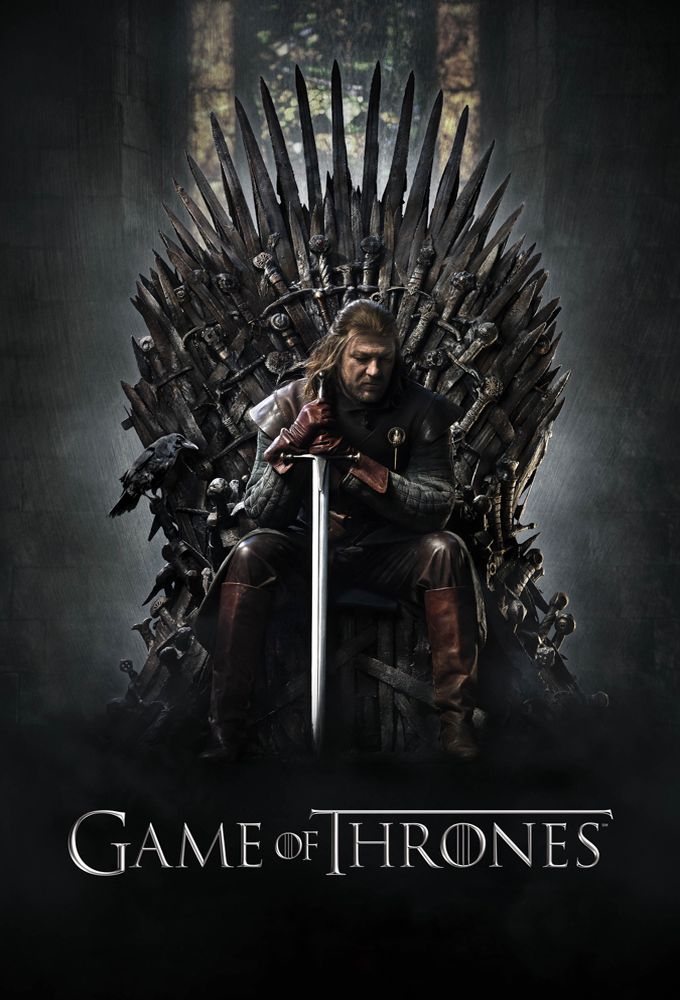
Game of Thrones
- Created by
- David Benioff, D. B. Weiss
- Network
- HBO
- Seasons
- 8
- Episodes
- 73
- Studio
- Revolution Sun Studios, Television 360, Generator Entertainment
32 archived facts 5 topics 1 source Last reviewed Sep 2026
Seven noble families fight for control of the mythical land of Westeros. Friction between the houses leads to full-scale war. All while a very ancient evil awakens in the farthest north. Amidst the war, a neglected military order of misfits, the Night's Watch, is all that stands between the realms of men and icy horrors beyond.
Summary: TMDB

All facts (32)
- #001
George R. R. Martin intended Game of Thrones to read more like historical fiction than contemporary fantasy, downplaying magic and sorcery in favor of battles, political intrigue and character development.
- #002
Martin has said that magic should be used sparingly in epic fantasy so that it keeps its mystery and impact.
- #003
Martin has stated that the real horrors of human history come from people themselves rather than from orcs and Dark Lords.
- #004
Martin has said that the good-versus-evil battle common to fantasy does not reflect the real world, and Game of Thrones explores good and evil through redemption and character change while letting viewers see events from different characters' perspectives.
- #005
In its early seasons, Game of Thrones regularly killed off main characters under the influence of the A Song of Ice and Fire books, a choice credited with building tension among viewers.
- #006
Critics noted that in later seasons some Game of Thrones characters gained "plot armor" and survived unlikely situations, which they linked to the show moving away from the novels toward a more conventional television series.
- #007
A 2012 study of 40 recent television dramas placed Game of Thrones second in deaths per episode, averaging 14, and a 2018 scientific study stated that roughly 60% of its major characters died from violence and war.
- #008
Game of Thrones adapted the novels with increasing changes over time; Benioff described the approach as adapting the series as a whole and following the map George laid out, hitting the major milestones but not necessarily every stop along the way.
- #009
Game of Thrones drew on settings, characters and events from European history, with most of Westeros echoing high medieval Europe in its geography, castles, cultures, feudal system, palace intrigues and knights' tournaments.
- #010
Like medieval Europe, most of the houses in Game of Thrones use a patriarchal system of power.
- #011
The scheming Cersei Lannister evokes Isabella, the "She-Wolf of France" (1295–1358), who, along with her family as portrayed in Maurice Druon's The Accursed Kings, was a main inspiration for Martin.
- #012
Other historical antecedents of elements in the series include Hadrian's Wall, which becomes Martin's Wall, the Roman Empire and the legend of Atlantis, which inform ancient Valyria and its Doom, and Damascus steel, which corresponds to Valyrian Steel.
- #013
In January 2006, David Benioff spoke by telephone with George R. R. Martin's literary agent about the books the agent represented. Benioff, a fan of fantasy fiction in his younger years, became interested in A Song of Ice and Fire even though he had not read the series at that point.
- #014
The literary agent sent David Benioff the first four novels of the series. Benioff read a few hundred pages of the first novel, A Game of Thrones, then shared his enthusiasm with D. B. Weiss and proposed adapting Martin's novels for television.
- #015
D. B. Weiss finished the first novel in what he described as maybe 36 hours.
- #016
The creator of Game of Thrones said his first drafts were usually too big or too expensive, and that he disliked having to cut them.
- #017
The creator of Game of Thrones said he decided to write something as large as he wanted, with a cast of characters in the thousands, huge castles, battles and dragons.
- #018
Martin considered his novels unfilmable, noting that a single novel was as long as The Lord of the Rings, which had been adapted into three feature films.
- #019
Benioff agreed that the novels could not become a feature film because their scale was too large and dozens of characters would have to be cut.
- #020
Martin was pleased with the idea of adapting the work as an HBO series, saying he never imagined it anywhere else.
- #021
The pilot episode of Game of Thrones, "Winter Is Coming", was shot in 2009. After a private viewing drew a poor reception, HBO required an extensive re-shoot covering about 90 percent of the episode, along with cast and directorial changes.
- #022
Between 2012 and 2015, the average budget per episode of Game of Thrones rose from $6 million to "at least" $8 million. The sixth season's budget exceeded $10 million per episode for a season total of over $100 million, a record for a series's production cost, and by the final season the per-episode production budget was estimated at $15 million.
- #023
Nina Gold and Robert Sterne served as the primary casting directors for Game of Thrones, assembling the main cast through auditions and readings.
- #024
Peter Dinklage and Sean Bean were the only main cast members the writers wanted from the start, and both were announced as joining the Game of Thrones pilot in 2009.
- #025
Some roles in the Game of Thrones pilot were recast for the first season: Jennifer Ehle was initially cast as Catelyn Stark before Michelle Fairley took over, and Emilia Clarke replaced Tamzin Merchant as Daenerys Targaryen. The remaining first-season cast was selected in the second half of 2009.
- #026
Because Game of Thrones had many new characters to cast in each season after the first, David Benioff and D. B. Weiss postponed introducing several key characters in the second season.
- #027
To handle the large number of new characters, Game of Thrones merged several characters into one or gave their plot functions to different characters.
- #028
Dean-Charles Chapman played both Tommen Baratheon and a minor Lannister character on Game of Thrones.
- #029
Game of Thrones employed seven writers across its eight seasons, with David Benioff and D. B. Weiss writing most of each season's episodes.
- #030
George R. R. Martin, author of A Song of Ice and Fire, contributed one episode to each of Game of Thrones's first four seasons.
- #031
George R. R. Martin did not write an episode for Game of Thrones's later seasons because he wanted to focus on finishing the sixth novel, The Winds of Winter.
- #032
Jane Espenson co-wrote one episode of Game of Thrones's first season as a freelance writer.
Continue through the archive
- David BenioffCreator
 George R.R. MartinProducer
- Peter Dinklageas Tyrion 'The Halfman' Lannister
 Kit Haringtonas Jon Snow
- Nikolaj Coster-Waldauas Sir Jaime 'Kingslayer' Lannister
 Lena Headeyas Cersei Lannister
 Emilia Clarkeas Daenerys Targaryen
- Isaac Hempstead Wrightas Brandon 'Bran' Stark
- Sophie Turneras Sansa Stark
Sources & editorial notes
Reference databases
Sources for the entries on this page
- Wikipedia Game of Thrones — Wikipedia
Information from external sources is independently selected, consolidated and edited by Arka Evren. Sources are listed for verification and further reading. Encyclopedia text is used under its licence (CC BY-SA). How we work