TV SERIES · 1997– · USA
The Shining
35 archived facts 6 topics 1 source Last reviewed Oct 2026
All facts (35)
- #001
The director of the Evil Dead and Spider-Man trilogies plays a small role as the garage attendant who rents a snowcat to Dick Halloran. Raimi also took the role of Bobby Terry in the 1994 miniseries adaptation of The Stand.
- #002
The Stanley Hotel is not only where this miniseries was shot but also the hotel that inspired Stephen King to write the novel; as the season was closing and it was nearly empty of guests and staff, he spent a night there (explained in detail at 0:09:40 in the DVD commentary for episode 1). Apparently, seeing a group of nuns leave the hotel made him feel as if the place had suddenly become godless. King stayed in room 217, long said to be haunted, and used it in the novel; it is now correctly depicted as a corner room rather than in the middle of the corridor as it appeared in the 1980 film adaptation, and that room was replaced with the nonexistent room 237: the owners of the Timberline Lodge, used for filming, were afraid guests would no longer want to stay in room 217 (ironically, many people specifically requested room 217 after reading the book).
- #003
The author plays the orchestra conductor Gage Creed. Gage Creed is also the name of the two-year-old boy played by Miko Hughes in Pet Sematary (1989), likewise adapted from a book by King. King also had a role in Pet Sematary.
- #004
He appears as a ghost in the living room. Darabont directed The Shawshank Redemption (1994), adapted from King's novella, and visited King to tell him he would soon be directing The Green Mile (1999). While there, they discussed his appearing as an extra.
- #005
The miniseries brings back the animated topiary animals from the novel; in The Shining (1980) these were replaced by a hedge maze because Stanley Kubrick felt the effects of the time were not up to it.
- #006
One of Stephen King's biggest objections to Stanley Kubrick's version was that Jack Nicholson played Jack Torrance as if he were already insane. This adaptation requires great effort to make Torrance seem good at first, gradually succumbing to madness as he endures an isolated winter at the Overlook Hotel.
- #007
When Jack speaks to his dead father on the CB radio, his nose starts to bleed. This was not planned. Steven Weber's nose bled on its own and he decided to keep acting.
- #008
Jack's struggle with alcoholism was inspired by Stephen King's own struggle with alcoholism while writing the book. One of King's motivations for making this miniseries was that the 1980 film adaptation of his book never dealt with this subject in depth, only alluding to Jack's alcoholism.
- #009
ABC allowed Stephen King to make a miniseries of The Shining on the condition that he not speak badly about the film version. King had never kept secret how dissatisfied he was with the film.
- #010
The Stanley Hotel is not as isolated as the Overlook is supposed to be. Specific camera angles were required to shoot outside, otherwise viewers could clearly see the surrounding town of Estes Park, Colorado.
- #011
King is the author of the novel on which the series is based. King was extremely unhappy with Stanley Kubrick's adaptation of his novel, which is why he took such a hands-on approach to the miniseries. He not only wrote the teleplay but also made a cameo. The miniseries restores many things Kubrick excluded, especially Jack's struggle with alcoholism.
- #012
According to the commentaries, Stephen King was the third unit director. He took all the still photographs seen in the notebook in the basement.
- #013
When Jack hears his father's voice on the CB radio, the voice belongs to actor Miguel Ferrer. Ferrer also appeared in the film adaptation of King's short story The Night Flier (1997) and in the TV miniseries version of The Stand (1994), also directed by Mick Garris.
- #014
One of King's reasons for wanting to tell The Shining as a miniseries was to be able to push the limits of violence much further than the film did.
- #015
Director Mick Garris's wife, Cynthia Garris, plays the decaying guest in room 217.
- #016
The Stanley Hotel was decorated for this production with topiary animals just as in Stephen King's original novel. However, years later a hedge maze was added, just as in Kubrick's film.
- #017
The Stanley Hotel was built in a "snow shadow" that receives little snow, which is why a summer hotel is built there. During the 1996 filming, there was very little snow except for one very heavy snowfall near the end of the shoot that covered everything (mentioned at 0:46:56 in the DVD commentary for part 2).
- #018
The scene between Jack and Wendy in the hotel lobby runs a little over ten minutes, which is almost unheard of for a miniseries. Long scenes like this are very expensive for a television format, which is probably why all the other scenes are much shorter.
- #019
The miniseries explores Jack Torrance's relationship with his father in more detail than the film does, as in the novel.
- #020
In the original novel, Wendy Torrance is a blonde former cheerleader who has never faced much hardship in her life, and as a result suffers a significant breakdown during her ordeal at the Overlook Hotel. One of Stephen King's problems with the 1980 film adaptation of his novel was that Wendy was played from the start by the dark-haired Shelley Duvall as meek and emotionally vulnerable. Here she is played by the more assertive blonde Rebecca De Mornay.
- #021
Some of the wasps, such as those Jack finds in the nest on the roof, had to be done with CGI.
- #022
The director appears as AA Hartwell at the Sidewinder Community Church.
- #023
The miniseries restores the novel's original ending, which was eliminated by the 1980 film: the Overlook finally burns down because Jack Torrance neglected to drain the boiler, and it takes Jack with it. In the film it was still standing at the end, and Jack had frozen to death in a hedge maze. The sequel novel Doctor Sleep is set 35 years after the Overlook burned and eventually includes a visit to its remains.
- #024
Director Mick Garris initially offered the role of Jack Torrance to Gary Sinise, but Sinise turned it down, believing audiences would accept no one but Jack Nicholson in the role.
- #025
In the novel, people are still leaving the Overlook when the Torrances arrive, and they appear in the film but not in the miniseries.
- #026
When Jack enters the Colorado Lounge on the last day, Glen Miller's "In The Mood" is playing on the music box. In Rose Red (2002), "In The Mood" is one of Annie Wheaton's favorite songs; during the investigation of the house she uses her powers to play it on a broken record player, and she and Nick dance several feet above the floor. The song also plays in a scene in King's novel 11/22/63, but it does not appear in the novel's TV adaptation.
- #027
In the book, while Dick and Danny talk about the Shining, Dick asks Danny to demonstrate his power by giving him a push, and this is in the miniseries but not in the film. Abra, a girl with the Shining, does something similar to Danny in the book's sequel, Doctor Sleep.
- #028
Room 217 continues the theme of rooms with numbers of significance in Stephen King's stories.
- #029
Director Mick Garris has a prior working history with Stephen King, having directed the adaptations of the author's Sleepwalkers (1992) and The Stand (1994).
- #030
In the novel, the woman in room 217 is named Mrs. Massey, and she still appears to Danny in the sequel Doctor Sleep. Danny considered her the worst of the ghosts he saw in the hotel. He has bruises on his neck because she tried to strangle him. She appears in the bathroom because that is where she died. After Dick showed him how, Danny learned to lock the spirits of Mrs. Massey and Horace Derwent in a mental lockbox, though they can be reopened if necessary.
- #031
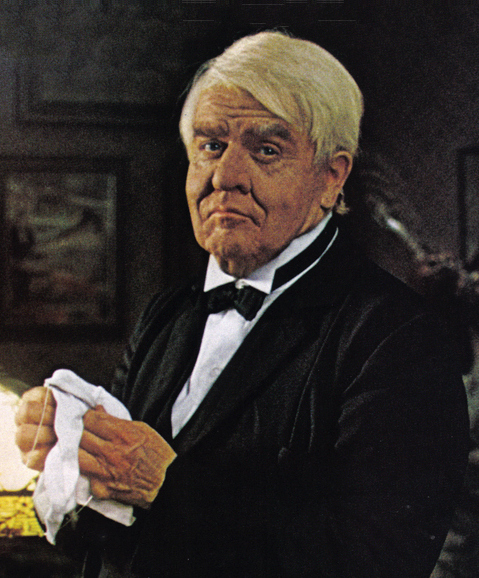
At one point Jack mentions Batman and Spider-Man. Pat Hingle played Commissioner Gordon in the Batman films, as did Jack Nicholson, star of the original The Shining (1980). Weber voiced Norman Osborn/Green Goblin in Ultimate Spider-Man (2012). Hingle also appeared in Stephen King's written-and-directed Maximum Overdrive (1986). Sam Raimi also makes a cameo here; Raimi directed the Spider-Man trilogy from 2002 to 2007.
- #032
While writing Doctor Sleep, Stephen King had to be reminded of things he had forgotten in The Shining. It is one of the few sequels he has written in his career.
- #033
Rebecca De Mornay was previously in a relationship with actor Harry Dean Stanton. Stanton was a good friend of Jack Nicholson and was considered for the role of the bartender Lloyd in the original The Shining (1980). He later appeared in two Stephen King adaptations himself: Christine (1983) and The Green Mile (1999).
- #034
In the novel, Jack was required to mow the lawns and trim the hedges as part of his job as caretaker.
- #035
Jack is writing a play in the miniseries and the book, but in the film it is not known what he came to the Overlook to write.
Continue through the archive
Sources & editorial notes
Reference databases
Sources for the entries on this page
- IMDb IMDb kaydı
Information from external sources is independently selected, consolidated and edited by Arka Evren. Sources are listed for verification and further reading. Encyclopedia text is used under its licence (CC BY-SA). How we work