

TV SERIES · 1959–1964 · USA
The Twilight Zone
- Created by
- Rod Serling
- Network
- CBS
- Seasons
- 5
- Episodes
- 156
- Studio
- Cayuga Productions, CBS
166 archived facts 8 topics 1 source Last reviewed Nov 2026
An anthology series containing drama, psychological thriller, fantasy, science fiction, suspense, and/or horror, often concluding with a macabre or unexpected twist.

166 Interesting Facts About The Twilight Zone
Interesting Facts (34)
- #001
- #002
- #003
- #004
- #005
Other than Rod Serling, Robert McCord was the only actor to appear in all five seasons. In second place are Jack Klugman, John Anderson, Jon Lormer and Vaughn Taylor, who each appeared in four seasons. Klugman and Taylor appeared in the first, third, fourth and fifth seasons, Anderson appeared in the first, second, fourth and fifth seasons and Lormer appeared in the each of the first four seasons.
- #006
On May 11, 2018, not long after The Twilight Zone (2019) was picked up for CBS All Access, CBS picked the following as the 10 most terrifying episodes of the original series. * Nightmare at 20,000 Feet (1963) * Time Enough at Last (1959) * Living Doll (1963) * Eye of the Beholder (1960) * It's a Good Life (1961) * The Monsters Are Due on Maple Street (1960) * Twenty Two (1961) * Five Characters in Search of an Exit (1961) * The Masks (1964) * The Hitch-Hiker (1960)
- #007
Serling was an award winning television writer before the series began, which helped him sell the off-beat idea of the series to the conservative producers and sponsors. The trick endings were one of the most popular features of the series once it hit. Serling would have been inspired to use this technique from the legendary EC science fiction and horror comics of that time, who's tricky, ironic endings were a main feature of their popularity.
- #008
- #009
On August 11, 2009 the U.S. Postal Service issued a pane of twenty 44-cent commemorative postage stamps honoring early U.S. television programs. A booklet with twenty picture post cards was also issued. On the stamp honoring this show, is a picture of its creator, host, and narrator Rod Serling. Other shows honored in the "Early TV Memories" issue were: The Adventures of Ozzie and Harriet (1952), Alfred Hitchcock Presents (1955), The Dinah Shore Show (1951), Dragnet (1951), The Ed Sullivan Show (1948), The George Burns and Gracie Allen Show (1950), Hopalong Cassidy (1952), The Honeymooners (1955), The Howdy Doody Show (1947), I Love Lucy (1951), Kukla, Fran and Ollie (1947), Lassie (1954), The Lone Ranger (1949), Perry Mason (1957), The Phil Silvers Show (1955), The Red Skelton Hour (1951), The Milton Berle Show (1948), The Tonight Show (which began as The Tonight Show (1953)), and You Bet Your Life (1950).
- #010
- #011
- #012
- #013
- #014
- #015
- #016
- #017
- #018
- #019
Apart from Rod Serling, Robert McCord was the only actor to appear in all five seasons. Next came Jack Klugman, John Anderson, Jon Lormer and Vaughn Taylor, each of whom appeared in four seasons. Klugman and Taylor appeared in the first, third, fourth and fifth seasons, Anderson in the first, second, fourth and fifth, and Lormer in each of the first four seasons.
- #020
- #021
- #022
The original narrator hired was not Rod Serling but the announcer Westbrook Van Voorhis. Van Voorhis recorded the narration for the pilot, "Where Is Everybody?" (1959). Because of scheduling conflicts, however, Van Voorhis was not available for later episodes. Serling was brought in, and eventually became the permanent narrator. Producer William Self, after looking for someone else, including Orson Welles (who demanded too much money), said: "Eventually Rod himself suggested that maybe he should do it. The suggestion was met with skepticism. None of us knew Rod as a writer. But he did a wonderful job." Self also felt Van Voorhis's voice seemed too pompous, wanted Serling to take over the narration duties immediately, and for the first episode Serling's narration was voiced over Van Voorhis's.
- #023
"Bewitchin' Pool" (1964) was chosen as the last episode of the series to air with a happy ending. It ends with two children whose parents are divorcing and about to separate escaping through the pool to a place where they are together and happy with a loving guardian. Some fans interpreted it as the two children drowning while their inconsolable parents search for them.
- #024
Before the series began, Serling was an award-winning television writer, which helped him sell the show's unusual idea to conservative producers and sponsors. Twist endings were one of the series' most popular features from the moment it aired. Serling must have drawn inspiration for using this technique from the legendary EC science-fiction and horror comics of the time, whose difficult and ironic endings were the main feature of their popularity.
- #025
- #026
- #027
- #028
- #029
Since 1995, the series has been rerun in marathons on Syfy, formerly The Sci-Fi Channel, every New Year's Eve/Day and Independence Day. The channel was able to add the series to its lineup after Viacom, its longtime distributor, acquired Paramount Pictures in 1994, at which point Paramount owned half of the network. The series continues to air on the channel even though it is now wholly owned by NBCUniversal.
- #030
On August 11, 2009, the United States Postal Service issued a sheet of twenty 44-cent commemorative stamps honoring the first American television programs. A booklet containing twenty picture postcards was also printed. The stamp honoring this series features an image of its creator, host and narrator, Rod Serling. Other shows honored in the "Early TV Memories" issue were: The Adventures of Ozzie and Harriet (1952), Alfred Hitchcock Presents (1955), The Dinah Shore Show (1951), Dragnet (1951), The Ed Sullivan Show (1948), The George Burns and Gracie Allen Show (1950), Hopalong Cassidy (1952), The Honeymooners (1955), The Howdy Doody Show (1947), I Love Lucy (1951), Kukla, Fran and Ollie (1947), Lassie (1954), The Lone Ranger (1949), Perry Mason (1957), The Phil Silvers Show (1955), The Red Skelton Hour (1951), The Milton Berle Show (1948), The Tonight Show (which began as The Tonight Show (1953)) and You Bet Your Life (1950).
- #031
- #032
- #033
- #034
Production Story (72)
- #035
- #036
- #037
- #038
Due to budgetary constraints in its second season, the network decided to cut costs by shooting some episodes on videotape rather than film. Because videotape was a relatively primitive medium in the early 1960s, editing tape was next to impossible. Thus, each of the six episodes was "camera-cut", as in live television, on a studio soundstage, using a total of four cameras. The requisite multicamera set-up of the videotape experiment pretty much precluded location shooting, severely limiting the potential scope of the storylines, and so the short-lived experiment was ultimately abandoned. The limitations of using videotape (e.g., it could not be edited as cleanly as film, and its visual quality was poorer) led the network to switch back to film for the rest of the series, despite the greater cost. The six videotaped episodes were titled: The Lateness of the Hour (1960); Static (1961); The Whole Truth (1961); The Night of the Meek (1960); Twenty Two (1961); and Long Distance Call (1961); and then transferred to film for broadcast, which saved the producers about five thousand dollars per episode.
- #039
Rod Serling was often seen with a cigarette during the introduction. One of the show's sponsors was the Liggett & Myers tobacco company and Serling served as on-screen spokesman for their product, Chesterfield cigarettes, during his "tune in next week" spot at the end of each episode. The American Tobacco Company, a later sponsor, insisted that he always be seen with a cigarette, although Serling refused to plug their brand (Pall Mall) on-screen.
- #040
- #041
- #042
- #043
- #044
- #045
The series has aired reruns on Syfy, formerly known as The Sci-Fi Channel, since 1995, with marathons every New Year's Eve/Day and Independence Day. The channel was able to add the show to its lineup after Viacom, the longtime distributor of the series, purchased Paramount Pictures, which owned half of the network at the time, in 1994. The series continues to air on the channel even as it is now fully owned by NBCUniversal.
- #046
- #047
- #048
- #049
- #050
- #051
- #052
Rod Serling made up the phrase "sixth dimension" to use in season one's opening narration. William Self of CBS asked him what was the fifth dimension (given that dimensions one through three are exemplified by a line, a plane, and a cube, respectively, and the fourth was once thought to be time). Serling answered, "I don't know. Aren't there five?" He then changed the narration to "There is a fifth dimension".
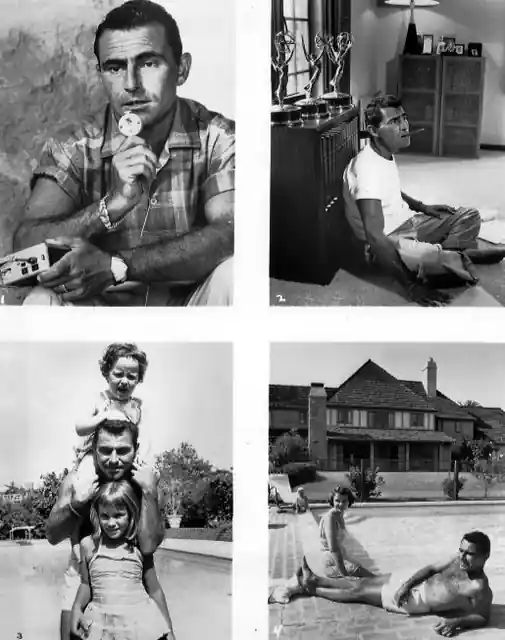
The Twilight Zone (1959): Rod Serling in four different scenesImage: Wikimedia Commons · CBS Television via the Bureau of Industrial Service. During the 1950s…, Public domain - #053
- #054
- #055
- #056
- #057
Serling was an award-winning television writer before the series began, which helped him sell the off-beat idea of the series to the conservative producers and sponsors. The trick endings were one of the most popular features of the series once it hit. Serling would have been inspired to use this technique from the legendary EC science fiction and horror comics of that time, whose tricky, ironic endings were a main feature of their popularity.
- #058
- #059
Announcer Westbrook Van Voorhis was hired as the original narrator, not Rod Serling. Van Voorhis recorded the narration for the pilot Where Is Everybody? (1959). However, due to scheduling conflicts, Van Voorhis would not be available for further episodes. Serling filled in; and eventually became the permanent narrator. Producer William Self said, after seeking out a replacement including Orson Welles (who demanded too much money), "Finally, Rod himself made the suggestion that maybe he should do it. It was received with skepticism. None of us knew Rod except as a writer. But he did a terrific job." Self also felt that Van Voorhis sounded much too pompous, he requested Serling take over the narration duties right away and Serling's narration was dubbed over Van Voorhis for the first episode.
- #060
Due to budgetary constraints in its second season, the network decided to cut costs by shooting some episodes on videotape rather than film. Because videotape was a relatively primitive medium in the early 1960s, the editing of tape was next to impossible. Thus, each of the six episodes was "camera-cut", as in live television, on a studio soundstage, using a total of four cameras. The requisite multicamera set-up of the videotape experiment pretty much precluded location shooting, severely limiting the potential scope of the storylines, and so the short-lived experiment was ultimately abandoned. The limitations of using videotape (e.g., it could not be edited as cleanly as film, and its visual quality was poorer) led the network to switch back to film for the rest of the series, despite the greater cost. The six videotaped episodes were titled: The Lateness of the Hour (1960); Static (1961); The Whole Truth (1961); The Night of the Meek (1960); Twenty Two (1961); and Long Distance Call (1961); and then transferred to film for broadcast, which saved the producers about five thousand dollars per episode.
- #061
- #062
- #063
Rod Serling coined the phrase 'the sixth dimension' for use in the first season's opening narration. William Self of CBS asked him what the fifth dimension was (the first, second and third dimensions are illustrated by a line, a plane and a cube respectively, while the fourth dimension was once thought to be time). Serling replied, 'I don't know. Aren't there five?' and changed the narration to 'There is a fifth dimension.'
- #064
- #065
All episodes in the first, second, third and fifth seasons were thirty minutes long. Fourth season episodes (broadcast between January and May 1963) were an hour long (though the number of episodes was halved), because CBS had changed the show's time slot and only a one-hour slot was available.
- #066
Living Doll (1963) took its death scene from Ray Bradbury's 1946 story 'The Small Assassin.' In that story, a murderous baby kills the family's mother by placing one of the babies at the top of the stairs. The mother trips over the baby and falls down the stairs to her death. In this episode, Erich Streator, played by Telly Savalas, dies in the same way, tripping over Talky Tina and falling down the stairs.
- #067
Serling was an award-winning television writer before the series began, and this helped him sell the show's unusual idea to conservative producers and sponsors. Twist endings became one of the most popular features once the series caught on. Serling may have used this technique inspired by the legendary EC science fiction and horror comics, whose surprise and ironic endings were a key element of their popularity.
- #068
The series has been airing in reruns on the Syfy channel (formerly The Sci-Fi Channel) since 1995, with marathons held every New Year's Eve/Day and Independence Day. The channel was able to add the series to its schedule when Viacom, the show's longtime distributor, bought Paramount Pictures in 1994, which owned half of the network. The series continues to air even though the channel is now wholly owned by NBCUniversal.
- #069
- #070
- #071
- #072
- #073
- #074
- #075
In the second season, due to budget restrictions, the network decided to cut costs by shooting some episodes on videotape instead of film. Because videotape was a relatively primitive technology in the early 1960s, editing on tape was nearly impossible. As a result, each of the six episodes was shot with "camera cuts" using four cameras on a studio soundstage, as in live television. The multi-camera setup required by the videotape experiment made location shooting almost entirely impossible and severely limited the potential scope of the stories, so the short-lived experiment was eventually abandoned. The limitations of videotape (for example, it could not be edited as cleanly as film and its visual quality was lower) pushed the network to return to film for the rest of the series despite the higher cost. The six episodes shot on videotape were: The Lateness of the Hour (1960); Static (1961); The Whole Truth (1961); The Night of the Meek (1960); Twenty Two (1961); and Long Distance Call (1961). These episodes were later transferred to film for broadcast and saved the producers about five thousand dollars per episode.
- #076
- #077
Rod Serling wanted Richard Egan for the narration because Egan had a rich and deep voice. However, due to the strict studio contracts of the time, Egan could not take on the job. Serling then said, "Either Richard Egan or no one. It will be Richard Egan or I will do it myself," and in the end he took on the narration himself.
- #078
Aside from Rod Serling, the only actor to appear in all five seasons was Robert McCord. In second place are Jack Klugman, John Anderson, Jon Lormer and Vaughn Taylor, who each appeared in four seasons. Klugman and Taylor appeared in the first, third, fourth and fifth seasons; Anderson in the first, second, fourth and fifth seasons; and Lormer in the first four seasons.
- #079
Westbrook Van Voorhis, not Rod Serling, was hired as the series' first narrator. Van Voorhis recorded the narration for the pilot episode "Where Is Everybody?" (1959). However, due to scheduling conflicts, he was not available for later episodes. Serling replaced him and eventually became the permanent narrator. Producer William Self said, after attempts such as Orson Welles asking for too much money, "Finally Rod suggested that maybe he should do it himself. The idea was met with skepticism. None of us knew Rod as anything but a writer. But he did a tremendous job." Self also thought Van Voorhis came across as very pompous and asked Serling to take over the narration; in the first episode, Serling's narration was recorded over Van Voorhis's.
- #080
- #081
- #082
- #083
Rod Serling coined the phrase "the sixth dimension" to use in the first season's opening narration. William Self of CBS asked him what the fifth dimension was (the first, second and third dimensions are exemplified by a line, a plane and a cube respectively, while the fourth dimension was once thought to be time). Serling replied, "I don't know. Aren't there five?" and changed the narration to "There is a fifth dimension."
- #084
- #085
- #086
All episodes in the first, second, third and fifth seasons were thirty minutes long. Fourth season episodes (aired between January and May 1963) were one hour long (though the number of episodes was halved), because CBS had changed the show's time slot and only a one-hour slot was available.
- #087
Living Doll (1963) took its death scene from Ray Bradbury's 1946 story 'The Small Assassin'. In that story, a murderous baby kills the family's mother by placing one of her babies at the top of the stairs. The mother trips over the baby and falls down the stairs to her death. In this episode too, Erich Streator, played by Telly Savalas, trips over Talky Tina and falls down the stairs to his death in the same way.
- #088
The series has been airing in reruns on the Syfy channel (formerly The Sci-Fi Channel) since 1995, with marathons held every New Year's Eve/Day and Independence Day. The channel was able to add the series to its schedule when Viacom, the show's long-time distributor, bought Paramount Pictures, which owned half the network, in 1994. The series continues to air even though the channel is now entirely owned by NBCUniversal.
- #089
- #090
- #091
- #092
- #093
- #094
Although the phrase 'Submitted for your approval' from Rod Serling's opening narration has become identified with the series, it appears in only three episodes: 'Cavender Is Coming' (1962), 'In Praise of Pip' (1963) and 'A Kind of a Stopwatch' (1963). This is a fine example of misconceptions in popular culture.
- #095
- #096
On 11 May 2018, shortly after The Twilight Zone (2019) reboot went into production at CBS All Access, CBS selected the ten scariest episodes of the original series: 'Nightmare at 20,000 Feet' (1963), 'Time Enough at Last' (1959), 'Living Doll' (1963), 'Eye of the Beholder' (1960), 'It's a Good Life' (1961), 'The Monsters Are Due on Maple Street' (1960), 'Twenty Two' (1961), 'Five Characters in Search of an Exit' (1961), 'The Masks' (1964) and 'The Hitch-Hiker' (1960).
- #097
- #098
- #099
The song 'Twilight Zone' on Rush's 2112 album is about this series. The episode 'Will the Real Martian Please Stand Up?' (1961) is alluded to with the words 'something strange beneath his hat, take it off, he has three eyes'; there is also a reference to the episode 'Stopover in a Quiet Town', but with a giant boy instead of a giant girl.
- #100
- #101
The classic TV series The Twilight Zone (1959) was frequently parodied by The Simpsons (1989); the most notable examples are in the Halloween special episodes Treehouse of Horror: 'Hungry Are the Damned' (a parody of To Serve Man), 'The Bart Zone' (a parody of It's a Good Life), 'Clown Without Pity' (a parody of Living Doll), 'Terror at 5½ Feet' (a parody of Nightmare at 20,000 Feet), 'Homer3' (a parody of Little Girl Lost), 'The Genesis Tub' (a parody of The Little People), 'Stop the World, I Want to Goof Off' (a parody of A Kind of a Stopwatch) and 'I've Grown a Costume on Your Face' (a parody of The Masks). This shows the series' place in pop culture.
- #102
- #103
On August 11, 2009, the United States Postal Service issued a sheet of twenty 44-cent commemorative stamps honoring early American television programs. The stamp honoring this series featured an image of its creator, host and narrator, Rod Serling. Among the other programs honored were classics such as 'The Adventures of Ozzie and Harriet', 'Alfred Hitchcock Presents', 'I Love Lucy' and 'The Honeymooners'.
- #104
Inger Stevens appeared in the episode 'The Hitch-Hiker' (1960) and died by suicide from an overdose in 1970 at the age of 35. Everett Sloane appeared in the episode 'The Fever' (1960) and likewise died by suicide from an overdose in 1965 at the age of 55. The similar fate of these two actors is a tragic coincidence behind the scenes of the series.
- #105
- #106
Many episodes of The Twilight Zone have plots or concepts with striking similarities to later Hollywood films. For example: 'One for the Angels' (1959) and 'Meet Joe Black' (1998); 'Perchance to Dream' (1959) and 'A Nightmare on Elm Street' (1984); 'And When the Sky Was Opened' (1959)/'The Purple Testament' (1960)/'Twenty Two' (1961) and 'Final Destination' (2000); 'Mirror Image' (1960) and 'Us' (2019); 'A World of Difference' (1960) and 'The Truman Show' (1998); 'Long Live Walter Jameson' (1960) and 'The Man from Earth' (2007); 'The Chaser' (1960) and 'Obsession' (2025); 'A Passage for Trumpet' (1960) and 'The Invisible' (2007); 'A World of His Own' (1960) and 'Ruby Sparks' (2012); 'A Most Unusual Camera' (1960) and 'Time Lapse' (2014); 'The Whole Truth' (1961) and 'Liar Liar' (1997); 'The Midnight Sun' (1961) and 'The Day the Earth Caught Fire' (1961); 'Five Characters in Search of an Exit' (1961) and 'Cube' (1997)/'Toy Story' (1995); 'Dead Man's Shoes' (1962) and 'The Cobbler' (2014); 'The Last Rites of Jeff Myrtlebank' (1962) and 'Sinners' (2025); 'Little Girl Lost' (1962) and 'Poltergeist' (1982); 'Steel' (1963) and 'Real Steel' (2011); 'A Kind of a Stopwatch' (1963) and 'Clockstoppers' (2002); 'Living Doll' (1963) and 'Child's Play' (1988); 'An Occurrence at Owl Creek Bridge' (1964) and 'Jacob's Ladder' (1990). These similarities lay bare the series' profound influence on cinema.
Behind the Scenes (8)
- #107
- #108
- #109
In the second season, due to budget restrictions, the network decided to cut costs by shooting some episodes on videotape instead of film. Because videotape was a relatively primitive technology in the early 1960s, editing on tape was nearly impossible. As a result, each of the six episodes was shot using four cameras in a studio soundstage with "camera cuts," as in live television. The multi-camera setup required by the videotape experiment made location shooting almost entirely impossible and severely limited the potential scope of the stories, so the short-lived experiment was eventually abandoned. The limitations of videotape (for example, it could not be edited as cleanly as film and its visual quality was lower) pushed the network to return to film for the rest of the series despite the higher cost. The six episodes shot on videotape were: The Lateness of the Hour (1960); Static (1961); The Whole Truth (1961); The Night of the Meek (1960); Twenty Two (1961); and Long Distance Call (1961). These episodes were later transferred to film for broadcast and saved the producers about five thousand dollars per episode.
- #110
- #111
Rod Serling was often seen with a cigarette during his introductions. One of the show's sponsors was the Liggett & Myers tobacco company, and in the "watch next week" spot at the end of each episode, Serling served as the on-screen spokesman for their product, Chesterfield cigarettes. A later sponsor, the American Tobacco Company, insisted that Serling always be seen with a cigarette, but Serling refused to promote their brand (Pall Mall) on screen.
- #112
- #113
- #114
Characters & Cast (12)
- #115
- #116
- #117
- #118
- #119
Other than Rod Serling, Robert McCord was the only actor to appear in all five seasons. In second place are Jack Klugman, John Anderson, Jon Lormer and Vaughn Taylor, who each appeared in four seasons. Klugman and Taylor appeared in the first, third, fourth and fifth seasons, Anderson appeared in the first, second, fourth and fifth seasons and Lormer appeared in each of the first four seasons.
- #120
Rod Serling wanted Richard Egan for the narration because Egan had a rich and deep voice. However, due to the strict studio contracts of the time, Egan could not take on the role. Serling then said, "Either Richard Egan or no one. It will be Richard Egan or I will do it myself," and in the end he took on the narration himself.
- #121
Aside from Rod Serling, the only actor to appear in all five seasons was Robert McCord. In second place are Jack Klugman, John Anderson, Jon Lormer and Vaughn Taylor, each appearing in four seasons. Klugman and Taylor appeared in the first, third, fourth and fifth seasons; Anderson in the first, second, fourth and fifth seasons; and Lormer in the first four seasons.
- #122
- #123
Westbrook Van Voorhis, not Rod Serling, was hired as the series' first narrator. Van Voorhis recorded the narration for the pilot episode "Where Is Everybody?" (1959). However, due to scheduling conflicts, he was not available for subsequent episodes. Serling replaced him and over time became the permanent narrator. After attempts such as Orson Welles asking for too much money, producer William Self said, "Finally Rod suggested that perhaps he should do it himself. The idea was met with skepticism. None of us knew Rod as anything but a writer. But he did a tremendous job." Self also thought Van Voorhis came across as too pompous and asked Serling to take over the narration; in the first episode, Serling's narration was recorded over Van Voorhis's.
- #124
- #125
- #126
Easter Eggs & References (8)
- #127
- #128
Rush's "Twilight Zone" song on their 2112 album, is about this show. The episode Will the Real Martian Please Stand Up? (1961) (#2.28) is indirectly specified in the lyric "beneath his hat the strangeness lies, take it off, he's got three eyes", as well as "Stopover in a Quiet Town", except being about a giant boy instead of a giant girl.
- #129
Several episodes of The Twilight Zone have plots or concepts that are remarkably similar to those found in later Hollywood films. In some cases, the resemblance may be the result of deliberate homage or inspiration, while in others it is likely coincidental. Examples include: One for the Angels (1959) and Meet Joe Black (1998); Perchance to Dream (1959) and A Nightmare on Elm Street (1984); And When the Sky Was Opened (1959), The Purple Testament (1960), and Twenty Two (1961) and Final Destination (2000); Mirror Image (1960) and Us (2019); A World of Difference (1960) and The Truman Show (1998); Long Live Walter Jameson (1960) and The Man from Earth (2007); The Chaser (1960) and Obsession (2025); A Passage for Trumpet (1960) and The Invisible (2007); A World of His Own (1960) and Ruby Sparks (2012); A Most Unusual Camera (1960) and Time Lapse (2014); The Whole Truth (1961) and Liar Liar (1997); The Midnight Sun (1961) and The Day the Earth Caught Fire (1961); Five Characters in Search of an Exit (1961) and Cube (1997) and Toy Story (1995); Dead Man's Shoes (1962) and The Cobbler (2014); The Last Rites of Jeff Myrtlebank (1962) and Sinners (2025); Little Girl Lost (1962) and Poltergeist (1982); Steel (1963) and Real Steel (2011); A Kind of a Stopwatch (1963) and Clockstoppers (2002); Living Doll (1963) and Child's Play (1988); An Occurrence at Owl Creek Bridge (1964) and Jacob's Ladder (1990).
- #130
- #131
The classic The Twilight Zone (1959) series is frequently parodied in The Simpsons (1989), most notably in the Halloween, Treehouse of Horror episodes: * Treehouse of Horror (1990) segment "Hungry Are the Damned" is a parody of To Serve Man (1962). * Treehouse of Horror II (1991) segment "The Bart Zone" is a parody of It's a Good Life (1961). * Treehouse of Horror III (1992) segment "Clown Without Pity" is a parody of Living Doll (1963). * Treehouse of Horror IV (1993) segment "Terror at 5½ Feet" is a parody of Nightmare at 20,000 Feet (1963). * Treehouse of Horror VI (1995) segment "Homer3" is a parody of Little Girl Lost (1962). * Treehouse of Horror VII (1996) segment "The Genesis Tub" is a parody of The Little People (1962). * Treehouse of Horror XIV (2003) segment "Stop the World, I Want to Goof Off" is a parody of A Kind of a Stopwatch (1963). * Treehouse of Horror XVI (2005) segment "I've Grown a Costume on Your Face" is a parody of The Masks (1964).
- #132
Although the phrase "Submitted for your approval" from Rod Serling's opening narration has come to be closely identified with the show (and is often used by Serling impressionists), it is only heard in three episodes: Cavender Is Coming (1962), In Praise of Pip (1963) and A Kind of a Stopwatch (1963).
- #133
Contains a major spoiler — show
Living Doll (1963) ripped off its death scene from the 1946 Ray Bradbury story "The Small Assassin." In that story, a killer baby kills the mother of the family by planting one of its dolls at the top of the stairs. The mother trips on it and falls down the stairs to her death. Almost the exact same thing happens in this story to Telly Savalas (Erich Streator), who trips over Talking Tina down the stairs to his death as well.
- #134
Deeper Meaning (21)
- #135
Contains a major spoiler — show
The Bewitchin' Pool (1964) was chosen to be the last episode to air the series out on a happy ending. It ends with two children whose parents are divorcing and are going to separate them, escaping through a pool to some place they are together and happy with a loving guardian. Some fans have interpreted this as the two children drowning, and their inconsolable parents calling for them.
- #136
- #137
- #138
- #139
- #140
Although the phrase 'Submitted for your approval' from Rod Serling's opening narration has become synonymous with the series, it appears in only three episodes: 'Cavender Is Coming' (1962), 'In Praise of Pip' (1963) and 'A Kind of a Stopwatch' (1963). This is a fine example of misconceptions in popular culture.
- #141
- #142
- #143
On May 11, 2018, shortly after The Twilight Zone (2019) reboot premiered on CBS All Access, CBS selected the ten scariest episodes of the original series: 'Nightmare at 20,000 Feet' (1963), 'Time Enough at Last' (1959), 'Living Doll' (1963), 'Eye of the Beholder' (1960), 'It's a Good Life' (1961), 'The Monsters Are Due on Maple Street' (1960), 'Twenty Two' (1961), 'Five Characters in Search of an Exit' (1961), 'The Masks' (1964) and 'The Hitch-Hiker' (1960).
- #144
- #145
- #146
The song 'Twilight Zone' on Rush's album 2112 is about this series. The episode 'Will the Real Martian Please Stand Up?' (1961) is alluded to with the words 'underneath his hat lies something strange, take it off, he has three eyes'; there is also a reference to the episode 'Stopover in a Quiet Town,' but with a giant boy instead of a giant girl.
- #147
'The Bewitchin' Pool' (1964) was chosen as the series' final episode to end happily. The episode tells of two children forced to leave their divorcing parents, escaping through a pool to a place where they are happy together. Some fans interpret this as the children drowning and their inconsolable parents calling out to them.
- #148
- #149
The classic The Twilight Zone (1959) series is frequently parodied by The Simpsons (1989); the most notable examples are in the Halloween specials Treehouse of Horror: 'Hungry Are the Damned' (a parody of To Serve Man), 'The Bart Zone' (a parody of It's a Good Life), 'Clown Without Pity' (a parody of Living Doll), 'Terror at 5½ Feet' (a parody of Nightmare at 20,000 Feet), 'Homer3' (a parody of Little Girl Lost), 'The Genesis Tub' (a parody of The Little People), 'Stop the World, I Want to Goof Off' (a parody of A Kind of a Stopwatch) and 'I've Grown a Costume on Your Face' (a parody of The Masks). This shows the series' place in pop culture.
- #150
- #151
On August 11, 2009, the US Postal Service issued a sheet of twenty 44-cent commemorative stamps honoring early American television programs. The stamp honoring this series featured an image of its creator, host and narrator, Rod Serling. Other honored programs included classics such as 'The Adventures of Ozzie and Harriet,' 'Alfred Hitchcock Presents,' 'I Love Lucy' and 'The Honeymooners.'
- #152
- #153
Inger Stevens appeared in the episode 'The Hitch-Hiker' (1960) and committed suicide by overdose in 1970 at the age of 35. Everett Sloane appeared in the episode 'The Fever' (1960) and likewise committed suicide by overdose in 1965 at the age of 55. The similar fate of these two actors is a tragic coincidence behind the scenes of the series.
- #154
- #155
Many episodes of The Twilight Zone feature plots or concepts that bear striking similarities to later Hollywood films. For example: 'One for the Angels' (1959) and 'Meet Joe Black' (1998); 'Perchance to Dream' (1959) and 'A Nightmare on Elm Street' (1984); 'And When the Sky Was Opened' (1959)/'The Purple Testament' (1960)/'Twenty Two' (1961) and 'Final Destination' (2000); 'Mirror Image' (1960) and 'Us' (2019); 'A World of Difference' (1960) and 'The Truman Show' (1998); 'Long Live Walter Jameson' (1960) and 'The Man from Earth' (2007); 'The Chaser' (1960) and 'Obsession' (2025); 'A Passage for Trumpet' (1960) and 'The Invisible' (2007); 'A World of His Own' (1960) and 'Ruby Sparks' (2012); 'A Most Unusual Camera' (1960) and 'Time Lapse' (2014); 'The Whole Truth' (1961) and 'Liar Liar' (1997); 'The Midnight Sun' (1961) and 'The Day the Earth Caught Fire' (1961); 'Five Characters in Search of an Exit' (1961) and 'Cube' (1997)/'Toy Story' (1995); 'Dead Man's Shoes' (1962) and 'The Cobbler' (2014); 'The Last Rites of Jeff Myrtlebank' (1962) and 'Sinners' (2025); 'Little Girl Lost' (1962) and 'Poltergeist' (1982); 'Steel' (1963) and 'Real Steel' (2011); 'A Kind of a Stopwatch' (1963) and 'Clockstoppers' (2002); 'Living Doll' (1963) and 'Child's Play' (1988); 'An Occurrence at Owl Creek Bridge' (1964) and 'Jacob's Ladder' (1990). These similarities lay bare the series' profound influence on cinema.
Career & Awards (10)
- #156
- #157
- #158
On August 11, 2009, the U.S. Postal Service issued a pane of twenty 44-cent commemorative postage stamps honoring early U.S. television programs. A booklet with twenty picture post cards was also issued. On the stamp honoring this show is a picture of its creator, host, and narrator Rod Serling. Other shows honored in the "Early TV Memories" issue were: The Adventures of Ozzie and Harriet (1952), Alfred Hitchcock Presents (1955), The Dinah Shore Show (1951), Dragnet (1951), The Ed Sullivan Show (1948), The George Burns and Gracie Allen Show (1950), Hopalong Cassidy (1952), The Honeymooners (1955), The Howdy Doody Show (1947), I Love Lucy (1951), Kukla, Fran and Ollie (1947), Lassie (1954), The Lone Ranger (1949), Perry Mason (1957), The Phil Silvers Show (1955), The Red Skelton Hour (1951), The Milton Berle Show (1948), The Tonight Show (which began as The Tonight Show (1953)), and You Bet Your Life (1950).
- #159
- #160
- #161
On May 11, 2018, not long after The Twilight Zone (2019) was picked up for CBS All Access, CBS picked the following as the 10 most terrifying episodes of the original series. Nightmare at 20,000 Feet (1963); Time Enough at Last (1959); Living Doll (1963); Eye of the Beholder (1960); It's a Good Life (1961); The Monsters Are Due on Maple Street (1960); Twenty Two (1961); Five Characters in Search of an Exit (1961); The Masks (1964); The Hitch-Hiker (1960).
- #162
- #163
- #164
- #165
Life & Family (1)
Sources & editorial notes
Reference databases
- Wikipedia
- IMDb
Information from external sources is independently selected, consolidated and edited by Arka Evren. Sources are listed for verification and further reading. Encyclopedia text is used under its licence (CC BY-SA). How we work