
GAME · 2013
BioShock Infinite
- Developer
- Irrational Games, 2K, Aspyr
- Publisher
- 2K
- Platforms
- Microsoft Windows, PlayStation 3, macOS
57 archived facts 6 topics 2 sources Last reviewed Sep 2026
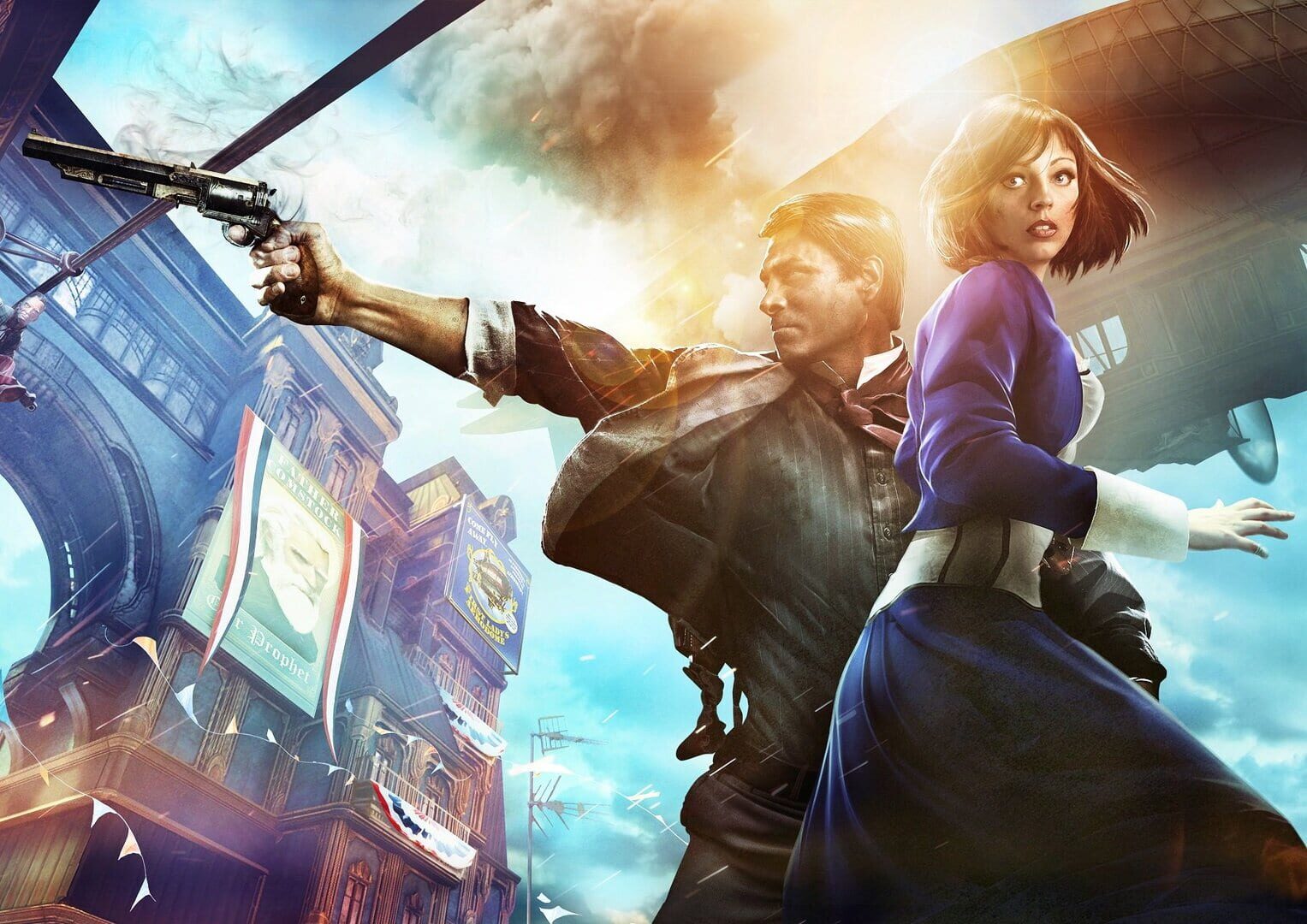
23 Facts From the Development of BioShock Infinite
- #027
After BioShock shipped in 2007, Irrational Games and 2K Games agreed that select Irrational personnel would form a new studio, 2K Marin, to begin a sequel while Ken Levine and Irrational instead joined a game in the XCOM franchise.
- #028
Disappointment within Irrational's ranks matched Levine's lack of interest in XCOM, because another company rather than Irrational was making the next BioShock.
- #029
While 2K Marin continued on BioShock 2 and Irrational's Australia office worked on XCOM, the main Irrational team drew up concepts for the next BioShock game.
- #030
Concept work on BioShock Infinite started in February 2008, with 2K giving Irrational substantial creative and financial freedom for the project.
- #031
Before settling on the floating city of Columbia, Irrational weighed other settings for BioShock Infinite, among them returning to Rapture or placing the story in the Renaissance period.
- #032
While BioShock Infinite's story mode was being constantly revised, two multiplayer modes were also in design: Border Control, a tower defense game set in the game's world, and a cooperative mode code-named Spec-Ops for up to four players, with matches on maps that would evolve after release and use environmental storytelling to show Columbia's civil war.
- #034
BioShock Infinite's ship date repeatedly slipped during development at Irrational, and staff left the company amid concern inside Irrational that the game would never be finished.
- #035
Game producer Don Roy joined BioShock Infinite in March 2012 and, finding no playable game available when he asked, created a new workflow to bring order to the project's disorganized and inefficient management.
- #036
BioShock Infinite took roughly five years to make and involved a team of around 200 people from Irrational, plus support from outside studios.
- #038
Content cut from BioShock Infinite included Vigors, Tear mechanics, weapons, locations, characters and other enemies; according to one developer, this amounted to enough material for five or six whole games.
- #040
BioShock Infinite's setting drew on turn-of-the-century American culture and propaganda, and some of the artwork around Columbia was adapted from historical posters.
- #041
By choosing the hypothetical date of July 4, 1912, the BioShock Infinite team identified films such as The Music Man, Meet Me in St. Louis and Hello, Dolly as sources of imagery showing ideal views of Americana at the turn of the 20th century.
- #042
Other inspiration for BioShock Infinite's art came from photographs taken before and after the 1906 San Francisco earthquake and from Sears-Roebuck catalogs.
- #045
Early designs for BioShock Infinite's flying city were darker and leaned toward Art Nouveau, but Irrational Games judged that direction too claustrophobic and too close to Rapture.
- #046
BioShock Infinite's developers settled on a brighter, more expansive architecture and color scheme for Columbia.
- #047
Irrational Games designed Columbia's vertical, open-air spaces to allow more varied combat than the confined areas of Rapture.
- #048
2K Marin helped build the architecture and details of Columbia for BioShock Infinite, as its levels were much larger in scope than those of earlier BioShock games.
- #049
BioShock Infinite's floating city setting was conceived early in development, but the name "Columbia" and the American exceptionalism themes that shaped the story were only settled on eight months before the game's reveal.
- #050
BioShock Infinite drew on the 2011 Occupy movement as an influence, which shaped how the Vox Populi group developed from its disorganized origins.
- #054
During early development of BioShock Infinite, Elizabeth was conceived as a utility character who handled tasks such as lock-picking that the player could not, rather than as a central partner.
- #055
After favorable player reactions to Elizabeth in the E3 2011 demo, Irrational expanded her role and abilities to make her a larger part of BioShock Infinite.
- #056
Irrational deliberately avoided giving Elizabeth the same tools as the player, such as a gun, and instead equipped her with helpful abilities like tossing supplies to Booker or deciphering codes to strengthen her emotional connection with the player.
- #057
Elizabeth's design and costume in BioShock Infinite were created so players could recognize her from a distance, given the game's open spaces and limited resolution, with a color scheme inspired by superheroes.
Sources & editorial notes
Sources for the entries on this page
- Wikipedia BioShock Infinite — Wikipedia
Information from external sources is independently selected, consolidated and edited by Arka Evren. Sources are listed for verification and further reading. Encyclopedia text is used under its licence (CC BY-SA). How we work