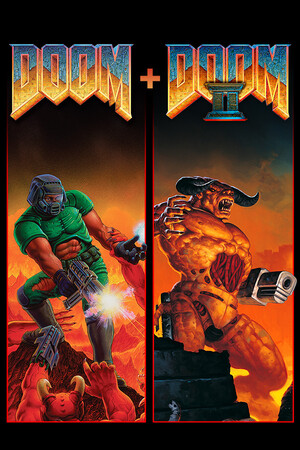
GAME · 1993
Doom
- Developer
- Nerve Software
- Publisher
- Atari, Inc., Atari, WMS Industries
- Platforms
- RiscPC, 3DO, Microsoft Windows, Super Nintendo Entertainment System, Sega Genesis
31 archived facts 2 topics 1 source Last reviewed Sep 2026
All facts (31)
- #001
Following the September 1992 release of Wolfenstein 3D: Spear of Destiny, the id Software team began planning their next game, with co-founder and lead programmer John Carmack having already started technical research on a new title while most of the studio worked on additional Wolfenstein episodes.
- #002
The id Software team was tired of Wolfenstein and wanted to build another 3D game using a new engine that John Carmack was developing.
- #003
Co-founder and lead designer Tom Hall proposed a new entry in the Commander Keen series, but the id Software team decided the Keen platforming gameplay was a poor fit for John Carmack's fast-paced 3D engines.
- #004
Designer John Romero and lead artist Adrian Carmack, both id Software co-founders, wanted to create something in a darker style than the Commander Keen games.
- #005
John Carmack came up with the concept for Doom as a game about employing technology to battle demons, drawing on a Dungeons & Dragons campaign played by the team.
- #006
The Dungeons & Dragons campaign that inspired Doom also shaped the design of Quake (1996) and Daikatana (2000).
- #007
The Doom team aimed to blend the styles of the films Evil Dead II and Aliens.
- #008
Development of Doom began in November 1992 after the team agreed to pursue the concept.
- #009
Doom's initial development team numbered five: programmers John Carmack and Romero, artists Adrian Carmack and Kevin Cloud, and designer Hall.
- #010
The Doom team relocated to a dark office building they called "Suite 666", drawing inspiration from sounds coming from a neighboring dental practice.
- #011
The team ended its relationship with previous publisher Apogee Software and chose to self-publish Doom, believing they had outgrown the publisher and could earn more money independently.
- #012
Hall's Doom design was a science fiction horror concept in which scientists on the Moon open a portal to an alien invasion, with the player discovering over a series of levels that the aliens are demons as hell infects the level design.
- #013
John Carmack disliked the proposed Doom story and dismissed having a story at all, saying story in a game is expected to be there but not that important; he preferred focusing on technological innovation and dropping Wolfenstein's levels and episodes for a fast, continuous world.
- #014
Hall disliked Carmack's direction but the rest of the Doom team sided with Carmack, so Hall spent the next few weeks reworking the Doom Bible; the team then realized Carmack's seamless-world vision was impossible given hardware limitations, forcing Hall to rework the design document again.
- #015
The same press release advertised features of John Carmack's new 3D engine for Doom, including multiplayer, that had not yet been designed.
- #016
Doom initially kept Wolfenstein's arcade-style scoring, but it was removed because it conflicted with the game's intended tone; the studio also tested and dropped systems such as lives, an inventory, a secondary shield and a complex user interface.
- #017
According to Sandy Petersen, John Carmack and Romero wanted to hire other artists, but Cloud and Adrian disagreed, arguing a designer was needed to help build a cohesive gameplay experience; the team also added a third programmer, Dave Taylor.
- #018
Doom's remaining levels were designed by Petersen and Romero, who worked toward different goals: the team considered Petersen's designs more technically interesting and varied, while Romero's were seen as more aesthetically interesting.
- #019
John Carmack started adding multiplayer to Doom in late 1993, a month before the game's release.
- #020
Once Doom's multiplayer component was coded, the development team played four-player games; Romero called this "deathmatch", and Cloud named killing other players "fragging".
- #021
According to Romero, Doom's deathmatch mode drew inspiration from fighting games including Street Fighter II, Fatal Fury and Art of Fighting.
- #022
Doom stored its level and graphical data in WAD files, short for "Where's All the Data?", kept separately from the engine so any part of the design could be changed without adjusting the engine code.
- #023
The Doom engine supports walls and floors at any angle or height, unlike the flat levels with right-angled walls of Wolfenstein. It does not, however, allow areas to be stacked vertically.
- #024
Doom's lighting system works by adjusting the color palette of surfaces directly. Instead of ray tracing light from sources to surfaces, the game sets a "light level" for a small area from that area's predetermined brightness and alters the surface textures' palette to imitate darkness.
- #025
Doom uses the same palette-adjustment lighting system to make distant surfaces appear darker than nearby ones.
- #026
Romero programmed engine features for Doom such as switches and movable stairs and platforms.
- #027
After Romero's complex level designs began causing problems with the engine, Carmack turned to binary space partitioning to quickly select the reduced portion of a level visible to the player at a given time.
- #028
Adrian Carmack served as lead artist on Doom, with Kevin Cloud credited as an additional artist.
- #029
Doom's monsters were designed to look nightmarish, using realistic, dark graphics rather than staged or rendered imagery, and were built through a mixed media approach.
- #030
For Doom's enemies, the artists sculpted some models and photographed them in stop motion from five to eight angles so they could be rotated realistically in-game, then digitized the images into 2D characters with a program written by John Carmack.
- #031
Adrian Carmack made clay models for a few Doom demons, while Gregor Punchatz built latex and metal sculptures of the others; the weapons were assembled from parts of children's toys.
Sources & editorial notes
Sources for the entries on this page
- Wikipedia Doom (1993 video game) — Wikipedia
Information from external sources is independently selected, consolidated and edited by Arka Evren. Sources are listed for verification and further reading. Encyclopedia text is used under its licence (CC BY-SA). How we work