GAME · 2008
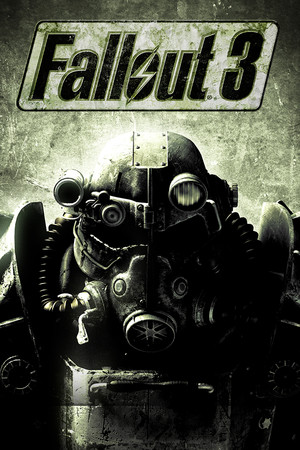
Fallout 3
- Developer
- Bethesda Game Studios
- Publisher
- Bethesda Softworks
- Platforms
- Microsoft Windows, PlayStation 3
29 archived facts 5 topics 1 source Last reviewed Sep 2026
All facts (29)
- #001
Fallout 3 traces its origins to Van Buren, the cancelled third mainline Fallout game that Black Isle Studios was developing before its publisher Interplay Entertainment's financial troubles led to cancellation in December 2003.
- #002
In 2004, Bethesda Softworks paid Interplay Entertainment a minimum guaranteed advance against royalties of $1,175,000 for the rights to develop its own version of Fallout 3.
- #003
Bethesda Softworks, then known for The Elder Scrolls series, sought Fallout 3 as a way to expand its catalogue with another project.
- #004
According to developer Joel Burgess, Bethesda's holding company ZeniMax Media rejected multiple offers from other companies wanting to work on Fallout 3, with the sense being that Bethesda had to make its own game.
- #005
The Fallout 3 team grew substantially after The Elder Scrolls IV: Oblivion shipped in 2006; programmer Jean Simonet estimated roughly 75 members by the end of development.
- #006
Lead designer and writer Emil Pagliarulo wrote most of the main story for Fallout 3 early in development, then let other designers rewrite and suggest changes once the team expanded.
- #007
According to Emil Pagliarulo, Fallout 3's development reflected Bethesda's choice to work more collaboratively and let developers voice opinions, unlike the rigid process he described for The Elder Scrolls IV: Oblivion, where the original design document had to be followed regardless of feedback.
- #008
Bethesda kept Fallout 3 an in-house production and did not hire anyone who had worked on the original Fallout games, according to product manager Pete Hines. Hines said the studio's mindset was to treat Fallout 3 as if it had made the original games.
- #009
Pagliarulo sought a "rawness" in Fallout 3's dialogue and included occasional profanity, and another goal was to give the player a sense of moral ambiguity at important decisions.
- #010
According to lead producer Gavin Carter, Fallout 3's karma mechanic was designed to show players the immediate consequences of their actions and to make them question whether they had chosen correctly. The player character's father, James, was created as a moral compass who would react to the player's earlier actions.
- #011
Before Fallout 3 was released, fans and journalists commonly joked that it was "Oblivion but with guns", and some players questioned whether it would simply be an iteration of The Elder Scrolls IV: Oblivion given Bethesda's prior high fantasy role-playing games.
- #012
Bethesda aimed to blend first-person shooter elements into Fallout 3 while still letting players fight with the tactical nuance typical of role-playing games.
- #013
Executive producer Todd Howard wanted Fallout 3's combat to combine real-time and turn-based play, which led to the V.A.T.S. system; Howard stressed "cinematic" combat and Simonet added slow-motion effects when the player used V.A.T.S., inspired by the slow-motion car-crash replays of the Burnout series.
- #014
Bethesda developers later said they considered Fallout 3's shooting mechanics among the game's weaker elements; Burgess remarked that the studio had no first-person shooter experts and that the mediocrity of the shooting did not matter, which he said spoke to some of the ways they were successful.
- #015
According to Pagliarulo, the shift to the Washington metropolitan area came from the adage "write what you know", since Bethesda was based in Rockville, Maryland, near Washington, D.C.
- #016
Burgess wanted Washington, D.C. in Fallout 3 to be hard to explore, with tougher enemies and more radiation, and the game engine required the area to be divided into zones linked by the Washington Metro.
- #017
Playtesters often had trouble navigating the Metro and found the increased difficulty less enjoyable, and Bethesda dropped an attempt to remove the dividers between zones after Burgess said the initial test did not show promise. Burgess described the whole Washington, D.C. area as "the big mistake I feel I made on [Fallout 3]".
- #018
Fallout 3's map was originally comparable in size to the map in The Elder Scrolls IV: Oblivion. Bethesda incorporated monuments from the Washington metropolitan area as visual landmarks to help players navigate, such as the Washington Monument visible in the distance when leaving Vault 101.
- #019
About six months before Fallout 3's release, Bethesda judged the map too small, since the barren wasteland setting made players notice locations too quickly compared with The Elder Scrolls IV: Oblivion, where mountains and trees hid distances. Bethesda therefore increased the map size by roughly 20 percent and spread out locations.
- #020
Late in Fallout 3's development, Bethesda found that no one had modeled the White House; lacking time to create another significant location, the studio instead showed the White House's remnants in a giant crater and explained it was one of the locations targeted by nuclear attacks.
- #021
To avoid overwhelming players with combat and to keep the map unpredictable, Bethesda spread out enemy encounters in Fallout 3 and added random encounters, such as contract killers attacking a character or a giant scorpion attacking a robot.
- #022
Inon Zur composed the score for Fallout 3, aiming to balance traditional American music such as blues and folk with the powerful cadence of military music.
- #023
The score for Fallout 3 was intended to showcase American life before the nuclear war while emphasizing the theme of militant progress.
- #024
Inon Zur was influenced by post-apocalyptic films like Mad Max 2 and Vietnam War films like Full Metal Jacket when composing the music for Fallout 3.
- #025
Inon Zur said he wanted the music for Fallout 3 to sound as if it comes out of a boom box rather than something symphonic and heroic, because the technology in Fallout is low-tech and the sound helps represent that aspect.
- #026
Fallout 3 had more than 40,000 lines of dialogue recorded, a figure that at the time earned a Guinness World Record for the most lines of dialogue in a single-player role-playing game.
- #027
Celebrity actors Liam Neeson and Malcolm McDowell were brought in to provide voice work for Fallout 3, and Ron Perlman returned as its narrator.
- #028
In an interview with Edge, Blindlight manager Lev Chapelsky said that former U.S. president Bill Clinton was jokingly offered a voice role in Fallout 3, but the offer was quickly turned down.
- #029
Hines stated that Bethesda would not have permitted Bill Clinton to voice a role in Fallout 3 even if he had accepted, and said the studio never named Clinton as its choice or instructed Blindlight to pursue him.
Sources & editorial notes
Sources for the entries on this page
- Wikipedia Fallout 3 — Wikipedia
Information from external sources is independently selected, consolidated and edited by Arka Evren. Sources are listed for verification and further reading. Encyclopedia text is used under its licence (CC BY-SA). How we work