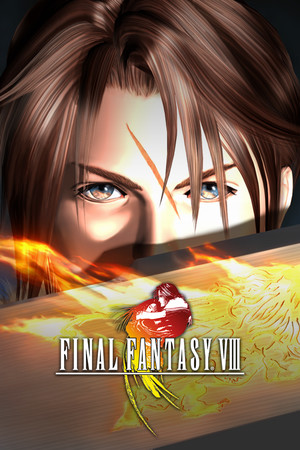
GAME · 1999
Final Fantasy VIII
- Developer
- Square
- Publisher
- Square
- Platforms
- Microsoft Windows
- Original title
- Fainaru fantajî VIII
42 archived facts 5 topics 1 source Last reviewed Sep 2026
All facts (42)
- #001
Development of Final Fantasy VIII started in 1997, while Final Fantasy VII was being translated into English, and the team grew to more than 100 people.
- #002
Hironobu Sakaguchi was executive producer on Final Fantasy VIII but focused mainly on Final Fantasy: The Spirits Within, so Yoshinori Kitase directed the game and Shinji Hashimoto took over as producer.
- #003
The Triple Triad card game in Final Fantasy VIII was created by programmer Kentarow Yasui, who drew on the popularity of trading cards in parts of Japan and asked for cards to be convertible into items because collecting alone felt too separate from the main game.
- #004
Final Fantasy VIII cost roughly ¥3 billion, or about $30 million, to develop, and its staff numbered around 180 people.
- #005
Final Fantasy VIII was the first title to involve extensive communication between Square's Japanese and North American teams during localization, following a shake-up of the company's localization process after Final Fantasy VII.
- #006
Lead translator Richard Honeywood wrote a text parser for Final Fantasy VIII that automatically converted English ASCII text into the Shift JIS format required by the game engine's compiler, greatly streamlining translation.
- #007
Final Fantasy VIII was the first major project for Alexander O. Smith, who later earned acclaim for his work on Vagrant Story. Smith said that because of limited communication with the development team, they were surprised that an IT employee used GameShark to access text files for Western localization.
- #008
Translation of Final Fantasy VIII was completed by September 1999, and its European release was delayed because of required graphical changes, including the removal of a Nazi-like uniform.
- #009
Character designer and battle visual director Tetsuya Nomura and art director Yusuke Naora gave Final Fantasy VIII realistically proportioned characters, moving away from the super deformed designs of the previous title.
- #010
Yusuke Naora worked to make the world of Final Fantasy VIII feel more realistic by using mostly bright lighting with shadows placed where appropriate.
- #011
Final Fantasy VIII used motion capture to make character movement lifelike in its full motion video sequences, though the team preferred manual animation over relying on it.
- #012
Final Fantasy VIII was generally designed to be a "bright, fresh Final Fantasy", a direction the team chose because it had dealt extensively with dark and "weird" imagery in Final Fantasy VII. According to an interview with Famitsu, designer Naora said the developers wanted to invert the atmosphere of earlier games in the series.
- #013
The decision to change direction for Final Fantasy VIII was easy for the developers, since most of them had worked on Final Fantasy VII and considered a new approach acceptable.
- #014
Final Fantasy VIII's world designs were developed knowing that most staff were by then used to computer graphics, which had not been the case with Final Fantasy VII. The developers said they attempted to "mix future, real life and fantasy" in the game.
- #015
As part of a theme desired by Kitase to give Final Fantasy VIII a foreign atmosphere, its locations were designed in the style of internationally familiar places while keeping a fantasy feel. Inspiration ranged from ancient Egyptian and Greek architecture to Paris, France, and an idealized futuristic European society, and some factions were given flags based on their history and culture.
- #016
Final Fantasy VIII's characters were designed with predominantly European appearances to maintain a foreign atmosphere.
- #017
Squall was given a gunblade, a fictional revolver–sword hybrid that works mainly as a sword and has an added damaging vibration feature activated through its gun mechanism, similar to a vibroblade. Nomura also added a fur lining along the collar of Squall's jacket as a challenge for the game's full motion video designers.
- #018
Some designs Nomura had drawn earlier but not yet used in a Final Fantasy game were incorporated into Final Fantasy VIII: Edea, Fujin and Raijin. Fujin and Raijin had originally been designed for Final Fantasy VII but were deemed unnecessary after the Turks characters were included, while Edea had been designed before VII's development based on the style of Yoshitaka Amano.
- #019
The plot of Final Fantasy VIII was conceived by Kitase, while Nomura supplied the story and characters and Nojima wrote the scenario.
- #020
During pre-production on Final Fantasy VIII, Nomura proposed giving the game a "school days" feel, an idea that merged with Nojima's existing concept of same-age main characters and became the "Garden" military academies.
- #021
Nojima planned a strong contrast between Final Fantasy VIII's two playable parties, Squall's present-day group and Laguna's past group, expressed through the age and experience of Laguna's team against the youth and naïveté of Squall's.
- #022
Nojima has said that the dynamic of players' relationships with the protagonist matters to him; in Final Fantasy VIII he gave players actual insight into Squall's thoughts, unlike his approach in Final Fantasy VII, which encouraged speculation.
- #023
Final Fantasy VIII Ultimania, a book containing an in-depth guide to Final Fantasy VIII and interviews with its developers, was published in March 1999, one month after the game's release.
- #024
An origami book tied to Final Fantasy VIII was released in November 1999.
- #025
Final Fantasy VIII Desktop Accessories also included a stand-alone version of the "Triple Triad" minigame, which let players compete against each other over a local area network.
- #026
In 1999, the ballroom dance scene from Final Fantasy VIII was shown as a technical demo for the PlayStation 2.
- #027
A Windows PC version of Final Fantasy VIII arrived in 2000, offering smoother graphics, enhanced audio and the Chocobo World minigame starring the Chocobo Boko.
- #028
Because Chocobo World was designed for the PocketStation, a handheld console never sold outside Japan, the PC release was the only way most North American and European players could access it.
- #029
Final Fantasy VIII joined Sony's Greatest Hits on August 28, 2000, and in 2009 it was added to the PlayStation Store on the PlayStation Network.
- #030
Final Fantasy VIII was included in the Final Fantasy 25th Anniversary Ultimate Box, a Japanese package released in December 2012.
- #031
An upscaled PC version of Final Fantasy VIII arrived on Steam on December 5, 2013.
- #032
Nobuo Uematsu, the regular series composer, wrote the soundtrack for Final Fantasy VIII. He based the songs on the emotional content of the scenes where they would be played, saying that expressing the emotions he wanted mattered more than improving skills.
- #033
Uematsu could not determine a character's emotions from the plot alone and instead used images of appearance and attire. He noted that it is important to know when a character's emotions peak, but that the ending dialog is often finished only about a month before release.
- #034
Asked by IGN Music whether the music of Final Fantasy VIII was very dark and perhaps shaped by the game's plot, Uematsu said the atmosphere of the music varies with the story line, but that he also intended to include various types of music in one game.
- #035
Final Fantasy VIII lacked the character themes used in the two previous games because Uematsu found those of Final Fantasy VI and VII ineffective. He considers character themes reasonable when each character has a highlight, but saw Final Fantasy VIII as focused on Squall Leonhart and Rinoa Heartilly as a couple, which led to the theme "Eyes on Me".
- #036
Final Fantasy VIII's original soundtrack was released in Japan by DigiCube on March 10, 1999, on four compact discs. Square Electronic Arts issued it in North America as Final Fantasy VIII Music Collection in January 2000, and Square Enix republished it worldwide on May 10, 2004.
- #037
An album of orchestral arrangements of selected Final Fantasy VIII tracks, titled Fithos Lusec Wecos Vinosec Final Fantasy VIII, was released by DigiCube on November 19, 1999, and later published by Square Enix on July 22, 2004. Shirō Hamaguchi arranged and conducted the pieces for a live orchestra.
- #038
Piano Collections: Final Fantasy VIII, a collection of piano arrangements performed by Shinko Ogata, was released by DigiCube on January 21, 2000, and re-published by Square Enix on July 22, 2004.
- #039
Final Fantasy VIII is known for two songs: "Liberi Fatali", a Latin choral piece played during the game's introduction, and "Eyes On Me", a pop theme performed by Hong Kong singer Faye Wong.
- #040
Nobuo Uematsu believed a ballad would closely relate to the theme and characters of Final Fantasy VIII, leading the developers to share "countless" artists before deciding on Faye Wong.
- #041
Nobuo Uematsu claimed that Faye Wong's voice and mood matched his image of the song exactly, and that her ethnicity "fits the international image of Final Fantasy".
- #042
After negotiations, "Eyes On Me" was recorded in Hong Kong with an orchestra and released as a CD single in Japan, selling over 400,000 copies and setting the record for the highest-selling video game music disc in that country at the time.
Sources & editorial notes
Sources for the entries on this page
- Wikipedia Final Fantasy VIII — Wikipedia
Information from external sources is independently selected, consolidated and edited by Arka Evren. Sources are listed for verification and further reading. Encyclopedia text is used under its licence (CC BY-SA). How we work