GAME · 2020
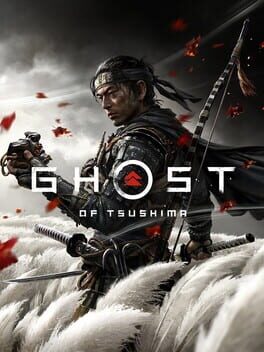
Ghost of Tsushima
- Publisher
- Sony Interactive Entertainment
39 archived facts 4 topics 1 source Last reviewed Sep 2026
All facts (39)
- #001
Ghost of Tsushima was developed by Sucker Punch Productions, a studio with 160 staff at the time of development.
- #002
Development of Ghost of Tsushima began in 2014, after Sucker Punch Productions finished Infamous Second Son and its expansion First Light, following nine years of work on the Infamous series.
- #003
Before settling on feudal Japan, Sucker Punch Productions weighed other settings and themes for Ghost of Tsushima, including pirates, Scottish outlaw Rob Roy MacGregor and The Three Musketeers; the studio later found a historical account of the 1274 Mongol invasion of Tsushima and said the entire vision clicked into place.
- #004
Sucker Punch Productions worked on Ghost of Tsushima for six years, the longest development period for any game by the studio; development was completed on June 22, 2020, when the studio confirmed the game had gone gold. Nate Fox was the game director, while Jason Connell served as creative director and art director.
- #005
Early in development on Ghost of Tsushima, Sucker Punch consulted fellow Sony team Japan Studio, which helped fly roughly 10 team members to Japan and Tsushima Island for a guided tour of about 10 or 11 days with a historian, and also connected the developers with historians on the invasion and local customs.
- #006
Ghost of Tsushima deliberately omits a character karma system, unlike the Infamous games, so the developers could deliver a more cohesive story that better reflected Jin's transformation from an honorable samurai into a legendary warrior.
- #007
In Ghost of Tsushima, the world and characters react dynamically to Jin's choices rather than presenting the player with binary options as in Infamous, and the developers considered his journey of relinquishing who he was to become something new a universal message for modern players.
- #008
Although Ghost of Tsushima has no karma mechanic, the weather on Tsushima Island grows stormier the more frequently the player uses ghost techniques, while players can still switch seamlessly between ghost and samurai styles because Jin's samurai roots remain despite his transformation.
- #009
Ghost of Tsushima's development team drew major inspiration from Akira Kurosawa films including Seven Samurai, Sanjuro, Yojimbo, Red Beard and Ran, as well as Takashi Miike's 13 Assassins. The standoff gameplay feature, in which a warrior waits for an opponent's first move before striking, was directly inspired by the ending of Sanjuro.
- #010
The team behind Ghost of Tsushima sought permission from the Kurosawa Estate to use Akira Kurosawa's name for the game's black-and-white gameplay mode, and attempted to replicate the samurai code shown in Seven Samurai.
- #011
Stan Sakai, creator of the comic series Usagi Yojimbo, was honored in Ghost of Tsushima through the surname of its protagonist. The comic, which follows a soft-mannered rabbit samurai aiding ordinary citizens, influenced the team; Fox had read it while working on the Sly Cooper games.
- #012
Several video games shaped Ghost of Tsushima's development: Tenchu inspired many of its items, Onimusha: Warlords influenced the option to play as both the ghost and an honorable samurai, and Karateka and Red Dead Redemption were also cited as inspirations.
- #013
Ghost of Tsushima was designed to be a challenging game, with Jin frequently outnumbered by enemies and basic foes able to kill him fairly quickly.
- #014
The development team behind Ghost of Tsushima hoped that its difficult combat would lead players to grow more appreciative of minor incremental growth.
- #015
Fox stated that the three pillars of Ghost of Tsushima's combat were "mud, blood, and steel".
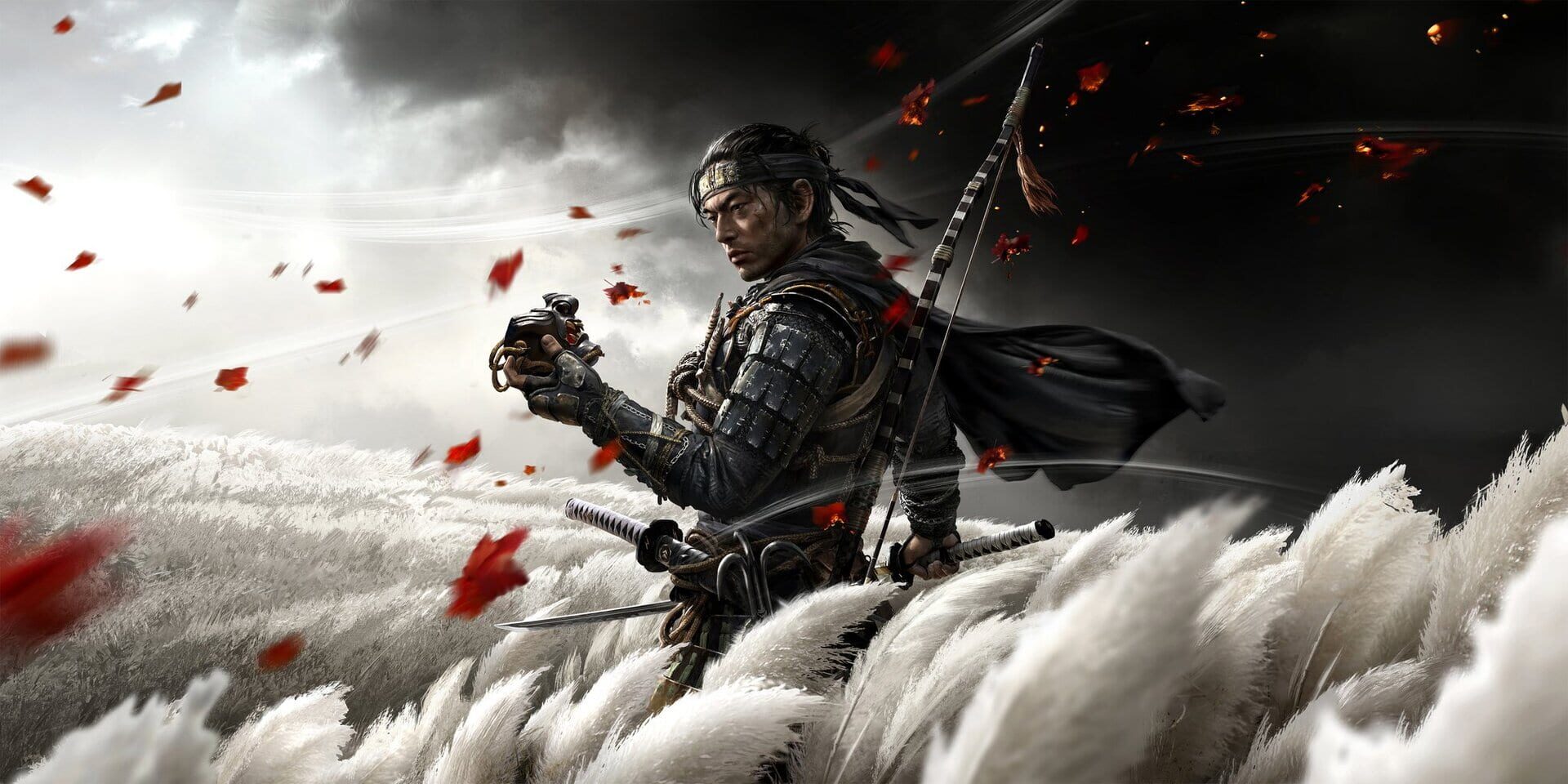
- #016
The combat system in Ghost of Tsushima was the hardest feature to implement, requiring the team to build several versions and revise its design often during development.
- #017
Early playtesters of Ghost of Tsushima criticized enemies as "sword sponge" for absorbing heavy damage, which broke immersion; the team added hit points and armor points before settling on defeating all enemies within a set number of hits.
- #018
In Ghost of Tsushima, enemy health stays the same across difficulties; higher difficulties instead make enemies use more defensive tactics like parrying and blocking, and the stagger system was introduced after early prototypes in which enemies deflected every attack were deemed overkill.
- #019
Ghost of Tsushima's ghost weapons were designed to be "exceedingly lethal" and generally more effective than samurai weapons, complementing the story and Jin's emotional dilemma between keeping samurai honor and saving the island through dishonorable means; Fox compared the Mongol enemies to packs of wolves attacking from all sides and likened the combat to a dance in which the player must "weave between Mongol swords".
- #020
Sucker Punch aimed to build a "beautiful, serene, and nature-filled open world feudal Japan" for Ghost of Tsushima.
- #021
At the game's reveal during Paris Game Week, Connell departed from the script to state that Ghost of Tsushima would have no waypoint mechanics and that exploration would be driven mainly by player curiosity.
- #022
Connell's unscripted announcement surprised the team, who then had to add features to make good on his promise.
- #023
Sucker Punch sought calm moments in Ghost of Tsushima through a minimalistic head-up display, nature-guided objectives and relaxing open world activities unconnected to progression or the main story, with side-quests likened to an anthology of stories about characters surviving the brutality of war.
- #024
The development team for Ghost of Tsushima chose early on to make wind blowing through the game world its visual signature, drawing on early Chanbara samurai films that used background movement such as dust, smoke and wind. Achieving correct reactions of foliage and other objects to wind took the team about one and a half years.
- #025
While implementing Ghost of Tsushima's wind guidance, the team drew inspiration from Shadow of the Colossus, where holding up a sword shows the player the direction of their objectives.
- #026
According to Connell, nature in Ghost of Tsushima symbolizes Jin's home, and wind-based guidance was an important tool for players to connect with that home. Fleming said the guiding winds also evoked a feeling that nature itself is on the player's side, which aligned with history in which Mongol forces were decimated by a typhoon the Japanese saw as a divine wind sent to protect their home.
- #027
Sucker Punch did not aim to recreate Tsushima Island exactly in Ghost of Tsushima; the in-game landmass shares the real island's geographic shape, but the studio invented its individual biomes so each region would be artistically distinct.
- #028
For Ghost of Tsushima, Sucker Punch gave each area a recognizable identity by using bold, vibrant colors in its nature modelling, so players could identify regions even from a distance.
- #029
The team behind Ghost of Tsushima selected a dominant foliage type for each region and exaggerated its presence, creating what it called "little pockets of massive boldness and beauty"; the Golden Forest, for example, emphasized orange and yellow tree hues rather than every tree species that would realistically grow there.
- #030
According to Connell, the Ghost of Tsushima locations represent an imagination of what an area would look like and a "perfect photographer's dream", while Fox said the in-game island's landscape is more diverse than the real one because the team also drew on the aesthetics of mainland Japan.
- #031
Connell noted that the art and environment teams struggled to shift to Ghost of Tsushima after nine years working on the Infamous games, which have a "punk rock" visual style.
- #032
Shadow of the Colossus and The Legend of Zelda: Breath of the Wild inspired Ghost of Tsushima's minimalistic landscape and aesthetic, though the team aimed for more photorealistic visuals to highlight its picturesque setting.
- #033
Ghost of Tsushima includes Kurosawa mode, a black-and-white filter with film grain and adjusted audio honoring Akira Kurosawa and his samurai films; the team playtested it using features common in colorblind accessibility modes.
- #034
Ghost of Tsushima's armors drew heavily on Kamakura and Heian period armor designs, which were bulky and colorful and conveyed a sense of regality.
- #035
For Ghost of Tsushima's ghost outfit, the team deliberately rejected the traditional all-black, fully-cloth assassin look so the outfit would read as more realistic.
- #036
In Ghost of Tsushima, elements of certain outfits such as capes and tassels react to the wind, strengthening the connection between the player, Jin and the game's world.
- #037
Ghost of Tsushima's peasant recruits wear leftover armor and look more ragtag than typical samurai, with geometric clothing patterns reflecting their origins, such as snowflake patterns for residents of Northern Tsushima.
- #038
Brad Meyer was the audio lead for Ghost of Tsushima. To capture sword-fighting sounds, the team used sword blanks that had previously been used in recording sessions for God of War, developed by Santa Monica Studio, another Sony developer.
- #039
According to Meyer, the team spent considerable time scraping the sword blanks together, clanging them, swinging them, suspending them from the ceiling and spinning them to record interesting sounds. They also used the blanks to cut through fruits, vegetables and cloth to create the sound of a sword cutting through a human body.
Sources & editorial notes
Sources for the entries on this page
- Wikipedia Ghost of Tsushima — Wikipedia
Information from external sources is independently selected, consolidated and edited by Arka Evren. Sources are listed for verification and further reading. Encyclopedia text is used under its licence (CC BY-SA). How we work