GAME · 2001
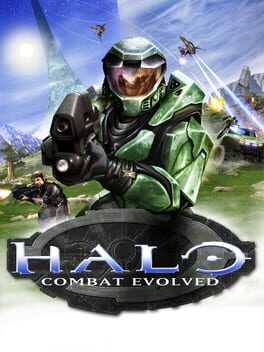
Halo: Combat Evolved
- Developer
- Bungie, Gearbox Software
- Publisher
- Xbox Game Studios
- Platforms
- Microsoft Windows, macOS, Xbox Series X and Series S
39 archived facts 2 topics 1 source Last reviewed Sep 2026

All facts (39)
- #001
Halo: Combat Evolved was conceived as an indirect successor to Bungie's earlier first-person shooter games Marathon and Marathon 2: Durandal.
- #002
After Marathon 2: Durandal shipped in 1995, Bungie sought ideas for a follow-up that would not be a direct sequel.
- #003
Bungie co-founder Jason Jones described one early concept as the natural extension of Marathon, comparable to Quake.
- #004
Bungie cancelled its first-person shooter project to pursue a vehicular combat concept known internally as "The Giant Bloody War Game", but Jones's difficulty building a vehicle physics model led the studio to instead develop the real-time strategy game Myth: The Fallen Lords, released in 1997.
- #005
Halo: Combat Evolved originated in a project by three Bungie staffers who set out to build a science fiction real-time strategy game featuring realistic physics simulations and three-dimensional terrain.
- #006
Early builds of the project that became Halo: Combat Evolved ran on the Myth engine and used an isometric perspective.
- #007
The project that became Halo: Combat Evolved was first called Armor, a working title dropped as boring and as the project departed from its original vision.
- #008
The title of the project that became Halo: Combat Evolved moved from Armor to Monkey Nuts and then to Blam!, the last change made because Jones could not tell his mother the earlier name.
- #009
While experimenting with ways to control units, Bungie added a mode that attached the camera to individual units in Halo: Combat Evolved. The vantage point moved continually closer to the units as the developers concluded players would have more fun driving the vehicles themselves rather than letting the computer do it.
- #010
By mid-1998, Halo: Combat Evolved had become a third-person shooter.
- #011
Peter Tamte, then executive vice president of Bungie, used contacts from his previous role at Apple to arrange a meeting between lead writer Joseph Staten, Jones and Apple CEO Steve Jobs. Impressed by the meeting, Jobs agreed that Halo: Combat Evolved would debut at the 1999 Macworld Conference & Expo.
- #012
Anticipation for Halo: Combat Evolved grew after industry journalists gave the game favorable reviews while under non-disclosure agreements at the 1999 Electronic Entertainment Expo.
- #013
Days before the Macworld announcement, the game that became Halo: Combat Evolved still lacked a permanent title, with candidates including The Santa Machine, Solipsis, The Crystal Palace, Hard Vacuum, Star Maker and Star Shield.
- #014
A branding firm hired by Bungie proposed the name Covenant, but Bungie artist Paul Russell put forward other options, among them Halo.
- #015
Some people disliked the name Halo, comparing it to something religious or to a women's shampoo, while designer Marcus Lehto said it conveyed enough about the intended universe to create a sense of mystery.
- #016
Early in the development of Halo: Combat Evolved, the game's premise centered on a human transport starship that crash-lands on a mysterious ringworld, where early versions of the Covenant arrive to loot what they can and war erupts with the humans.
- #017
Bungie promised that Halo: Combat Evolved would be an open-world game with terrain that deformed from explosions, persistent details such as spent shell casings, and variable weather, but none of these features appeared in the final product.
- #018
Halo: Combat Evolved's early versions included Halo-specific fauna, which were dropped after design difficulties and because the creatures detracted from the surprise appearance of the Flood.
- #019
In early versions of Halo: Combat Evolved, the Master Chief was known simply as the cyborg, and when the game was shown at E3 in June 2000 it was still a third-person shooter.
- #020
Bungie's financial difficulties during Halo: Combat Evolved's development led Peter Tamte to approach Ed Fries, head of Microsoft Game Studios, about a possible acquisition.
- #021
Microsoft announced its acquisition of Bungie on June 19, 2000, after Fries negotiated an agreement in which Microsoft gained Bungie and the rights to Halo while Take-Two Interactive kept the Myth and Oni properties.
- #022
A glitch in Myth II: Soulblighter that wiped the contents of its installation directory was found only after 200,000 copies had been produced for the December 1998 launch; Bungie recalled the copies and issued a fix at a cost of $800,000, after which the company sold a share of itself and publishing rights to Take-Two Interactive.
- #023
Bungie had roughly nine months to turn the loose gameplay and story concepts of Halo: Combat Evolved into a finished product for the Xbox, which was still an experimental hardware platform at the time.
- #024
A major concern during development of Halo: Combat Evolved was ensuring the game played well on the Xbox gamepad, since first-person shooters on consoles were rare at the time.
- #025
Designer Jaime Griesemer led the effort to write code for Halo: Combat Evolved that discerned player intent and assisted movement and aiming without being obvious, buffering player inputs so the result matched the desired movement rather than the movement players actually made.
- #026
Other Bungie projects were cancelled and their teams were absorbed into Halo: Combat Evolved to speed its completion.
- #027
According to Griesemer, after the Bungie team relocated to Microsoft's campus in Redmond, Washington, he was so busy that his belongings remained unpacked for six months.
- #028
Halo: Combat Evolved designers prototyped encounters and enemy AI on a sandbox level known as "B30".
- #029
The gameplay's success on the small sandbox level B30 energized the team, and B30 became the fourth mission, "The Silent Cartographer".
- #030
Bungie made drastic cuts to Halo: Combat Evolved's features and scope to meet the release date, scrapping open-world plans and deeming the lengthy planned campaign infeasible.
- #031
Halo: Combat Evolved's online multiplayer component was dropped because Xbox Live would not be ready, and only four months before release the multiplayer was still deemed not fun, so it was scrapped and rebuilt from scratch using team members who moved from the defunct Bungie West team after completing Oni; some personnel slept in the office for the last few months to meet the deadline.
- #032
Bungie's social culture and the rush to finish Halo: Combat Evolved led team members to give input and feedback across disciplines.
- #033
Level design for Halo: Combat Evolved required collaboration between the designers who built the environments players would explore and the artists who shaped those environments' aesthetics.
- #034
Robert McLees and Lehto were the first artists assigned to the project that became Halo: Combat Evolved, and Bungie later brought in Shi Kai Wang to refine Lehto's designs.
- #035
The Covenant aliens in Halo: Combat Evolved started as varied exploratory designs that came together once each enemy's gameplay role was defined.
- #036
Halo: Combat Evolved's visual design was spearheaded by Paul Russell and shifted in response to changes in the game's gameplay and story.
- #037
To tell its factions apart, Halo: Combat Evolved's artists gave each distinct architecture, technology and weaponry. The UNSC's originally curved look was made blockier to set it apart from the Covenant, and human weapons stayed projectile-based against the Covenant's energy weapons.
- #038
In Halo: Combat Evolved, human vehicles were based on animals, with the Warthog inspired by Lehto's love of off-roading.
- #039
Halo: Combat Evolved's Pillar of Autumn interiors drew heavily on the production design of the film Aliens, while the Covenant were given organic, curvilinear forms in greens and purples and the Forerunner were defined by angular constructions. The Forerunner interiors first drew on Aztec patterns and the work of Louis Sullivan before being refined five months from the game's completion.
Sources & editorial notes
Sources for the entries on this page
- Wikipedia Halo: Combat Evolved — Wikipedia
Information from external sources is independently selected, consolidated and edited by Arka Evren. Sources are listed for verification and further reading. Encyclopedia text is used under its licence (CC BY-SA). How we work