
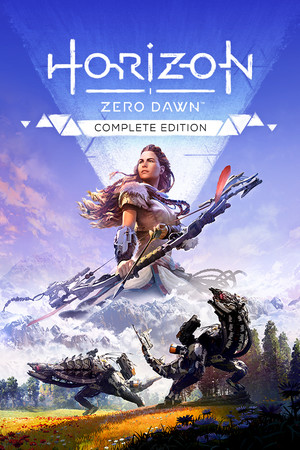
GAME · 2017 · NETHERLANDS
Horizon Zero Dawn
- Developer
- Guerrilla Games, Sony Interactive Entertainment
- Publisher
- Sony Interactive Entertainment, PlayStation PC LLC
- Platforms
- Microsoft Windows
38 archived facts 6 topics 1 source Last reviewed Nov 2026
38 Interesting Facts About Horizon Zero Dawn
Interesting Facts (5)
- #001
Dutch actress Hannah Hoekstra gave Guerilla Games the rights to use her face for the character Aloy. Thanks to this, Aloy's realistic expressions and natural appearance match the actress's facial features exactly. Hoekstra's contribution stands out as an important detail that increases the character's believability.
- #002
The main villain, HADES, is voiced by the game's writer. This interesting choice gives the character both a threatening and an intellectual depth. The writer bringing to life the enemy he himself created adds a personal touch to the game's narrative.
- #003
At a viewpoint in the game, the place where the voice mentions that her father teaches in a building is actually the Air Force Academy Chapel in Colorado Springs. This real location establishes an authentic connection to the game's post-apocalyptic world. Players become more attached to the story as they wander among the ruins of a familiar structure.
- #004
As Aloy advances through the ruins of an unknown town, players can notice the Pikes Peak Range Riders Monument; this reveals that the town is Colorado Springs. There is also a nearly completely rusted Interstate I-25 sign in the remains of a street. Other real locations in the game include the United States Air Force Academy, Red Rock Amphitheatre, Bryce Canyon National Park, Eagle Canyon, Lake Powell and Monument Valley.
- #005
In the game's optional data points, it is explained why robot technology is dominant in the Horizon universe. According to the narrative director, nanotechnology and genetic technologies were strictly regulated and restricted because of accidents such as the Naysay Doom terrorist attack and the Citarum River incident. These details are also discussed in the podcast 'Horizon GAIA Cast Episode 2 - Events of the 21st Century'.
Production Story (23)
- #006
Horizon Zero Dawn began as an internal pitch by art director Jan-Bart van Beek after Guerrilla Games asked its staff for ideas in late 2010. Game director Mathijs de Jonge saw it as the riskiest of the roughly 40 concepts put forward.
- #007
Guerrilla Games began Horizon Zero Dawn after shipping Killzone 3 in 2011. Co-founder and managing director Hermen Hulst said a big reason for the choice was the chance to leave the gritty dystopia of Killzone behind for something more beautiful and vibrant.
- #008
Horizon Zero Dawn also got the nod because Sony, Guerrilla's parent company, had no western role-playing game in its lineup at the time. The concept stood on three pillars: a lush, documentary-style natural world, robotic dinosaurs and a red-headed heroine.
- #009
Work on Horizon Zero Dawn briefly stopped around the 2010 release of Enslaved: Odyssey to the West, which also had a post-apocalyptic setting and a red-headed hero. Hulst says the team spent six months prototyping another project before deciding to pitch Horizon to Sony again, wanting to make something radically different.
- #010
To shore up its role-playing know-how, Guerrilla Games hired developers who had worked on series such as The Elder Scrolls and The Witcher.
- #011
Wanting Horizon Zero Dawn to be accessible, the team left out deep role-playing systems, gave Aloy no traditional character stats and kept the user interface simple.
- #012
Fallout 3, an RPG built around emergent gameplay and player agency, was one of Horizon Zero Dawn's inspirations; its combat was organized into the stages "prepare", "engage" and "escape".
- #013
Horizon Zero Dawn was Guerrilla's first open world game, and the studio's design philosophy moved from the "rollercoaster rides" of Killzone to building whole "theme parks".
- #014
Machines were at first the only enemies in Horizon Zero Dawn; human foes were added for variety in combat and to show off different tribal cultures. The team also shrank the world once they realized they couldn't fill the whole map, and a cooperative multiplayer plan was scrapped.
- #015
Early work on Horizon Zero Dawn focused on how the various human tribes would deal with the world's machines, which in turn shaped their clothing, architecture and tools.
- #016
Guerrilla worked with anthropologists and studied how tribal cultures form while building out the world of Horizon Zero Dawn.
- #017
The Horizon Zero Dawn team drew mainly on two books by Jared Diamond: Guns, Germs, and Steel (1997) and Collapse: How Societies Choose to Fail or Succeed (2005).
- #018
Guerrilla once considered setting Horizon Zero Dawn in Europe, and in its home country of the Netherlands, but chose North America for its varied landscapes and recognizable landmarks.
- #019
For the look of the machines, the Horizon Zero Dawn team consulted the robotics department of the Delft University of Technology and settled on an exoskeleton design, which gave players strategic soft spots to aim their arrows at.
- #020
Machine design on Horizon Zero Dawn started with rough sketches of basic skeletons and in-game functions, and engineers were told to design the machines as though they could really be built.
- #021
Horizon Zero Dawn's artists sculpted high-detail machine parts such as hydraulic joints and armour plates in ZBrush; the team also took courses in animal and creature animation and consulted Dr. Stuart Sumida on anatomy.
- #022
The machines in Horizon Zero Dawn first followed Killzone's militaristic, industrial look, but the developers found that made players feel like soldiers rather than hunters, so those ideas went to the game's ancient military machines instead.
- #023
The T. rex-like Thunderjaw was the first machine the Horizon Zero Dawn team created and the project's proof of concept; it took 18 months to go from first sketch to working in the game.
- #024
Horizon Zero Dawn used "World Data Maps" to tell its shaders and placement systems about conditions such as humidity and temperature, which is how fireflies only show up near bushes at night. The game also mixed dynamic and pre-calculated lighting, with "irradiance volumes" delivering high-quality indirect light that could follow the day-night cycle.
- #025
Horizon Zero Dawn was conceived as science fiction whose lore stayed firmly rooted in plausible science and realistic extrapolation, with early development drawing on visions of the future such as Princess Mononoke (1997) and Nausicaä of the Valley of the Wind (1984).
- #026
Aloy was at the heart of Horizon Zero Dawn throughout development. The team first made her younger and more expressive, then settled on a more mature version they felt opened up more story possibilities.
- #027
Early on, Horizon Zero Dawn's writers looked to heroines like Ellen Ripley in Alien, Sarah Connor in Terminator and San in Princess Mononoke.
- #028
Aloy was written to be compassionate because of how she was raised, and every Horizon Zero Dawn side quest started as a story idea answering why she in particular would want to help. Gonzalez called the main plot an "epic tragedy", but the side quests let the team tell lighter, sarcastic or comic stories, and NPC dialogue quietly adjusts to the order in which players finish main and side quests so the story stays consistent.
Behind the Scenes (5)
- #029
Stealth in Horizon Zero Dawn was designed to feel like hunting: enemies are forgiving the first time they notice Aloy, but once she's fully spotted it's hard to hide again, which pushes players to fight rather than run off and reset the enemy's alert.
- #030
Because Horizon Zero Dawn takes place in the ruins of an advanced civilisation, the team sculpted every ancient structure by hand so it looks broken and lopsided.
- #031
Guerrilla built machine encounters in Horizon Zero Dawn to grow with the player's knowledge: the first time you meet a new machine type its weak points are exposed so you learn how to fight it, while later armoured versions make you strip away their plating before you can exploit those weaknesses.
- #032
Machines in Horizon Zero Dawn react according to their class: Acquisition machines may run away, while Combat and Recon machines team up to hunt the player.
- #033
So the player isn't overwhelmed, Horizon Zero Dawn's AI picks which machine attacks next based on how interesting and varied the fight will feel; while one attacks, the rest of the group circles and waits its turn, leaving openings for the player to strike back or get away.
Characters & Cast (1)
- #034
Aloy was made an outcast of the Nora tribe so players could share her outsider's view as she steps into a strange new world; the team wanted her to start as the "least important person in the world" and end up the most important.
Easter Eggs & References (1)
- #035
Machine development on Horizon Zero Dawn started with early technical prototypes, one of them a machine called the "Predator" that later turned up as a holographic Easter egg in Killzone Shadow Fall.
Deeper Meaning (3)
- #036
Horizon Zero Dawn's developers created distinct cultures to represent different worldviews, such as the matriarchal Nora and the patriarchal, technology-loving Carja.
- #037
The ruins in Horizon Zero Dawn were made to look fragile, to stir sympathy for the people who once lived comfortably there.
- #038
The developers say "Horizon" in the title Horizon Zero Dawn stands both for a boundless new world and for the passing of time, marked by the rising and setting of the Sun.
Related pages
- Horizon Forbidden West — Horizon Zero Dawn comes up in the facts on that page
Sources & editorial notes
Sources for the entries on this page
- Wikipedia Horizon Zero Dawn — Wikipedia
Information from external sources is independently selected, consolidated and edited by Arka Evren. Sources are listed for verification and further reading. Encyclopedia text is used under its licence (CC BY-SA). How we work