
GAME · 2005 · JAPAN
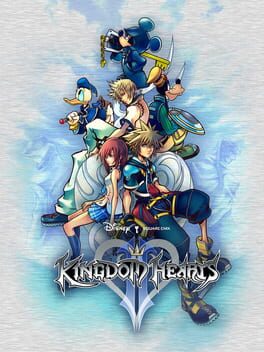
Kingdom Hearts II
- Developer
- Square Enix
- Publisher
- Square Enix
- Platforms
- PlayStation 3
59 archived facts 5 topics 2 sources Last reviewed Nov 2026
59 Interesting Facts About Kingdom Hearts II
Interesting Facts (41)
- #001
- #002
- #003
- #004
- #005
Woody and Buzz Lightyear from Toy Story (1995) were initially planned to be new Summons in the game's Final Mix version, but they were cut because the Disney/Pixar relationship was still doubtful at the time of the Final Mix version, which appeared about a year after Disney acquired Pixar. Tetsuya Nomura also did not want to include largely new Disney content released only for Japanese fans. Their models are still present in the game code of the Final Mix release, even if only as texture models. They were later included in Kingdom Hearts III (2019).
- #006
- #007
- #008
- #009
James Earl Jones and Jonathan Taylor Thomas's performances as Mufasa and Young Simba were entirely made up of archived audio.
- #010
Tetsuya Nomura included the worlds of The Lion King (1994) and Tron (1982) because they are his favorite Disney films. The Lion King (1994) world was originally set to appear in Kingdom Hearts (2002), but it was cut because that game's engine could not properly control a four-legged character, which Sora was meant to be when visiting the world. The engine was completely redesigned for this game, allowing Square to meet the programming requirements needed to create a playable four-legged character. Tron (1982) was included because Nomura was inspired by Tron 2.0 (2003), which was being worked on and released while this game was in development, and he saw someone working on it.
- #011
- #012
- #013
Disney Castle and Olympus Coliseum are the only worlds in this game that exist exactly as they appeared in Kingdom Hearts (2002). Although Disney Castle was not a playable world in the first game, its corridors and rooms look completely identical. The Hades section of Olympus Coliseum was not in the first game, but apart from that the Coliseum lobby, trophy room and training areas are entirely the same. Agrabah, Halloween Town, Hollow Bastion and Atlantica also appeared in both games, but their appearances in the first and second games differ greatly.
- #014
- #015
- #016
If the letter 'X' is removed from the name Xemnas and the letters are rearranged, the name 'Ansem' emerges. Applying the same process to Roxas and Xehanort yields 'Sora' and 'no heart', respectively. This holds true for all members of Organization XIII; their names are formed by scrambling the letters of their real names and adding an 'X' at the beginning. However, the game only gives the original names of the six apprentices of Ansem the Wise (Xemnas, Xigbar/Braig, Xaldin/Dilan, Vexen/Even, Lexaeus/Aeleus and Zexion/Ienzo).
- #017
The English version of the game differs from the Japanese original in terms of gameplay and some scenes, going beyond typical translation and localization. The green blood of the Hydra boss in Olympus Coliseum was changed to black and purple smoke in the English version, although the green blood was retained in an earlier cutscene. In the Xigbar boss fight in The World That Never Was, the crosshair image was altered; the cross was replaced with three circles and the edge darkening reminiscent of a telescopic sight was removed. An attack animation was also edited; in the Japanese version Xigbar combines his two pistols to form a sniper rifle, while in the English version he spins his weapons and fires with a single pistol. The most content edits were made in Port Royal. Some violent elements were removed, such as the scene where Barbossa's sword emerges from Jack Sparrow's chest; Will Turner aiming a gun at his head during his suicide threat was also cut. The undead pirates who serve as enemies do not catch fire when affected by Fire magic, unlike in the Japanese version. In addition, the pirates' rifles were changed to resemble crossbows, yet the gunshot sound is still heard and Sora's reaction command remains 'Return Fire'. In the Japanese version Barbossa talks about lust and women, whereas in English this was translated simply as 'pleasant company'; however, this change is faithful to the line in the original film.
- #018
- #019
Johnny Depp, Keira Knightley, Orlando Bloom and Geoffrey Rush could not reprise their roles for the scenes in the world based on Pirates of the Caribbean: The Curse of the Black Pearl (2003), because they were busy filming Pirates of the Caribbean: Dead Man's Chest (2006) and Pirates of the Caribbean: At World's End (2007) at the time.
- #020
- #021
On the map called 'Proof of Existence', there are twelve glowing tiles on the ground representing the weapons of the Organization XIII members, excluding Xemnas. Blue indicates the living, while red indicates the dead. Each member is represented by their weapon and title, but this does not apply to Ienzo (Zexion). His tile is placed deliberately destroyed to conceal what his weapon is, because his weapon was not revealed until the Japanese release of Kingdom Hearts II: Final Mix+ (2007) and Kingdom Hearts Re: Chain of Memories (2007).
- #022
- #023
When the main three characters are called, they are always named in the same order: Sora, Donald and Goofy. The only moment this order is broken is when you meet Belle at Beast's Castle, where Belle addresses them as 'Donald, Sora and Goofy'. Otherwise it is always 'Sora, Donald and Goofy'.
- #024
- #025
- #026
A world based on The Hunchback of Notre Dame (1996) was planned to appear in the game, but it was cut due to time constraints and possible similarities to Beast's Castle (Beauty and the Beast (1991)) and other worlds. This world was later used in Kingdom Hearts 3D: Dream Drop Distance (2012).
- #027
- #028
In the Pride Lands chapter, Nala and the other lionesses mention that Simba and Nala are expecting a cub. Although this game was released after the second film, the story takes place after the first film, and the cub they are expecting is male. After the first film, Disney licensed a book series called "Six New Adventures," which featured their son Kopa. At the end of the first film, the new cub is shown to be male. At the beginning of the second film, their cub is shown to be female. The cub they are expecting in the game is Kopa, not Kiara.
- #029
- #030
The four crystals in the Trophy in Twilight Town represent the four basic spells found in most RPGs: Blue = Blizzard, Red = Fire, Yellow = Thunder and Green = Cure. Interestingly, these also correspond to the four main and Huge Materia in Final Fantasy VII (Support, Summon, Command and Magic, respectively). There is also one more spell level not present in Kingdom Hearts: Aja.
- #031
The costumes of the Final Fantasy VII characters Cloud, Yuffie and Aerith have changed from their appearance in Kingdom Hearts (2002). In the first game, their costumes reflected their outfits in Final Fantasy VII, while in this game they reflect their outfits in the film Final Fantasy VII: Advent Children (2005).
- #032
Yuna, Rikku and Paine are presented as fairy-like beings. This was a preference of Tetsuya Nomura, who wanted to show Final Fantasy characters in non-human forms. His reason for showing them in this form was that he thought it would be the most interesting, and that if they were normal-sized, they would crowd the camera angle when all together.
- #033
- #034
- #035
- #036
Note that Land of Dragons, Beast's Castle and Pride Lands are next to the worlds where Maleficent's allies are found. This implies that they were responsible for their destruction through the Heartless in the previous game. Olympus Coliseum was not previously close to Hollow Bastion due to the distance between worlds. However, the Gummi Ship was upgraded with Cid's navigation gummi, allowing a warp portal to open between Traverse Town and Olympus Coliseum; that is, the Gates rearranged the old portal. Since Traverse Town fell into the Realm of Sleep, only Olympus Coliseum became visitable.
- #037
- #038
The game's secret ending was designed as a link to the events of Kingdom Hearts: Birth by Sleep (2010). Additionally, after the release of this game's Final Mix version, Kingdom Hearts II: Final Mix+ (2007), a new secret boss named Lingering Will was added as a link as well (just as Unknown in Kingdom Hearts Final Mix was created as a link to this game).
- #039
- #040
- #041
Production Story (4)
Behind the Scenes (6)
Characters & Cast (4)
- #052
- #053
- #054
Several characters received new English voice actors in Kingdom Hearts II: Ansem, Aerith Gainsborough, Squall Leonhart, Sephiroth, and Hercules, who had been voiced in the first game by Billy Zane, Mandy Moore, David Boreanaz, Lance Bass, and Sean Astin respectively, were voiced by Richard Epcar, Mena Suvari, Doug Erholtz, George Newbern, and Tate Donovan, Hercules' original voice actor.
- #055
Except for Yuffie, who was voiced by Christy Carlson Romano in the film but is voiced by Mae Whitman in this game, all the Final Fantasy VII character voices are the same actors and actresses as in the film Final Fantasy VII: Advent Children (2005). Similarly, Yuna, Rikku and Paine are voiced by the same actors as in their own game(s).
Deeper Meaning (4)
- #056
Each world has a unique symbol that appears on screen during the scene transition as Sora moves from one area to another. The symbols are: Twilight Town is a keyhole, Disney Castle is Mickey's head, Hollow Bastion/Radiant Garden is a crown, Land of Dragons is a Chinese emblem, Beast's Castle is a rose, Olympus Coliseum is a lightning bolt, Atlantica is a large musical note with two small notes, Port Royal is a skull and crossbones, Agrabah is a magic lamp, Halloween Town is a jack-o'-lantern, Pride Rock is Rafiki's drawing of young Simba, the Hundred Acre Wood is a honey pot, Timeless River is a simple circle, Space Paranoids is Tron's disc, and finally the World That Never Was is the Heartless symbol (a heart with an X).
- #057
- #058
Beast is the only Disney character, aside from Donald and Goofy, who can assist you in the fight against Xaldin, a member of Organization XIII. All other bosses are fought against Organization members either alone or together with Donald and Goofy (for the Absent Silhouette battles against Organization XIII members from Chain of Memories in Kingdom Hearts II: Final Mix+ (2007), although each optional battle takes place in a world with a temporarily forced party member leading up to it (except Lexaeus), the game only allows Sora to be helped by Donald and Goofy). Beyond these, the only other character who assists you is Riku in the final battle against Xemnas. However, Riku is not a Disney character.
- #059
Sources & editorial notes
Sources for the entries on this page
- Wikipedia Kingdom Hearts II — Wikipedia
Information from external sources is independently selected, consolidated and edited by Arka Evren. Sources are listed for verification and further reading. Encyclopedia text is used under its licence (CC BY-SA). How we work