GAME · 1995
Chrono Trigger
- Developer
- Square
- Publisher
- Square, Square Enix
- Platforms
- Super Nintendo Entertainment System, Nintendo DS, Microsoft Windows, Wii, PlayStation Portable
- Original title
- Kurono toriga
39 archived facts 4 topics 2 sources Last reviewed Sep 2026
All facts (39)
- #001
Magus's three generals, Ozzie, Slash and Flea, took their names from famous musicians: Ozzy Osbourne, former singer of Black Sabbath; Slash, guitarist of Guns n' Roses; and Flea, bassist of Red Hot Chili Peppers.
- #002
The game's Japanese dialogue explained the Planet's involvement in the whole story much better: the Reptites worshipped the Planet, the "Entity" the characters mention was the Planet, and the final chapter was not called "The Final Battle" but "At The Edge of our Planet's Dream". This is why Chrono Cross, the game's sequel, is full of Planet references that make sense with the original Japanese dialogue.
- #003
The character Ayla is a reference to Jean M. Auel's book series about a woman named Ayla in prehistoric times.
- #004
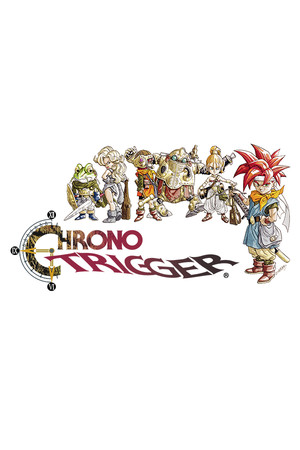
The game's character design and illustrations were done by Akira Toriyama, known for the Dragon Ball series.
- #005
There are more than a dozen possible endings.
- #006
The game has a special Programmer's Room where many developers left messages for players.
- #007
In the PlayStation re-release, composer Yasunori Mitsuda was not listed in the music credits, which instead credited supervisor Nobuo Uematsu. When the Nintendo DS version was released, Mitsuda was once again credited as Uematsu.
- #008
Although it was not the first game to include such a mode, Chrono Trigger coined the term New Game Plus.
- #009
Chrono Trigger: Crimson Echoes, an unofficial fan game produced by Kajar Laboratories, is a Chrono Trigger ROM hack not officially supported or endorsed by Square Enix. The game takes place between the events of Chrono Trigger and its sequel Chrono Cross, set five years after the events of Chrono Trigger. The Crimson Echoes project was started in 2004 by ZeaLitY and was scheduled for release on May 31, 2009. The game was completed after 98 percent of it was finished. Square Enix threatened Kajar Laboratories with a copyright lawsuit and sent a cease and desist letter, leading to the game's cancellation. Despite this, there are unofficial ways to play the cancelled game online or by hacking a USB drive.
- #010
When the original SNES version of the game went out of print but before a reprint was made, the value of the SNES version rose rapidly. It was not unusual to see copies priced above 100 dollars on sites such as eBay.
- #011
Contains a major spoiler — show
The three gurus, Balthazar, Melchior and Gaspar, take their names from the magi of the same names in the Bible.
- #012
It was Hironobu Sakaguchi who suggested that Yasunori Mitsuda compose for the project. Mitsuda was working at the company as a sound engineer and programmer at the time and was considering leaving over his dissatisfaction with his salary and his desire to write music.
- #013
Rumors of a possible third game in the series began when Square Enix filed a trademark for "Chrono Break" in 2001. Over the years, various members of the original Chrono Trigger project came forward in interviews, citing other projects or difficulties that prevented the team members from reuniting for a third project. In a 2014 interview, Hironobu Sakaguchi said he hoped to move forward with a third Chrono project, but differences between himself and Square's upper management prevented it from happening. In December 2017, Takashi Tokita stated that he had reworked various ideas for the Chrono Break project into Final Fantasy Dimensions II (2017).
- #014
Many of the game's music tracks have been sampled by other pop artists; a notable example is Schala's Theme, which was sampled by Wiz Khalifa in "Never Been."
- #015
The game was initially planned for the upcoming Nintendo Disk Drive and was to be connected to the Secret of Mana series. However, the cancellation of the add-on forced the team to scale down the project to fit the cartridge-based Super Nintendo (or Super Famicom as it is known in Japan), and as a result the project team started from scratch to create a new concept.
- #016
Masato Kato was initially opposed to the idea of time travel in the game, fearing it would lead to boring and repetitive gameplay.
- #017
Early feedback from the game's testers complained that the game was too difficult.
- #018
Yasunori Mitsuda lost several music tracks that were in production due to a hard disk crash.
- #019
It is famously noted that Marle uses fire magic instead of ice on the box art. Akira Toriyama based this on an early prototype screenshot of the game in which Marle used fire magic.
- #020
The game uses a variation of the Active Time Battle system that Square first used in Final Fantasy IV.
- #021
When the Super NES Classic Edition was released, the game was left off the mini console despite its popularity. However, there are hackers who modify the console to include the game.
- #022
This game is famous for its button-mashing minigames; one of the optional ones is the soda-drinking contest at the Millennial Fair, and it is a game that must be played along with the soup-drinking contest at Ayla's prehistoric dance party. In the Super Nintendo version, if the player had a turbo controller, winning the soda-drinking and soup-drinking contest game became much easier. However, on the Nintendo DS and the Wii Virtual Console version, the player has no turbo button option, and so winning is much harder, especially in the unavoidable soup-drinking contest with Ayla, where the player must mash the A button until they finally win and continue the game.
- #023
Kazuhiko Torishima credited the concept of Chrono Trigger to a fusion of "Dragon Quest plus Final Fantasy" and arranged for Enix to lend Yuji Horii to Squaresoft for its development.
- #024
Development of Chrono Trigger began in early 1993 with 50–60 developers convened by Square, including Masato Kato, whom Square designated story planner.
- #025
Chrono Trigger was initially intended for licensing under the Mana franchise with the working title Maru Island, and was planned for Nintendo's Super Famicom Disk Drive before Nintendo canceled the project; Square then reoriented the game for a Super Famicom cartridge and rebranded it as Chrono Trigger.
- #026
Chrono Trigger was produced by Aoki, with Akihiko Matsui, Yoshinori Kitase and Takashi Tokita credited as directors.
- #027
According to Tanaka, the name Chrono Trigger was first used as a codename for the project that became Secret of Mana before being adopted for a new project.
- #028
Masato Kato edited and completed the Chrono Trigger outline, writing the majority of the game's story including all events of the 12,000 BC era. He took pains to avoid what he described as a long string of errands.
- #029
Contains a major spoiler — show
Masato Kato and Yuji Horii initially proposed Crono's death in Chrono Trigger, intending that he stay dead, but Square deemed the scenario too depressing and asked that Crono be brought back to life later in the story. Kato also devised the game's system of multiple endings because he could not branch the story out to different paths.
- #030
Chrono Trigger's team designed the End of Time as a place to give players hints, fearing they could get stuck and need a walkthrough.
- #031
Chrono Trigger testers had complained the game was too difficult, and Horii said the developers judged the difficulty from their own experience, adding that many players failed to solve puzzles the team expected them to get easily.
- #032
Chrono Trigger's soundtrack was composed mainly by Yasunori Mitsuda, with Nobuo Uematsu contributing ten pieces and Noriko Matsueda writing one track. Mitsuda, then a sound programmer, had threatened to leave Square over his pay before Hironobu Sakaguchi suggested he score the game.
- #033
Yasunori Mitsuda wrote Chrono Trigger's music with the aim of creating a sound that belonged to no established genre, describing it as music of an imaginary world. He discussed the setting and scenes with director Masato Kato, a close friend, before composing each piece.
- #034
Yasunori Mitsuda spent several nights sleeping in his studio while working on Chrono Trigger and credited dreams with inspiring some pieces, including the ending theme "To Far Away Times." He later said the tune was dedicated to a person with whom he had wanted to share a generation.
- #035
A hard drive crash cost Yasunori Mitsuda roughly forty unfinished Chrono Trigger tracks, and after he developed stomach ulcers Nobuo Uematsu joined to compose ten pieces and complete the score. Mitsuda watched the ending with the staff before release and cried at the finished scene.
- #036
Chrono Trigger's soundtrack was released as a three-disc commercial pressing in 1995, a scale of tracks and sound effects that was unprecedented at the time of the game's release.
- #037
Music from Chrono Trigger was performed live by the Tokyo Symphony Orchestra in 1996 at the Orchestral Game Concert in Tokyo, Japan.
- #038
A suite of Chrono Trigger music is part of the symphonic world-tour Play! A Video Game Symphony, and Mitsuda attended the concert's world premiere in Chicago on May 27, 2006. The suite comprised "Reminiscence", "Chrono Trigger", "Chrono Cross~Time's Scar", "Frog's Theme", and "To Far Away Times".
- #039
A medley of Chrono Trigger music formed one of the four suites of the "Symphonic Fantasies" concerts in September 2009, produced by the creators of the Symphonic Game Music Concert series and conducted by Arnie Roth. Square Enix also re-released the game's soundtrack with a video interview with Mitsuda in July 2009.
Sources & editorial notes
Sources for the entries on this page
- IMDb IMDb
- Wikipedia Chrono Trigger — Wikipedia
Information from external sources is independently selected, consolidated and edited by Arka Evren. Sources are listed for verification and further reading. Encyclopedia text is used under its licence (CC BY-SA). How we work