GAME · 2009
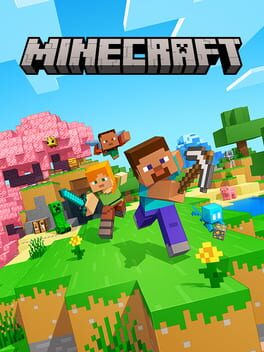
Minecraft
- Developer
- Mojang Studios, Microsoft
- Publisher
- Xbox Game Studios, Mojang Studios, Sony Interactive Entertainment
- Platforms
- Microsoft Windows, PlayStation 3, macOS, PlayStation Vita, Windows Phone
36 archived facts 4 topics 1 source Last reviewed Sep 2026
All facts (36)
- #001
At King, Markus "Notch" Persson mainly built browser games and picked up several programming languages.
- #002
In his spare time, Markus "Notch" Persson prototyped his own games, frequently taking inspiration from other titles.
- #003
Markus "Notch" Persson was an active participant on the TIGSource forums for independent developers.
- #004
Persson explored a first-person view for RubyDung comparable to Dungeon Keeper but abandoned it because he considered the graphics too pixelated at the time.
- #005
Infiniminer, a block-based open-ended mining game first released in April 2009, shaped the direction of RubyDung and influenced Minecraft's visual style, including the return of first-person mode, the blocky look and block-building fundamentals; unlike Infiniminer, Persson wanted Minecraft to include RPG elements.
- #006
On 2 December 2011, Persson stepped down from development of Minecraft and handed the project's lead to Jens "Jeb" Bergensten.
- #007
On 15 September 2014, Microsoft announced a $2.5 billion acquisition of Mojang that included the Minecraft intellectual property.
- #008
According to Persson, he suggested the Microsoft deal on Twitter by asking a corporation to buy his stake in Minecraft after criticism over his enforcement of the game's end-user license agreement, which had been in place for three years; Mojang CEO Carl Manneh then received a call from a Microsoft executive asking whether Persson was serious, and Mojang was also approached by Activision Blizzard and Electronic Arts.
- #009
A Bedrock Edition-exclusive beta version of Minecraft called Minecraft RTX was released by Nvidia on 16 April 2020, adding physically-based rendering, real-time path tracing and DLSS for RTX-enabled GPUs. The public release followed on 8 December 2020.
- #010
In Minecraft RTX, path tracing can only be turned on in supported worlds, which are available free through the in-game Minecraft Marketplace, a texture pack from Nvidia's website, or compatible third-party texture packs. It cannot be enabled by default with any texture pack on any world.
- #011
Minecraft RTX initially suffered from numerous bugs, display errors and instability issues.
- #012
A new optional visual mode called Vibrant Visuals, described as a graphical overhaul similar to Minecraft RTX, was announced on 22 March 2025. It promises modern rendering features such as dynamic shadows, screen space reflections, volumetric fog and bloom without requiring RTX-capable hardware, and was released as part of the Chase the Skies update on 17 June 2025 for Bedrock Edition, with a Java Edition release planned for a later date.
- #013
Minecraft began in May 2009, when Persson developed the first known versions of the game under the name Cave Game, with a world of grass and cobblestone blocks that could be placed and removed.
- #014
After being published on the TIGSource forums, the game was renamed Minecraft, and Persson kept updating it in response to community feedback during a phase later called Classic. Multiplayer and a survival mode with hostile monsters were added in that phase, along with ambient music by C418.
- #015
Minecraft moved into the Indev phase on 23 December 2009, taking features from a Classic branch called Survival Test and adding paintings by artist Kristoffer Zetterstrand. On 27 February 2010, Persson started a new branch, Infdev, to experiment with infinite worlds.
- #016
Minecraft entered the Alpha phase on 30 June 2010, with frequent and spontaneous updates that introduced redstone, a material able to transmit signals that change the state of various blocks. Alpha v1.2.0, released on 30 October 2010, added biomes and the Nether.
- #017
The Adventure Update, released as Beta 1.8 on 14 September 2011, reworked world generation with new biomes, structures and terrain features such as ravines, and overhauled player movement and combat by adding sprinting, critical hits and a hunger bar that replaced direct food healing. It also added creative mode.
- #018
Minecraft's first full release, version 1.0.0, arrived on 18 November 2011 and added several changes, including the End and the Ender Dragon.
- #019
Minecraft version 1.9, the Combat Update, was released on 29 February 2016 and added a weapon cooldown system, dual wielding, a shield item, and an expanded End dimension with end cities and equippable elytra for aerial gliding.
- #020
Minecraft's Update Aquatic, version 1.13, arrived on 18 July 2018 and reworked the oceans with new biomes, coral reefs, shipwrecks, fish as living mobs, and underwater creatures such as the Drowned.
- #021
Minecraft's Caves & Cliffs update was released in two parts in June and November 2021; Part I added new mobs and materials such as copper blocks that oxidize over time, while Part II raised the world height from 256 to 384 blocks and reworked terrain generation with expanded caves and taller mountains.
- #022
Minecraft version 1.20, Trails & Tales, was released on 7 June 2023 and introduced archaeology, letting players excavate items from the ground with a brush. In September 2023, Mojang announced a shift from major annual updates to more frequently released game drops, which later added trial chamber dungeons in version 1.21, bundle inventory items in version 1.21.2, and the pale garden biome with a hostile mob called the Creaking in version 1.21.4.
- #023
Minecraft's console debut came with the Xbox 360 edition, developed by 4J Studios and released on 9 May 2012. Announced as part of the Xbox Live Arcade NEXT promotion, it added a redesigned crafting system, a new control interface, in-game tutorials, split-screen multiplayer and online play through Xbox Live.
- #024
Unlike the PC version of Minecraft, the Xbox 360 edition's worlds were finite and bordered by invisible walls. That version moved from an outdated PC port to a Java-equivalent edition before being discontinued.
- #025
Minecraft reached PlayStation platforms through PlayStation 3 and PlayStation 4 editions released on 17 December 2013 and 4 September 2014, respectively, both developed by 4J Studios. Originally planned as a PS4 launch title, the game was delayed before its eventual release, and a PlayStation Vita version followed in October 2014.
- #026
After being discontinued, these Minecraft versions became known as the Legacy Console Editions.
- #027
The source code of Minecraft's Legacy Console Editions was leaked on 4chan in 2026, exposing unused structures and world types.
- #028
Minecraft: Pocket Edition launched in August 2011 as an early alpha for the Xperia Play through the Android Market, and it reached other Android devices on 8 October 2011.
- #029
An iOS version of Minecraft: Pocket Edition arrived on 17 November 2011, and a Windows Phone port became available shortly after Microsoft acquired Mojang.
- #030
Minecraft: Pocket Edition began with a focus on creative building and basic survival, and it lacked many features found in the PC version of Minecraft.
- #031
Bergensten stated on Twitter that Minecraft: Pocket Edition was written in C++ rather than Java, because iOS does not support Java.
- #032
In July 2015, a port of Minecraft's Pocket Edition was released for Windows 10 as the Windows 10 Edition, with full crossplay to other Pocket versions.
- #033
Microsoft announced in January 2017 that it would no longer maintain the Windows Phone versions of Minecraft's Pocket Edition.
- #034
Minecraft was announced for the fourth-generation Apple TV on 27 October 2016 and released as Minecraft: Apple TV Edition on 19 December 2016.
- #035
Mojang announced on 24 September 2018 that updates for the Apple TV version of Minecraft would end because of its small player base.
- #036
Minecraft: Fire TV Edition was released for Amazon Fire TV devices on 19 December 2016, designed for television play with a controller or remote.
Sources & editorial notes
Sources for the entries on this page
- Wikipedia Minecraft — Wikipedia
Information from external sources is independently selected, consolidated and edited by Arka Evren. Sources are listed for verification and further reading. Encyclopedia text is used under its licence (CC BY-SA). How we work