GAME · 2010
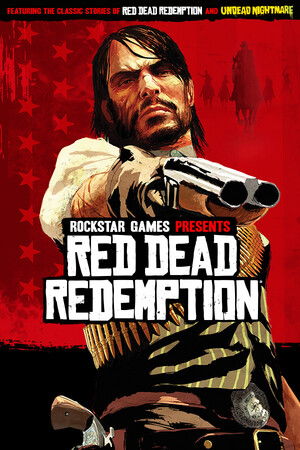
Red Dead Redemption
- Platforms
- PlayStation 3, Microsoft Windows, Xbox Series X and Series S
30 archived facts 5 topics 1 source Last reviewed Sep 2026
All facts (30)
- #001
Several scholars observed that the word "redemption" in Red Dead Redemption's title is ironic, since John cannot achieve such a feat; Reid McCarter of Bullet Points Monthly called the term "bitterly ironic" because neither the characters nor the country can be reinvented.
- #002
Contains a major spoiler — show
Scholars disagreed over whether Red Dead Redemption's ending delivers redemption: Margini wrote that the final chapter lets the player feel the promised redemption is achieved before the story takes it away, while Kotaku's Heather Alexandra believed John earned his redemption by sacrificing himself for his family.
- #003
Red Dead Redemption examines the cycle of violence, shown most clearly through Jack repeating his father's failures by becoming an outlaw; NPR's Jason Sheehan described the game as a tale of violence used to solve violence producing only more violence.
- #004
Red Dead Redemption's violence drew scholarly commentary: Margini found it justifiable because "violence means something", Timothy J. Welsh called it "just a game" while warning of the nihilism it could spread if generalized, and Christopher Bartel questioned the moral justification of virtual murder and noted that even hard-core gamers might balk at virtual sadism.
- #005
Red Dead Redemption comments on freedom and control, showing how societal change can cause people to lose control and compromise their morality.
- #006
According to Nick Robinson, John's horse in Red Dead Redemption reflected his freedom and comfortability, while traveling with government agents by car represented him as literally and figuratively trapped by technology.
- #007
Sara Humphreys identified a connection between MacFarlane's Ranch in Red Dead Redemption and the class conflict of Johnson County, Wyoming in the late nineteenth century, as part of the game's demonstration of economic inequality.
- #008
Elston cited the Native American character Nastas in Red Dead Redemption as an instance of Gerald Vizenor's concept of "manifest manners", in which a falsified indigenous experience is presented as truth.
- #009
Contains a major spoiler — show
Dr. Esther Wright argued that Red Dead Redemption included Native American characters only to justify and complement the white characters' otherness in opposition to government and civilization, calling it a disingenuous oversimplification and misuse of the complexities of Native American genocide. She said that although John is not overtly racist, his part in an attack on an Indian reservation implicates him in a micro-scale recreation of racist, genocidal violence.
- #010
Contains a major spoiler — show
Margini suggested Red Dead Redemption's Native American representation could be dark satire or a crafty way of excusing genocide at Marston's hand, aligned with a wider erasure in other Western media, while Triana found Native Americans end up victims of the game's evil social forces because John prioritizes reuniting with his family.
- #011
Red Dead Redemption's early development began in 2005, with full development starting in 2006 after a core development team was formed.
- #012
Rockstar San Diego's 180-person team worked with Rockstar's Leeds, New England, North and Toronto studios, bringing the total team to over 1,000 people.
- #013
Analyst estimates put the combined development and marketing budget for Red Dead Redemption between US$80 million and US$100 million, which would rank it among the most expensive video games to develop.
- #014
Development of Red Dead Redemption drew controversy over accusations of unethical working practices at Rockstar San Diego, including twelve-hour workdays, six-day weeks and salary increases below the industry average.
- #015
Red Dead Redemption's script ran to 1,500 pages and took two years to write.
- #016
The development team drew on Western films including The Wild Bunch, High Plains Drifter, Unforgiven and The Proposition, and chose a 1911 setting because they felt most Western fiction is set between 1840 and 1880, which let them examine the shift from the old West into the modern world.
- #017
For Red Dead Redemption, the team aimed for violence that felt raw and unpleasant, pursuing realism without exaggeration.
- #018
Red Dead Redemption's open world was built to represent iconic features of the American frontier; the team took field trips to Washington, D.C. to visit the Library of Congress and the National Archives Building, gathered many photographs, and studied classic Western films, television shows and novels, regarding the open world's creation as one of the most technically demanding parts of production because it required filling the world with enough content to interest players.
- #019
Red Dead Redemption runs on Rockstar's proprietary Rockstar Advanced Game Engine (RAGE), which handles animation and rendering, alongside the Euphoria and Bullet engines for additional animation and environment rendering.
- #020
Overhauling RAGE's potential processing power let Red Dead Redemption achieve a high level of detail, including realistic animations and detailed textures.
- #021
The processing power of the PlayStation 3 and Xbox 360, as experienced through development kits, motivated the Red Dead Redemption team to begin development and to build a game capable of fully rendering the countryside, which had been difficult on earlier hardware.
- #022
Red Dead Redemption was conceived to scale up the core mechanics of Red Dead Revolver to the standard of other Rockstar titles, keeping key elements such as Dead Eye and dueling while otherwise overhauling the experience; creating realistic horse movement proved a challenge, leading the team to engage a stunt horse to simulate movement for the designers.
- #023
Red Dead Redemption contains roughly 450 characters, many of them created organically to reflect the historical period.
- #024
Rockstar researchers produced a style guide drawn from genuine sayings of the era to support the game's extensive character dialogue.
- #025
Rod Edge was hired by Rockstar as full-time director for actors' performances, which were recorded with motion capture in Santa Monica, California, while additional dialogue and sound effects were captured in a studio.
- #026
Rob Wiethoff was cast as John Marston following an audition process; the character was written as a nuanced "family man" rather than a clear hero or villain.
- #027
Red Dead Redemption was among Rockstar's first games to feature an original score. Music supervisor Ivan Pavlovich said the game's large scale was one of the biggest difficulties in producing the score, and that licensed music alone, as in earlier Rockstar games, would not have achieved an effective gaming experience.
- #028
In 2008, Rockstar brought in musicians Bill Elm and Woody Jackson, who together composed roughly 200 tracks for Red Dead Redemption across 15 months. The original score and its subsequent album were recorded and mixed at Jackson's Electro-Vox Recording Studios in Los Angeles and mastered at Capitol Studios.
- #029
While researching music for Red Dead Redemption, Woody Jackson found no "Western sound" existed in 1911 and felt that 1960s Western film soundtracks, such as Ennio Morricone's work on the Dollars Trilogy, better represented Western music. Rockstar also consulted players of traditional Western instruments, including harmonica player Tommy Morgan.
- #030
Red Dead Redemption includes vocal performances by Ashtar Command, José González, Jamie Lidell and William Elliott Whitmore.
Sources & editorial notes
Sources for the entries on this page
- Wikipedia Red Dead Redemption — Wikipedia
Information from external sources is independently selected, consolidated and edited by Arka Evren. Sources are listed for verification and further reading. Encyclopedia text is used under its licence (CC BY-SA). How we work