
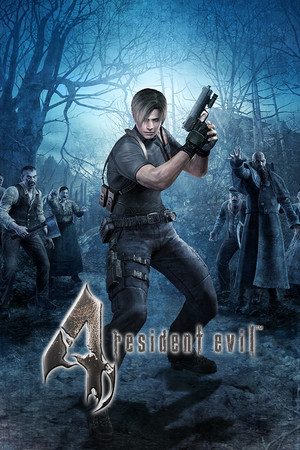
GAME · 2005 · JAPAN
Resident Evil 4
- Developer
- Capcom
- Publisher
- Capcom
- Platforms
- Wii, PlayStation 3, Microsoft Windows, PlayStation Portable, Nintendo GameCube
- Original title
- Biohazard 4
47 archived facts 6 topics 2 sources Last reviewed Nov 2026

47 Interesting Facts About Resident Evil 4
Interesting Facts (29)
- #001
The story is set in Spain, and the Spanish spoken by the villagers is Castilian, which has a pronunciation distinct from the standard form of Spanish known as Español that is widely spoken by many Latin Americans. The currency used throughout the game is the Peseta, which may strike some as curious since Spain adopted the Euro in 2002 and the game takes place in 2004. It would therefore make perfect sense for them to still have the old currency in their pockets, since they have all been in their puppet-like state for at least two years.
- #002
This is the first Resident Evil game in which Umbrella is not responsible for the monsters and the bio-organic weapon (BOW) creations. Umbrella is gone at this point and could return.
- #003
Ashley will cover her skirt and shout 'Ah, you pervert!' if the player aims upward toward her while standing on lower ground.
- #004
The Matilda handgun takes its name from the character of the same name in Luc Besson's Léon: The Professional (1994), whose main character is also Leon. The game also includes an unlockable "Professional" difficulty as a tribute to the film. In addition, the menu screen of the 'Separate Ways' missions (added in later versions of the game) closely resembles the poster for Besson's La Femme Nikita (1990), with both heroines sitting and holding a gun in similar poses.
- #005
If you rescue the dog from the bear trap at the start of the game, it will return to help you during your fight against El Gigante.
- #006
This is the first Resident Evil presented in 16:9 widescreen. All previous entries were displayed in 4:3 full screen. As a result, the game looks cinemascope-like when played on a 4:3 television.
- #007
Hidden cutscene: before the fight with the lake monster, if Leon fires the shotgun into the water, the monster will emerge from the water and eat him.
- #008
At the start of Chapter 1-3, after Leon's second encounter with the bearded Chief Mendez, if the player chooses to go back into the bedroom to follow him, this triggers a hidden cutscene. The Chief violently attacks Leon, but he is saved in time by the unidentified Ada Wong. The same cutscene also appears in Ada's 'Separate Ways' side mission.
- #009
Resident Evil 4 was initially said to be part of an exclusivity deal between Capcom and Nintendo, but the situation was more complicated than that. To attract older players to more mature games, Nintendo made a deal with series creator and Capcom designer Shinji Mikami to develop three GameCube-exclusive Resident Evil games. Those three games were Resident Evil (2002), Resident Evil Zero (2002) and Resident Evil 4. Mikami had lost faith in the technical capabilities of other consoles and famously stated that he would "cut off his own head" (Japanese slang for quitting one's job) if Resident Evil 4 came out on another platform. However, because of the GameCube version's immense popularity but disappointing sales, Capcom decided to port it to PlayStation 2 and PC as well. Since Capcom and Mikami had made separate deals with Nintendo, Capcom claimed that Resident Evil 4 was not part of their full exclusivity agreement with Nintendo. Despite his earlier promise, Mikami later apologized because the game would be multiplatform, but he approved the addition of extra missions to those versions. Capcom and Nintendo then signed a deal under which Capcom would port Resident Evil 2 and 3 only to GameCube for the rest of the sixth console generation. Resident Evil 4 has shown remarkable longevity since then, being ported to the Wii and remastered for Xbox 360 and PlayStation 3. It was later updated again for re-release on PC, which then formed the basis for the HD ports for Xbox One, PlayStation 4 and finally Nintendo Switch; simplified versions were also made for iPhone and iPad. It was also released in 2021 as a virtual reality version for the Oculus Quest 2 and finally as a full remake for PlayStation 5 titled Resident Evil 4 (2023).
- #010
All the cutscenes in the game were pre-rendered, which can cause some continuity errors depending on the player's choices and settings. For example, in any cutscene where Leon draws his weapon, the weapon will always be the same one even if it was sold and replaced with a different weapon. Although Leon and Ashley's outfits can be changed in the game, they will not appear in the cutscenes for the same reason.
- #011
After working on Resident Evil Zero (2002), series creator Shinji Mikami changed the game's style and noticed that many members of the design team were tired of and bored with using the same old survival-horror formula of the other Resident Evil games. This convinced him that Resident Evil 4 needed to be taken in a completely different direction in both story and gameplay.
- #012
The Killer 7 semi-automatic Magnum takes its name from Killer7 (2005), another Capcom game produced by Shinji Mikami. It is the only weapon in the game without a special upgrade feature.
- #013
After the fight with the lake monster, if the player returns to the entrance of the area, a short secret cutscene featuring wolves plays. If the player follows the normal path, no wolves are encountered until Leon returns to the church.
- #014
The first port of the game for PlayStation 2 included an additional campaign called "Separate Ways," which follows Ada Wong's perspective in parallel with the events of the main game. This side story was carried over to all subsequent ports, remakes and re-releases, and it explains many plot points from the main game: for example, it reveals how Ada initially rang the church bells that drew the villagers away from Leon, and how she came to his aid several times despite orders to kill him.
- #015
During the main game's ending title sequence, images of the villagers before and during the Las Plagas infection are shown. These images apparently come from a book seen in Bitores Mendez's house at the start of Mission 2 of Ada Wong's "Separate Ways" game.
- #016
Hidden death: in Chapter 2.2, during the Ganados ambush in the cabin, if you shoot Luis five times, he will shoot and kill you.
- #017
The original GameCube version contains a unique glitch that sometimes causes Leon to move sideways instead of forward after reopening a save file. If you reset the game and reopen the save file, Leon will walk straight again. Another glitch caused Leon to move much faster than normal, making shooting and knife slashing far easier.
- #018
Strangely, no children are ever seen among the villagers in the game. They were originally going to be included, but the developers decided not to include them due to strict rules on depicting violence targeting children in video games. Although it is not addressed in the game, the official explanation is that children cannot survive the Las Plagas infection, so they had all already died before Leon arrived in the village.
- #019
The story between Leon Kennedy and Jack Krauser is partially explored in Resident Evil: The Darkside Chronicles (2009).
- #020
Albert Wesker, the long-time main antagonist of the Resident Evil series, is mentioned in the main game only as the mastermind behind Krauser's and Ada's involvement in obtaining a Las Plagas sample. He does, however, appear visually in the "Separate Ways" side missions.
- #021
It is the first Resident Evil game not to use an inventory system made up of numerous slots, each holding one item. Instead, it has attaché cases with a grid system that lets the player store items more efficiently based on available storage space rather than predefined slots. The cases can be upgraded to larger cases throughout the game to provide more storage space. Most sequels and remakes after RE4 returned to the slot system, making this game and its 2023 remake the only titles to use this attaché case system until Resident Evil Village (2021).
- #022
The music Leon and Ashley hear in Chapter 2.2 as they try to escape the rural village at night may be familiar to players of Resident Evil - Code: Veronica (2000); it is the same music heard when Claire Redfield enters the torture basement behind the guillotine in the prison facility.
- #023
Two different versions were made for PC. The first release was based on the PlayStation 2 version and was published by Ubisoft in 2007. It was widely criticized for its lack of mouse control, missing lighting in certain sections and low texture resolution, which made it inferior to the PlayStation, Wii and GameCube versions. The greatly improved second port, based on the PlayStation 3/Xbox 360 HD versions, was published by Capcom in 2014.
- #024
The name of the Los Illuminados cult means "The Enlighted" in English.
- #025
Concept art reveals several enemy types that did not appear in the finished game. These include: the "Electric Man" (similar to a Regenerator, but with no explanation of what it does); the Parasite Woman (a woman wearing a straitjacket and carrying a large mutated arm); and the Lurching Man (a prototype Regenerator design able to switch between solid and liquid forms).
- #026
The game has a dynamic difficulty system; that is, the game adjusts the strength, durability and even the number of enemies according to the player's performance.
- #027
This is the last Resident Evil game directed by series creator Shinji Mikami. Mikami was not involved in the next game, Resident Evil 5 (2009), and said it was "not the game he would make." He stated that he was neither particularly happy nor sad about this, praised Capcom's hard work, but expressed that he did not like the idea of a Resident Evil game so different from his own style.
- #028
Those infected and controlled by Las Plagas are called Ganados. In Spanish, "ganado" means "cattle" or "livestock." However, it is rarely used in the plural (except as a form of the verb "ganar," meaning "to win" or "to earn money").
- #029
When Ada and Leon meet in Salazar's room, Ada sneaks up from behind (after a brief fight) and says to him, "It's been a long time." Albert Wesker says the same thing when he approaches Chris Redfield from behind in Resident Evil - Code: Veronica (2000).
Production Story (9)
- #030
The first discarded version of Resident Evil 4 was directed by Hideki Kamiya, with a story by Resident Evil 2 writer Noboru Sugimura built around Kamiya's idea of a "cool" and "stylish" action game.
- #031
Resident Evil 4 spent long years in production due to constant changes. The game was cancelled and restarted four times. The first scrapped version was to feature a character named Tony Redgrave, the son of Ozwell Spencer mentioned in Resident Evil (1996) and Resident Evil (2002), who gained superpowers after being infected with the G-virus. Producer Shinji Mikami, however, felt the concept had drifted too far from the series' survival-horror roots. This version eventually became its own game (and franchise), Devil May Cry (2001), and Tony was renamed Dante.
- #032
The story of the fog version was again written by Sugimura's scenario creation company Flagship, and the producer of the final version noted that Ashley did not appear in it, though a different, never-revealed girl did; the game was also to include some first-person elements.
- #033
Resident Evil 3: Nemesis scenario writer Yasuhisa Kawamura said in 2012 that he was responsible for the "Hook Man" version of Resident Evil 4, having wanted to make Biohazard 4 scarier.
- #034
The game's first version was announced for PlayStation 2 under the direction of Hideki Kamiya, director of Resident Evil 2 (1998). This build was eventually cancelled as a Resident Evil installment and became the title known as Devil May Cry (2001). Development was ultimately moved to the GameCube console and another build produced by Shinji Mikami emerged. This was its first version, showing a variation of Leon's existing costume from Resident Evil 2 (1998) and fighting a fog-like virus. The second version shown featured a villain who notably wore a hook on one of his hands, and the game's final logo still reflects this. A third version was created but never revealed to the public; it again featured classic zombies, but it was cancelled a few months later before Mikami took over as director and turned the game into its final version. In Japan, a special bonus DVD disc included with the game contained footage from the second version that was made.
- #035
According to Yasuhisa Kawamura, he suggested using a scene from the American film Lost Souls in which the main character finds herself in a derelict building with a killer on the loose, and an arranged version of that idea became the Hook Man.
- #036
Yasuhisa Kawamura said he was very sorry and "even ashamed" that Mikami had to step in and scrap the "Hook Man" version of Resident Evil 4.
- #037
Speaking for the team, producer Hiroyuki Kobayashi said the staff was "tired of the same thing", that some got bored and moved on to other projects, and that the older format was "stuck in a cookie cutter mold" and "shackles holding us down".
- #038
The first GameCube version of the game featuring Leon Kennedy was called the "Castle version" or "Fog version" and had Oswell E. Spencer (the unseen "man behind the curtain" from Resident Evil (1996) and Resident Evil (2002)) as the main villain. It involved Leon and his team raiding Spencer's old European castle, reportedly where Umbrella began its B.O.W. research. However, Albert Wesker would also attack the castle with a new virus that infects Leon and his team as they explore it. The virus destroys Leon's team and leaves him the sole survivor, but gives him superpowers in his left arm. Leon would then be accompanied by an imprisoned young girl and her BOW attack dog, and they would eventually discover the origins of the Progenitor virus (the precursor to the T- and G-viruses that would be introduced in the prequel Resident Evil Zero (2002)) in ancient ruins beneath the castle. Another part of the game would take place on an airship. This version was cancelled because the main enemy was to be a black tentacled fog that was very difficult to render, so when hallucinatory monsters were proposed to replace them, this became the basis of the second "Hallucination" version. The female partner and her dog became a separate game, Haunting Ground (2005), and most of the other elements eventually appeared in Resident Evil 5 (2009).
Behind the Scenes (3)
- #039
A Japanese pre-order bonus released in January 2005, the Biohazard 4 Secret DVD, included five minutes of gameplay footage of Resident Evil 4. This version was called Maboroshi no Biohazard 4, meaning 'The Phantom Biohazard 4'.
- #040
Contains a major spoiler — show
The Regenerators were designed to take distinct heavy breaths before appearing, alerting the player to their presence, and they regenerate continuously, requiring the player to find and target the Plaga parasites inside them using an infrared scope.
- #041
For Resident Evil 4, the game's designer detailed each cinematic sequence so that characters' facial expressions would match the tone of their voice actors' performances.
Characters & Cast (1)
- #042
Carolyn Lawrence, the voice of Ashley Graham in Resident Evil 4, called her character vulnerable because Leon must constantly rescue her, and described Kennedy as having more brawn than brain.
Easter Eggs & References (2)
- #043
The corridor sequence, in which the player must dodge lasers via quick-time events, is likely a reference to the 2002 film Resident Evil, where the characters face almost the same situation.
- #044
Unusual for a horror game of its time, the game was released uncensored in Germany and received an 18 rating. However, the "Assignment Ada" and "The Mercenaries" modes were not included in the German version, because Capcom was confident it would not need to submit these modes for review after the main game had received its rating. As a result, the full version of the game containing all modes was banned in Germany in 2005 (the ban was lifted in 2016). After the German GameCube version's release, Capcom realized that both modes were required for the player to unlock the Handcannon and Chicago Typewriter. When the Wii version was about to be released in Germany, Capcom modified the game so that the player could unlock both weapons after completing the game on Professional difficulty.
Deeper Meaning (3)
- #045
The confrontation with Verdugo (Salazar's "Right Hand") is the only boss fight in the game that can be partially skipped. The player must fight or evade him until the elevator is activated, after which they can leave; Verdugo will not follow. However, if Leon returns to the area, Verdugo will still be waiting for him.
- #046
Kobayashi explained that, within the game's lore, the Regenerators originated as malformed byproducts of Los Iluminados' bioorganic weapons research, implanted with multiple Plaga parasites during experimentation.
- #047
In an interview with Famitsu, Mikami said elements such as the Regenerators help preserve Resident Evil 4's survival horror aspect by balancing a scary kind of gameplay with the challenge of overcoming that fear, aiming to give players a sense of achievement.
Sources & editorial notes
Sources for the entries on this page
- Wikipedia Resident Evil 4 — Wikipedia
Information from external sources is independently selected, consolidated and edited by Arka Evren. Sources are listed for verification and further reading. Encyclopedia text is used under its licence (CC BY-SA). How we work