GAME · 1990
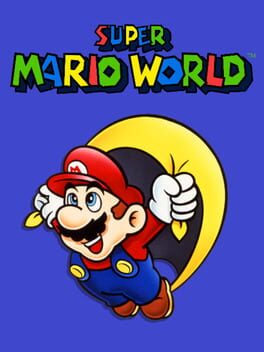
Super Mario World
- Developer
- Nintendo Entertainment Analysis & Development
- Publisher
- Nintendo
- Platforms
- Super Nintendo Entertainment System, Nintendo Super System, Wii, Wii U
15 archived facts 2 topics 1 source Last reviewed Sep 2026
All facts (15)
- #001
Super Mario World was directed by Takashi Tezuka, with Shigeru Miyamoto, the creator of Super Mario and The Legend of Zelda, serving as producer.
- #002
Shigefumi Hino worked as graphics designer on Super Mario World.
- #003
Nintendo Entertainment Analysis & Development developed Super Mario World with a team of fifteen people, among them three main programmers and a character designer, most of whom had worked on earlier Super Mario games.
- #004
In a retrospective interview, the core team of Super Mario World said that Shigeru Miyamoto held the most authority during development.
- #005
Development of a fourth Super Mario installment began in October 1988, shortly after Super Mario Bros. 3 was released.
- #006
According to Tezuka, the software tools for the new hardware were not yet fully developed, and the team had to start something new.
- #007
Composer Koji Kondo chose to reuse the same themes he had created for Super Mario Bros. 3 in Super Mario World, presenting them in a rearranged form so players would recognise the melodies while hearing new variations as they progressed.
- #008
Koji Kondo felt "overjoyed" at composing music with eight sounds at once, as Super Mario World was the first game developed for the SNES.
- #009
To express the technological novelty of the new console, Koji Kondo used several different instruments in Super Mario World, implementing them all one after the other in the title song.
- #010
Koji Kondo grew concerned about how people would react to his unusual combinations of instruments in Super Mario World, noting that the use of more traditional square waves and triangle waves had "gained acceptance" with consumers; for the sound effects, he used a variety of musical instruments rather than square waves to emphasise that the game used traditional technology with a hybrid of new materials. It took Kondo around a year and a half to write all the music.
- #011
Super Mario World was officially unveiled on 28 July 1989 at the first Shoshinkai event, during a press release.
- #012
Nintendo delayed Super Mario World's release to late 1990 because the team struggled with the new console and its still-developing software tools, needed to refine concepts for more player-friendly controls, and faced a global chip shortage that slowed Super Famicom production.
- #013
Super Mario World was shown again at the second Shoshinkai event on 28–29 August 1990, where the demonstration drew positive public response regarding gameplay.
- #014
At its first Shoshinkai showing, Super Mario World's technological advancements were considered impressive, but the game was still seen as too similar to earlier Super Mario installments in gameplay and graphics.
- #015
The Mega Drive outsold the SNES and created intense competition between the two companies, marking the first time since December 1985 that Nintendo did not lead the market, though Nintendo eventually overtook Sega.
Sources & editorial notes
Sources for the entries on this page
- Wikipedia Super Mario World — Wikipedia
Information from external sources is independently selected, consolidated and edited by Arka Evren. Sources are listed for verification and further reading. Encyclopedia text is used under its licence (CC BY-SA). How we work