FILM · 2014 · USA
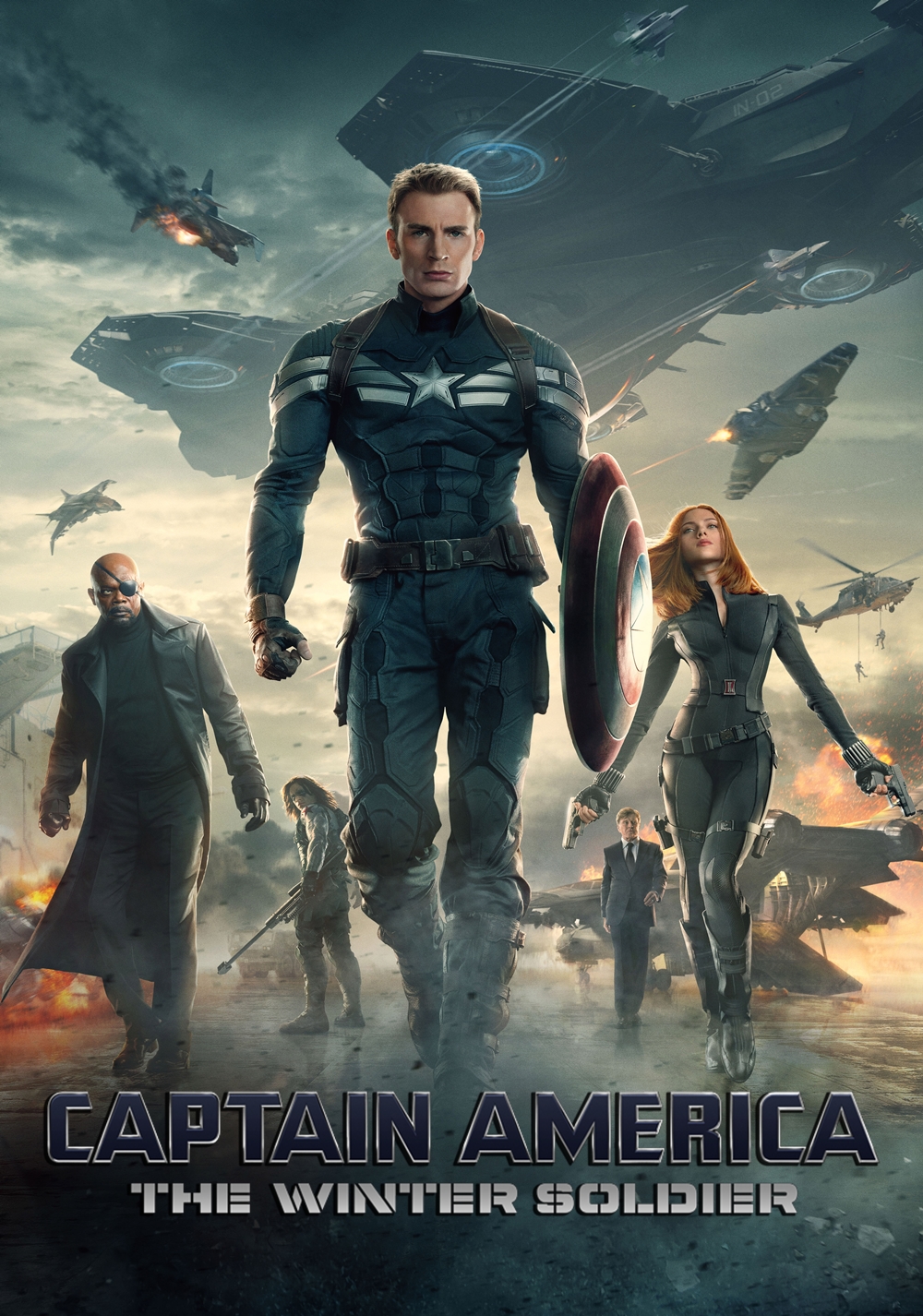
Captain America: The Winter Soldier
- Directed by
- Joe Russo, Anthony Russo
- Runtime
- 136 min
- Studio
- Marvel Studios
171 archived facts 8 topics 1 source Last reviewed Sep 2026
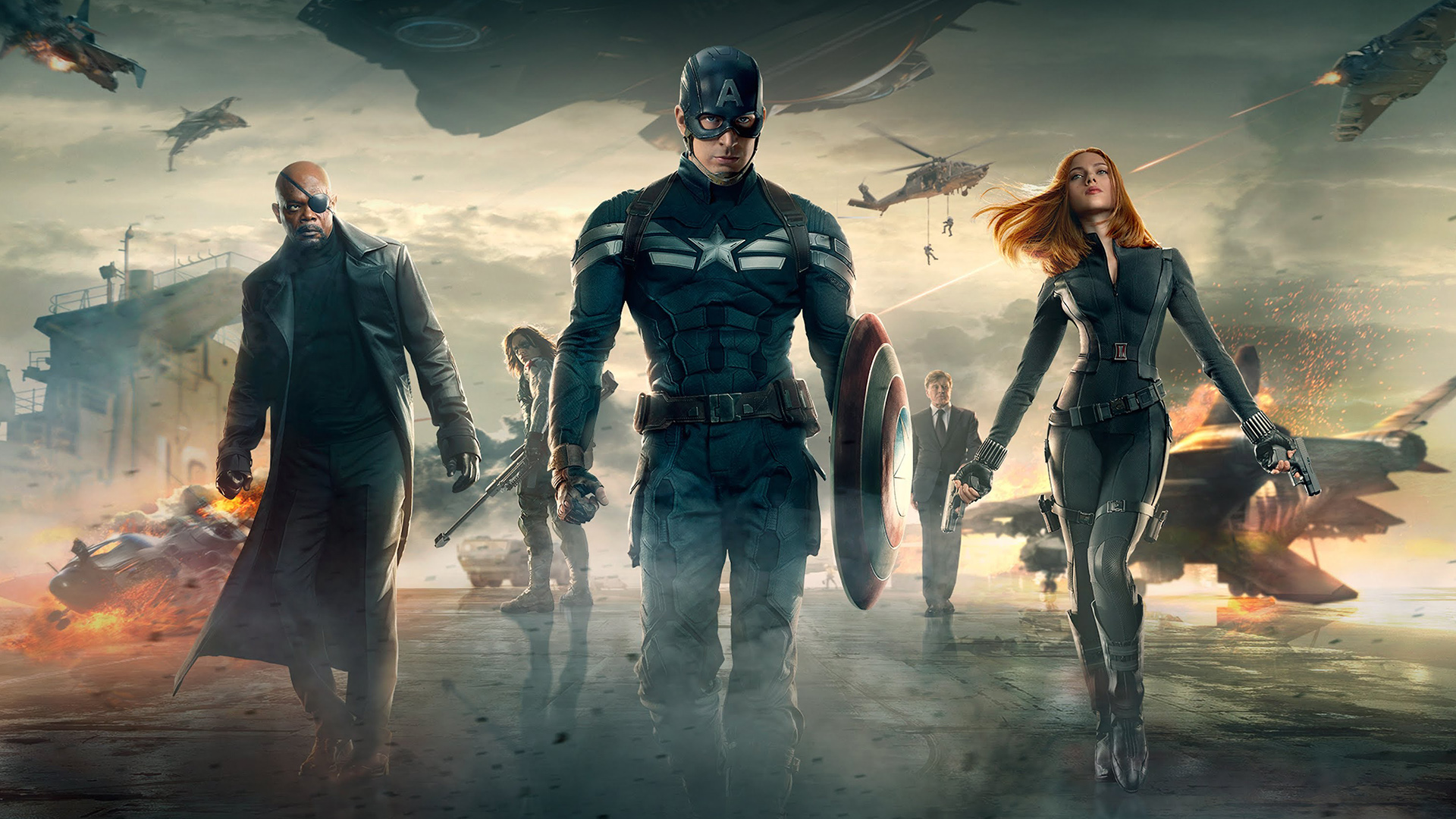
After the cataclysmic events in New York with The Avengers, Steve Rogers, aka Captain America is living quietly in Washington, D.C. and trying to adjust to the modern world. But when a S.H.I.E.L.D. colleague comes under attack, Steve becomes embroiled in a web of intrigue that threatens to put the world at risk. Joining forces with the Black Widow, Captain America struggles to expose the ever-widening conspiracy…
Summary: TMDB
9 Facts on the Deeper Meaning of Captain America: The Winter Soldier
- #020
The shopping mall that Black Widow and Captain America visit to trace the source of the encrypted USB drive is the Tower City Center in Cleveland, Ohio. The building's exterior and hall were used as the opera house where Loki confronts German opera patrons in The Avengers (2012).
- #046
Contains a major spoiler — show
While fighting the Winter Soldier, Captain America needs every resource available to him, including his iconic shield, which gets far more use in this film. The shield is traditionally used mostly as a defensive weapon, but in this film the filmmakers wanted to explore using it more as an offensive weapon. The shield has two handles, and Steve Rogers can grip them to use it in an eastern-style form of combat.
- #065
During filming in Washington, D.C., Steve Rogers, Black Widow and Falcon appeared in scenes at some of the most prominent national landmarks, including the Thomas Jefferson Memorial, the Abraham Lincoln Memorial, the National Air and Space Museum, the Capitol Building, the National Mall, the Occidental Restaurant at The Willard Hotel, the DuPont Circle neighborhood, and the Theodore Roosevelt Bridge, which the production closed for the first time for the shooting of a major motion picture.
- #072
Contains a major spoiler — show
The Winter Soldier lands only nine blows with his metal arm in the entire film: one punch to Captain America in the street fight, one backhand to the doctor repairing his arm, and seven blows to Captain America in the final fight, all of which are blows that let the Captain fall. All his other strikes are either blocked or delivered with his non-metal arm. Like Cap, he mainly uses his metal arm as a shield to block.
- #074
Before this film's premiere, given the character's obvious American image, there were some doubts that this sequel would draw much interest outside the United States. After the film was released, however, it became a major international success.
- #088
Sebastian Stan, as Bucky Barnes / the Winter Soldier, has only 13 lines of dialogue over the course of his screen time.
- #100
Because Sebastian Stan could not grow his hair out in time for the film between projects, he had to wear extensions to play the Winter Soldier. The only time in the MCU that his long hair is natural rather than extensions is the sequel Captain America: Civil War (2016). The Winter Soldier's long hair is long enough to imply that HYDRA cared so little about his personal grooming and upkeep that they did not bother to cut it.
- #103
The Russo brothers cited Klute (1971), The Parallax View (1974), Three Days of the Condor (1975), All the President's Men (1976), The French Connection (1971) and To Live and Die in L.A. (1985) as inspirations for making this film.
- #152
Contains a major spoiler — show
The following characters appeared in the film and were adapted from the comics: Steven 'Steve' Rogers/Captain America first appeared in the comic book story "Meet Captain America" in Captain America Comics #1 (March 1941) by writer Joe Simon and writer/artist Jack Kirby. Nicholas Joseph "Nick" Fury, referred to on screen as Nick Fury, first appeared in the comic book story "Seven Against the Nazis!" in Sgt. Fury and His Howling Commandos #1 (May 1963) by writer Stan Lee and artist Jack Kirby. Natalia Alianovna "Natasha Romanoff" Romanov/Black Widow first appeared in the comic book story "The Crimson Dynamo Strikes Again!" in Tales of Suspense #52 (April 1964) by writers Stan Lee & Don Rico and artist Don Heck. Alexander Goodwin Pierce, referred to on screen as Alexander Pierce, first appeared in the comic book story "Uneasy Allies" in Nick Fury vs. S.H.I.E.L.D. #3 (August 1988) by writer Bob Harras and artist Paul Neary. James Buchanan "Bucky" Barnes Jr./The Winter Soldier, referred to on screen as Bucky Barnes or The Winter Soldier, first appeared as Bucky Barnes in the comic book story "Meet Captain America" in Captain America Comics #1 (March 1941). He later became the Winter Soldier in the comic book story "Out of Time: Part 1" in Captain America Vol. 5 #1 (January 2005). The character was created by writer Joe Simon and writer/artist Jack Kirby. Samuel Thomas "Sam" Wilson/The Falcon, referred to on screen as Sam Wilson or The Falcon, first appeared in the comic book story "The Coming of the Falcon!" in Captain America #117 by writer Stan Lee and artist Gene Colan. Maria Hill first appeared in the comic book story "Breakout!: Part 4" in New Avengers #4 (March 2005) by writer Brian Michael Bendis and artist David Finch. Brock Rumlow first appeared in the comic book story "Wheel of Death" in Captain America #359 (October 1989) and the comic book story "Blood In the Sea" in Captain America #360 (November 1989). The character was created by writer Mark Gruenwald and artist Kieron Dwyer. Jasper Sitwell first appeared in the comic book story "The Day of the Druid!" in Strange Tales #144 by writer Stan Lee and artist Howard Purcell. Sharon Carter/Agent 13 first appeared in the comic book story "30 Minutes to Live!" in Tales of Suspense #75 (March 1966) by writer Stan Lee and artists Jack Kirby and Dick Ayers. Margaret Elizabeth "Peggy" Carter, referred to on screen as Peggy Carter, first appeared as an unidentified, indistinct memory image in the comic book story "30 Minutes to Live!" in Tales of Suspense #75 (March 1966); the character first fully appeared in the comic book story "If a Hostage Should Die!" in Tales of Suspense #77 (May 1966) and was officially named in the comic book story "This Way Lies Madness!" in Captain America #162 (March 1973). The character was created by writer Stan Lee and artist Jack Kirby. Dr. Arnim Zola first appeared in the comic book story "River of Death" in Captain America and the Falcon #208 (April 1977) by writer/artist Jack Kirby. Georges Batroc first appeared in the comic book story "30 Minutes to Live!" in Tales of Suspense #75 (March 1966) by writer Stan Lee and artist Jack Kirby. Baron Wolfgang von Strucker first appeared in the comic book story "At the Mercy of Baron Strucker" in Sgt. Fury and His Howling Commandos #5 (January 1964) by writer Stan Lee and artist Jack Kirby. Wanda Marya Maximoff first appeared in the comic book story "The Brotherhood of Evil Mutants!" in The X-Men #4 (March 1964) by writer Stan Lee and artist Jack Kirby. Pietro Django Maximoff first appeared in the comic book story "The Brotherhood of Evil Mutants!" in The X-Men #4 (March 1964) by writer Stan Lee and artist Jack Kirby. The list above names only the creators of each character's first appearance. As with all comic book characters, Captain America and his supporting cast have been reinvented many times and given different contributions by different writers. These include different iterations in different settings that add different concepts to the characters' overall mythology.
Sources & editorial notes
Reference databases
Sources for the entries on this page
- IMDb IMDb
Information from external sources is independently selected, consolidated and edited by Arka Evren. Sources are listed for verification and further reading. Encyclopedia text is used under its licence (CC BY-SA). How we work